
Search “can chickens eat oranges” and you can walk away more confused than when you started. One site swears citrus is poison that will wipe out your flock; the next shows hens happily pecking a juicy orange half in the summer heat.
So which is it? After sorting through the myths, the careful evidence-based advice, and a fair bit of backyard folklore, the honest answer is refreshingly simple: yes, chickens can eat oranges — in small amounts, as an occasional treat.
This guide clears up where the scary rumors came from, what oranges really do (and don’t do) for your birds, which parts are safe, and exactly how much is too much. By the end, you’ll know whether it’s even worth offering them.
So, Can Chickens Eat Oranges?
Yes — oranges are safe for chickens when fed in moderation. They aren’t toxic, and a few juicy segments now and then won’t hurt a healthy adult bird.
The catch is that oranges are sugary and acidic, which lands them firmly in the “occasional treat” category rather than on the daily menu.
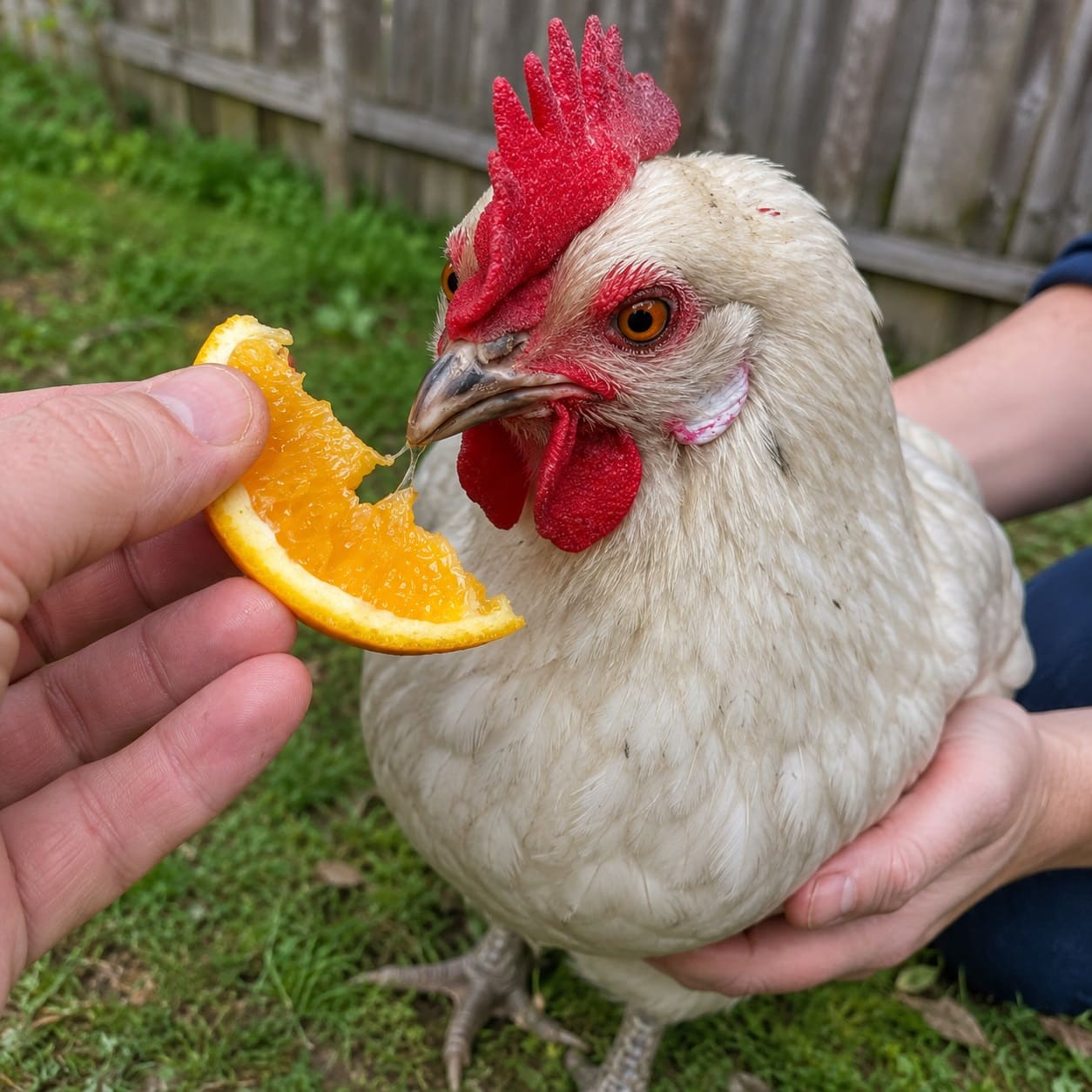
A good rule of thumb many keepers follow is the 90/10 split: treats of all kinds should make up no more than about 10 percent of what your chickens eat in a day, with the other 90 percent coming from a complete, balanced feed that covers everything their bodies actually need.
Think of an orange the way you’d think of a slice of cake for yourself — lovely once in a while, a problem if it becomes lunch.
👉 Read the Ultimate Guide to Feeding Your Backyard Laying Hens
Busting the “Citrus Will Hurt Your Flock” Myth
If you’ve read that citrus is dangerous for chickens, you’re not imagining it — that warning is everywhere.
It usually shows up in two forms: that oranges are somehow toxic, and that the acidity ruins eggshells and tanks egg production. Both deserve a closer look.
- First, the toxicity claim
There’s simply no solid evidence that oranges poison chickens. Keepers who’ve raised birds for decades report no citrus-related deaths, and there’s no known toxin in orange flesh the way there is persin in avocado skin or solanine in green potatoes.
The “citrus kills chickens” idea looks like one of those rumors that got repeated so often it started to pass for fact.
- Second, the eggshell worry
This one at least has a kernel of logic: too much acid in the diet could interfere with calcium absorption, and calcium is what builds strong shells.
But the key words are “too much.” At treat-sized amounts, there’s no established scientific link between oranges and thin shells or a drop in laying.
The soft-shell reports almost always involve birds being overfed citrus, or a diet that was short on calcium to begin with.
Here’s the twist most articles miss: the famous “benefit” of oranges — a big dose of vitamin C — is largely wasted on chickens.
Unlike people, chickens make their own vitamin C internally, so they don’t need to eat it under normal conditions.
That doesn’t make oranges harmful; it just means the health halo they wear for humans doesn’t transfer neatly to your flock.
Will Your Chickens Even Want Them?
Here’s the plot twist after all that worrying: a lot of chickens simply don’t care for oranges. Citrus is tart and strongly scented, and most birds prefer mild, sweet foods.
It’s common to toss out orange pieces only to find them kicked around and abandoned like a rejected toy.
That said, chickens are individuals with their own tastes. Some flocks have a bird or two that loves citrus and will clean the flesh right out of the rind while their coop-mates won’t come near it.
Interest can even shift with the weather — a cold, juicy orange tends to get more attention on a hot afternoon than on a chilly morning.
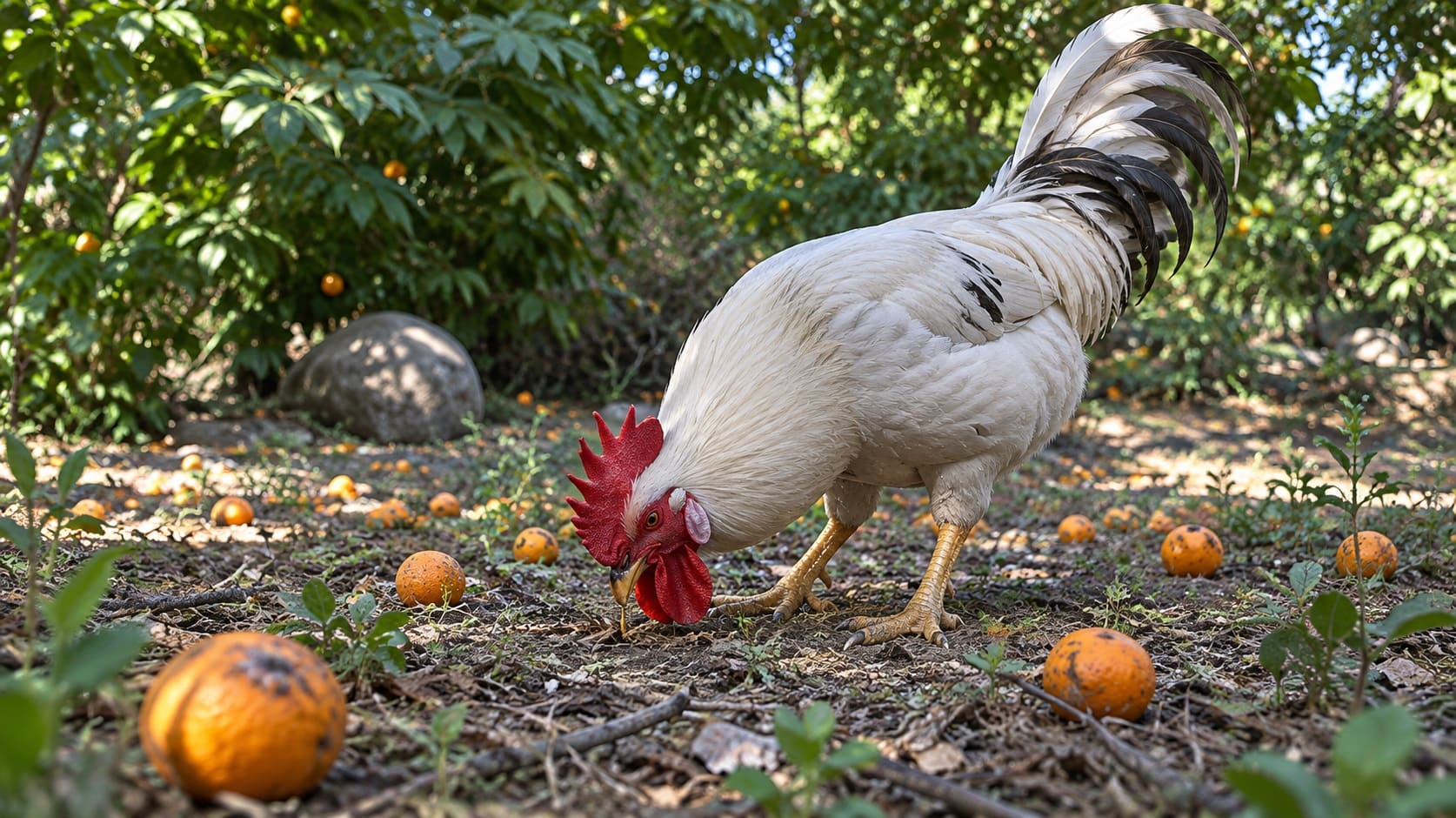
The first time you offer an orange is mostly entertainment for you.
Picture the boldest hen marching over, giving it a hard stare, delivering one investigative peck, then strutting off deeply unimpressed — while the shyest bird in the flock quietly circles back later to finish what’s left.
If your birds ignore oranges entirely, that’s completely normal and nothing you need to fix.
What Oranges Actually Offer Your Flock
So if the vitamin C is beside the point, why bother offering oranges at all? A few genuine reasons:
- Hydration and cooling.
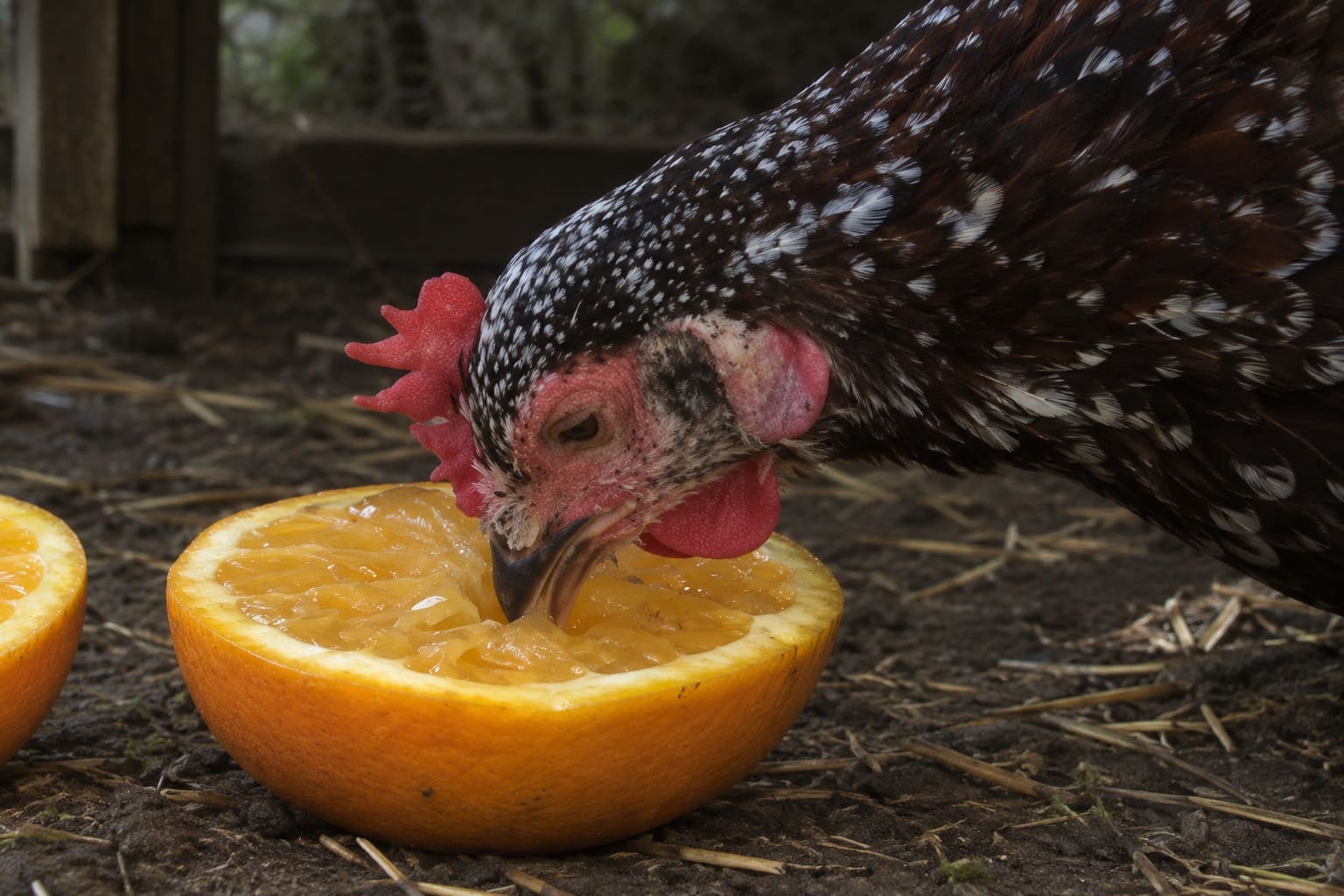
Oranges are mostly water, which makes a chilled segment a refreshing way to help birds cope on hot summer days.
- A quick energy boost.
The natural sugars give a fast little lift, handy when a flock is stressed or run-down.
- Antioxidants and trace nutrients.
Oranges carry flavonoids, carotenoids, and a bit of folate, potassium, and calcium — modest amounts that support general health as part of a varied diet.
None of these are reasons to rush out and buy oranges specifically for your chickens. Citrus is pricey compared with feed, and your birds get everything they truly need elsewhere.
But when you’ve got a few oranges going soft in the fruit bowl, sharing a little is a fine way to add variety and cut down on waste.
One curious bonus lives in the peel: it contains natural pigments called xanthophylls, the same family of compounds that deepen yolk color.
Feeding orange peel can nudge yolks a shade more orange — though marigold petals and yellow corn do the job far more effectively if that’s your goal.
Which Parts of the Orange Are Safe?
Not every part of the orange is equal in a chicken’s eyes — or stomach. Here’s how the pieces stack up:
| Part of the orange | Safe to feed? | What to know |
| Flesh (pulp) | Yes | The sweet, juicy part is the safe, appealing bit — where the water and most of the nutrients are. Pull it into small segments. |
| Pith (white layer) | Yes | The spongy white layer under the peel is harmless. No need to pick it off. |
| Peel (skin) | Yes, with care | Safe if washed well or organic, but tough, bitter, and usually ignored. Wax and pesticide residue are the real concerns — chop it finely or skip it. |
| Seeds | Best removed | Citrus seeds hold trace compounds that release tiny amounts of cyanide, and they’re a minor choking risk. One stray seed won’t doom a bird, but removing them is the safe habit. |
When Oranges Become a Problem
Trouble with oranges almost never comes from a bird having a little — it comes from too much, too often.
Too Much Sugar
Oranges carry a fair amount of natural sugar, and a chicken’s system isn’t built for sugary foods.
Overfeeding can lead to weight gain and, in the crop, can feed the yeast behind sour crop — an uncomfortable digestive infection.
Too Much Acid
With a pH of roughly 3 to 4, oranges are acidic enough to irritate a chicken’s digestive tract when eaten in quantity.
The usual result is loose droppings or a mild stomach upset that clears on its own once the citrus stops.
This same acid is behind the (overblown) eggshell worry — a genuine issue only at truly excessive amounts.
Pesticides on the Peel
Store-bought oranges are often sprayed and waxed, and those residues concentrate on the skin.
If you plan to offer any peel, wash it thoroughly or choose organic fruit. When in doubt, peel the orange and hand your birds only the flesh.
How to Feed Oranges the Right Way
Ready to give it a try? Feeding oranges well takes about a minute:
- Wash the orange, especially if you’ll be offering any of the peel.
- Peel it (optional). Most chickens prefer the flesh, and peeling sidesteps the pesticide question.
- Remove the seeds and pull the fruit into small segments or bite-sized pieces.
- Offer a small amount — think half a segment to a full segment per bird.
- Scatter the pieces or set them in a shallow dish, then watch how your flock reacts.
- Clear away the leftovers before nightfall so sweet, fragrant scraps don’t attract rats, mice, or other pests.
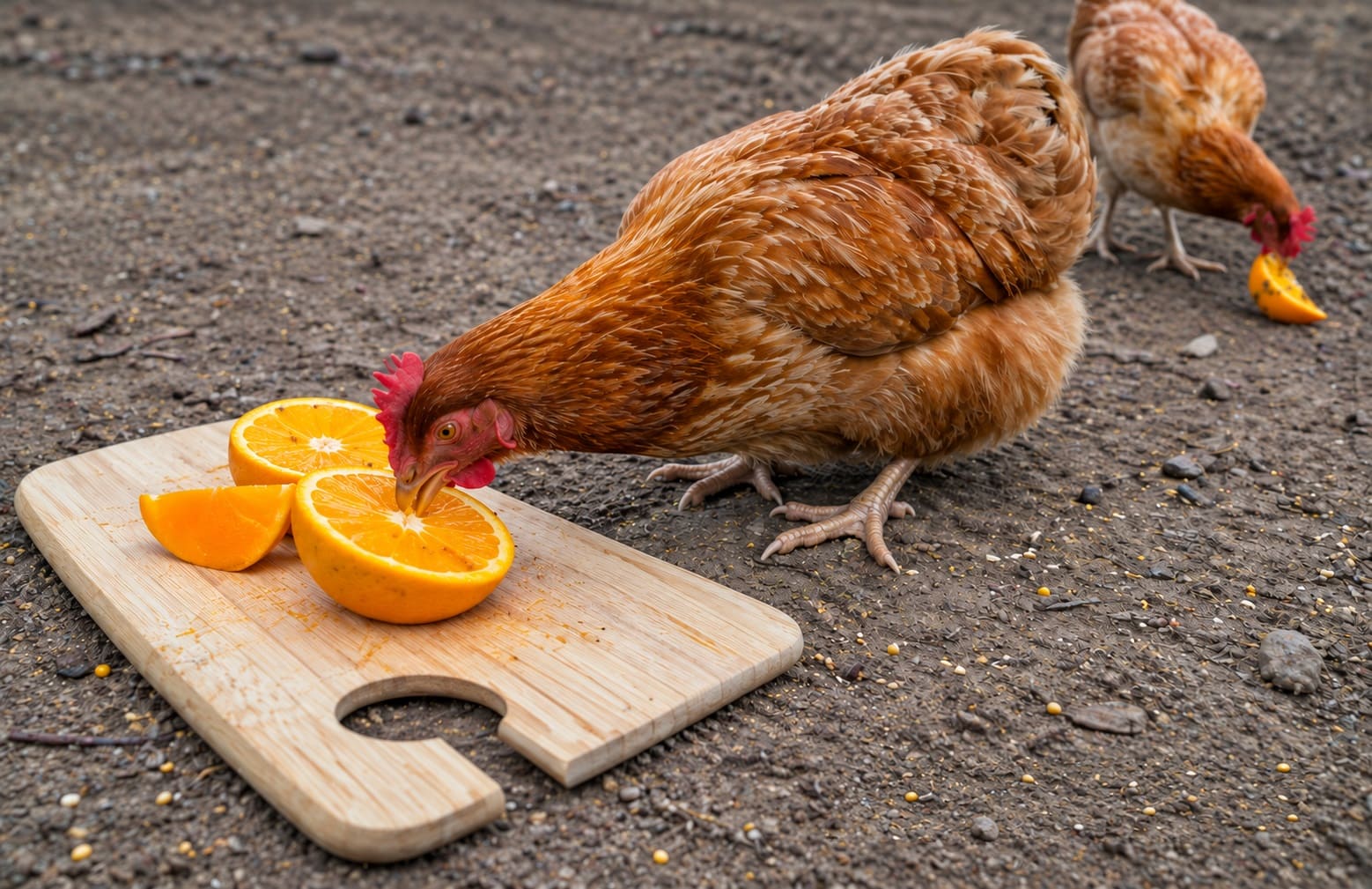
How often? Once or twice a week at most is plenty. A single medium orange split among a flock of about 10 birds is a reasonable serving.
On hot days, try freezing orange segments and offering them as a cool, hydrating treat — a simple bit of summer enrichment your birds may appreciate more than the fruit itself.
One group to leave out entirely: baby chicks. Their digestive systems are delicate, and sugary, acidic citrus is too much for them.
Wait until birds are older — at least a month or two — and even then keep it to a tiny taste alongside their proper chick starter.
Frequently Asked Questions
- Can chickens eat mandarins, clementines, or tangerines too?
Yes, and these smaller citrus fruits are often a better bet. They tend to be sweeter and less acidic than a full-size orange, which some birds find more appealing, and they’re easy to peel and split into bite-sized segments.
Feed them with the same moderation and remove any seeds.
- Can chickens have canned oranges or orange juice?
It’s best to skip both. Canned oranges usually sit in sugary syrup, and juice is essentially concentrated sugar and acid without the fiber that comes with whole fruit.
Fresh, plain orange segments are the only form worth offering — and clean water is always the better drink.
- Will feeding oranges make my eggs taste like citrus?
Almost certainly not at treat-sized amounts. The foods most often blamed for off-tasting eggs are strong ones like onion, garlic, or fish meal, and even those links are debated.
A few orange segments a week won’t leave your eggs tasting of citrus.
- What should I do if my flock got into a whole pile of oranges?
Don’t panic. Remove the extra fruit, make sure the birds have fresh water and their normal feed, and keep an eye on their droppings over the next day.
A one-time overindulgence usually sorts itself out; call a vet only if a bird turns lethargic or stops eating.
Related posts:
- Can Chickens Eat Grapes? Safe Portions & Feeding Tips
- Can Chickens Eat Bananas? Benefits, Risks & Feeding Tips
- Can Chickens Eat Sunflower Seeds? Everything You Need to Know
The Bottom Line
Oranges land in the same easygoing category as a lot of kitchen extras: not a superfood, not a poison, just a fine little treat when handled sensibly.
Here’s what to carry away:
- Oranges are safe in moderation — a treat, never a staple.
- The “citrus is toxic” warning is a myth; the real risks are sugar and acid in excess.
- Chickens make their own vitamin C, so oranges are more about variety and hydration than nutrition.
- Feed small amounts once or twice a week, skip the seeds, and keep citrus away from chicks.
- Don’t be surprised if your flock shrugs and walks away.
The real joy of keeping chickens is getting to know the little personalities in your run, and treats are a fun way to do exactly that.
So next time you’ve got an orange going soft, chill a few segments, toss them out, and see who turns out to be a citrus fan and who’s a hard no. Your birds will tell you precisely what they think — they always do.

