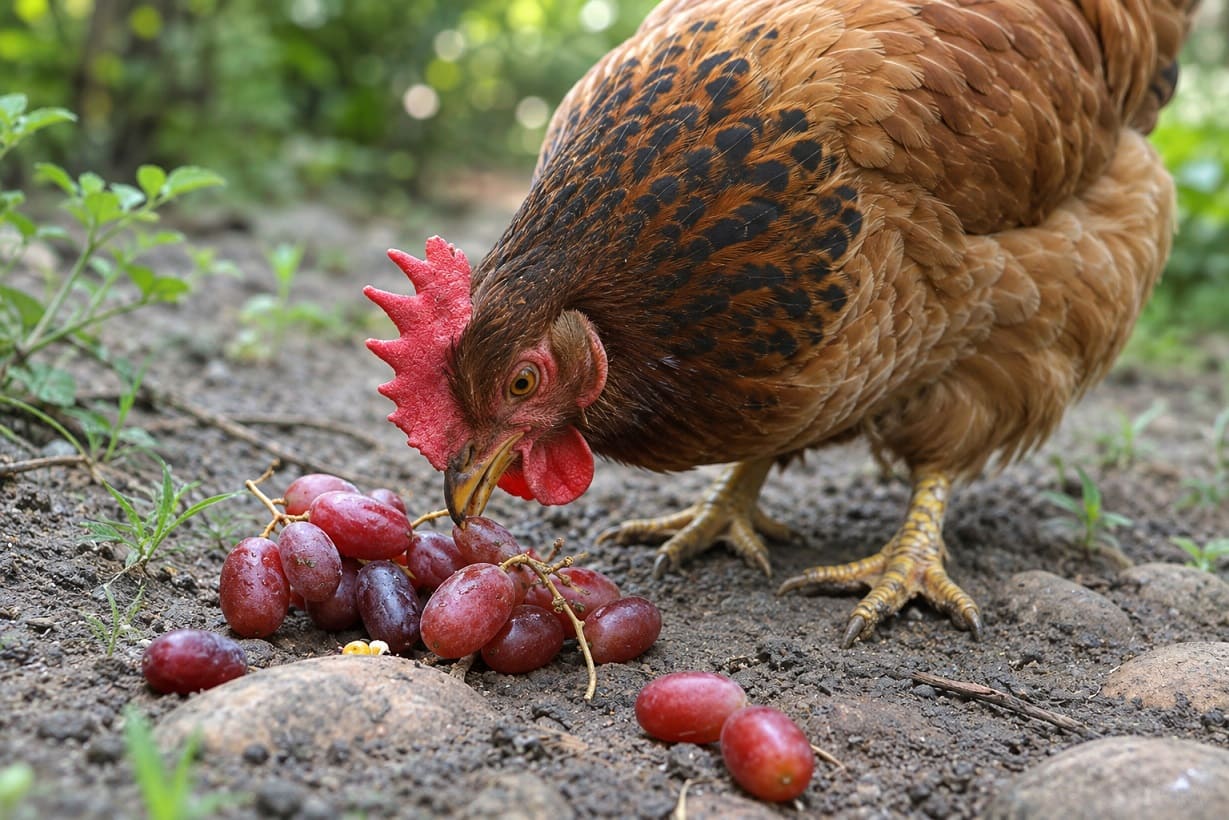
Grapes have a frightening reputation in the pet world. A small handful can send a dog to the emergency vet with kidney failure, and cats don’t fare much better.
So when a brand-new chicken keeper watches a hen snatch a grape and gulp it down whole, a flash of panic makes perfect sense.
Here’s the reassuring part: chickens aren’t dogs. Grapes are safe for them, and most flocks go absolutely silly for the things.
The catch is that “safe” and “smart in large amounts” aren’t the same thing. A grape is mostly sugar and water with a few good vitamins riding along.
This guide covers how many grapes to give, how to serve them so nobody gets hurt, and the one prep step that’s worth an extra 30 seconds.
Here’s the short version, if you’re in a hurry:
- Yes, chickens can safely eat grapes — red, green, or black.
- Treat them like candy: a couple of grapes per bird, and no more than about a tenth of the daily diet.
- Halve or quarter them, especially for bantams, chicks, and fast eaters.
- Toss any grapes that are moldy, fermented, or heavily sprayed, and skip grape juice and jelly.
- Real nutrition comes from complete feed, greens, and bugs. Grapes are just the fun part.
Why Grapes Spook So Many New Keepers
Most of us learn the pet food rules through dogs and cats first. Grapes and raisins land high on the “never feed” list for them, so it feels natural to assume the same goes for the backyard flock. That instinct is healthy — it just doesn’t apply here.
Chickens process grapes without trouble. What makes this confusing is that the rule isn’t the same for every dangerous-to-dogs food.
Chocolate, for example, is genuinely toxic to chickens too, because of the theobromine and caffeine in it. So the honest answer is that you can’t guess a chicken’s safe list from a dog’s. Grapes happen to be fine; chocolate truly isn’t.
The other half of the worry is the gulp-it-whole habit. It looks alarming, but a chicken is built to swallow whole prey far larger than a grape — and the choking question gets a straight answer below.
What Grapes Actually Do for Your Flock
Let’s be clear-eyed about what a grape really is. A cup of grapes is roughly 80% water and brings about 100 calories and 23 grams of sugar, with only about 1 gram of protein, according to USDA FoodData Central.
That tiny protein number is the whole reason grapes can never be a main food: laying hens need protein and calcium that fruit simply doesn’t supply.
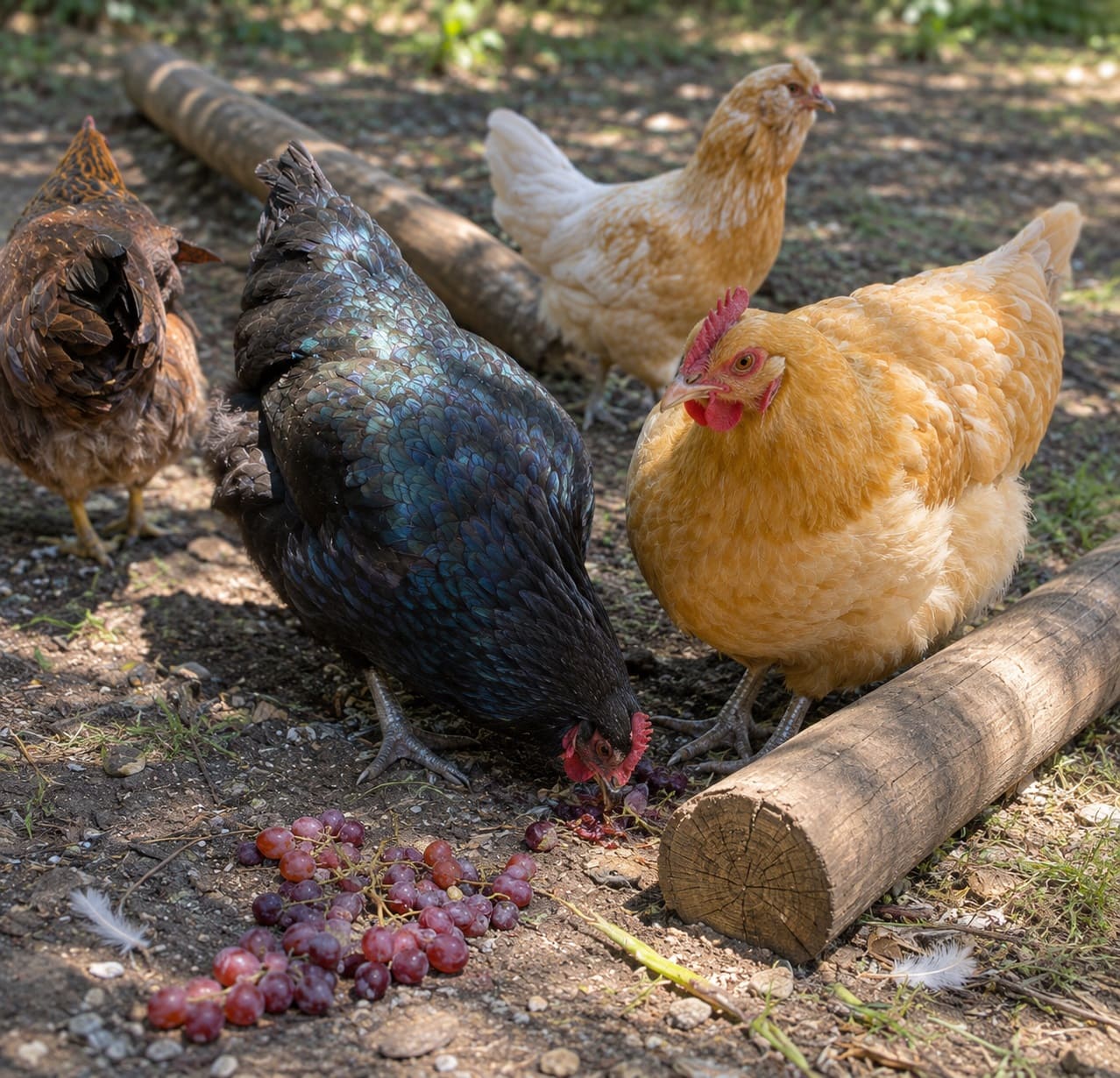
That said, grapes aren’t empty calories. In small amounts they bring a few genuine perks:
- Hydration on hot days, thanks to all that water — handy when birds are panting in summer.
- Vitamin C and vitamin K, plus minerals like potassium and copper that support everyday health.
- Plant antioxidants, including resveratrol, which help the body handle ordinary wear and tear.
- A little fiber to feed the good bacteria in a hen’s gut.
- Pure entertainment: chasing and pecking grapes is real foraging exercise for body and brain.
Think of grapes as a fun dessert, not a side dish — a little sparkle and a small nutritional bonus on top of a balanced diet.
The Real Risks, and How Seriously to Take Them
A couple of worries come up again and again: the sugar and the shape. Both are worth understanding, and neither should scare you off grapes entirely.
The Sugar Problem
Sugar is the bigger long-term issue, and it’s easy to underestimate. A grape that looks tiny to you is a sugar bomb for a 5-pound bird.
Pile on too many, too often, and the trouble shows up slowly: extra weight, loose droppings, and over time the risk of fatty liver.
There’s also sour crop, an uncomfortable yeast overgrowth that sugary treats can encourage. And if your hens fill up on fruit, they eat less of their real feed — which is often why a keeper suddenly notices fewer eggs in the nest box.
The fix is simple: keep the portion small and the feed front and center.
The Choking Question
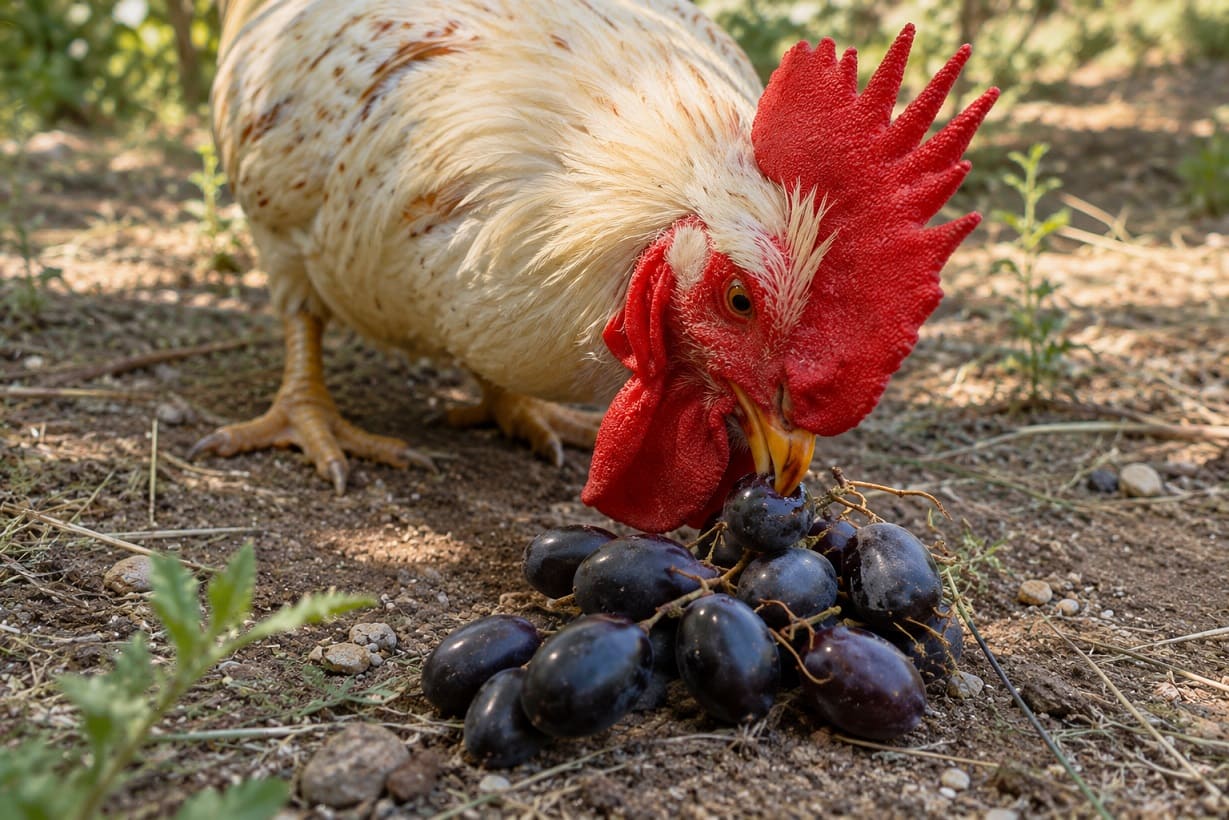
Online, opinion is split. One camp says choking is a myth, since chickens swallow mice and frogs whole.
The other shares heartbreaking stories of a bird that got a whole grape lodged between the crop and stomach and didn’t make it. Both are telling the truth, and the real answer sits in the middle.
For a healthy, full-sized adult hen, choking on a grape is genuinely rare. But rare isn’t never.
A whole grape is round, slick, and just the wrong size to lodge in a small throat or pack into the crop. The birds most at risk are bantams, chicks, and any hen that bolts her food in a crowd.
Here’s the moment that actually causes trouble: a small hen grabs a whole grape, sees her sisters charging over, and tries to swallow it fast rather than share.
Almost every time, she’s fine. But that competitive panic-gulp — not the grape itself — is what turns a treat into a scare.
This is why one small habit is worth it: cut the grapes. Halving an adult’s grapes (or quartering them for little birds) removes almost all of the risk for the cost of 30 seconds and a knife.
It’s cheap insurance, and it also helps them digest the treat faster.
How Many Grapes, and How Often
There’s no need for a kitchen scale here, just a sense of proportion. A good target is 1 to 2 grapes per chicken, offered maybe 1 to 3 times a week.
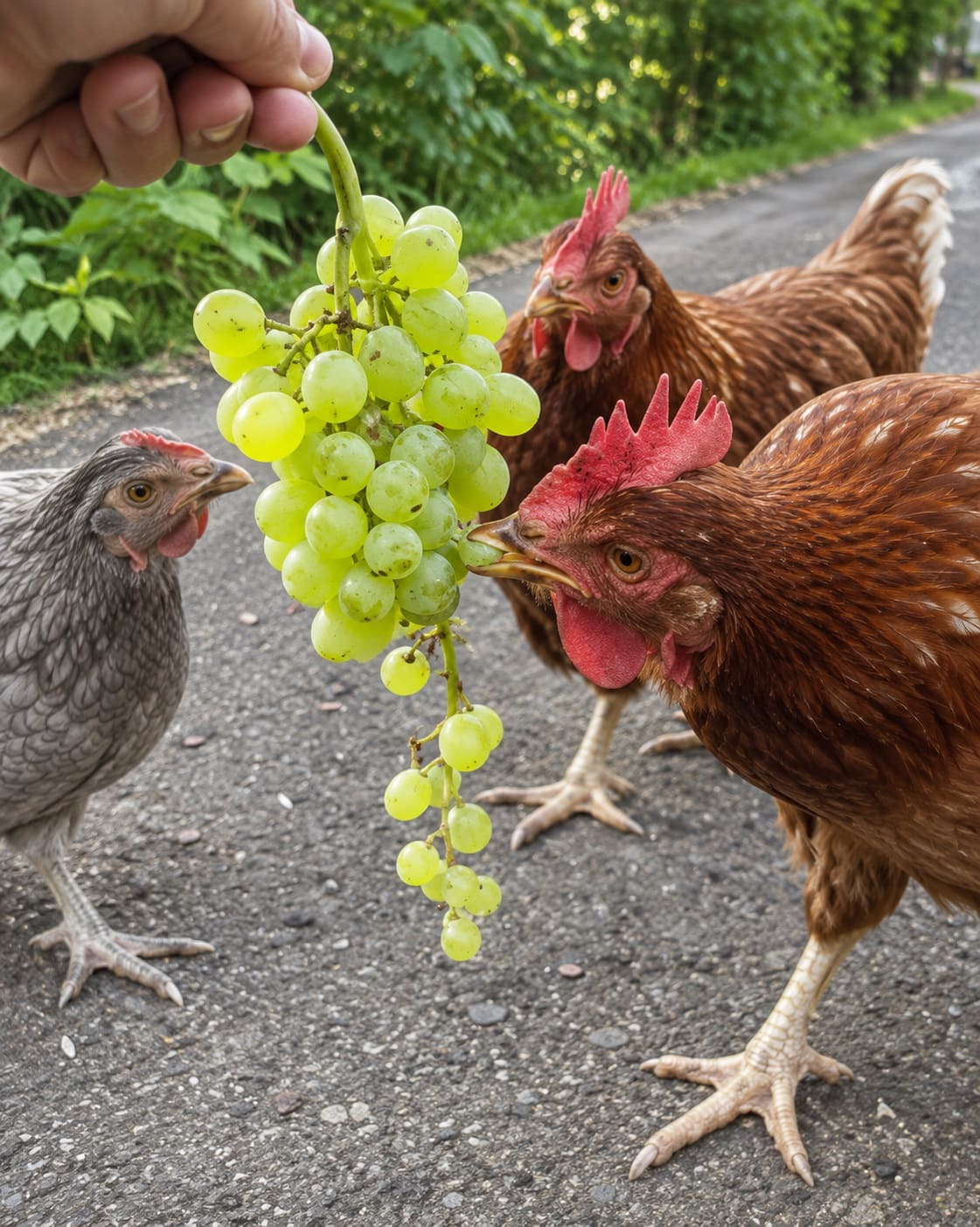
Treats of all kinds should stay under about 10% of what your birds eat in a day; the other 90% is complete feed plus whatever they forage.
If you keep a mixed treat routine, rotate grapes with other goodies rather than stacking them. A few grapes today, a little melon or a handful of berries another day.
That keeps the sugar in check and the menu interesting, which is half the fun of keeping chickens anyway.
How to Serve Grapes Safely
Once you’ve decided on a small portion, serving them well takes just a few steps:
- Rinse them well under cool water to wash off pesticide residue. Organic is a nice bonus, but still rinse.
- Pull the grapes off the stems. Stems are stringy, low in value, and an easy thing to choke on.
- Halve each grape — quarter them for bantams, chicks, or unusually large grapes.
- Scatter them so everyone gets a turn, or thread a few on a string and hang it for a peck-and-play treat. Never bury grapes in the feed, where the moisture spoils the feed and hidden grapes can mold.
- Make sure grit is always available. The gizzard uses it to grind down skins and seeds.
- Clear away anything they don’t finish before it rots and draws flies or rodents.
A summer tip that’s easy to get wrong: frozen grapes make a wonderful hot-weather treat, but freeze them already halved. A frozen whole grape is rock-hard and extra slippery — the exact worst-case shape for a quick swallow.
Special Cases Worth Knowing
Baby Chicks
In the early weeks, a chick’s job is to grow, and that takes the protein in a quality starter feed. Sugary, low-protein snacks just get in the way. Honestly, the simplest move is to skip grapes for very young chicks altogether.
If you can’t resist, wait until they’re a few weeks old, mash or finely chop a tiny piece, and offer it rarely. A whole or halved grape is far too big for a chick and easy to choke on.
Raisins vs. Fresh Grapes
Raisins are just dried grapes, so people assume they’re interchangeable. They’re not, really. Drying removes the water and concentrates the sugar, so a raisin packs a bigger sugary punch in a smaller, denser, harder-to-cut bite.
| What to weigh | Fresh grapes | Raisins |
| Sugar per bite | Moderate, diluted by water | Concentrated and higher |
| Water content | High — helps with hydration | Very low |
| Choking/cutting | Easy to halve or quarter | Small, dense, hard to cut |
| Best choice? | Yes — the everyday pick | Only rarely, 1–2 per bird |
You may have heard that raisins could cause kidney trouble in chickens the way grapes do in dogs. That link isn’t established for poultry, so don’t lose sleep over an accidental nibble.
Still, with fresh grapes sitting right there, there’s little reason to lean on raisins. If you do offer one, a soak in water softens it up.
Leaves, Vines, and Stems
Good news for anyone with a grapevine in the yard: chickens enjoy foraging on grape leaves and tender vines, and both are safe — as long as they haven’t been sprayed with pesticides or weed killer.
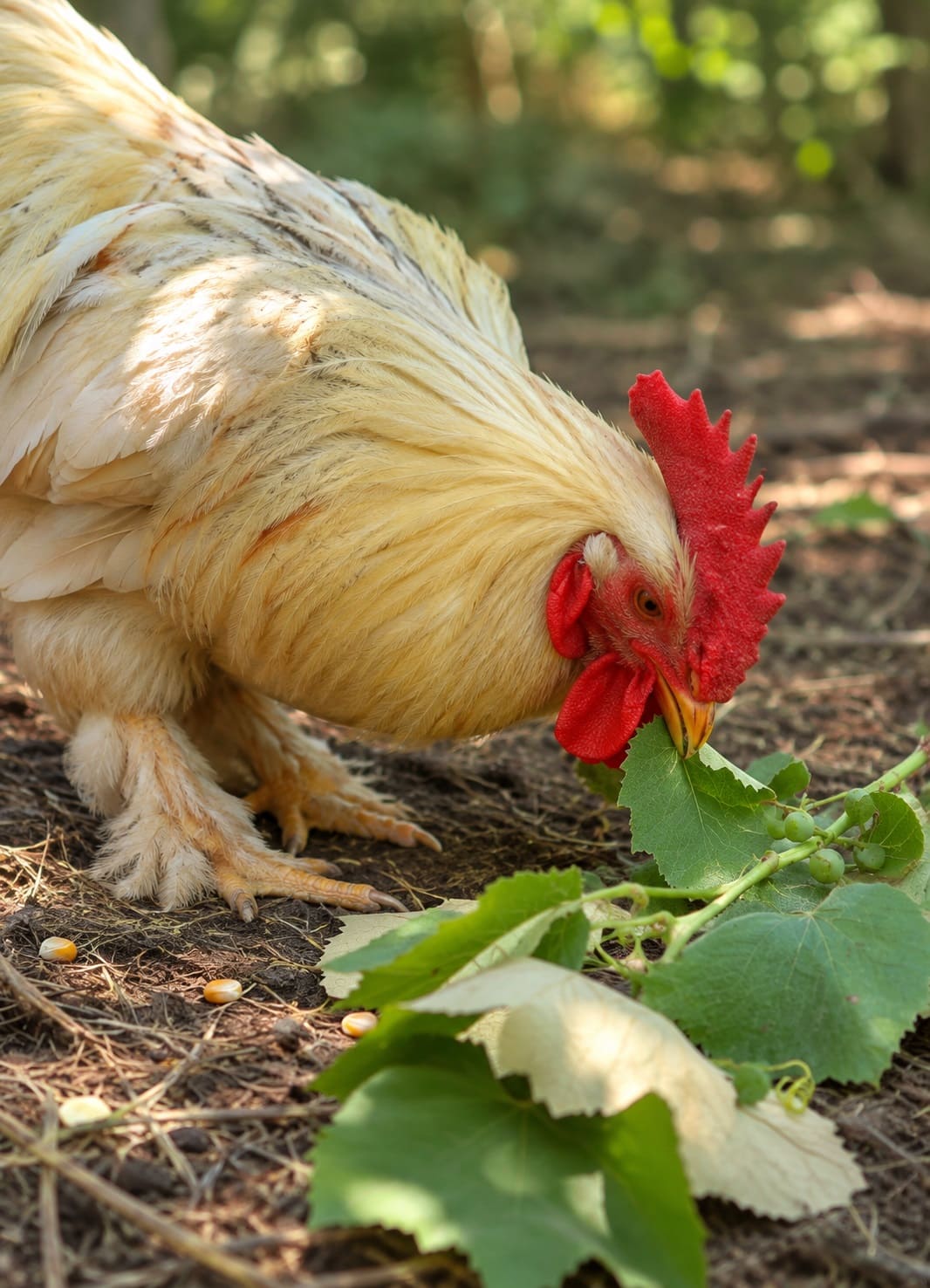
The stems holding a bunch together are a different story. They’re tough and stringy, so pull the fruit off and let those go.
Frequently Asked Questions
Can chickens eat grape seeds and skins?
Yes, both are fine. A chicken’s gizzard breaks down skins and seeds easily, especially when the birds have grit available. You may spot a few whole seeds pass straight through, and that’s perfectly normal.
My hen just swallowed a whole grape — should I panic?
Almost certainly not. A healthy adult bird routinely swallows things larger than a grape. Watch her for a few minutes for neck-stretching, open-mouth gaping, or obvious distress. If she’s acting normal, she’s fine — and next time, halve them.
What if my chickens got into way too many grapes?
A one-time binge usually isn’t an emergency. The likely result is a sugar-fueled bout of loose droppings and maybe a quieter, less hungry bird for a day.
Keep fresh water available, hold off on other treats, and watch her closely — if the diarrhea drags on, she goes off her feed, or she seems lethargic, it’s time to call your vet.
Are red or green grapes better for chickens?
The difference is tiny. Darker grapes carry a bit more antioxidant, and green ones tend to be slightly sweeter, but your hens won’t care either way. Offer whatever is fresh, and a mix is great.
Do I have to buy seedless grapes?
No — seeded grapes are perfectly fine. Seedless ones just save you a moment when you’re slicing them up.
Can chickens eat grapes every day?
It’s better not to. Daily sugar adds up quickly for a small bird and can crowd out the feed they actually need. Keep grapes to a few times a week and rotate them with other treats.
Related posts:
- Can Chickens Eat Bananas? Benefits, Risks & Feeding Tips
- Can Chickens Eat Sunflower Seeds? Everything You Need to Know
- Can Chickens Eat Potatoes? The Safe and Toxic Varieties Explained
The Bottom Line
Grapes are a great example of a treat that’s safe and genuinely fun, as long as you keep a sense of proportion. Here’s what to carry with you:
- Grapes are safe for chickens — a sweet treat, never a meal.
- Keep it to a couple per bird, a few times a week.
- Halve them (quarter for little birds) and ditch the stems.
- Fresh beats raisins; mold and fermented fruit go in the trash; juice and jelly aren’t worth it.
- The real diet is still feed, forage, and bugs.
Once you’ve got the portion right, feeding grapes becomes one of those small daily joys of flock-keeping.
So the next time a bunch is about to turn in the fridge, rinse a handful, halve them, and scatter them across the run.
Then grab a coffee and enjoy the show — few things are as entertaining as a hen sprinting off with her prize.
If this clicked for you, try the same small-portion approach with berries or melon and watch your flock fall in love all over again.

