
The best duck breed for a beginner is usually a calm, mid-sized heritage breed such as the Welsh Harlequin, Buff or Silver Appleyard. These ducks lay well, stay on the ground and tolerate the mistakes of a first season.
If eggs are the whole point, a Khaki Campbell or one of the hybrid layer ducks will fill the fridge. For meat, the Pekin is the obvious choice, and for a quiet yard nothing beats a Muscovy.
Below you’ll find what each popular breed is really like to live with, the numbers that matter side by side, and the breeds that tend to disappoint first-time keepers.
Quick picks
- Best all-round beginner duck: Welsh Harlequin, with Buff and Silver Appleyard close behind.
- Most eggs: Khaki Campbell, or a hybrid layer such as the Golden 300 or White Layer.
- Fastest meat: Process at about 7 to 8 weeks.
- Quietest: Muscovy, though it can fly and has its own legal rules in the US.
- Friendliest pet: a standard (not jumbo) Pekin raised by hand.
- Small garden: Australian Spotted, or a Call if your neighbors don’t mind noise.
- Skip as a first duck: Crested, Jumbo Pekin and Mallard.
Four Questions That Narrow the Choice
Duck breeds differ less than dog breeds do. Any domestic duck will forage, splash, quack and make mud. Still, a few questions will rule out half the list before you look at a single photo.
- What do you want from them?
Light breeds turn feed into eggs, heavy breeds turn it into meat, and the middle-weight breeds do a bit of both.
If you only want company, pick for temperament and size, and remember that regular handling as ducklings shapes tameness more than breed does.
- How close are your neighbors?
Female ducks quack, often loudly and in chorus at dawn. Drakes of the Mallard-derived breeds can only manage a hoarse rasp. A drakes-only flock or a group of Muscovies is the quiet option.
- Can you contain a flier?
Most heavy and medium breeds can’t get more than a foot or two off the ground. Bantams, Mallards and young Muscovies fly well, and light breeds such as Magpies can flutter over a low fence when startled.
- Do you want them to hatch their own?
Some breeds go broody and raise ducklings reliably. Others almost never sit, so you’d need an incubator. Choose deliberately, because a broody duck stops laying for several weeks.
How to Read Egg Numbers and Weights
Look up the Welsh Harlequin and you’ll find egg counts anywhere from 100 to 330 a year. Nobody is lying. Yearly figures depend heavily on the strain.
A line bred for laying by a production hatchery can lay twice as many eggs as an exhibition line of the same breed, which was selected for shape and color.
Treat every egg count as a first-year figure for a well-fed duck from a laying strain. Output drops after the second or third year and stops during the annual molt. Most breeds also slow down in short winter days unless you add light.
Weights vary the same way: “standard” or show strains of the Rouen and Aylesbury are far heavier than the production strains most hatcheries sell. If numbers matter to you, ask the seller what their own birds do.
Duck Breeds Compared at a Glance
These are realistic ranges for hatchery and utility strains, the birds most people actually buy, grouped the same way as the profiles below. Weights are for adult birds, and drakes run toward the top of each range.
Laying breeds
| Breed | Adult weight | Eggs a year | Temperament and best use |
| Khaki Campbell | 3.5–4.5 lb (1.6–2 kg) | 250–300+ | Active and nervous; top heritage layer |
| Welsh Harlequin | 4.5–5.5 lb (2–2.5 kg) | 150–250+ | Calm and curious; eggs, often broody |
| Indian Runner | 3–4.5 lb (1.4–2 kg) | 150–250+ | Flighty forager; eggs and slug control |
| Magpie | 4–5.5 lb (1.8–2.5 kg) | 180–250 | Busy forager; eggs, can flutter |
| Abacot Ranger | 5.5–6.5 lb (2.5–3 kg) | 180–200+ | Hardy forager; eggs, mainly UK |
| Hybrid layers | 4.5–6 lb (2–2.7 kg) | 250–290+ | Calm; maximum eggs, won’t breed true |
Dual-purpose breeds
| Breed | Adult weight | Eggs a year | Temperament and best use |
| Silver Appleyard | 6–9 lb (2.7–4 kg) | 200–270 | Placid; best heavy dual-purpose breed |
| Saxony | 7–9 lb (3.2–4 kg) | 190–240 | Gentle; dual-purpose, rare |
| Buff (Orpington) | 5.5–7.5 lb (2.5–3.4 kg) | 150–220 | Easygoing; dual-purpose |
| Golden Cascade | 6–8 lb (2.7–3.6 kg) | 165–240 | Calm, strong forager; scarce |
| Ancona | 5–6.5 lb (2.3–3 kg) | 210–280 | Calm, hardy; leans toward eggs |
| Cayuga | 6–8 lb (2.7–3.6 kg) | 100–150 | Varies by bird; dark eggs, cold-hardy |
| Swedish | 6–8 lb (2.7–3.6 kg) | 100–180 | Calm, shy; hardy free-ranger |
Meat and small breeds
| Breed | Adult weight | Eggs a year | Temperament and best use |
| Pekin | 8–11 lb (3.6–5 kg) | 125–200 | Friendly, talkative; meat and pets |
| Muscovy | Hens 5–7 lb (2.3–3.2 kg), drakes 10–15 lb (4.5–6.8 kg) | 60–120 | Quiet, independent; lean meat, flies |
| Rouen (production) | 6–8 lb (2.7–3.6 kg) | 100–180 | Docile; slow-growing meat, Mallard look |
| Aylesbury | 9–10 lb (4–4.5 kg) | Under 100 | Placid; heritage meat, very rare |
| Duclair | 4.5–6 lb (2–2.7 kg) | 130–200 | Calm; fine-flavored meat, pasture |
| Call | 1–2 lb (0.5–0.9 kg) | 25–75 | Loud, charming; pets, flies |
| Australian Spotted | 2–2.2 lb (0.9–1 kg) | 50–125 | Calm; best-laying bantam, flies |
| East Indie | 1.5–2 lb (0.7–0.9 kg) | 40–100 | Shy; ornamental, flies |
Best Duck Breeds for Eggs
A good laying duck will match or beat a good laying hen. Duck eggs are larger, with bigger yolks and thicker shells, and bakers love them.
The breeds below are all light and active. That means they eat less than the heavy breeds, but they also stress more easily and need more room to roam.
Khaki Campbell
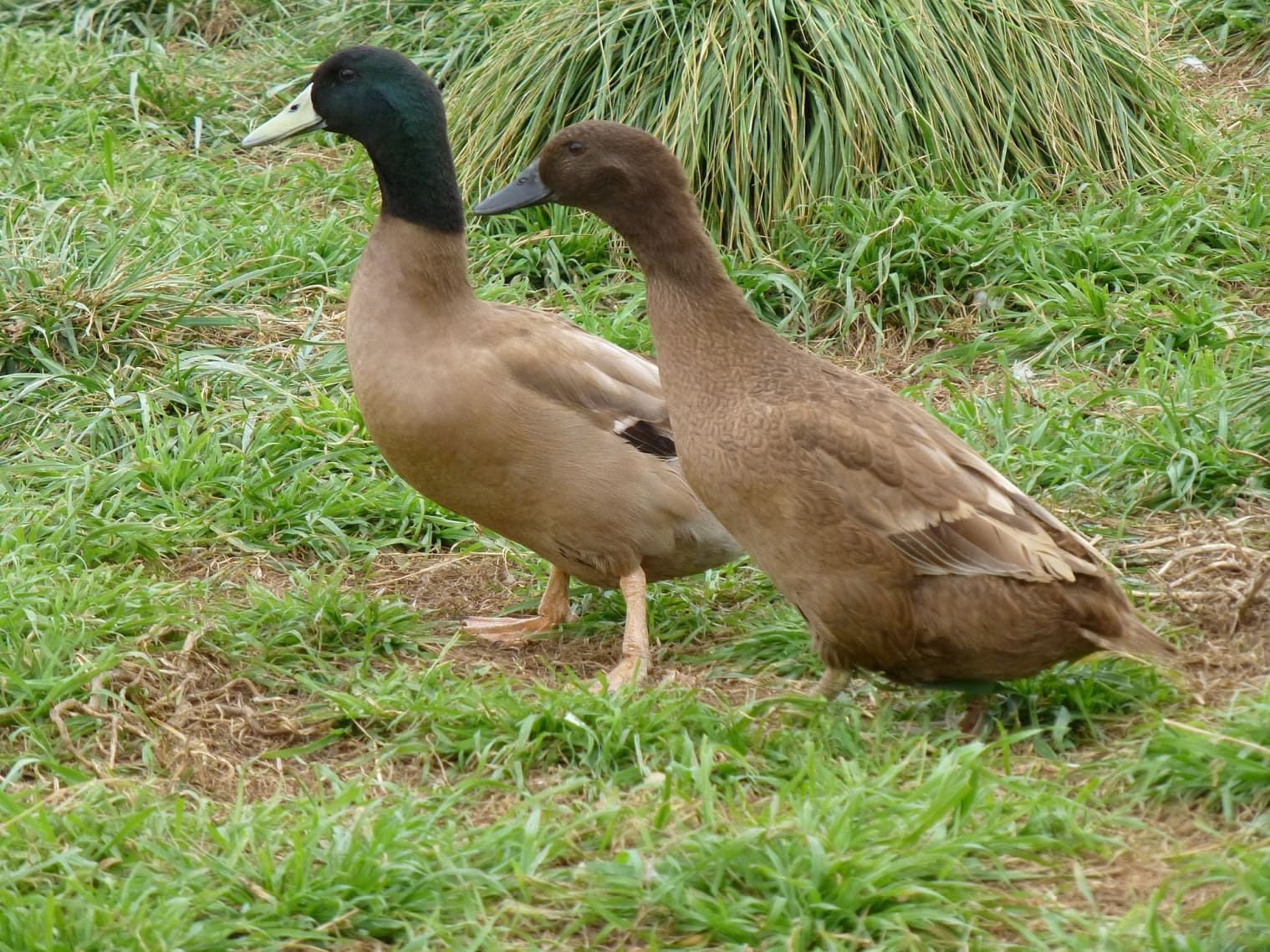
Adele Campbell bred this duck in Gloucestershire, England, around 1900, crossing Runner, Rouen and Mallard blood.
A laying-strain Campbell can manage five or six eggs a week for most of the year, and it keeps going through winter if it gets 14 to 16 hours of light.
The trade-off is temperament. Campbells are alert, quick to panic and rarely cuddly, and they almost never go broody. Buy from a hatchery that selects for laying, since show-bred Campbells lay noticeably less.
Welsh Harlequin
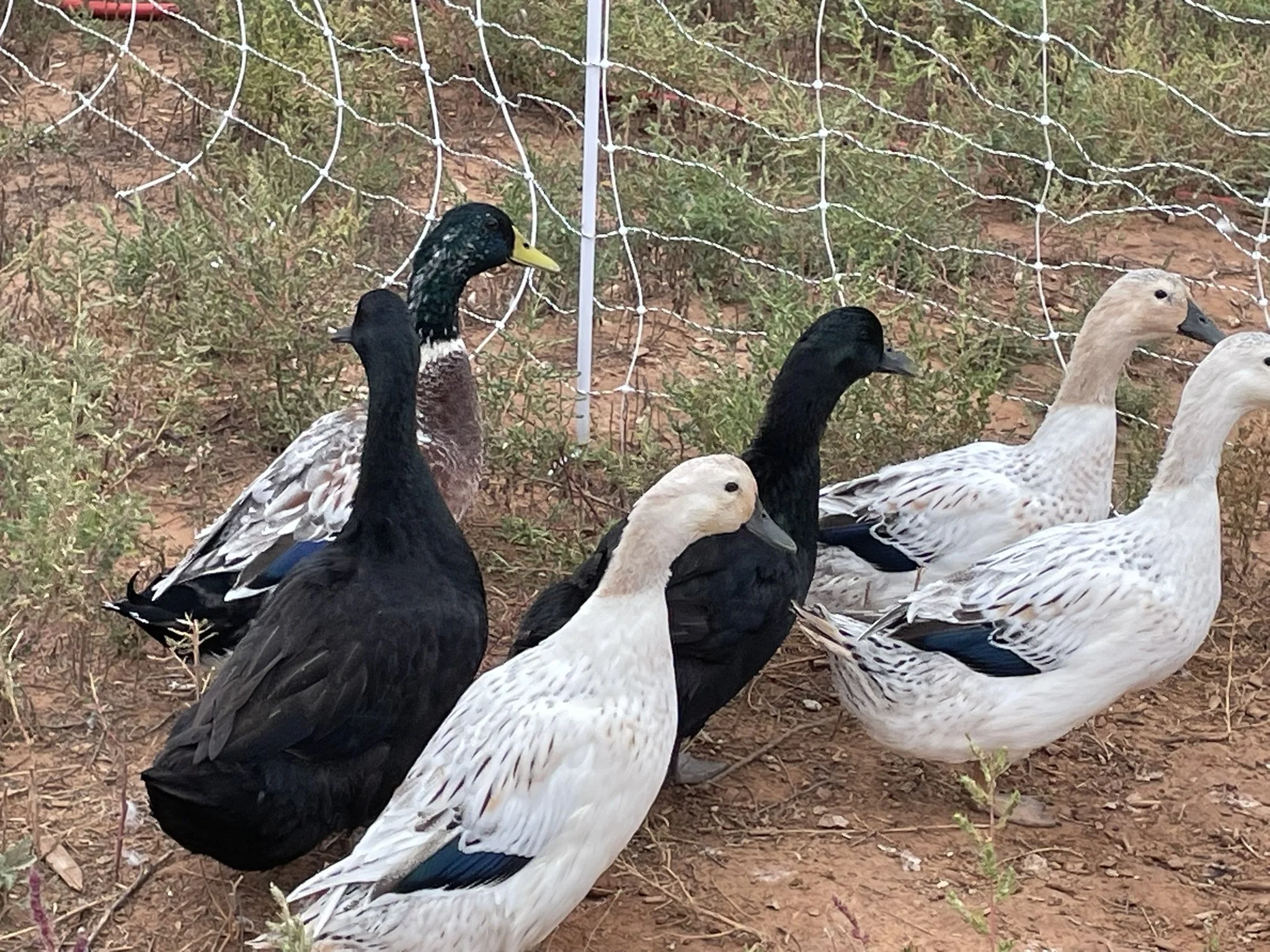
Leslie Bonnet developed the Welsh Harlequin in Wales in 1949 from a color mutation in Khaki Campbells. It keeps much of the Campbell’s laying ability with a far calmer nature.
Harlequins are steady, curious and easy to handle, which is why so many experienced keepers recommend them first.
Hens often go broody and make good mothers. As a bonus, ducklings can often be sexed by bill color in their first few days: darker bills tend to be drakes. It isn’t foolproof, but it beats waiting two months to find out.
Indian Runner
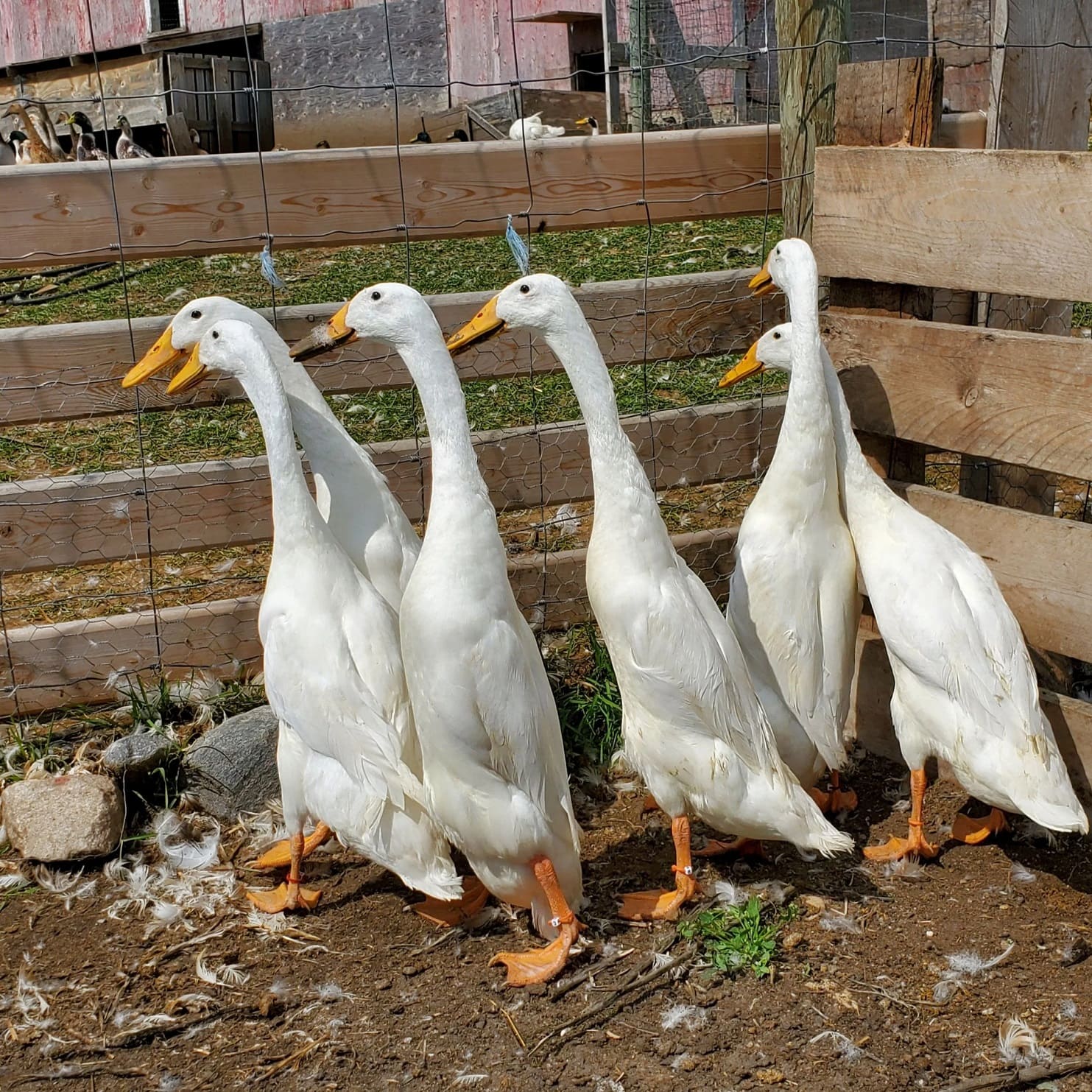
Runners came from Indonesia, not India, where they were herded through rice paddies to eat insects and snails. They stand upright like bowling pins and run rather than waddle.
They’re superb slug hunters and light on feed, but they need space to roam, startle easily and can stampede as a group.
Expect to find eggs dropped wherever a Runner happened to be in the morning unless you keep the flock shut in until midmorning.
Magpie
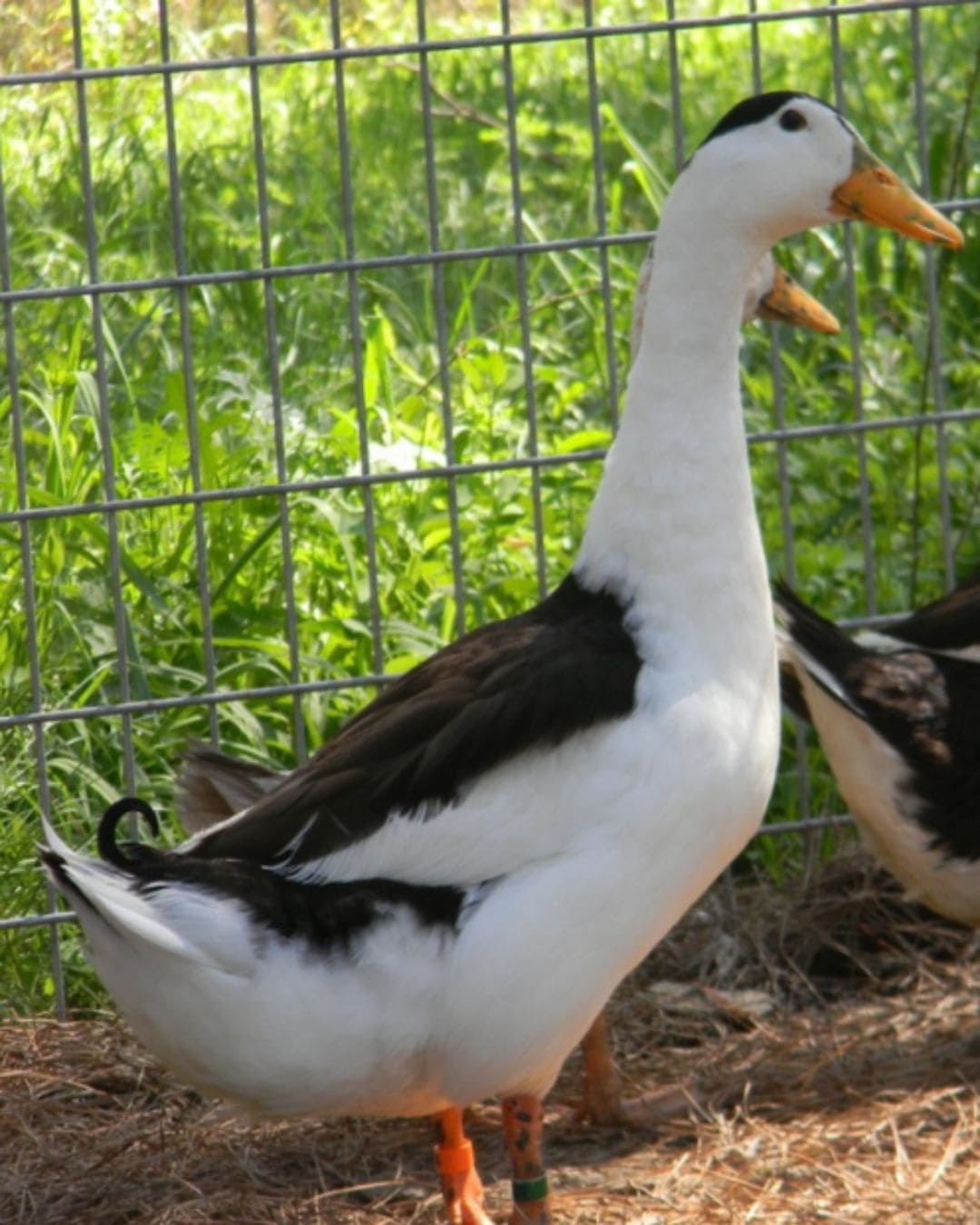
The Magpie is a white duck with a dark cap and back, in black or blue. It’s a light, energetic forager that lays well and keeps moving all day.
Like other light breeds, a frightened Magpie can lift itself over a low fence, so a covered run or clipped wing feathers help.
Abacot Ranger
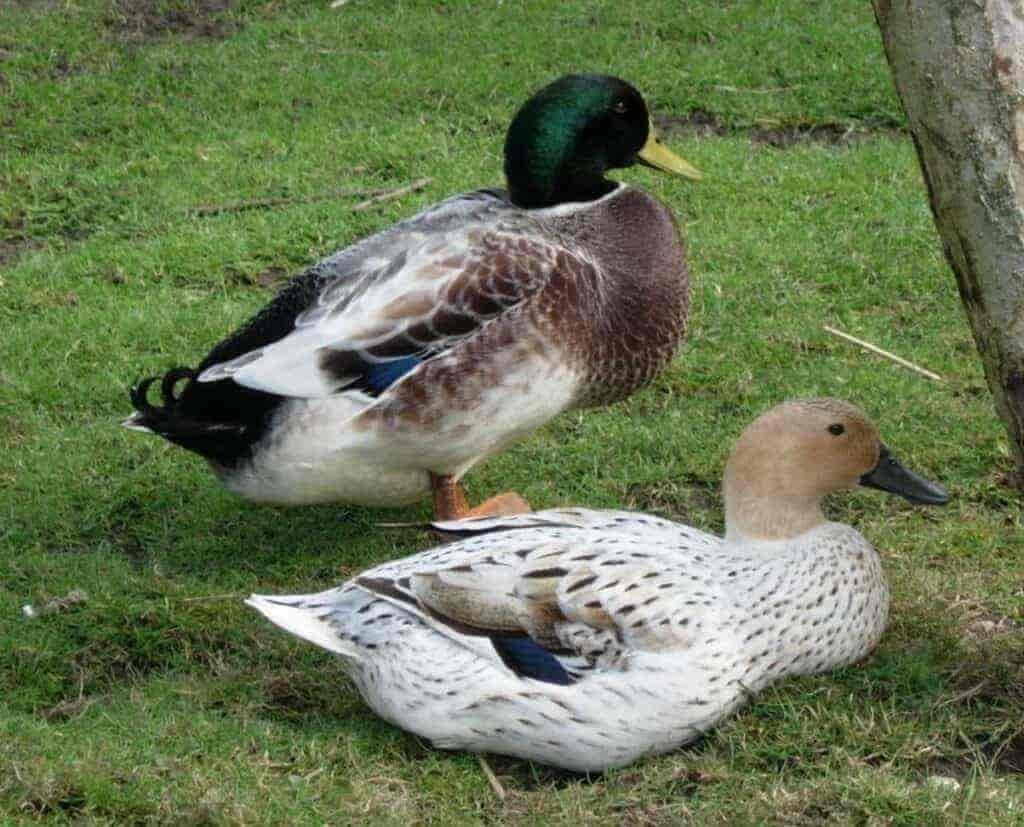
Oscar Gray developed this light duck between 1917 and 1922 at his Abacot Duck Ranch near Colchester, England, from Khaki Campbell and Indian Runner stock. It has a mostly white body with a darker hood on the head and neck.
Good utility strains lay around 180 to 200 white eggs a year, and the breed is hardy, active and an efficient forager.
It’s widely kept by British breeders but hard to find in the US, so North American readers will find a similar balance in the Welsh Harlequin.
Hybrid Layer Ducks
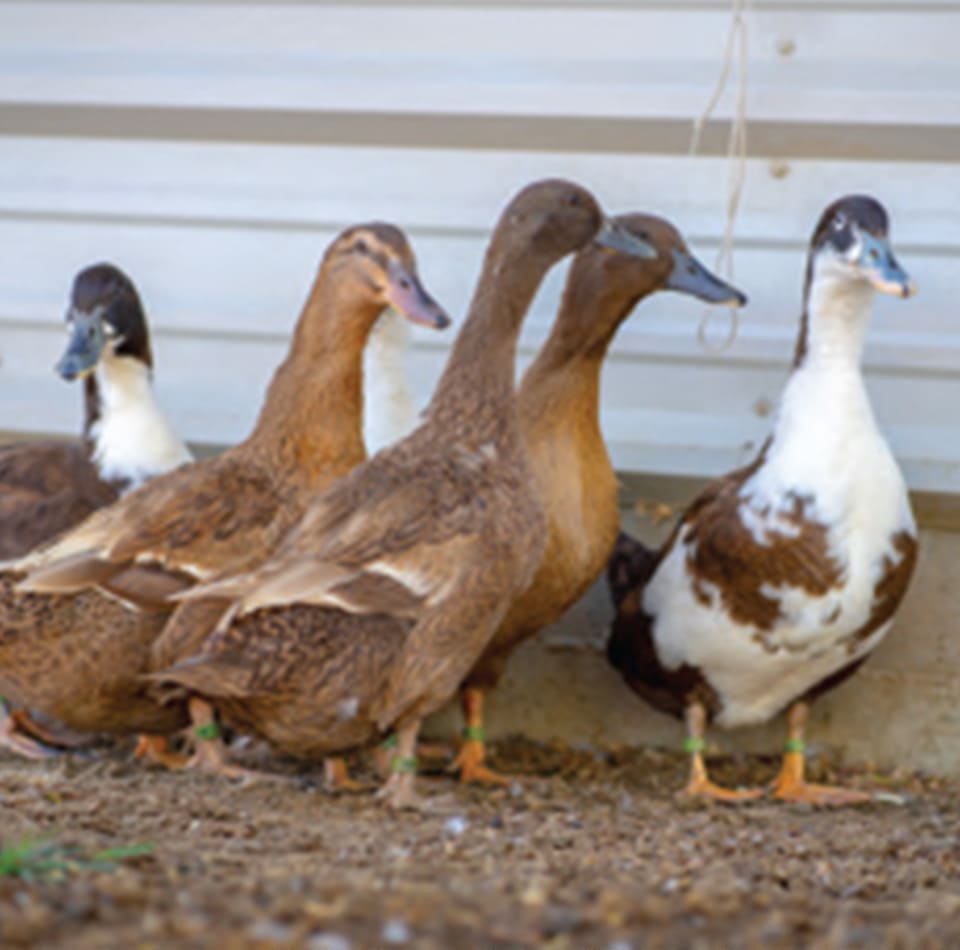
Metzer Farms in California bred the Golden 300 Hybrid Layer in the 1990s and later added the White Layer. Both are built purely for eggs and can lay close to 300 a year, with calmer temperaments than Campbells.
The catch is the same as with hybrid chickens: their ducklings won’t look or lay like their parents, so plan to restock from the hatchery.
Best Dual-Purpose Duck Breeds
Dual-purpose breeds lay a respectable number of eggs and grow big enough to be worth putting in the freezer.
Most are calm, and many will hatch and raise their own replacements, which makes them the backbone of a self-sustaining flock.
They grow more slowly than a Pekin, so treat them as a source of both eggs and meat rather than a quick meat crop.
Silver Appleyard
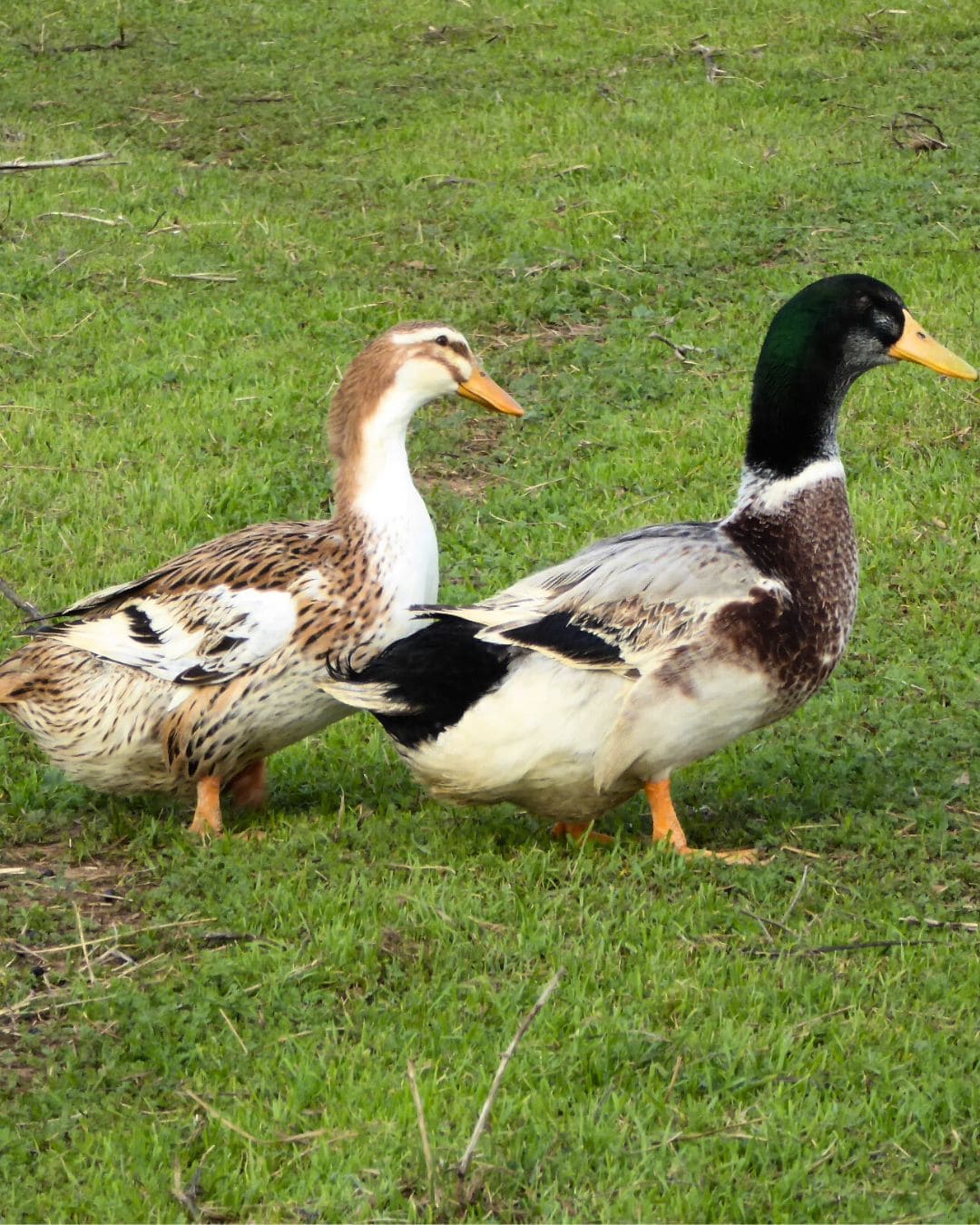
Reginald Appleyard bred this large, Mallard-patterned duck in Suffolk, England, in the 1930s and 1940s. He wanted good looks, plenty of large white eggs and a deep breast.
It delivers all three. Appleyards are placid, easily tamed, too heavy to fly and inclined to go broody, so they suit beginners who want both eggs and meat.
Keep them active and don’t overfeed, because they put on fat readily. Don’t confuse them with the Miniature Silver Appleyard, a separate small breed covered below.
Saxony
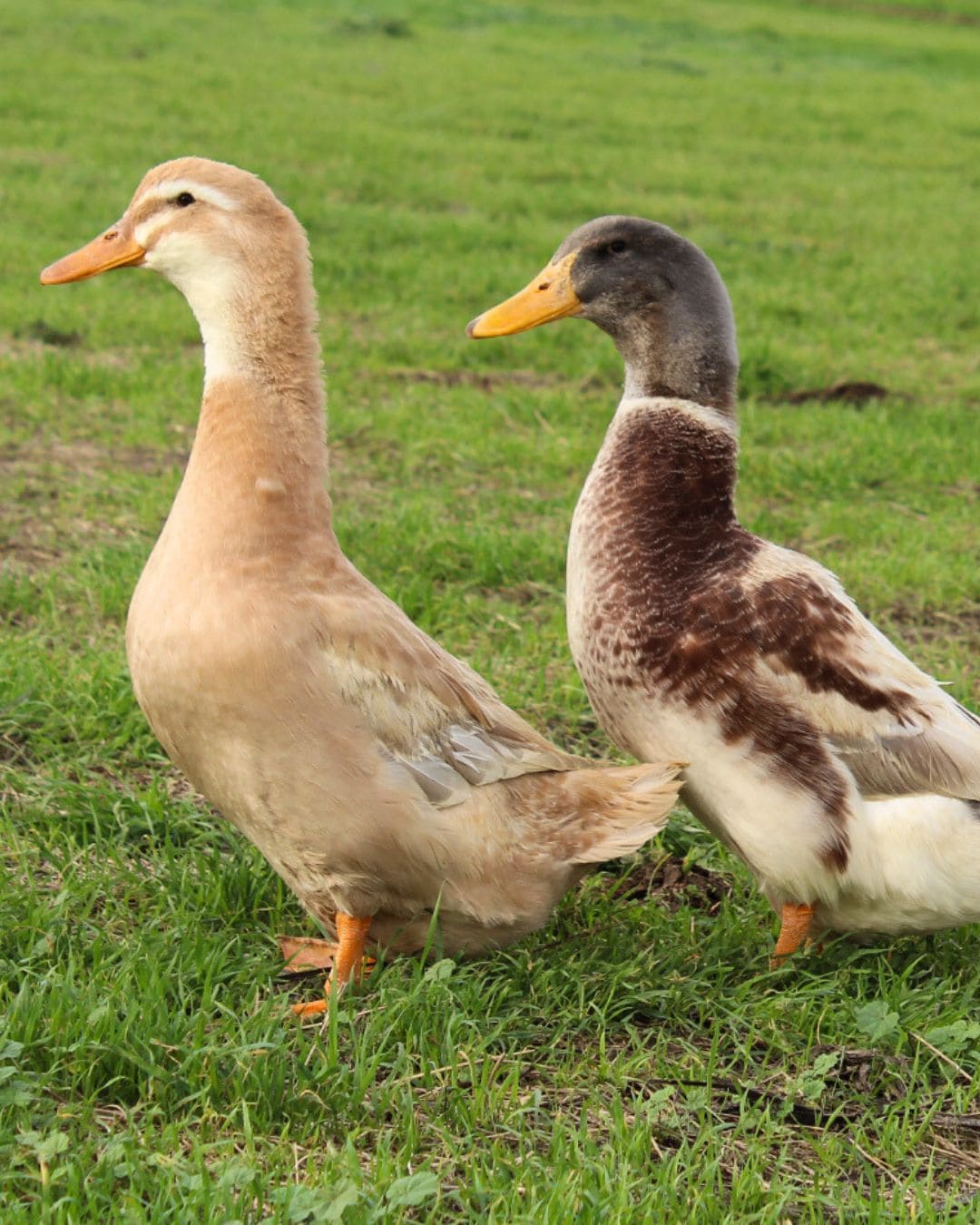
The Saxony comes from Germany, where Albert Franz developed it in the 1930s. Most of the early stock was lost in the Second World War.
Drakes have a soft blue-gray head and chestnut breast; ducks are buff with pale face stripes. Saxonies are gentle, quiet for their size, good foragers and solid layers of large white eggs.
They’re still rare in North America, so they can take some searching.
Buff (Buff Orpington)
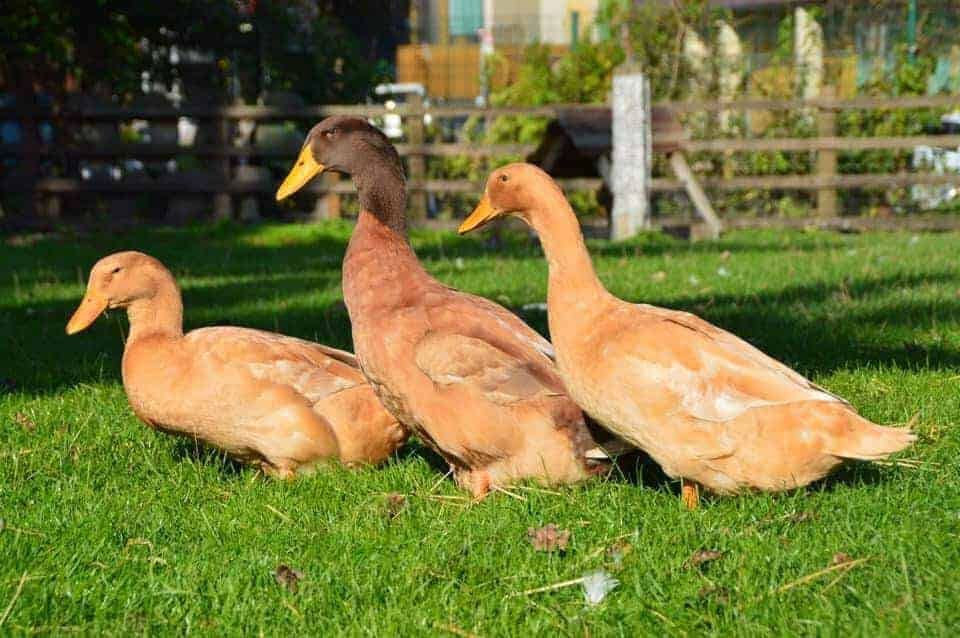
William Cook, the same Kent breeder behind the Buff Orpington chicken, created this duck in the late 1800s. The American Poultry Association simply calls it the Buff.
It’s an even-tempered, warm fawn duck that lays steadily and goes broody at times. Its pale feathers make for a cleaner-looking carcass than dark breeds.
If you want a single breed that does a bit of everything without fuss, the Buff is hard to fault.
Golden Cascade
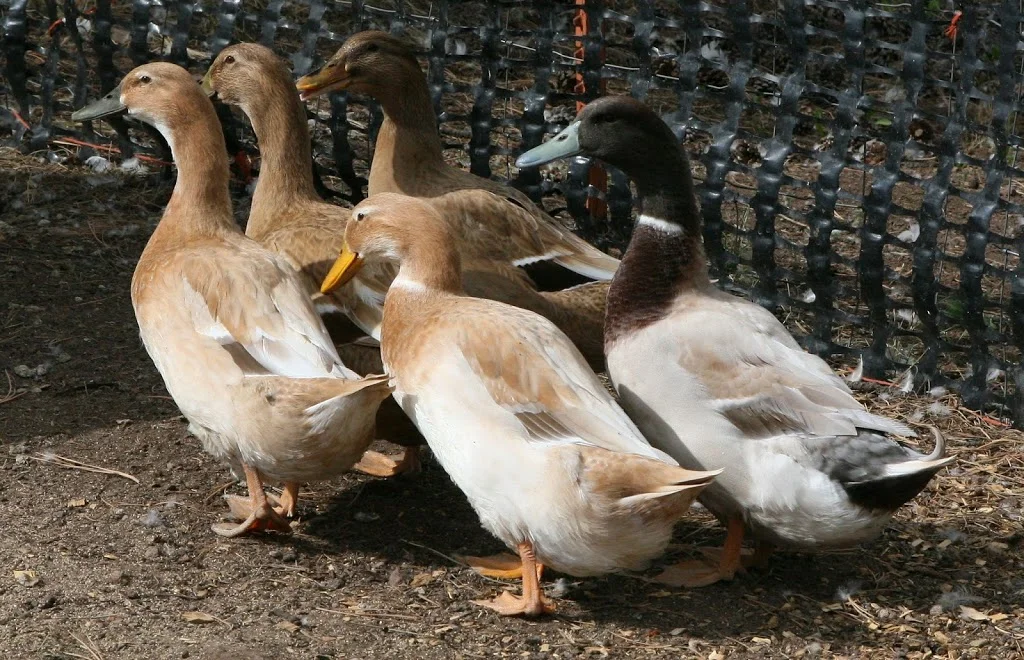
Dave and Millie Holderread developed the Golden Cascade in Oregon in the late 1970s and introduced it in 1984.
They wanted a fast-growing, active duck that laid well and could be sexed at hatch. Its fawn-and-gold coloring makes ducklings easier to sex by down color than most breeds.
Expect a calm bird that forages superbly, copes with both heat and cold, and lays 165 to 240 large eggs a year. Stock is limited, so order early or join a waitlist.
Ancona
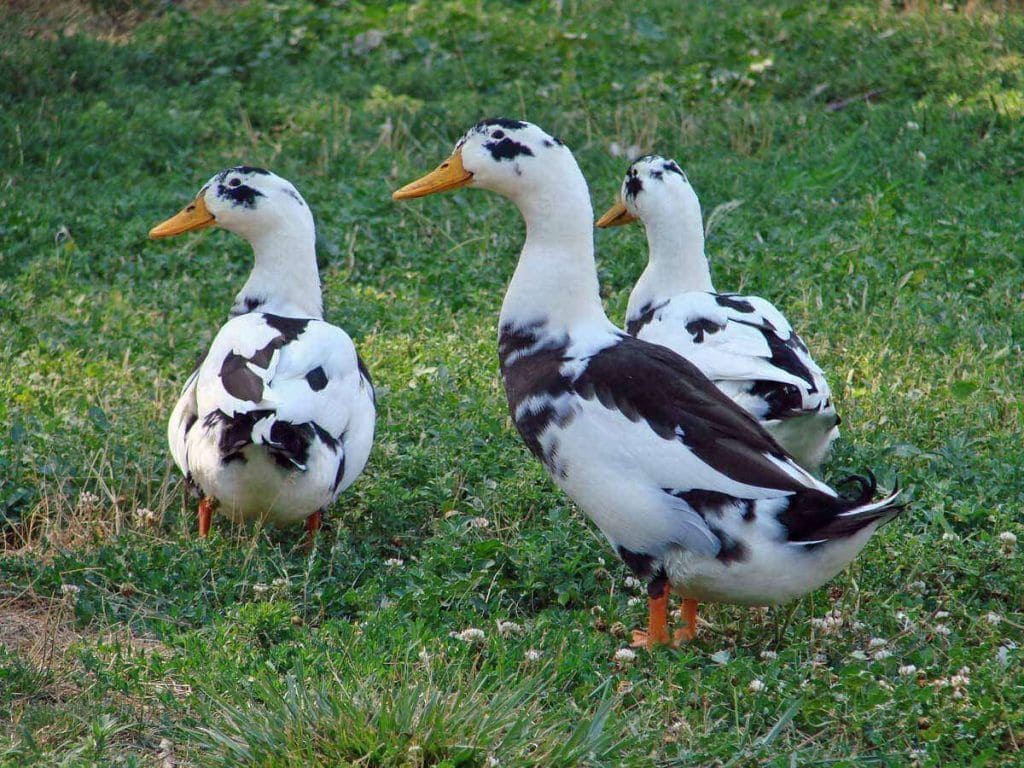
The Ancona’s broken, patchy plumage makes every bird look different.
Nobody is sure whether it was developed in Britain or the United States, and the major breed standards in the US, UK and Europe don’t recognize it.
It has a strong following anyway, because it’s calm, hardy, an energetic forager and a good layer for its size.
Cayuga
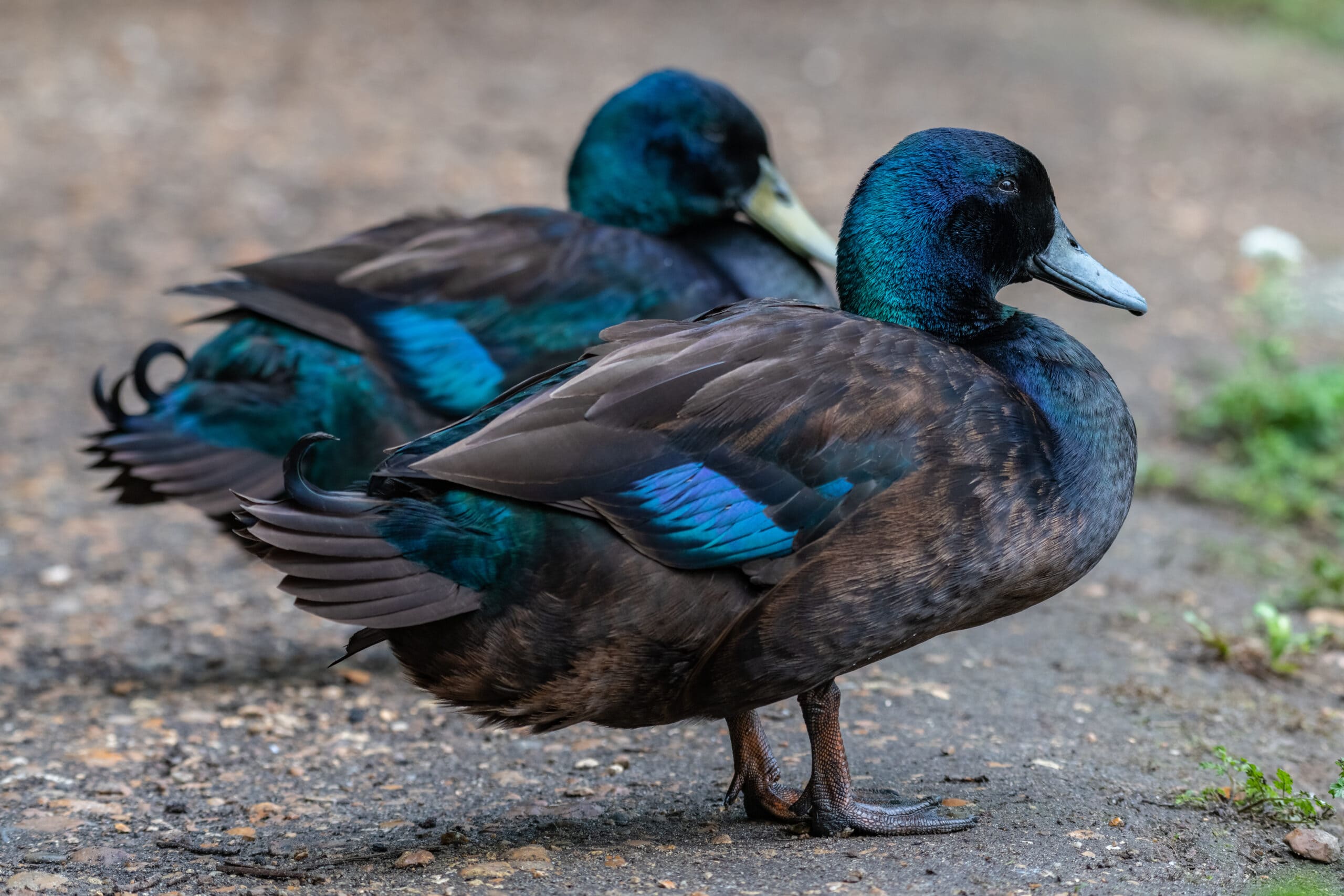
The Cayuga is a black duck with a green sheen. It was developed in New York State, and before the Pekin took over it was the main table duck of the Northeast.
Its eggs are the talking point: the first ones of the season can be charcoal or almost black, fading to gray or white as laying goes on. Cayugas are cold-hardy and good foragers, and individual birds range from gentle to skittish.
Old birds gradually turn white. The dark pinfeathers also make plucking harder, which is why some keepers skin them instead.
Swedish
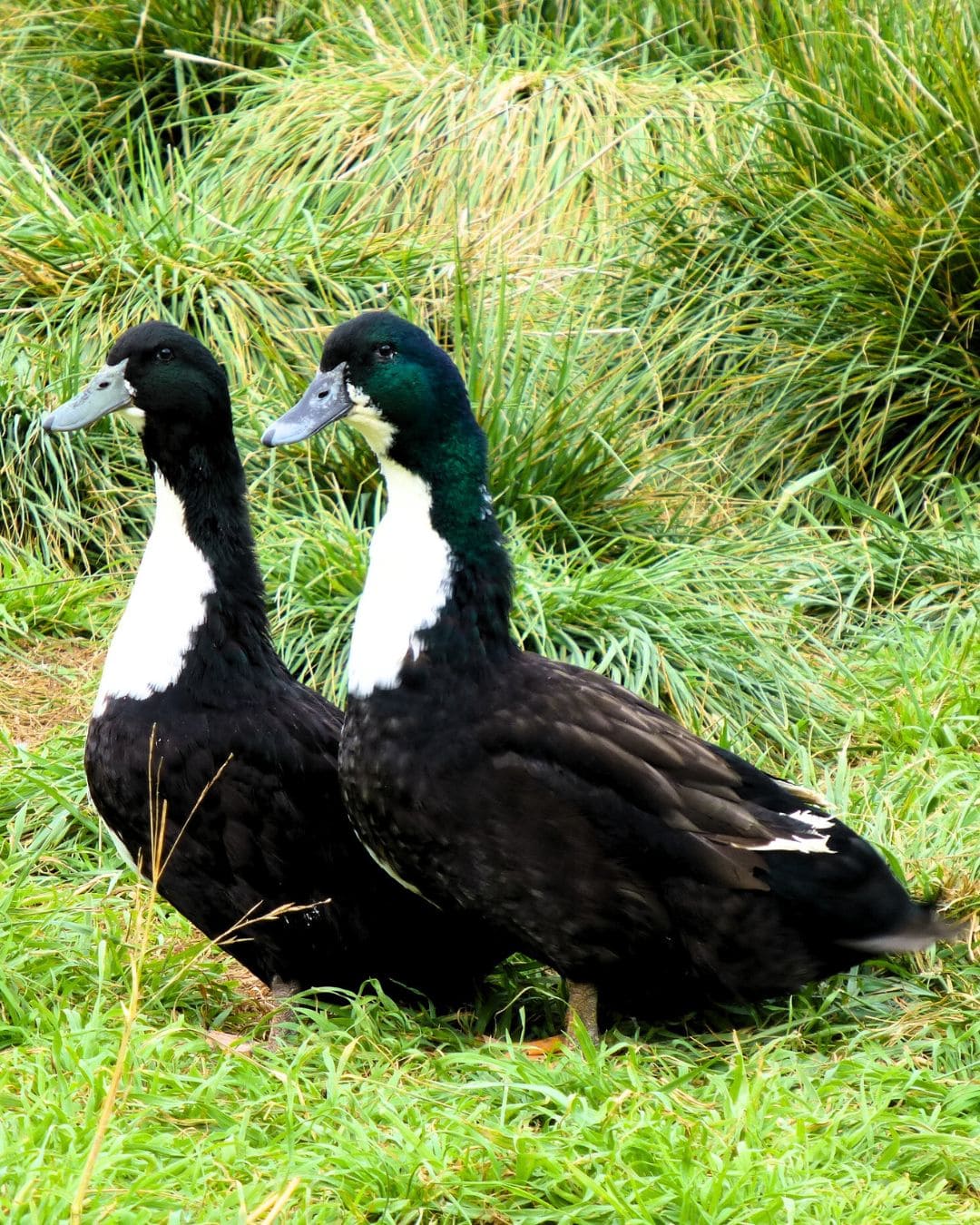
Swedish ducks come from the Pomeranian coast when it was Swedish territory in the 1800s. They’re blue-gray or black with a white bib. They’re hardy, very good foragers and happiest with room to free-range, but they’re often shy around people.
Blue doesn’t breed true. Pair two blues and, on average, half the ducklings will be blue, a quarter black and a quarter silver or splash. If you want only black ducklings, breed black to black.
Best Duck Breeds for Meat
Every duck is edible, but the meat breeds convert feed into carcass far faster. Raised on a small farm, a heavy duck makes a rich, red-fleshed roast that has more in common with steak than with chicken.
Pekin
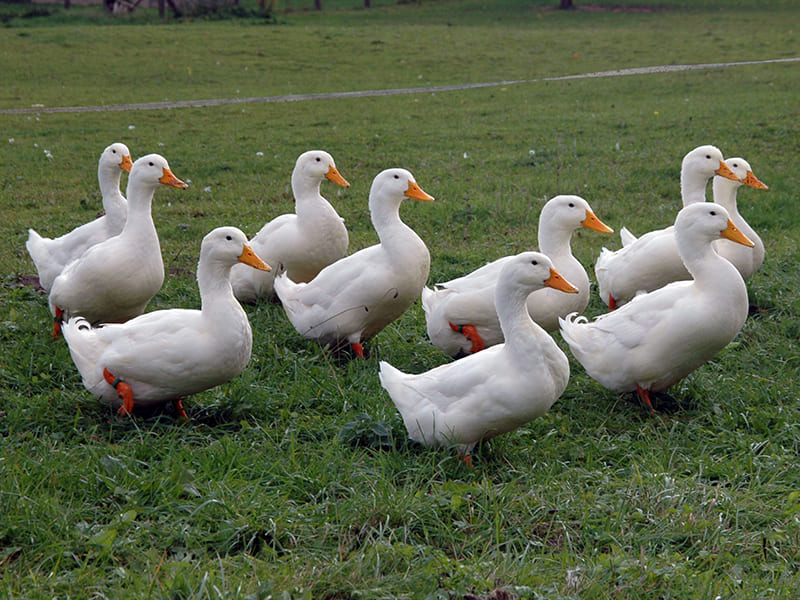
The white Pekin, which reached Long Island from China in 1873, accounts for around 90 percent of US duck meat. Commercial strains reach 7 pounds (3.2 kg) in 7 weeks. On a small farm, expect 6 to 7 pounds (2.7 to 3.2 kg) by 7 or 8 weeks.
Process them then, before the next set of pinfeathers makes plucking slow and feed efficiency drops. Pekins are also friendly, chatty pets and lay reasonably well, but they rarely sit on eggs.
Avoid “Jumbo” Pekins as pets. They grow so heavy so fast that leg and joint problems are common and many don’t live long.
A note for readers outside North America: in Britain and Europe, “Pekin” usually means the upright German Pekin, a different breed. There, the big white table duck is usually a commercial Aylesbury-type cross such as the Cherry Valley.
Muscovy

The Muscovy isn’t descended from the Mallard. It’s a separate species from Central and South America. That explains the bare red face, the claws for perching, the 35-day incubation instead of 28, and the quiet hiss and trill instead of a quack.
Hens are broody, devoted mothers and may raise two broods a season. Drakes grow to roughly twice the hens’ weight, and their lean, dark meat is often compared to veal.
Process them by about 16 weeks, before the meat toughens. Crossed with Mallard-derived ducks, Muscovies produce mule ducks, which are sterile.
Know three drawbacks before you buy. Young birds and hens fly well, so you’ll need a covered run or clipped wings.
The bare face is prone to frostbite in hard winters. And in the United States, Muscovies fall under federal migratory bird rules.
Under 50 CFR 21.48, they may be acquired only to be raised for food, and releasing them to the wild is prohibited.
Some states, including Florida, treat feral Muscovies as invasive. Check with your state wildlife agency before ordering.
Rouen
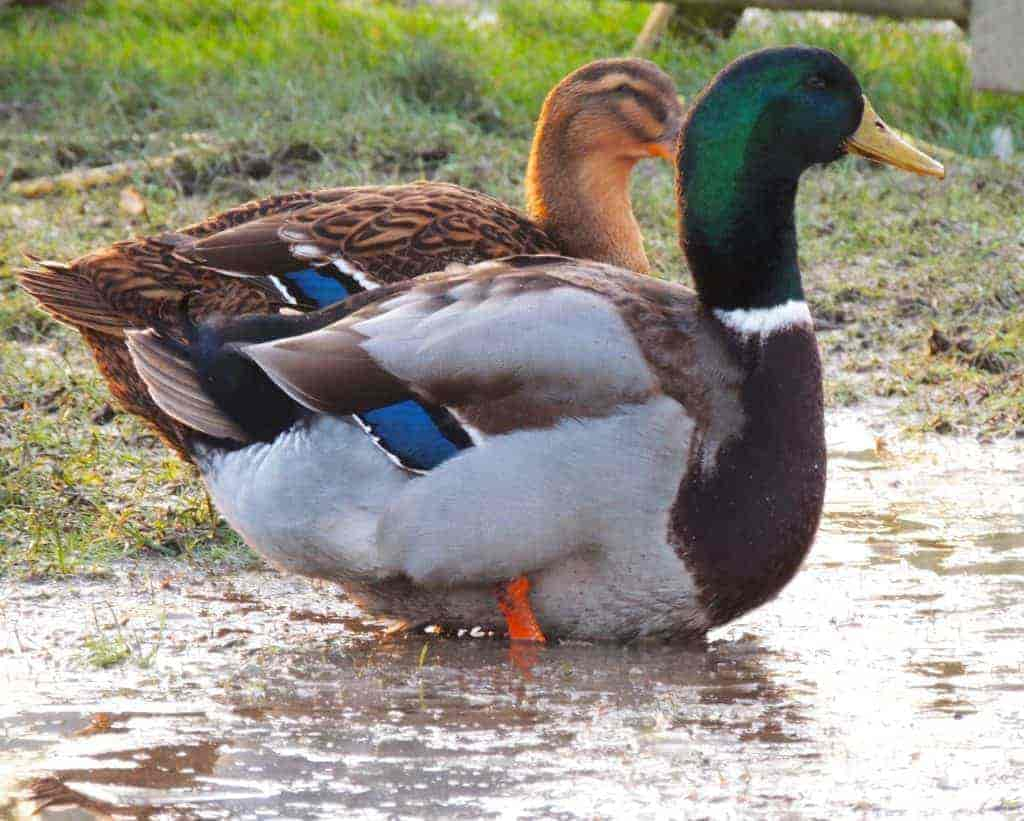
The Rouen looks like an oversized Mallard but is far too heavy to fly. It was developed in France and refined in England.
There are two very different types. Standard or exhibition Rouens reach 9 to 11 pounds (4 to 5 kg), lay few eggs, walk little and often struggle to breed. Production Rouens, the ones most hatcheries sell, are lighter, more active and better layers.
Either way, they’re docile and slow-growing, taking months rather than weeks to reach a good table weight. That suits a keeper who isn’t in a hurry.
Aylesbury
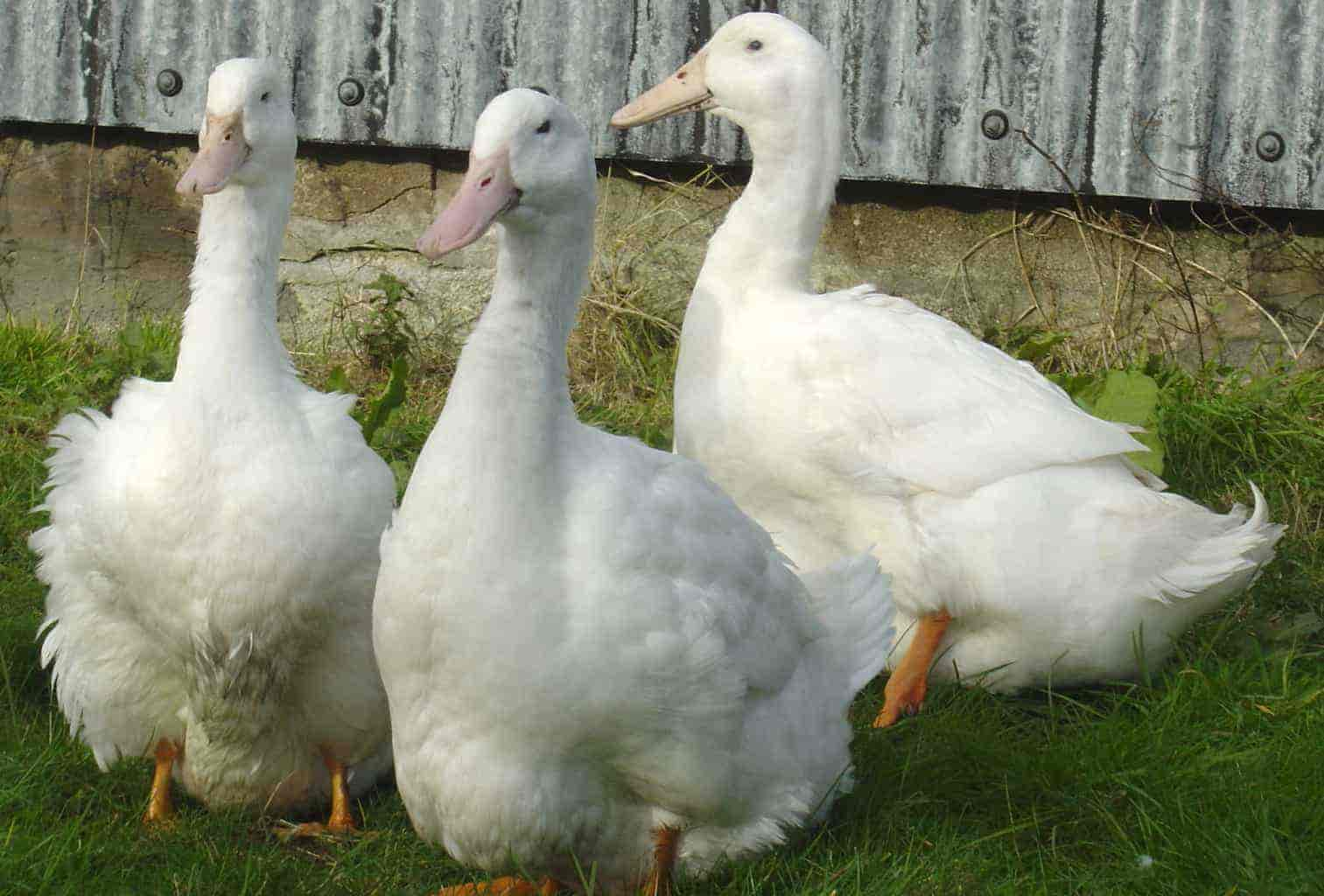
Named for the English town that supplied London with table ducks for two centuries, the true Aylesbury is a big, deep-bodied white duck with a pale pink bill and white skin.
Pure stock is now very rare. Many white ducks sold as Aylesburys are commercial crosses. A pink bill is the first thing to check, since a Pekin’s bill is orange-yellow.
Duclair
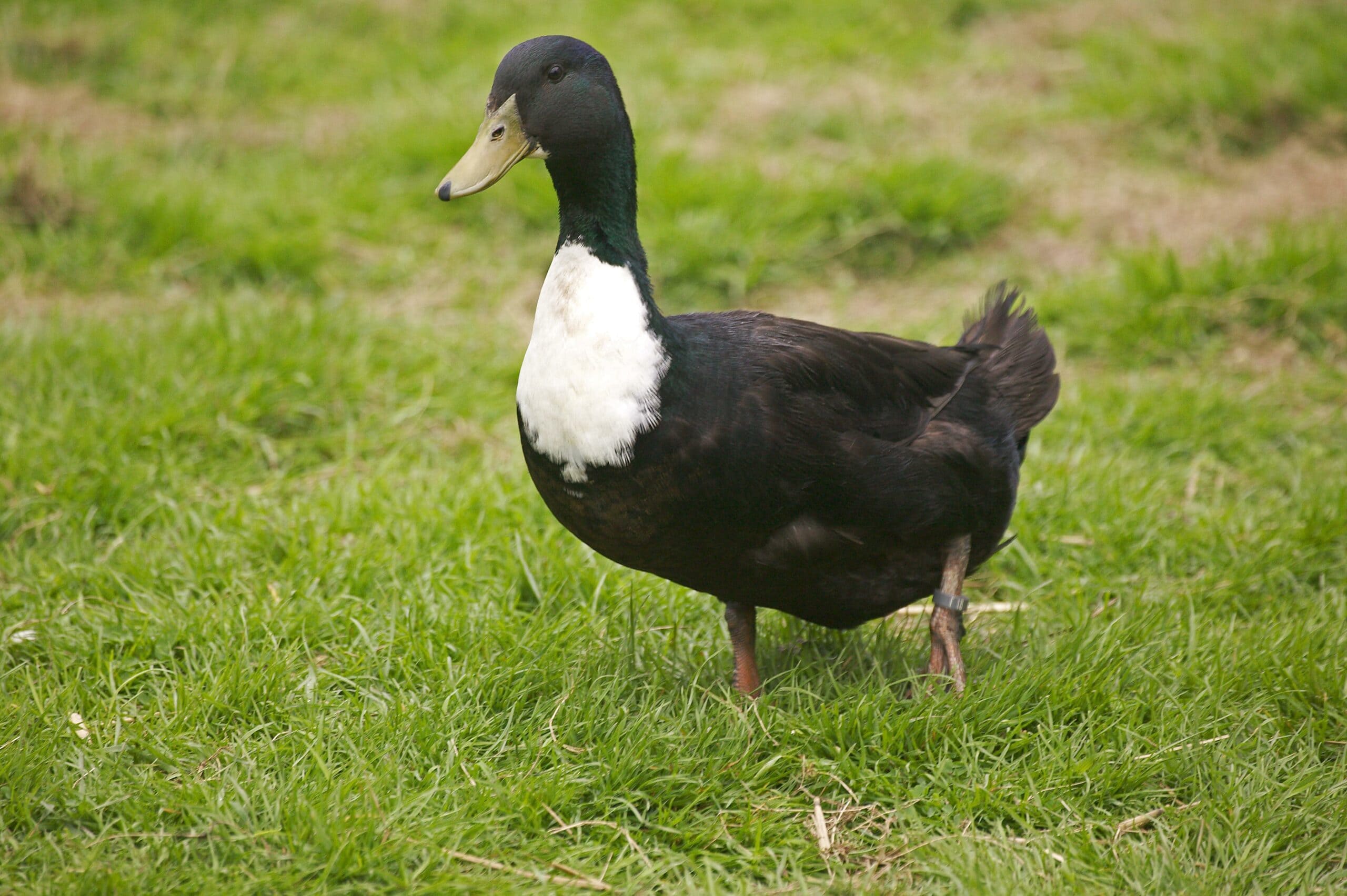
The Duclair is a French breed named after the town of Duclair in Normandy. Traditional birds are black or blue with a white bib. In 2012, Metzer Farms and Stone Church Farm in New York recreated it as an all-white strain, which dresses out cleaner.
At 4.5 to 6 pounds (2 to 2.7 kg), it’s much smaller than a Pekin. It makes up for that with a high proportion of breast meat and a rich flavor that chefs seek out.
It’s calm, does well on pasture and lays 130 to 200 eggs a year, which makes it a good choice for a small meat flock. In the US it comes mainly from Metzer.
Small and Bantam Breeds
Bantam and miniature ducks weigh roughly 1 to 3 pounds (0.5 to 1.4 kg) and suit small gardens. Most are kept for looks, personality and showing, though the Australian Spotted and Miniature Silver Appleyard lay enough to be useful.
All of them fly well, so plan on a covered pen or clipped wings.
Call
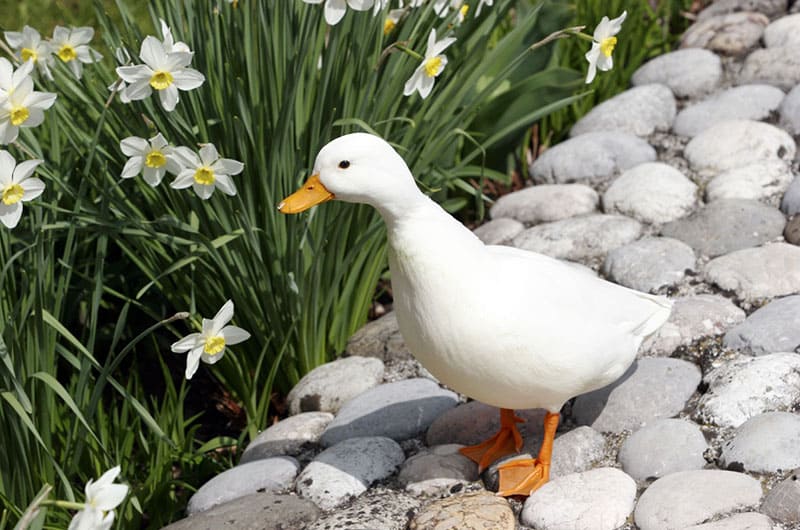
Hunters once used Calls as live decoys to lure wild ducks, and the voice that made them useful is still there. Calls are the loudest breed by a wide margin, so they suit only patient neighbors.
Their round heads and short bills are adorable, but that short bill makes it harder for ducklings to break out of the shell, so hatching them takes more skill.
If you love the look but want a calmer, better-laying bantam, choose the Australian Spotted.
Australian Spotted
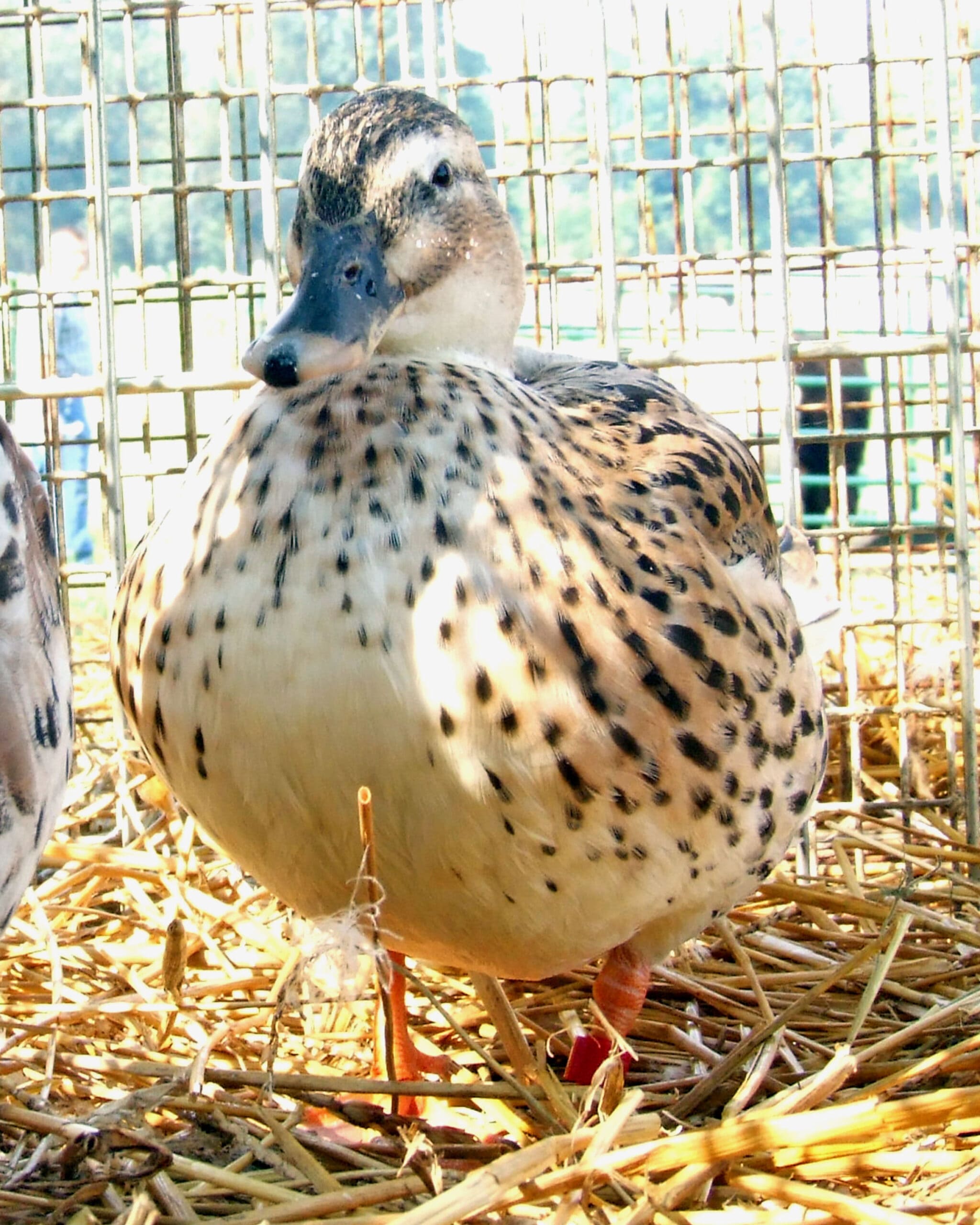
Despite the name, John C. Kriner and Stanley Mason developed this bantam in Pennsylvania in the 1920s, partly from Call and Mallard stock. It weighs about 2 pounds (0.9 kg) and is calm and personable.
It’s also the best layer among the bantams, producing 50 to 125 cream, blue or green eggs a year. It flies but tends to stay near home, and clipping one wing settles the question. Its small size makes it easy prey, so it needs a secure pen at night.
Miniature Silver Appleyard
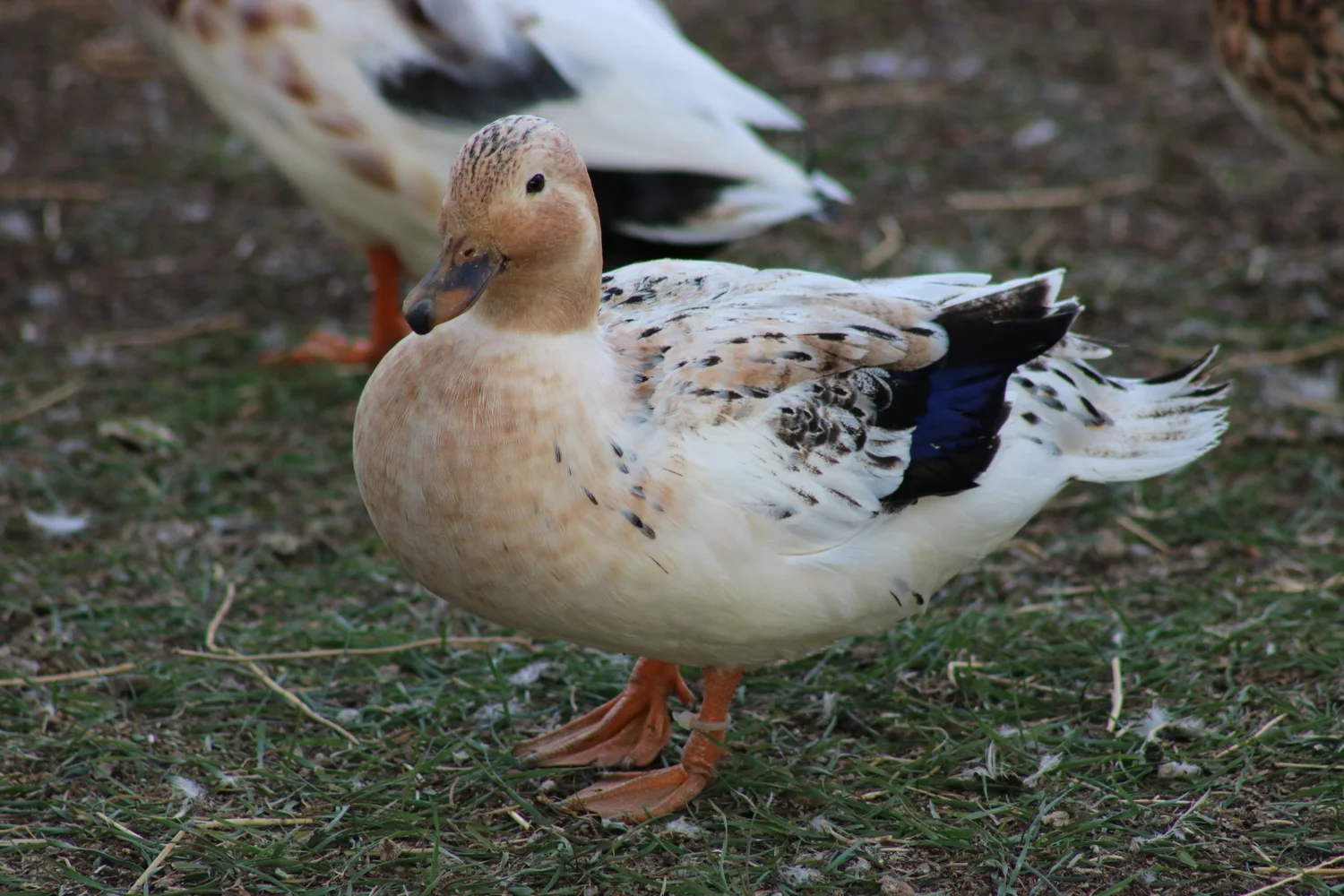
Tom Bartlett of Gloucestershire, England, bred this scaled-down Silver Appleyard in the 1980s, and it was standardized in the UK in 1997.
It carries the full-size breed’s pattern on a body of about 2.5 to 3 pounds (1.1 to 1.4 kg). Good strains lay up to about 160 eggs a year.
It’s a popular garden duck in Britain because it’s small, attractive and productive for its size. It can fly, so clip a wing, and stock is rare or absent in North America.
East Indie
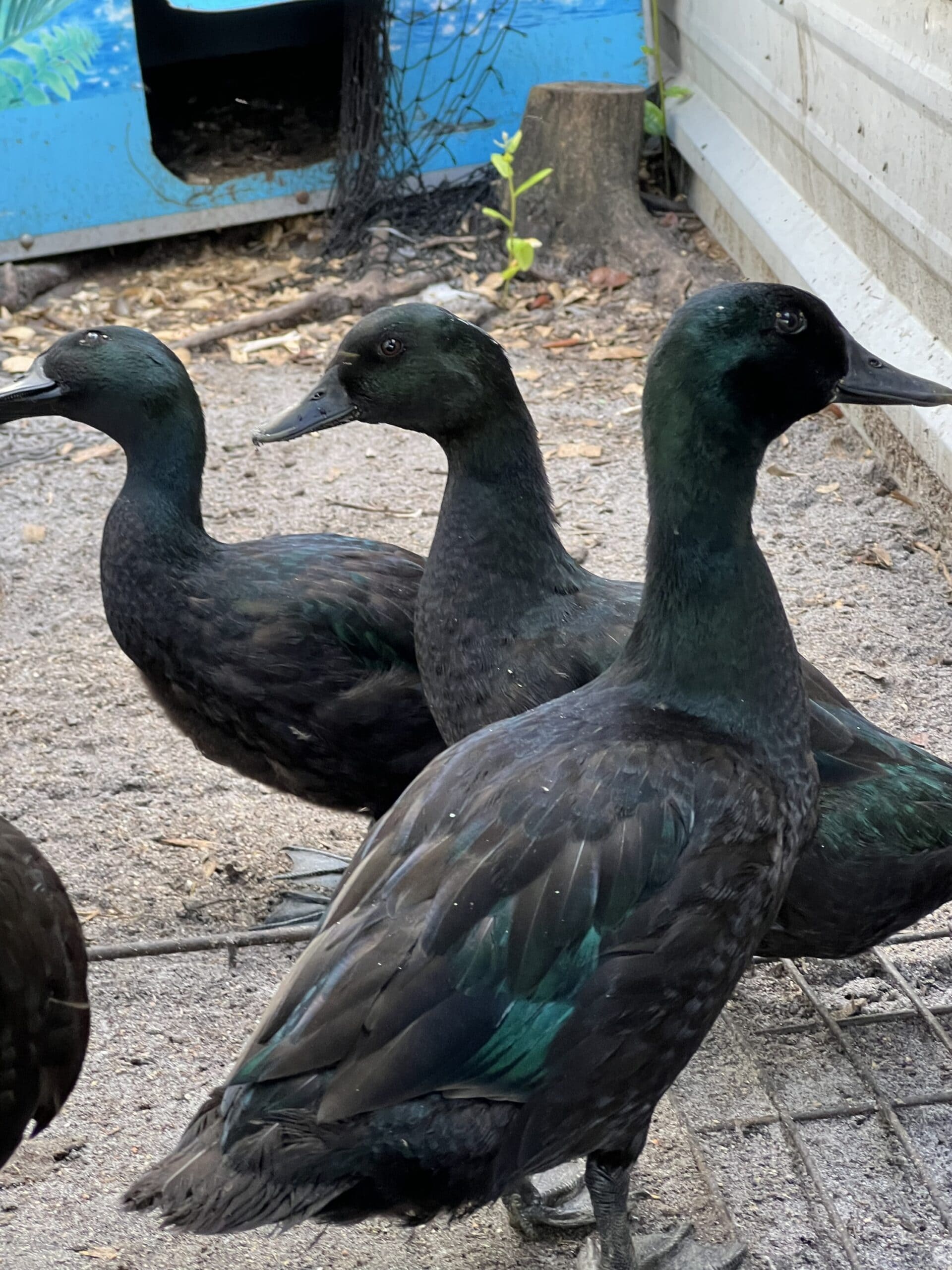
The East Indie is a small black duck with a vivid green sheen, like a miniature Cayuga. It’s quieter and shyer than the Call and is mainly an exhibition bird. Like Cayugas, East Indies pick up white feathers as they age.
Mallard

Domestic Mallards are the wild bird in captive-bred form, and they keep its strong flight and urge to roam.
In the US, captive-reared Mallards may be kept and sold without a federal permit only if marked before 6 weeks of age, by removing the hind toe of the right foot, pinioning, a seamless leg band or a foot-web tattoo. Hatcheries normally do this for you.
Mallards are also notably good mothers and lay pale green eggs. If you want the look without the flight, choose a Rouen.
Breeds to Think Twice About as a Beginner
None of these are bad ducks, but each one brings a problem that tends to catch first-time keepers out.
- Crested ducks. The pom-pom comes from a gene that leaves an opening in the skull covered by a fatty growth. Two copies of the gene are fatal, so if two crested ducks are paired, about a quarter of the ducklings die in the shell. Even single-copy birds can suffer balance and neurological problems. If you adopt one, enjoy it and don’t breed it.
- Jumbo Pekins, Calls, Mallards and Muscovies, for the reasons in their profiles: leg trouble, noise, flight and, for the last two, legal rules. Bantams are also fragile in small children’s hands.
- Exhibition strains of anything. Show Rouens and Aylesburys can be too heavy to mate easily, and show-bred layers lay less.
The Recognized Duck Breeds
Breed standards are set by national bodies: the American Poultry Association (APA) in the US, the Poultry Club of Great Britain and British Waterfowl Association in the UK and the Entente Européenne in Europe, while Australia uses the Australian Poultry Standards.
The APA recognizes 17 duck breeds in four weight classes:
- Heavy: Aylesbury, Muscovy, Pekin, Rouen, Saxony, Silver Appleyard
- Medium: Buff, Cayuga, Crested, Swedish
- Light: Khaki Campbell, Magpie, Runner, Welsh Harlequin
- Bantam: Call, East Indie, Mallard
You’ll also find breeds the APA doesn’t list, including the Ancona, Abacot Ranger, Australian Spotted, Duclair, Golden Cascade and Miniature Silver Appleyard profiled above, rarer ones such as the Dutch Hookbill and Shetland, and hatchery hybrids.
All except the Muscovy descend from the wild Mallard, which is why any two of them can interbreed. Many are rare. The Livestock Conservancy’s 2026 Conservation Priority List rates the Aylesbury, Australian Spotted, Dutch Hookbill and Shetland as critical.
The Magpie and Saxony are threatened, and the Ancona, Buff, Campbell, Cayuga, non-industrial Rouen, Silver Appleyard, Swedish and Welsh Harlequin are on its watch list.
Mixing Breeds and Building Your First Flock
Ducks are flock animals, and a lone duck is a miserable, noisy one. Start with at least three, so a loss doesn’t leave a single bird. Different breeds live together happily if you follow three rules:
- Keep drakes in the minority. Allow at least four or five ducks per drake in a mixed flock, more with light, high-energy breeds. Too many drakes will exhaust and injure the females. A drakes-only flock works fine if you don’t want eggs.
- Watch size differences. A heavy drake can hurt a small duck when mating. Keep bantams with bantams if you can.
- Separate breeds if you want purebred ducklings. Any two Mallard-derived breeds will cross freely during the breeding season.
Most people start with day-old ducklings from a hatchery or feed store. Many hatcheries have minimum orders so the ducklings keep each other warm in transit, and some will ship sexed birds so you can pick your ratio.
Rare breeds can mean a waiting list, so order early in winter for spring delivery.
Ducklings need more niacin than chicks do. Feed a waterfowl starter, or a chick starter with added niacin, usually brewer’s yeast, at the rate your hatchery recommends.
Frequently Asked Questions
When do ducks start laying?
Most ducks start laying at about 5 to 7 months old. Light laying breeds such as Campbells and Runners come in at the early end, and heavy breeds start later. A duck that matures in late fall or winter may wait until the days lengthen in spring.
Do ducks need a pond?
No, but they do need water deep enough to dunk their whole head, which keeps their eyes and nostrils clean. A tub or kiddie pool you empty and refill often will do.
Heavy breeds mate more successfully on water, so a pool helps if you want fertile eggs. Don’t let young ducklings swim unsupervised. Without a mother’s oil on their down, they chill and can drown.
How long do domestic ducks live?
Most live about 8 to 12 years with good care, though laying slows after the first few seasons. Fast-growing meat strains, especially Jumbo Pekins, often live much shorter lives.
Are duck eggs safe to eat like chicken eggs?
Yes, with the same care. Collect them daily, brush off any dirt, refrigerate them and cook them until the yolks and whites are firm. Their large, rich yolks make them a favorite for baking.
Choosing Your First Ducks
For most first flocks, three or four Welsh Harlequins, Buffs or Silver Appleyards will give you eggs, good company and a gentle introduction to life with ducks. Add Khaki Campbells or hybrid layers if you want more eggs, or Pekins if the freezer is the goal.
Before you order, check your local rules on poultry, especially for Mallards and Muscovies. Then sort out a predator-proof night shelter, because a fox or raccoon is a far bigger risk to your first ducks than any choice of breed.

