
Cilantro sauce is a quick blender sauce of fresh cilantro, lime, garlic and salt, either loosened with oil or folded into something creamy like sour cream, yogurt or mayo.
It takes about five minutes, uses up a whole bunch of an herb that wilts fast, and turns plain tacos, rice bowls, grilled chicken or fries into something you’d happily order again.
Here’s a creamy version for tacos and dipping, an oil-based one that freezes, and what to do when a batch comes out bitter, bland or too garlicky.
Cilantro sauce at a glance
- Basic ratio: about 2 cups of lightly packed cilantro to 1 cup of creamy base, with 2 tablespoons of lime juice and one small garlic clove.
- Time: 5 to 10 minutes, no cooking.
- Equipment: a mini food processor or blender is easiest, but a sharp knife and a whisk will do.
- Storage: keep it in the fridge and use it within 4 days.
- Freezing: only the oil-based version freezes well.
Choose Your Base
Every cilantro sauce shares the same green core: cilantro, lime, garlic and salt, often with a little chile. What you blend that core into decides the texture, the richness and what the sauce suits best.
| Base | Texture and flavor | Best for |
| Sour cream | Thick, mildly tangy, the classic taco sauce | Tacos, nachos, burritos, dipping |
| Greek yogurt | Tangier and lighter; use 2% or whole milk | Bowls, fish, lamb, salads |
| Mayonnaise | Richest and most garlicky, restaurant style | Fries, wings, sandwiches, fried yuca |
| Oil (no dairy) | Loose, sharp and bright, like a pesto | Marinades, grilled meat, rice; freezes well |
| Avocado | Thick and buttery, dairy-free | Tacos and dips eaten the same day |
Mixing bases works well. Sour cream with about a quarter of its volume in mayonnaise gives you tang plus the rounder taste of a restaurant garlic sauce, and a spoonful of mayo takes the sharp edge off yogurt.
If you use yogurt, skip nonfat, which tastes chalky and thin. Mexican crema, a cultured cream that’s thinner and milder than sour cream, makes a pourable sauce with no thinning needed.
For the avocado version, use one ripe avocado and about ⅓ cup (80 ml) of water in place of the sour cream, and for a vegan creamy sauce, use vegan mayo or a plant-based yogurt.
How to Make Cilantro Sauce
Creamy Cilantro Lime Sauce
- Makes: about 1¼ cups (300 ml), or 10 servings of 2 tablespoons.
- Time: 10 minutes.
- Equipment: a mini food processor, a blender, or an immersion blender with a tall jar.
Ingredients
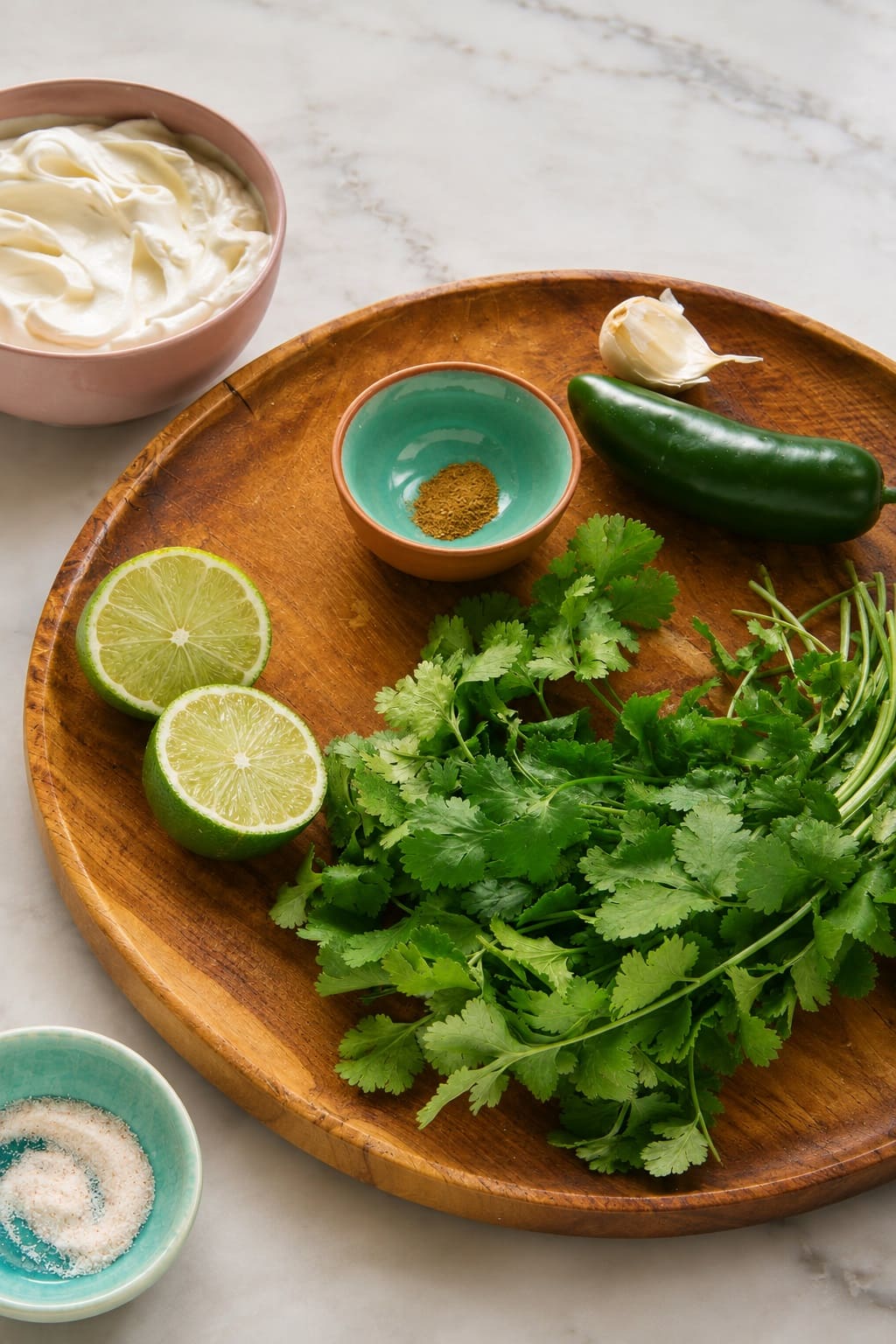
- 2 cups lightly packed cilantro leaves and tender stems, about 1½ ounces (40 g), or one small bunch
- 1 small garlic clove
- ½ jalapeño, ribs and seeds removed (optional)
- 2 tablespoons fresh lime juice (30 ml), from about 1 lime, plus more to taste
- ½ teaspoon fine salt, or ¾ teaspoon Diamond Crystal kosher salt
- ¼ teaspoon ground cumin (optional)
- 1 cup sour cream (240 g), or ¾ cup sour cream plus ¼ cup mayonnaise
- 1 to 3 tablespoons cold water, as needed
Steps
- Swish the cilantro in a large bowl of cold water, wait a minute for the grit to sink, then lift it out and dry it well in a salad spinner or towel. Water clinging to the leaves thins the sauce and dulls its color.
- Cut off the thick lower stems and roughly chop the rest so long stems can’t wrap around the blade. Keep the thin upper stems, which carry as much flavor as the leaves.
- For a gentler garlic flavor, smash the clove and soak it in the lime juice for 10 minutes. Blend it in as usual, or discard it and use only the juice if you want just a hint of garlic.
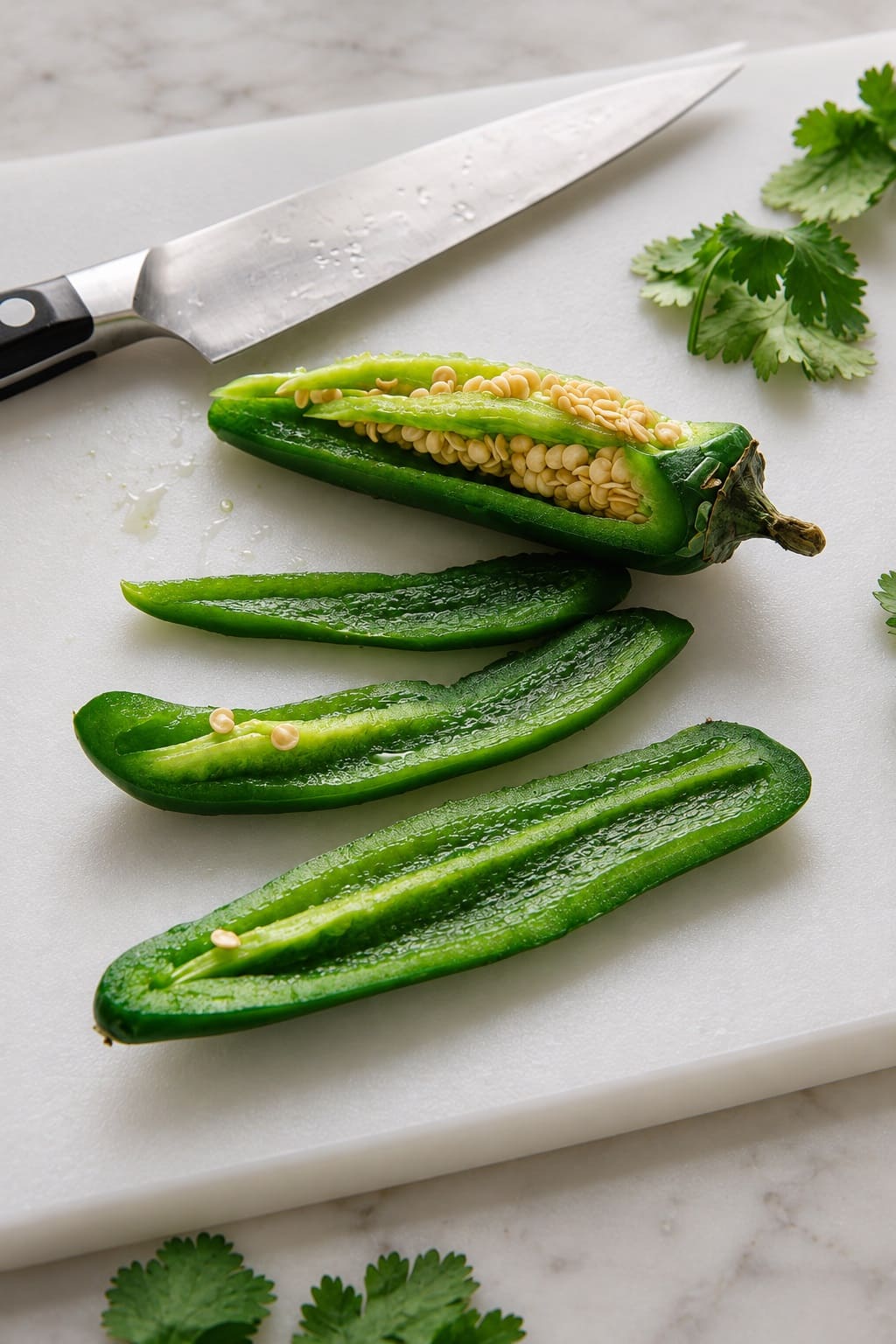
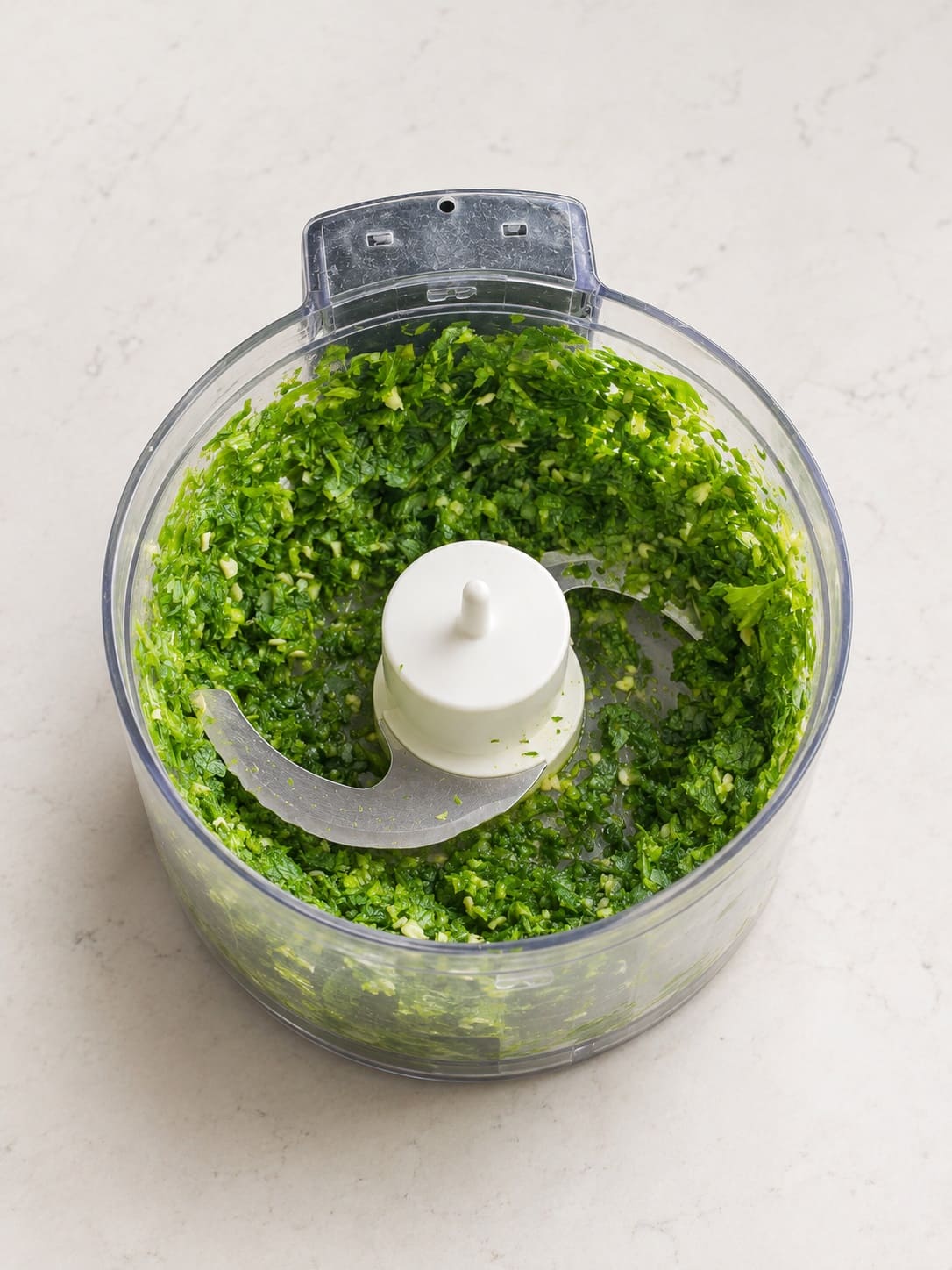
- Pulse the garlic and jalapeño until finely chopped. Add the cilantro, lime juice, salt and cumin, and pulse into a coarse green paste, scraping down the sides once or twice.
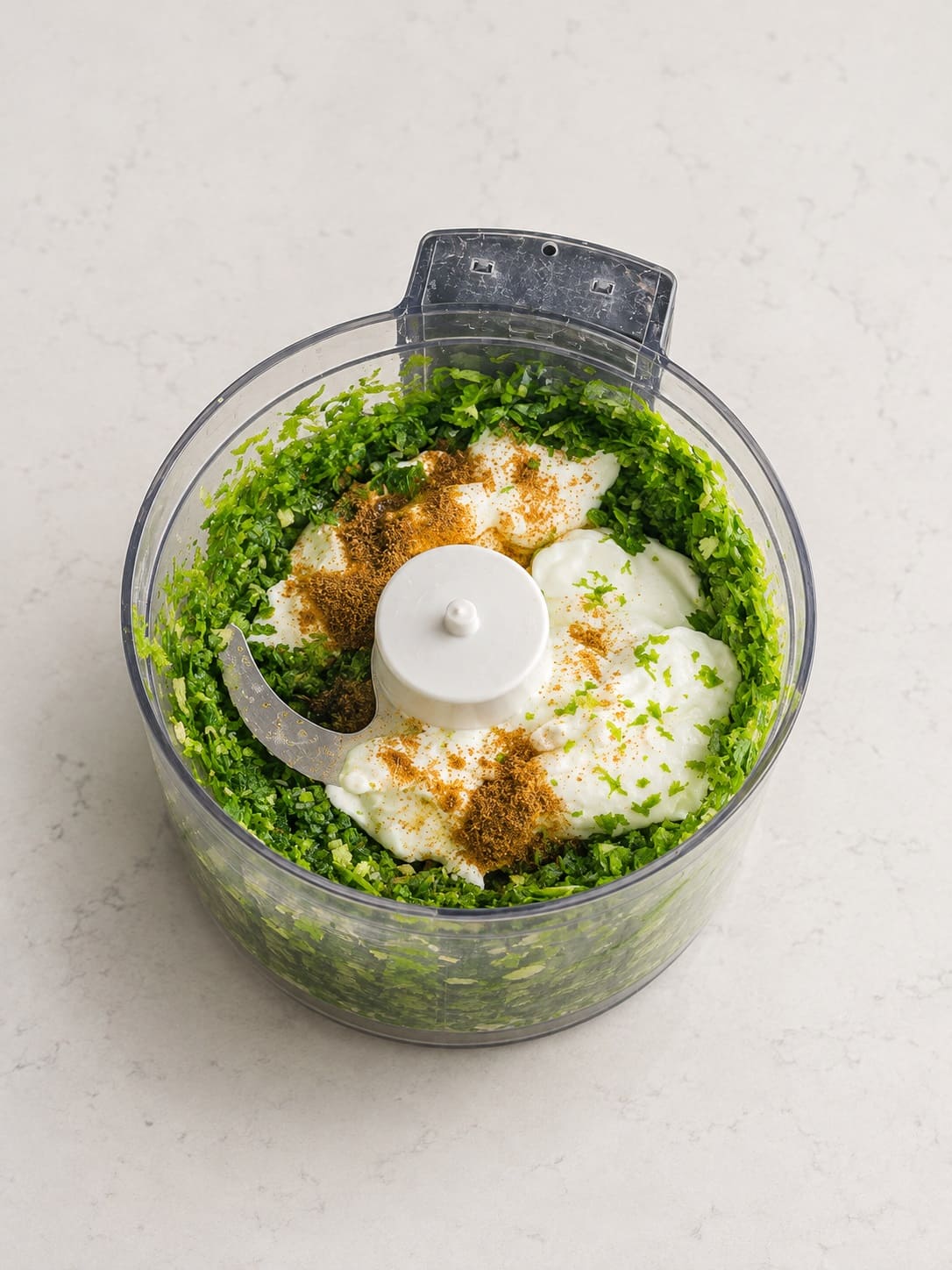
- Add the sour cream and blend until the sauce turns pale green with fine flecks of herb. Stop there for a fresher look, or keep blending for a smooth, even green.
- Taste it on a chip or a bite of whatever you’re serving. Add salt if it tastes flat and lime if it tastes heavy, then thin it with water, a spoonful at a time, until it drizzles off a spoon.
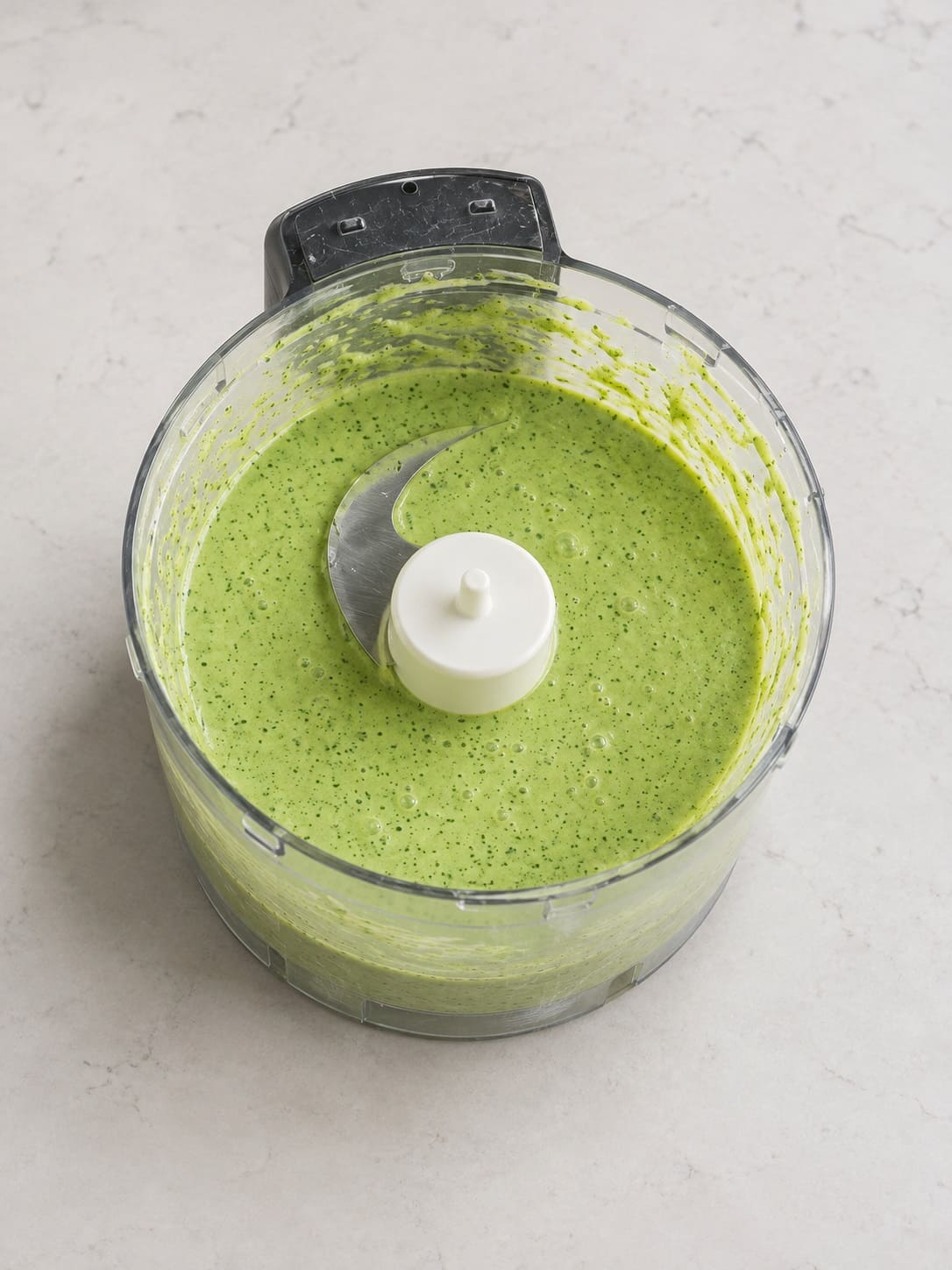
- Serve it right away, or chill it for 30 minutes to soften the raw edges and thicken it slightly.
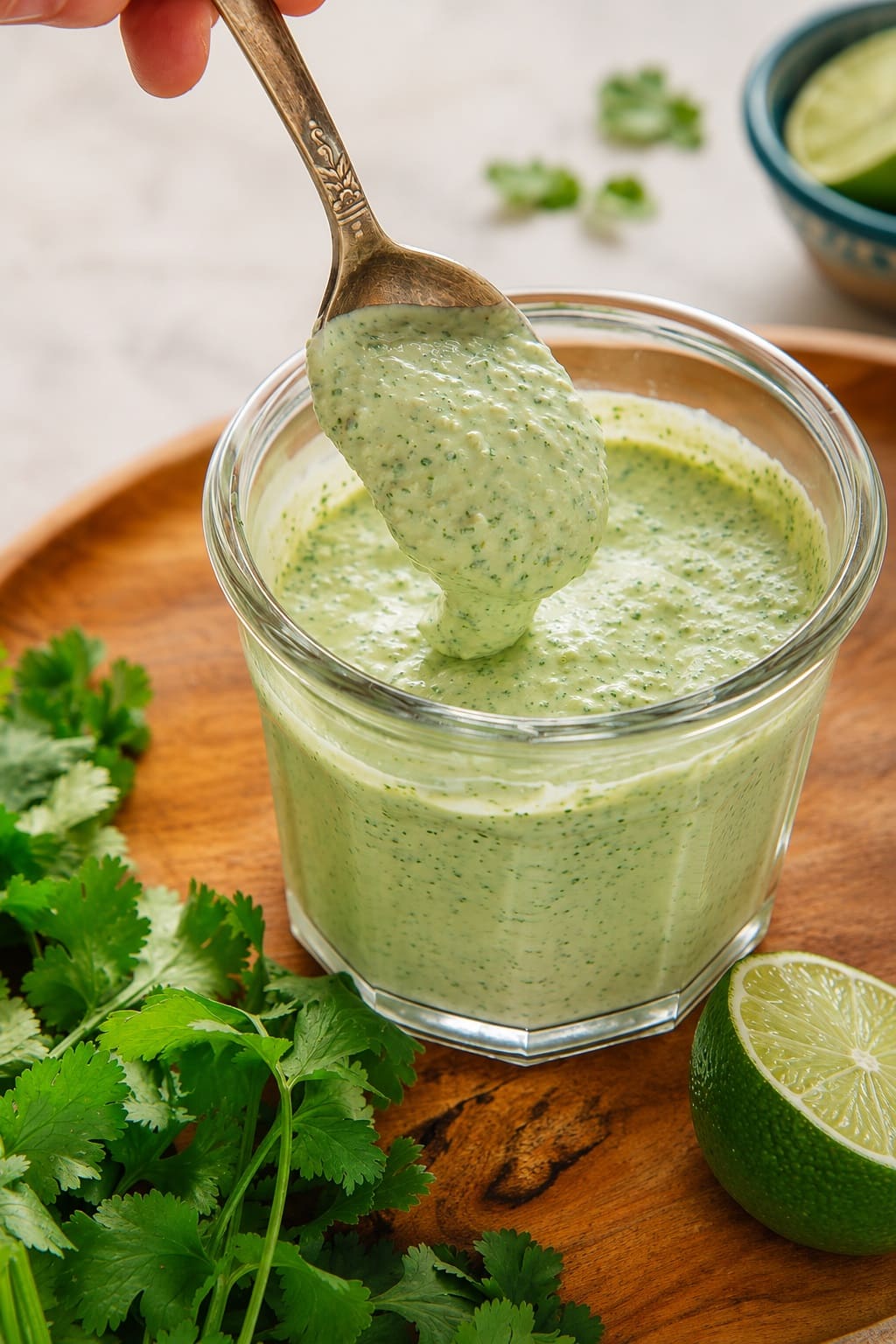
Adding the creamy base after the herbs are chopped matters more than it sounds. Blend everything at once and the cilantro and garlic float in the thick dairy, dodging the blade, so you end up with stringy leaves and bits of raw garlic.
No processor? Mince the cilantro, garlic and chile as finely as you can and whisk them into the base with the lime and salt. You’ll get a thicker, white sauce flecked with green, which is ideal for dipping.
Oil-Based Cilantro Sauce (Dairy-Free and Freezable)
This version is closer to a loose pesto or chimichurri: bright, punchy and pourable. Make it when a big bunch of cilantro needs using up, or when you want a marinade or a sauce to spoon over grilled meat and rice.
- Makes: about 1 cup (240 ml).
- Time: 10 minutes.
Ingredients
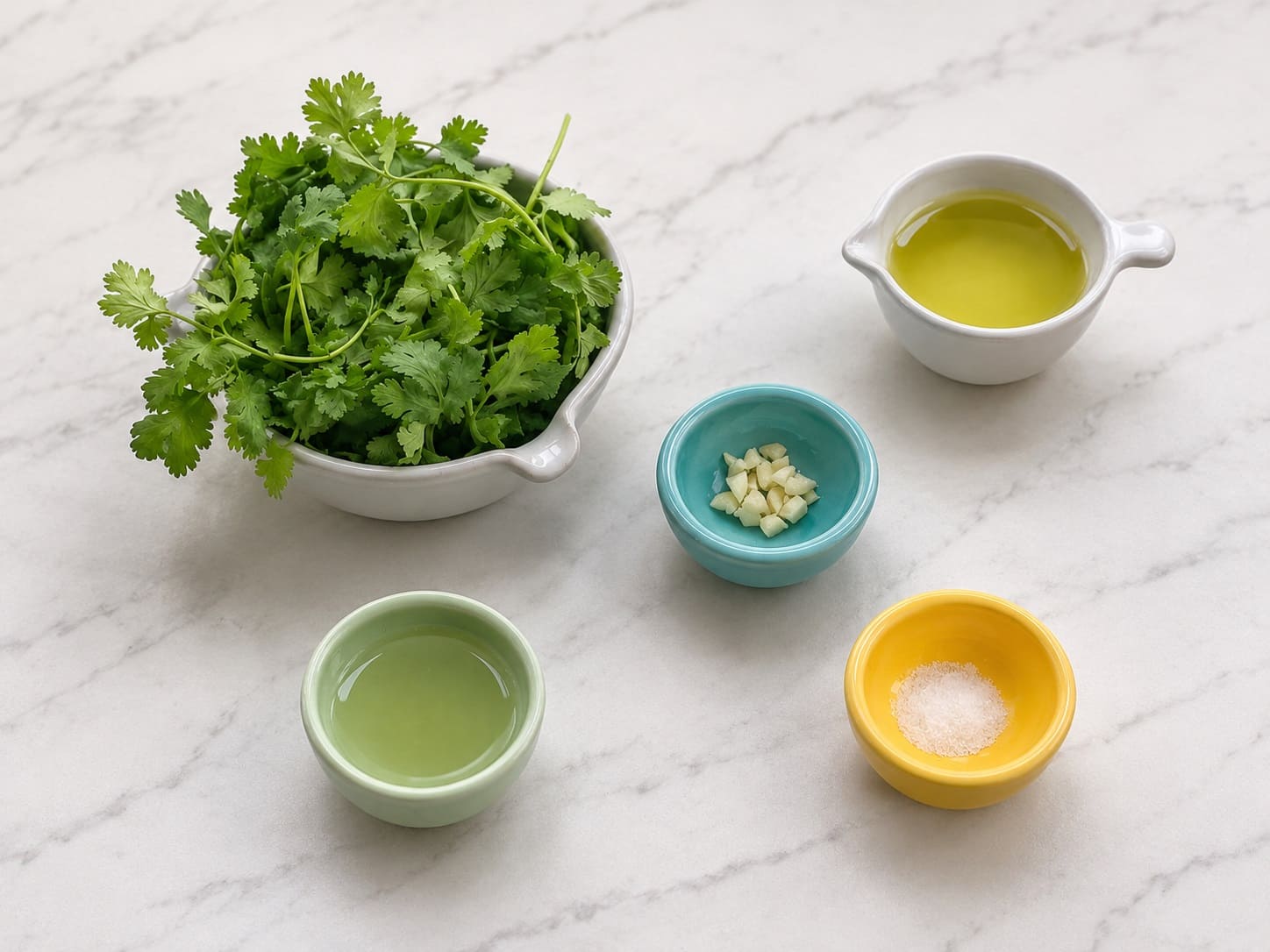
- 1 large bunch cilantro, about 4 ounces (115 g), leaves and tender stems
- 1 garlic clove
- 2 green onions, or ½ to 1 jalapeño (optional)
- ¼ cup fresh lime juice (60 ml)
- ½ teaspoon fine salt
- 1 teaspoon honey or agave syrup (optional)
- ⅓ cup neutral oil (80 ml), such as avocado, sunflower or canola
Steps
- Wash, dry and roughly chop the cilantro as for the creamy sauce.
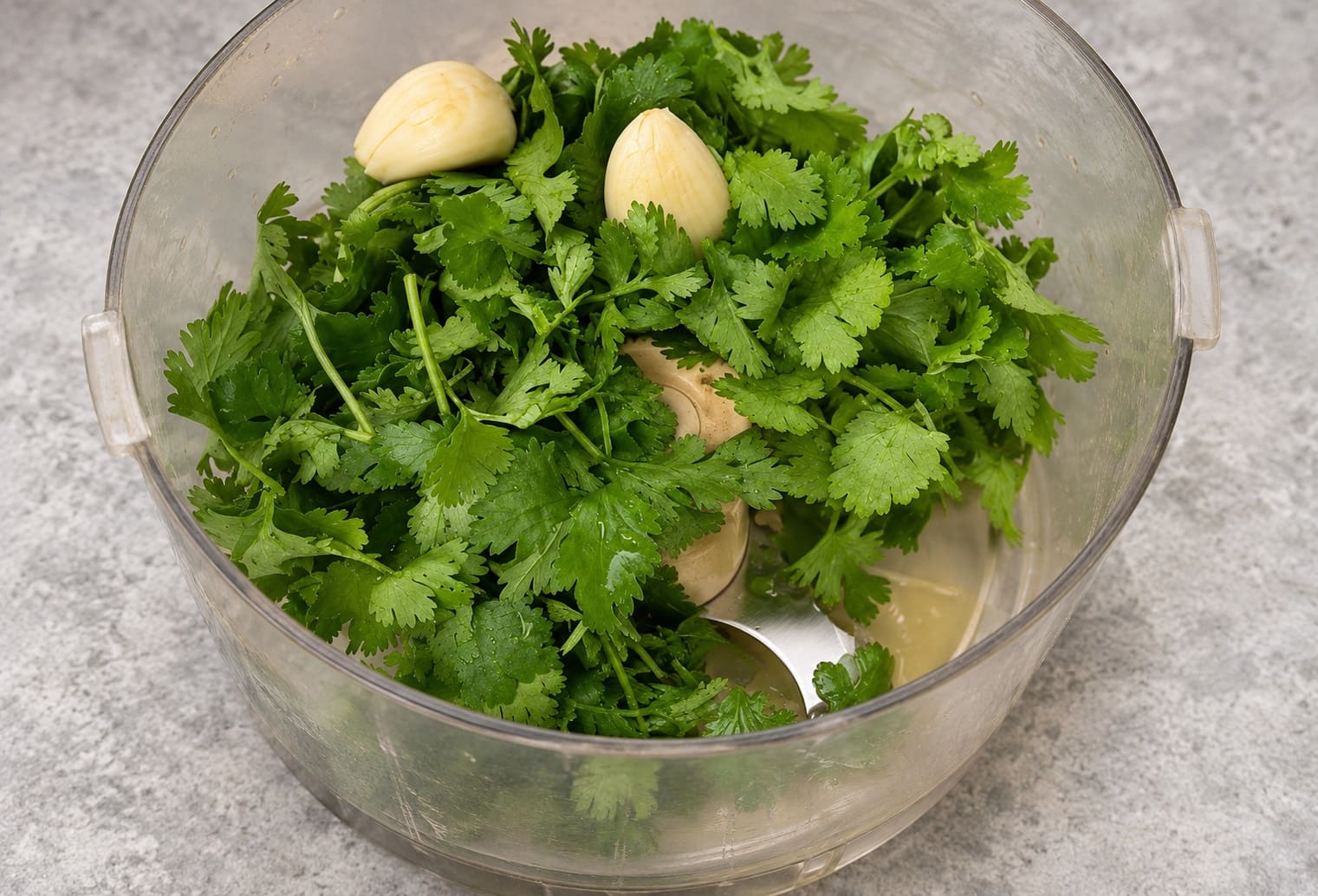
- Process the cilantro, garlic, green onions or chile, lime juice, salt and honey into a fine paste, scraping down the sides as needed.
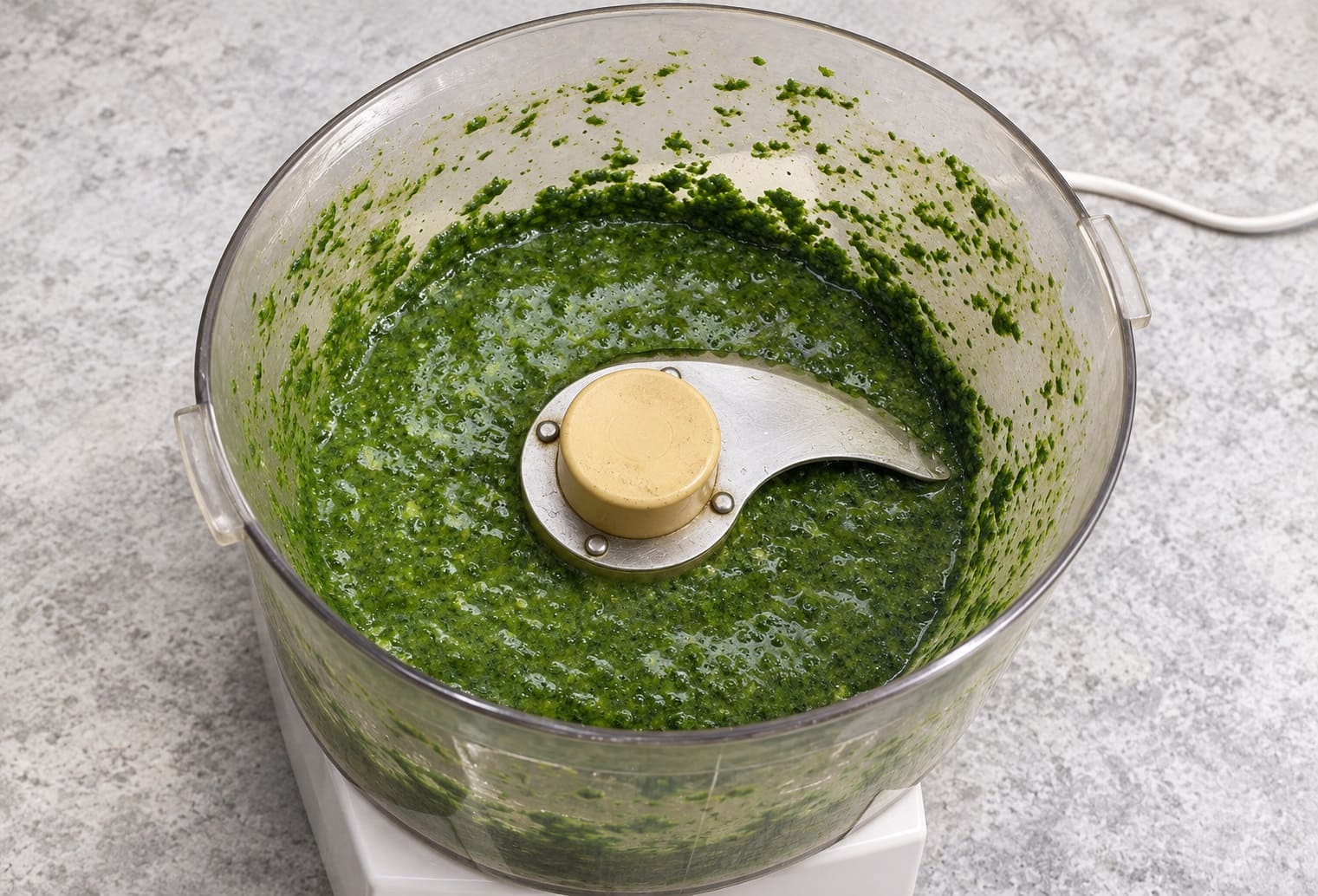
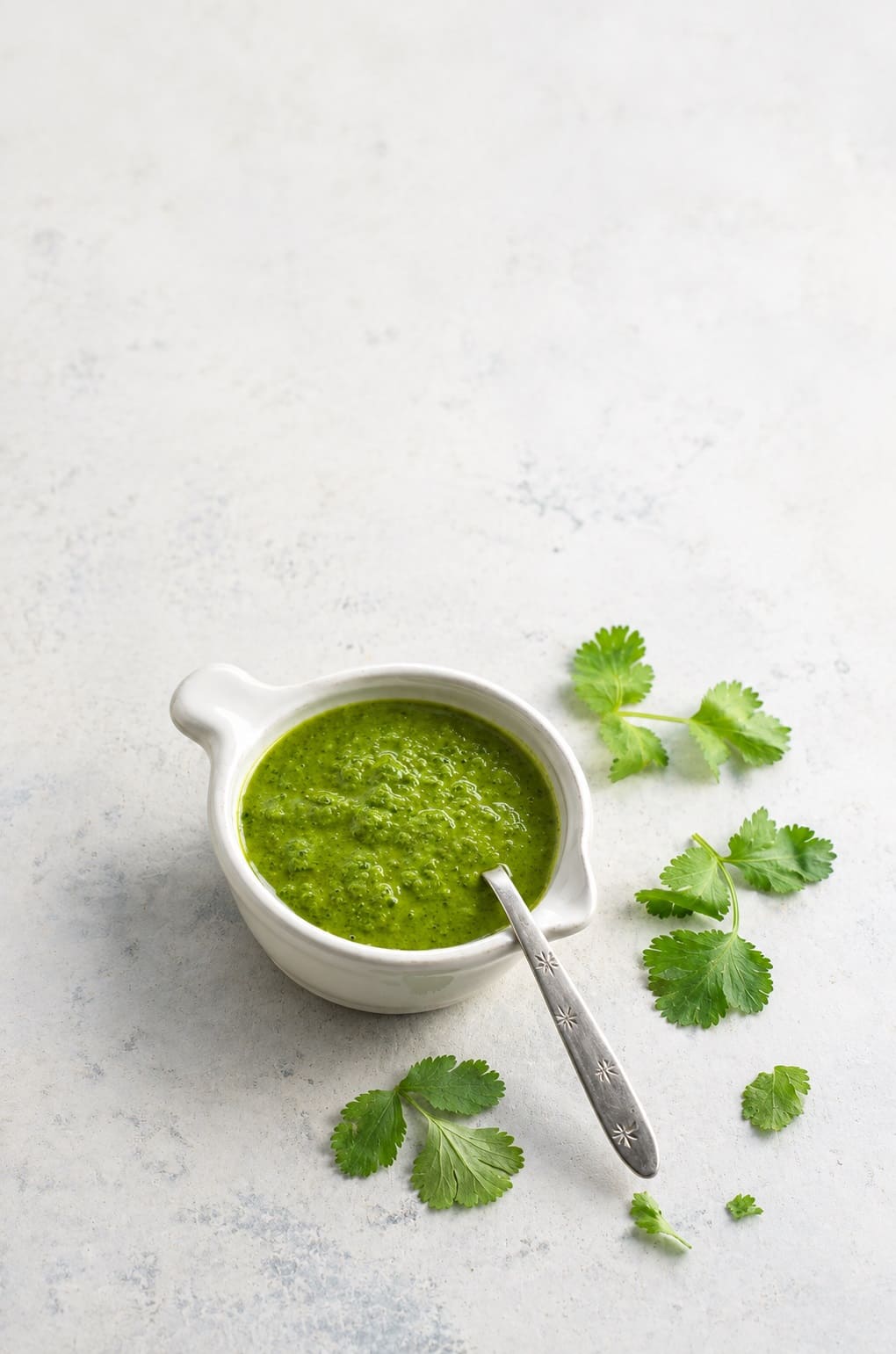
- With the motor running, pour in the oil in a thin stream until the sauce looks glossy and slightly thickened. Taste, then adjust the salt and lime.
Why not extra-virgin olive oil? Its bitter polyphenols are normally sealed inside the oil, and a fast blade breaks the oil into such tiny droplets that they escape into the sauce.
America’s Test Kitchen found this makes blended olive oil sauces taste bitter, though strong flavors can mask it, which is why some cooks never notice.
If you love its taste, blend with a neutral oil and stir a couple of spoonfuls of extra-virgin oil in by hand at the end.
Getting the Balance Right
Cilantro, limes and garlic all vary from batch to batch, so treat any recipe as a starting point and taste as you go. These are the dials worth knowing:
- Cilantro:
A bunch can be skimpy or huge, so weigh it if you can, or judge by eye. A creamy sauce should look clearly green, not white with a few specks. Some bunches are mild and some are pungent, so chew a leaf before you decide how much to use.
- Garlic:
Raw garlic keeps getting sharper for hours after blending, so a sauce that tastes balanced at lunch can be harsh by dinner. Start with one small clove, especially when you’re making it ahead, and add more only after tasting.
- Heat:
Most of a chile’s heat sits in the pale ribs inside, not the seeds, so trim the ribs for a mild sauce. Serrano adds more heat, pickled jalapeños add a softer, tangy heat, and charring a jalapeño over a flame first rounds off its bite and adds a smoky note.
👉 Discover Flavorful Pepper Varieties Every Beginner Should Grow
- Acid:
Lime is the classic, but lemon works too. Bottled lime juice will do in a pinch if lime is its only ingredient, though it tastes flatter than fresh. If you add zest, take only the green layer, since the white pith underneath is bitter.
- Salt:
Creamy bases and lime both need more salt than you’d expect, but salt brands differ. Morton kosher and fine table salt are much saltier by the spoonful than Diamond Crystal, so add the last pinch after blending, when you can taste.
- Extras:
A little cumin or ground coriander adds warmth, a green onion or shallot adds savory depth, and a pinch of sugar or a few drops of honey rounds off sharp lime. Add them one at a time, because too many extras bury the cilantro.
Fixing Common Problems
Most disappointing batches come down to a handful of causes, and nearly all of them can be rescued:
| Problem | Likely cause | Fix |
| Bitter | Extra-virgin olive oil blended hard, lime pith, or overblending | Switch to neutral oil and pulse briefly; balance this batch with a little honey or more base |
| Tastes of mayo or sour cream, not cilantro | Too little cilantro for the base | Blend in another handful; aim for about 2 cups of cilantro per cup of base |
| Too garlicky after a few hours | Raw garlic intensifies as it sits | Stir in more base and cilantro; next time use one small clove or soak it in the lime juice |
| Too thin | Too much lime or water, or a thin yogurt | Stir in more base; chilling also thickens it a little |
| Won’t blend or stays chunky | Small batch in a big processor, or too little liquid | Use a mini processor or an immersion blender in a narrow jar; add a teaspoon of lime or water |
| Dull or brownish | Cilantro or avocado oxidizing over time | Make it the day you serve it; press plastic wrap onto the surface |
| Separated in the fridge | Normal settling in thinner sauces | Stir or shake before serving |
| Too salty or too sour | Heavy hand with salt or lime, or a saltier brand | Blend in more base and cilantro; a pinch of sugar tames sourness |
How Long Cilantro Sauce Keeps, and How to Freeze It
Recipes for this sauce promise anything from two days to a month in the fridge. The safe answer is shorter than many of them suggest: keep it in a covered jar in the refrigerator and use it within 4 days.
Raw garlic and fresh herbs are low-acid foods that can carry the bacteria that cause botulism, and covering them in oil shuts out air, the condition those bacteria need to grow.
That’s why Oregon State University Extension tells home cooks to refrigerate pesto and other herb or garlic mixtures in oil and use them within 4 days, or freeze them. A splash of lime juice doesn’t make a homemade sauce acidic enough to change that.
For creamy versions, the standard 3 to 4 days for refrigerated leftovers is the sensible limit. The toxin can’t be seen, smelled or tasted, so a sauce that seems fine after a week isn’t proof that it’s safe.
- Keep it cold:
Don’t leave cilantro sauce out for more than 2 hours, or 1 hour when it’s above 90°F (32°C), as it often is at a cookout. Set the bowl over ice on a buffet.
Quality fades before safety does: the bright color dulls after about a day, so make roughly what you’ll use.
- Freezing:
The oil-based sauce freezes well. Spoon it into an ice cube tray, freeze until solid, then move the cubes to an airtight jar or bag so their aroma doesn’t spread to other food.
For the best color and flavor, use them within a couple of months, and thaw them in the fridge rather than on the counter.
Creamy versions don’t freeze well. Sour cream and yogurt turn grainy and weepy, and mayonnaise breaks into oil and solids as it thaws.
For creamy sauce on demand, freeze the oil-based sauce instead and stir a thawed cube into fresh sour cream or yogurt.
Avocado versions are best the day you make them; press plastic wrap onto the surface and use them within a day or two.
- Don’t can it:
There’s no tested home canning process for herb sauces like this one, so freezing is the only safe way to keep it longer.
Ways to Use Cilantro Sauce
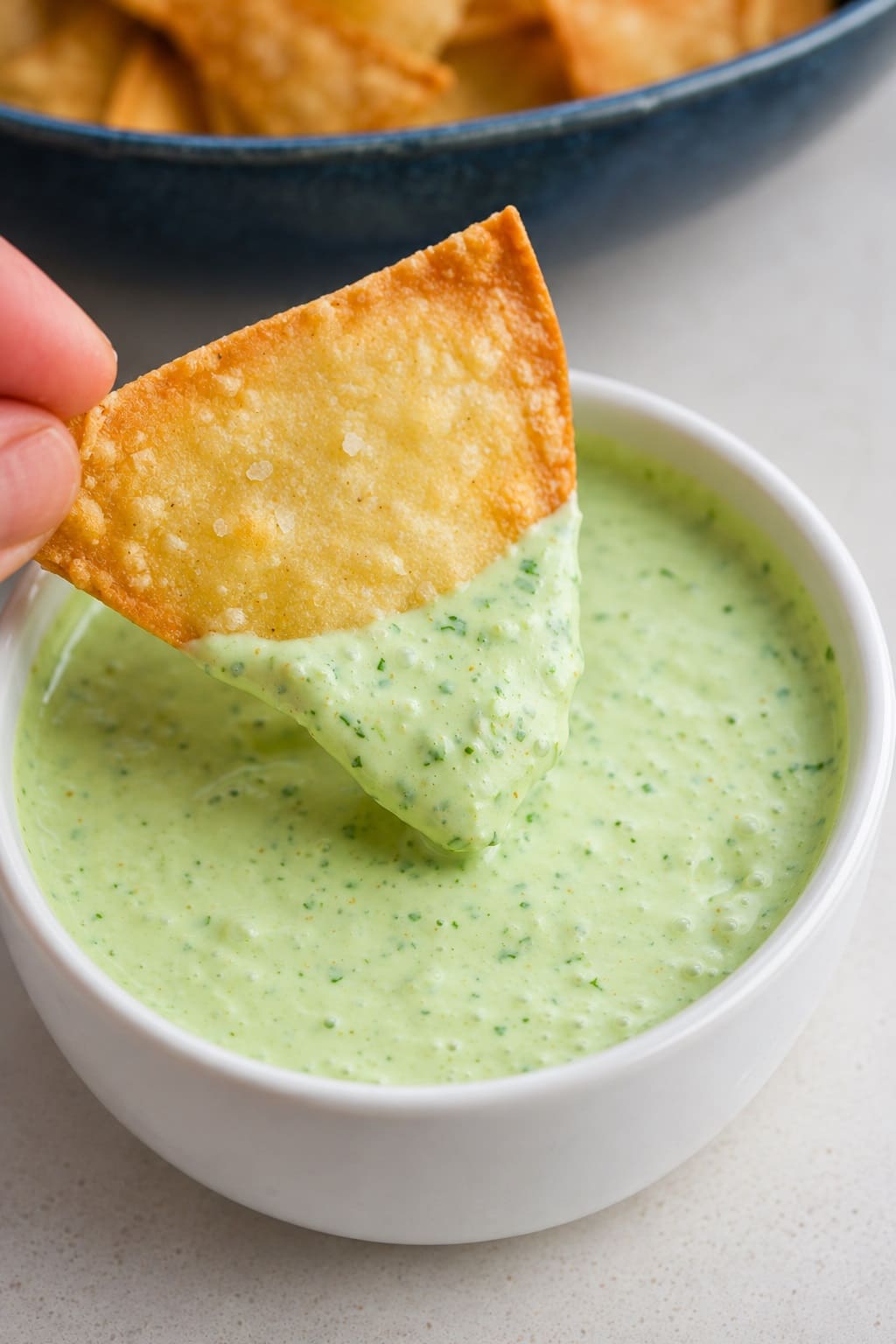
Think of the creamy version as an upgrade on sour cream and the oil version as a fresh herb sauce, and you’ll find uses everywhere:
- Tacos, burritos and nachos: add it just before eating, because a wet sauce softens taco shells and tortillas as they sit.
- Bowls and salads: thin either version with water or lime to use as a dressing, or toss it with shredded cabbage for a quick taco slaw.
- Grilled and roasted food: spoon it over chicken, steak, salmon, shrimp, roasted potatoes, cauliflower or corn.
- Dips and spreads: serve the thicker creamy sauce with chips, fries, fried plantains or raw vegetables, or use it in place of mayo on a sandwich or wrap.
- Marinade: the oil version suits chicken, shrimp and tofu. Set aside the portion you plan to serve before any of it touches raw meat, and throw out the marinade that did.
- Eggs and rice: stir it through warm rice, or spoon it over scrambled or fried eggs.
Frequently Asked Questions
Can I make cilantro sauce with dried cilantro?
No. Drying strips out the fresh, citrusy aroma that makes this sauce work, and dried leaves won’t give you the green color or body either. If you can’t get fresh cilantro, make a sauce from another fresh herb instead.
What can I use if cilantro tastes like soap?
Use flat-leaf parsley, half parsley and half mint, or basil leaves.
The soapy taste isn’t fussiness; researchers have linked it to genetic differences in how people smell certain compounds in the leaves. Parsley is milder than cilantro, so add a little extra lime and garlic to keep the sauce lively.
Is cilantro sauce the same as salsa verde or chimichurri?
No, though they’re cousins. Mexican salsa verde is built on tomatillos and green chiles, Argentine chimichurri on parsley, oregano and vinegar, and Yemeni zhoug on cilantro with chiles and warm spices like cardamom.
A few spoonfuls of jarred salsa verde blended into the creamy version adds a tangy tomatillo note, if you’d like a little of both.
Where to Start
Make the creamy version first: a small bunch of cilantro, a cup of sour cream, a lime and one small clove of garlic.
Taste it on the food you’re serving, adjust the salt and lime, and jot down what you changed so your next batch starts closer to your ideal.
When a big bunch of cilantro is about to wilt, turn it into the oil-based sauce and freeze it in cubes, and you’ll always be a few minutes away from something bright to spoon over dinner.

