
No. Hens lay eggs whether or not a rooster lives with them, and they lay just as many. A hen’s body releases a yolk on its own schedule, set by her age, the length of the day and how well she’s fed, and the egg gets built and laid either way.
A rooster changes one thing about those eggs: whether they’re fertilized and could hatch after three weeks of steady warmth.
Below you’ll find what really keeps hens laying, what fertile eggs mean for your kitchen, and a simple way to decide whether a rooster belongs in your flock.
Quick facts
- No rooster, no problem: hens lay the same number and size of eggs without one
- What he adds: fertile eggs, a lookout and often a calmer flock, along with crowing and wear on the hens
- Fertile eggs: safe to eat, with the same taste and nutrition; collect daily and keep them cool
- What drives laying: age (most start at 18 to 22 weeks), about 14 hours of light, layer feed and low stress
- Check first: many towns that allow hens ban roosters, and so do many HOAs
- If you keep one: plan on roughly 8 to 12 hens per rooster
How a Hen Makes an Egg on Her Own
A hen starts life with a pair of ovaries, yet only the left one grows into a working organ. It holds thousands of tiny yolks, and once she matures they ripen one at a time.
Each ripe yolk drops into the oviduct, a long coiled tube that works like an assembly line: first the white is wrapped around the yolk, then two thin membranes, and finally the shell, which takes about 20 of the roughly 25 hours the whole job needs.
Within about an hour of laying one egg, she usually releases the next yolk.
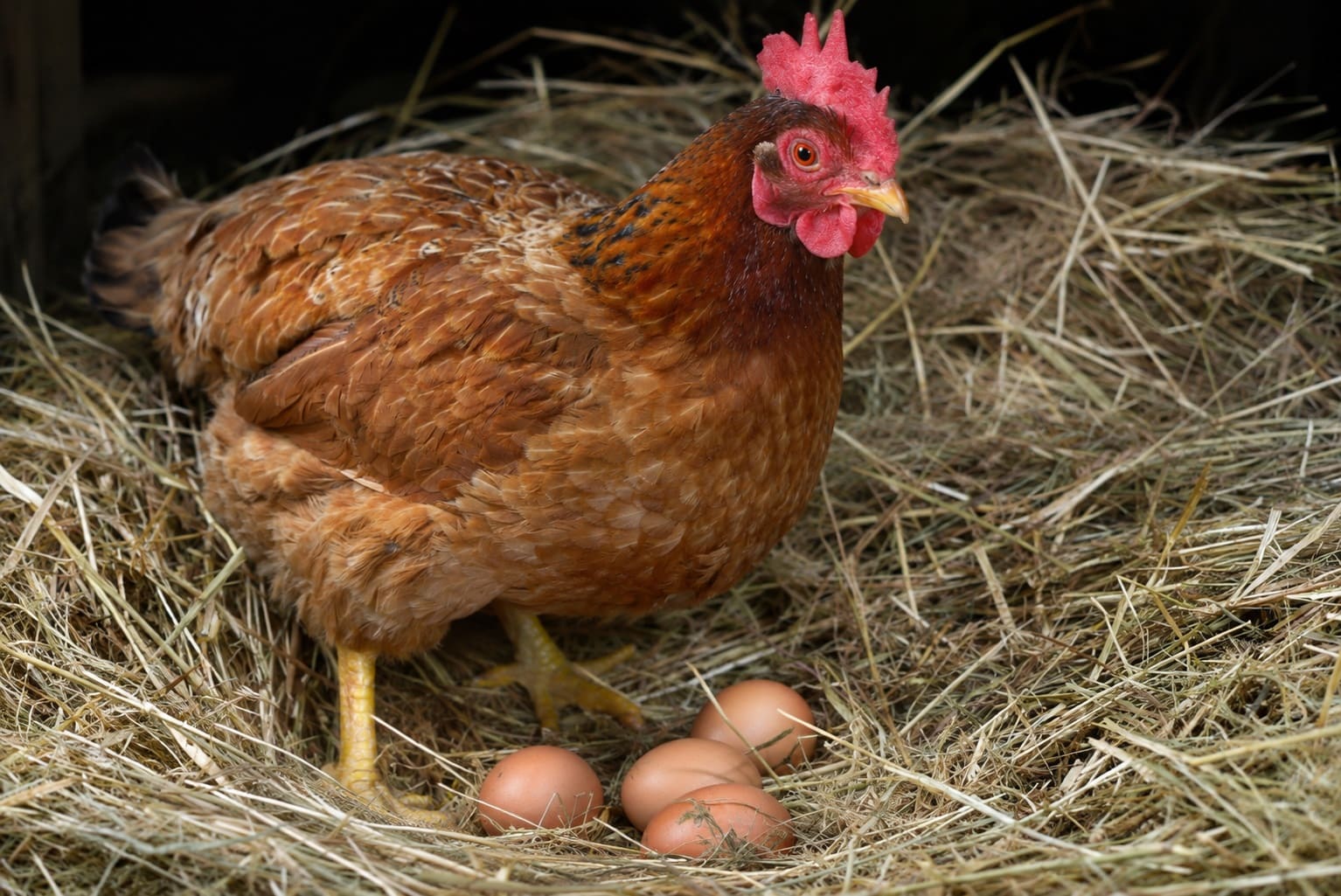
Nothing in that sequence waits on a male. Your grocery store is the proof: nearly every carton there comes from flocks with no roosters at all, because a bird that eats feed and lays nothing doesn’t pay its way on an egg farm.
Because each egg takes a bit longer than a day, a hen lays a little later each day until she’d be laying too late in the afternoon. Then she skips a day and starts over the next morning.
That’s why a strong layer gives you five or six eggs a week rather than seven, and many heritage breeds give three or four. An off day isn’t a sign anything is wrong.
Most pullets (young hens that haven’t laid yet) start at 18 to 22 weeks. Leghorns and sex-link hybrids often begin sooner, while big, slow-maturing breeds such as Brahmas and Cochins can take 24 weeks or more.
A pullet that reaches laying age as the days shorten in fall may hold off until late winter or spring.
What Keeps Hens Laying (and What Doesn’t)
When eggs slow down or stop, the missing rooster is never the reason. Laying runs on hormones that respond to day length, so light comes first, followed by age, food, stress and health.
Hens lay best with about 14 hours of light a day, and production drops off once days fall below about 12 hours. Here’s how to work out what’s going on.
| What you notice | Likely cause | What to do |
| Fewer eggs from fall into winter | Short days | Normal. Wait for spring, or add a timed light in the early morning to reach about 14 hours of light. |
| No eggs and feathers everywhere | Molt, usually in late summer or fall, from about 18 months old | Switch to a higher-protein feed (around 18 to 20%) until new feathers grow in. Laying usually returns in two to three months. |
| Hen flattens in the nest, won’t leave and growls | Broodiness. She stops laying while she sits, fertile eggs or not. | Give her fertile eggs to hatch, or break the mood with a few days in a wire-floored crate with food and water. |
| Thin or soft shells, fewer eggs | Too little calcium, often from too many treats | Feed a complete layer feed, offer oyster shell on the side, and keep treats and scraps to about 10% of the diet. |
| Laying stops after a move, a predator scare or new birds | Stress | Secure the coop, allow at least 4 square feet (0.4 m²) per bird indoors and about 10 square feet (0.9 m²) in the run, and add new birds slowly. |
| Hens look healthy, but fewer eggs turn up in the boxes | Hidden nests, egg eating, or snakes and rats | Check under shrubs and in corners, keep the birds in the run until midday for a week, and collect more often. |
| Pale comb, droopy hen, weight loss | Illness or parasites such as mites or worms | Check under the feathers at night for mites, and see a vet who treats poultry if she doesn’t perk up. |
| Slow decline year after year | Age | Normal. Most hens lay best in their first two years, then a little less each year. |
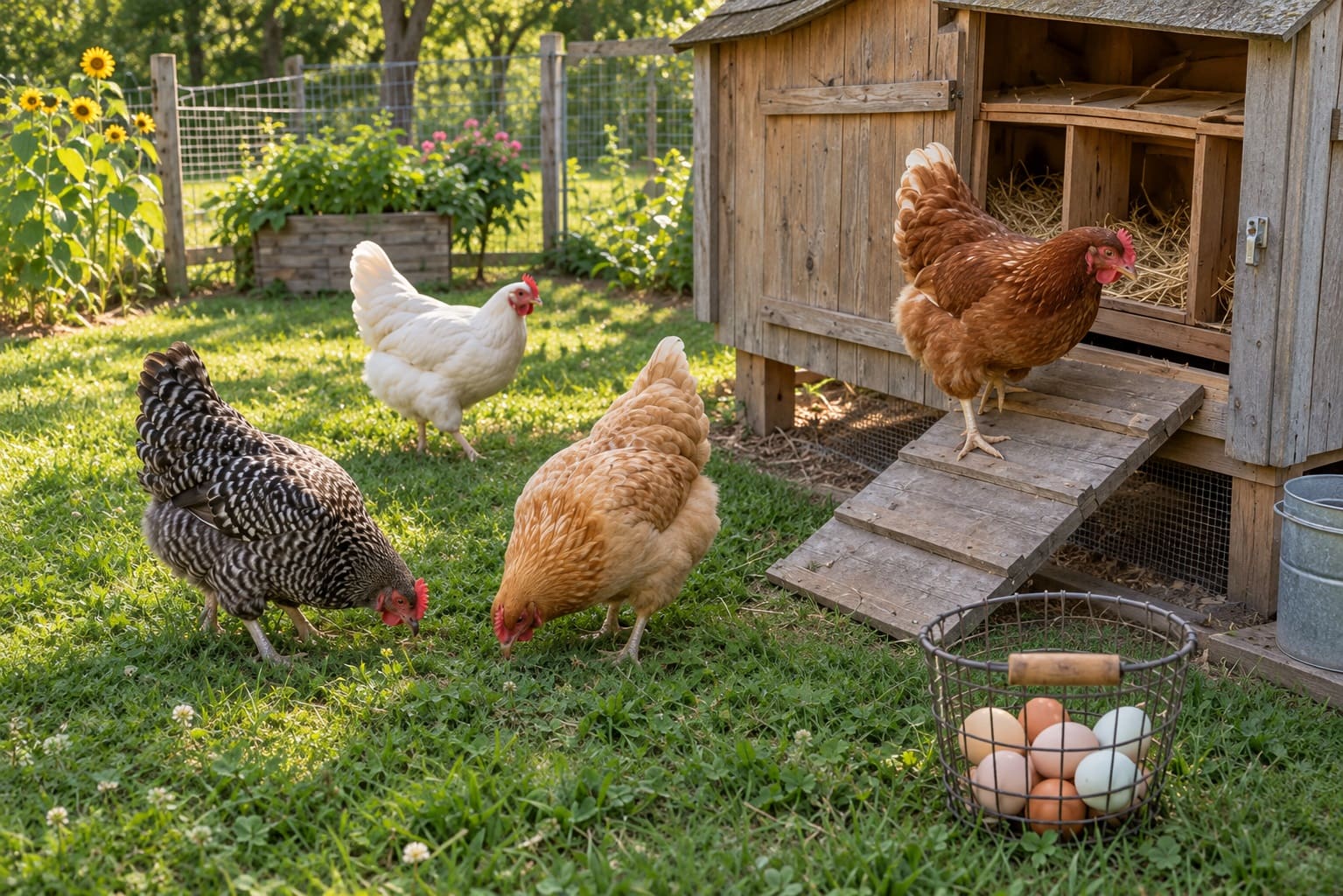
One more stressor belongs on that list: the rooster himself. A rooster with too few hens, or one that fixates on a favorite, can wear hens down enough that they lay less. He can’t make them lay more, but he can make them lay less.
What a Rooster Actually Changes
A rooster’s only role in the egg itself is fertilization. Roosters have no penis. Mating is a quick press of vent against vent, often called a cloacal kiss, and it’s over in a second or two.
The hen stores the sperm in tiny pockets in her oviduct, called sperm storage tubules, and releases a little at a time. Sperm meet each new yolk at the top of the oviduct, so an egg is fertilized before the white and shell even start to form.
That storage system creates a timeline that surprises many keepers:
- An egg laid on the day of mating won’t be fertile, because it was already well on its way.
- An egg laid the next day might be. From about the third day on, eggs are usually fertile.
- After a single mating, fertility typically lasts about 10 to 14 days and then tapers off, though a few eggs can still be fertile three weeks later or more.
So if you rehome a rooster, assume your eggs could be fertile for about three more weeks. If you’re switching roosters to hatch purebred chicks, wait at least three weeks after the old one leaves before saving eggs, so you know who the father is.
As for egg numbers, keepers sometimes notice more eggs after a rooster arrives, but that usually lines up with lengthening spring days or hens coming out of a molt.
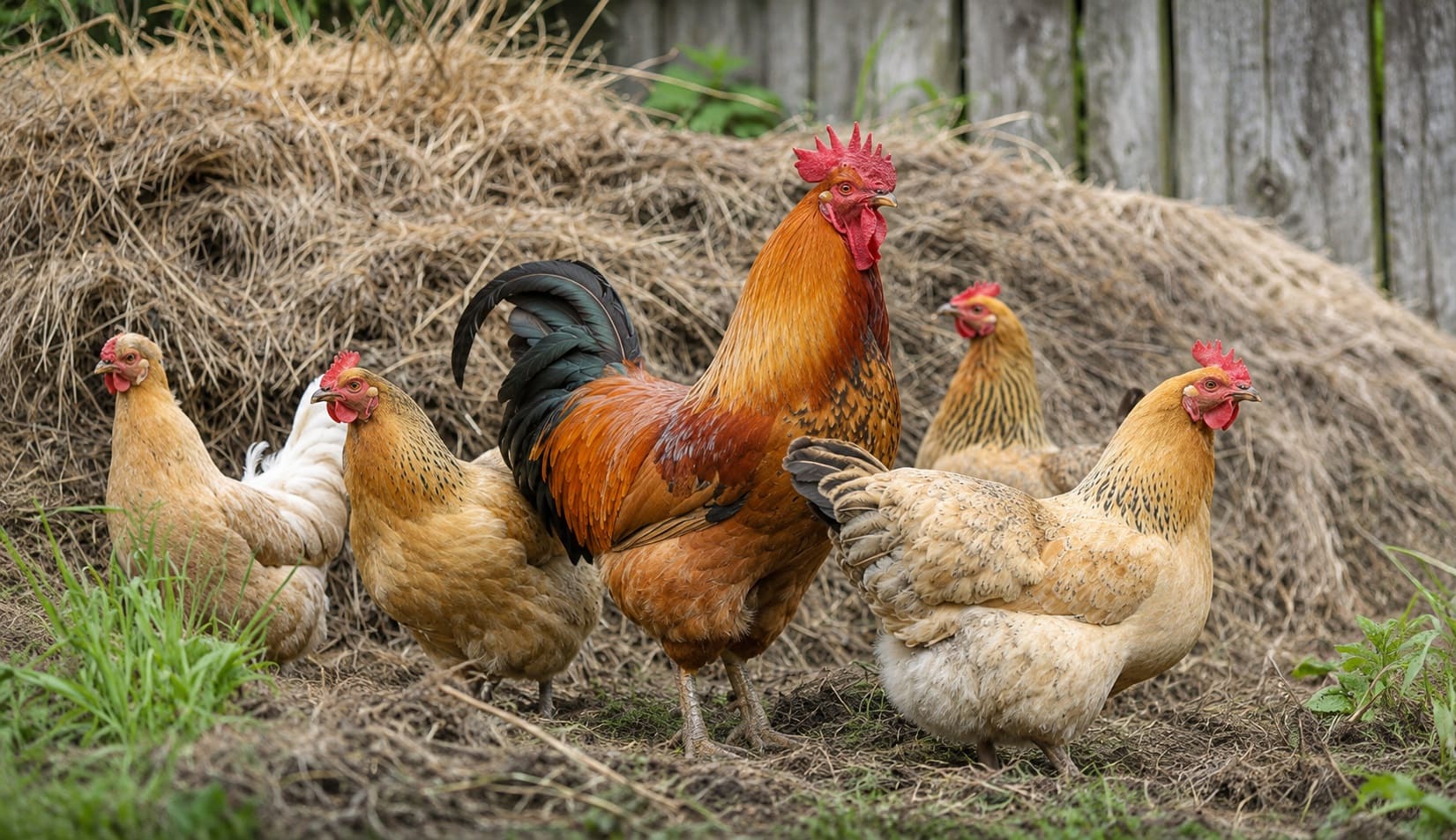
His effect on behavior is real, though. Swedish researchers studying large flocks of laying hens found that hens kept with males fought less and showed fewer signs of fear than hens kept on their own.
That’s about calmer birds, not more eggs, and a later study of Spanish layer breeds found no drop in fear and some signs of extra stress, so the benefit depends on the rooster and the setup.
There’s one odd exception to the rule. Once in a great while, an unfertilized chicken egg starts to develop an embryo on its own, a process called parthenogenesis. It has been documented in a few breeds, such as dark Cornish and white Leghorns.
Almost all of these embryos die early, and the rare one that hatches is male. For a backyard flock, the practical rule holds: no rooster, no chicks.
Fertile Eggs in the Kitchen
Fertile eggs are safe to eat, and you won’t taste a difference. Their nutrition is the same too, so the idea that fertile eggs are healthier is a myth.
You can tell them apart if you look closely at the yolk. Every yolk has a small white spot on its surface. On an infertile egg, it’s a solid, irregular dot.
On a fertile egg, it’s a little larger, about 1/8 inch (3 to 4 mm) across, and shaped like a bullseye with a pale center and a ring.
A red or brown speck means something else entirely: a tiny blood vessel burst while the egg was forming. Blood spots are harmless, and you can lift them out with a spoon if they bother you.
A fertile egg stays dormant until it’s kept warm. At room temperature and below, development stays on pause, which is why hatcheries hold eggs meant for hatching at about 55 to 68°F (13 to 20°C).
Growth only gets going near incubation temperature, about 100°F (38°C), the heat under a sitting hen. A few habits keep fertile eggs fit for breakfast:
- Collect eggs at least once a day, and twice in hot weather, when a nest box can get warm enough to start development.
- Refrigerate them. Once chilled, a fertile egg won’t develop.
- Don’t let a broody hen sit on eggs you plan to eat. After a day under her, development can begin.
- Treat a hidden nest with suspicion. If you can’t tell how long the eggs have been out there, candle them or throw them out.
Candling means shining a bright flashlight through the shell in a dark room. After about four days of warmth, a developing egg shows thin red veins spreading from a dark spot, though they’re harder to see through brown or dark shells.
An egg that was collected promptly and kept cool shows only a clear glow and the shadow of the yolk.
Should You Keep a Rooster Anyway?
On the plus side, a good rooster spends much of his day on watch. He has different alarm calls for hawks and for ground predators, and hens dive for cover when they hear them.
He finds food and calls the hens over with a quick “tuk-tuk-tuk” while picking up and dropping the morsel, a display called tidbitting.
He often breaks up squabbles between hens, and many keepers find he herds the flock back toward the coop at dusk. And if you want chicks, he’s your steady source of fertile eggs.
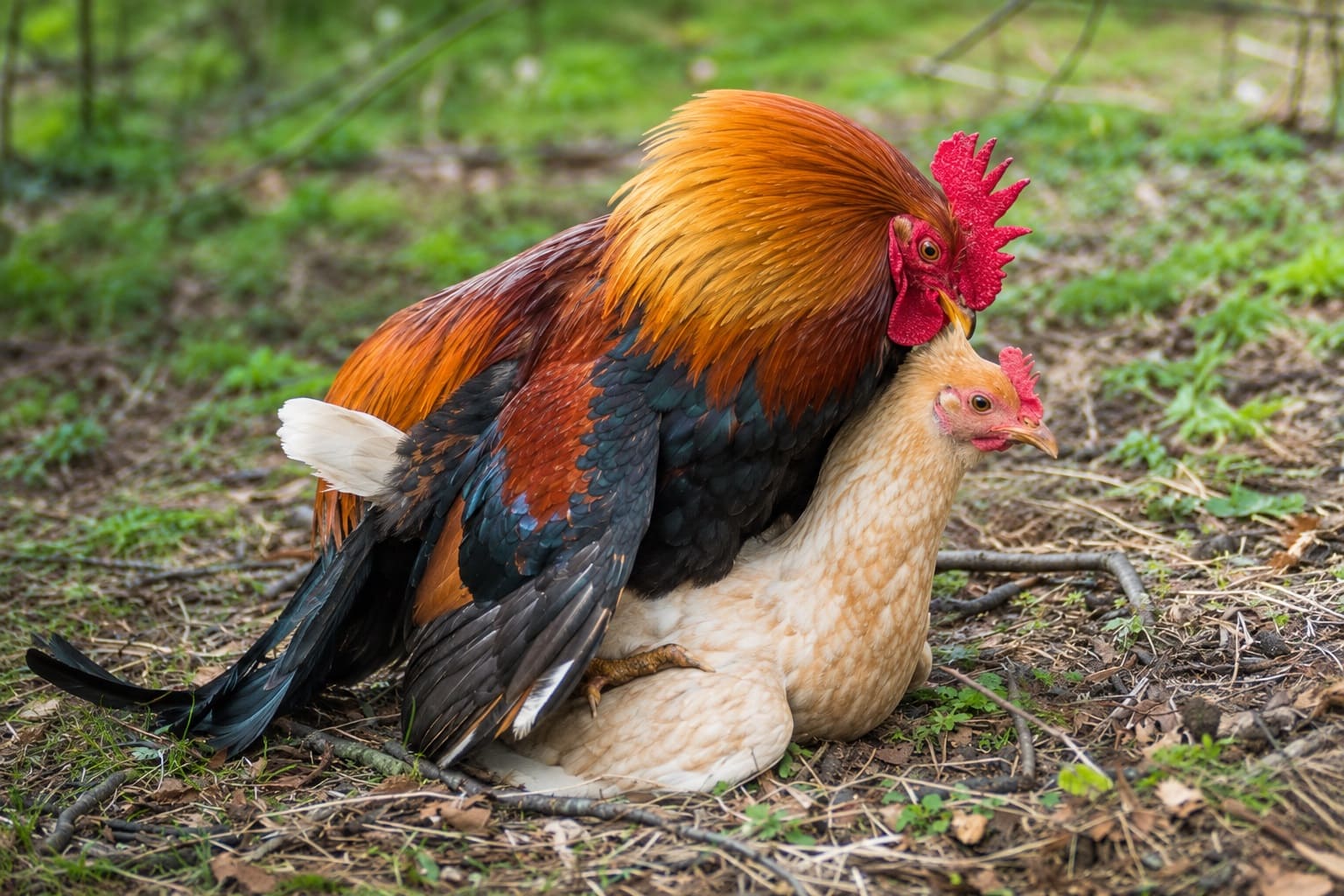
His protection has limits. A rooster can sometimes chase off a cat or startle a hawk, but he’s no match for a fox, coyote, raccoon or loose dog.
At best he buys the hens a few seconds, often at the cost of his own life. A predator-proof coop and run protect a flock far better than any bird can.
The downsides are just as concrete. Roosters crow at all hours, not just at dawn. Many cities and HOAs that welcome hens ban roosters outright, and complaints can bring fines.
Some roosters turn on people as they mature, and their spurs can cut through jeans, which matters if children gather the eggs. Mating wears on hens, stripping feathers from backs and necks, especially on a rooster’s favorites.
Hatching brings its own problem: roughly half of every hatch will be males, and roosters are notoriously hard to rehome. And he eats like a hen while laying nothing.
Here’s how those trade-offs play out in common situations:
| Your situation | Rooster? | Why |
| Town lot, close neighbors, or rules that ban roosters | No | Noise complaints and fines aren’t worth it, and your hens will lay the same. |
| Hens live in a covered, predator-proof run | Not needed | His lookout job matters little inside a closed run. |
| Free-ranging on acreage with hawks or foxes around | Worth considering | His early warnings give hens time to hide, though a locked coop at night still matters most. |
| You want to hatch chicks most springs | Yes, or buy hatching eggs | A rooster gives a steady supply. For one hatch a year, bought eggs under a broody hen are often easier. |
| Fewer than about eight hens | Usually no | Too few hens to share his attention, so backs get bare. |
| Small children collect the eggs | Only a proven, gentle bird | An aggressive rooster’s spurs can cause real injuries. |
| Bantam hens in the flock | Only a bantam rooster | A large rooster can injure small hens while mating. |
Running a Hens-Only Flock Well
Without a rooster, his jobs fall to you, and you can do most of them better.
Protection comes from the building rather than a bird. Use 1/2-inch (13 mm) hardware cloth instead of chicken wire, which keeps chickens in but doesn’t keep predators out.
Bury or lay an apron of it about 12 inches (30 cm) out from the base of the run to stop diggers, cover the run if hawks hunt your area, and lock the coop every night.
On farms with large free-range flocks, a trained livestock guardian dog does the lookout job far more reliably than a rooster.
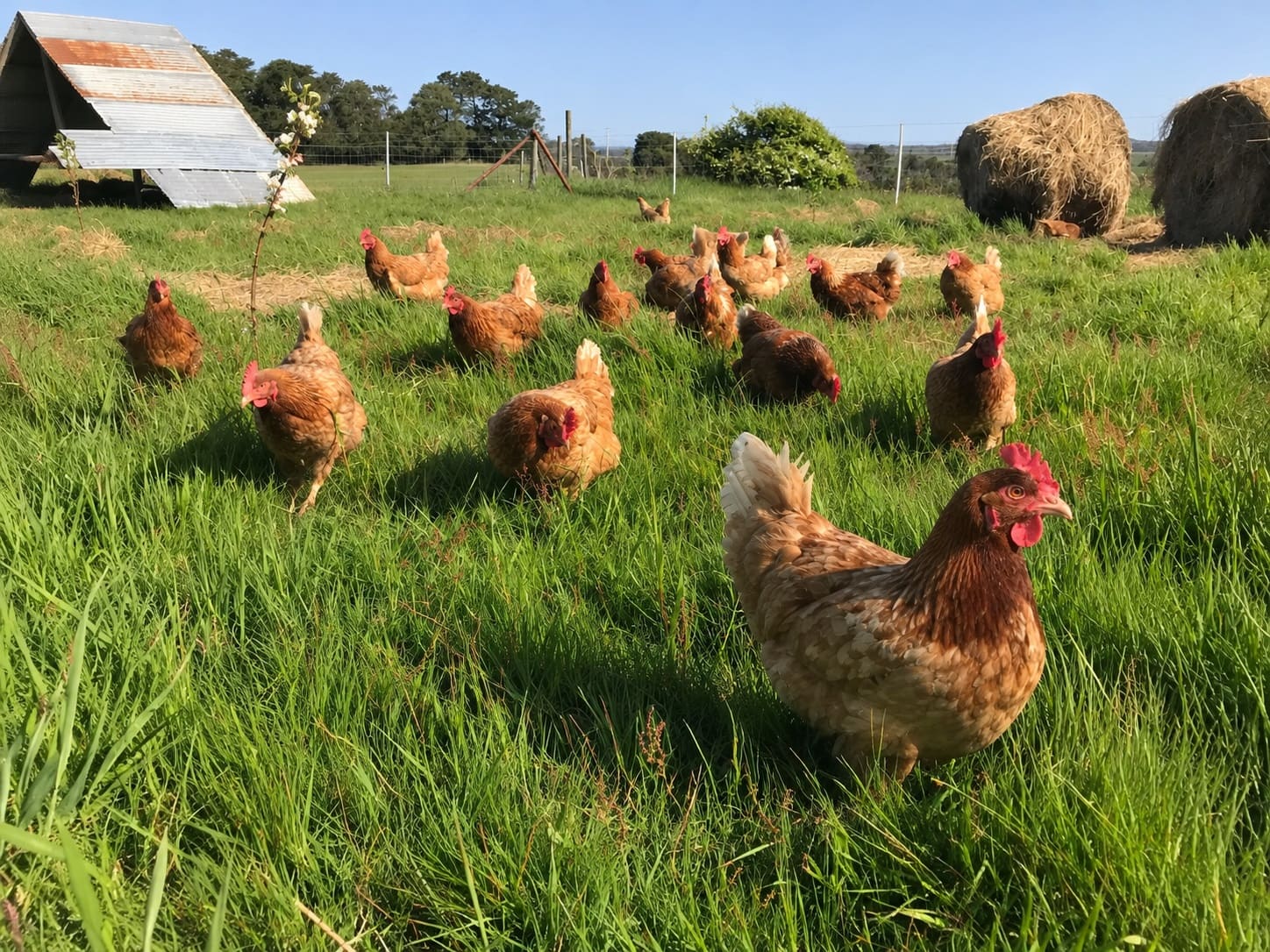
Keeping the peace takes space and variety. In most rooster-free flocks, the top hen steps into the lead role, keeping watch and sometimes even crowing.
Bullying usually drops when hens have room, more than one feeder and waterer, and things to do, such as a dust-bath area, extra perches and piles of leaves or straw to scratch through.
You can still raise chicks. When a hen goes broody, slip fertile hatching eggs from a local breeder or a hatchery under her at dusk.
You can also buy day-old pullets. Hatchery sexing is right about 90% of the time, so a surprise cockerel can still turn up. Decide ahead of time whether you’d keep him, rehome him or raise him for the table.
If You Decide to Keep One
Temperament matters more than breed, but breed helps. Orpingtons, Cochins, Brahmas, Australorps and Faverolles have a reputation for calm roosters, and a bantam rooster with standard-size hens causes less wear on their backs.
Individuals vary, though, and a cockerel’s true personality usually doesn’t show until he matures at about five to seven months. An adult rooster whose behavior you’ve seen, from a keeper you trust, is a safer bet than a young cockerel.
Plan on about eight hens per rooster for heavy breeds and up to 12 for lighter, more active ones. Young cockerels and older roosters can handle only about half as many.
In a backyard flock, one rooster is usually plenty. Two can work with lots of space and plenty of hens, especially if they were raised together.
He can eat what your hens eat, but since he doesn’t need layer feed’s extra calcium, many keepers switch a mixed flock to an all-flock feed and set oyster shell out on the side for the hens.
To add an adult rooster to an existing flock:
- Check local rules and your HOA, and give close neighbors a heads-up.
- Quarantine him for 30 days, well away from your flock, and watch for coughing, discharge, mites or lice.
- Move him into a wire pen inside the run for about a week, so everyone can see each other without fighting.
- Let him out when you can stay and watch. Some chasing is normal, but separate the birds if anyone draws blood.
- Check your hens’ backs and necks each week for missing feathers, and fit a hen saddle, a small fabric cape, on any favorite that starts going bald.
If he turns on people, don’t wait for it to pass. Avoid playing or sparring with a young cockerel, since he’ll read it as a challenge, and move calmly around him rather than backing away.
If he keeps attacking, especially with children around, rehoming or culling him is a reasonable choice.
Frequently Asked Questions
Why is my hen crowing?
In a flock with no rooster, the top hen sometimes crows now and then as part of taking the lead, and it’s harmless.
If a hen starts crowing and also stops laying, grows a bigger comb or starts acting like a rooster, an ovarian problem may have changed her hormones, and a poultry vet is worth a call.
How old does a rooster have to be to fertilize eggs?
Most cockerels can fertilize eggs by five to six months old, a bit later in large, slow-maturing breeds. Fertility is usually best in his first few years and declines slowly after that.
Can you stop a rooster from crowing?
Not humanely. A dark coop and a later let-out time can soften early-morning crowing a little, but he’ll still crow through the day. No-crow collars and small “crow boxes” cut the noise by restricting him.
RSPCA Australia opposes practices that stop roosters from crowing, and says any collar must fit correctly and come off at the first sign of distress or trouble breathing.
Will a hen go broody without a rooster?
Yes. Broodiness is hormonal and has nothing to do with whether her eggs are fertile. A broody hen will sit on infertile eggs, golf balls or an empty nest for weeks.
Either slip fertile eggs under her in the first few days or break her broodiness so she gets back to laying.
Rooster or Not, the Eggs Keep Coming
Your hens will fill the nest boxes either way, so the real choice is whether a rooster’s extras are worth his crowing, the wear on your hens and any friction with neighbors or local rules.
If you’re just starting out, a hens-only flock is the simplest way in, and you can add a rooster later once you know your birds and your neighbors.
If chicks are the draw, try a broody hen and a dozen hatching eggs from a local keeper first. It’s an easy way to find out whether raising your own chicks suits you before you commit to a rooster.

