
Fresh holes in the kale, a broccoli plant stripped to its ribs overnight, little dark pellets scattered on the leaves below: that’s caterpillar work, and it moves fast. The methods that actually stop it are simple and mostly cheap.
For most home gardens, it comes down to picking off what you can see, spraying young caterpillars with Btk (a bacterial insecticide that only affects caterpillars), and covering vulnerable crops before moths and butterflies lay their next round of eggs.
Here’s how to confirm what’s eating your plants, decide whether it’s worth fighting, and choose the right fix.
First, Make Sure It’s Caterpillars
Caterpillars chew, so their damage looks ragged: holes with uneven edges, leaf margins eaten inward, or whole sections gone. These clues confirm it:
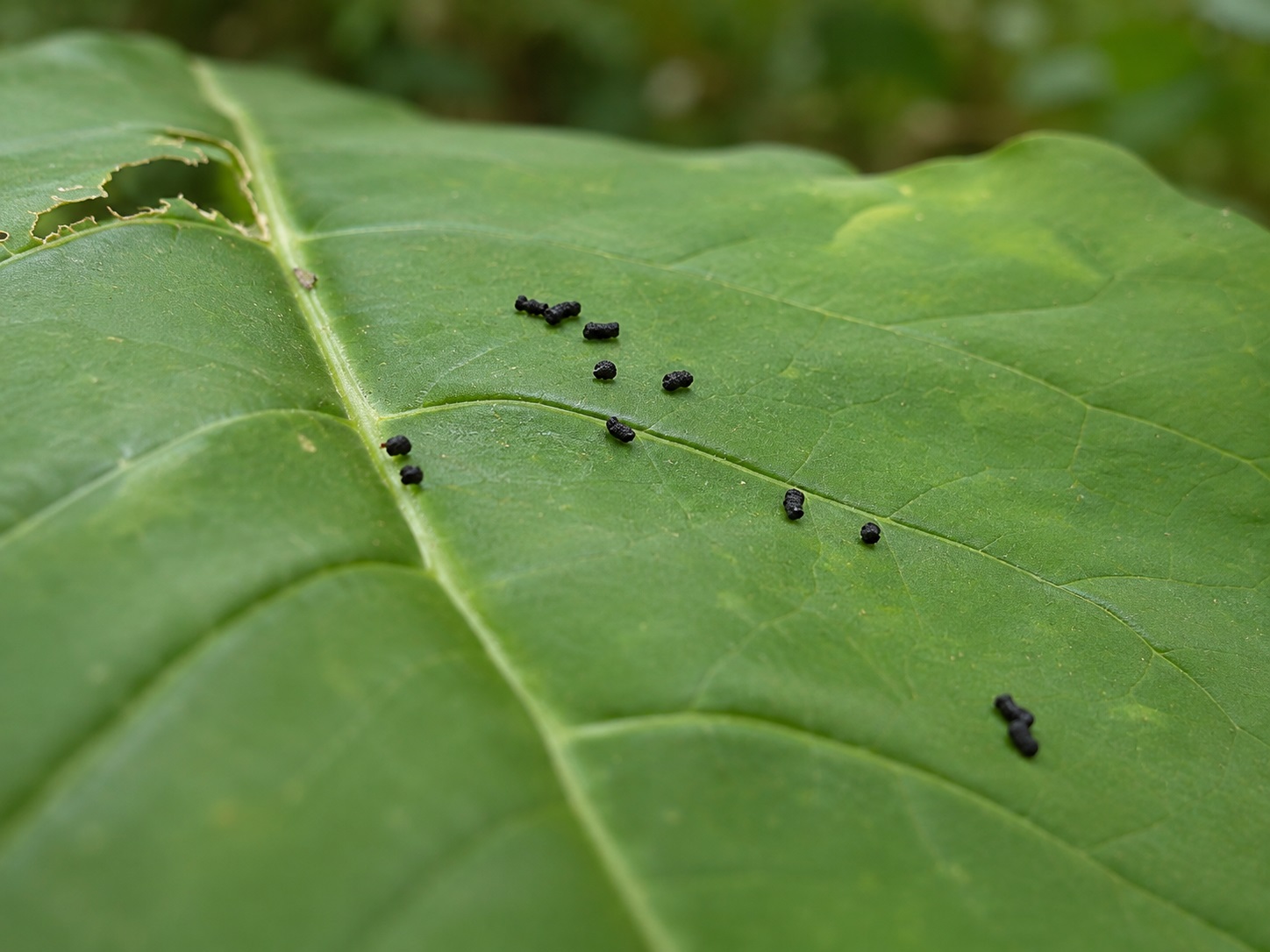
- Frass: droppings that look like coarse ground pepper or tiny green-black pellets, scattered on the leaves below the feeding spot. Fresh, moist frass means something is still eating.
- “Windowpane” patches: very young caterpillars can’t chew through a leaf yet, so they scrape the underside and leave a thin, see-through skin.
- Rolled or webbed leaves: leafrollers and webworms tie leaves together with silk and feed inside.
- Seedlings cut off at the soil line: the classic sign of cutworms, which hide in the soil by day and feed at night.
- Holes in fruit, ears or stems: borers and fruitworms feed inside, where sprays can’t reach them.
Many caterpillars feed at night and rest under leaves by day, and green caterpillars vanish against green leaves, so do your searching with a flashlight around dusk or just after sunrise.
Frass is your map, since the caterpillar is usually right above where the droppings land. On trees, pellets on the patio or your car often show up long before you spot anything in the canopy.
Rule out the look-alikes
Two pests in particular get mistaken for caterpillars, and neither responds to the same treatment.
Slugs and snails chew similar ragged holes, but they leave silvery slime trails and do their worst in wet weather.
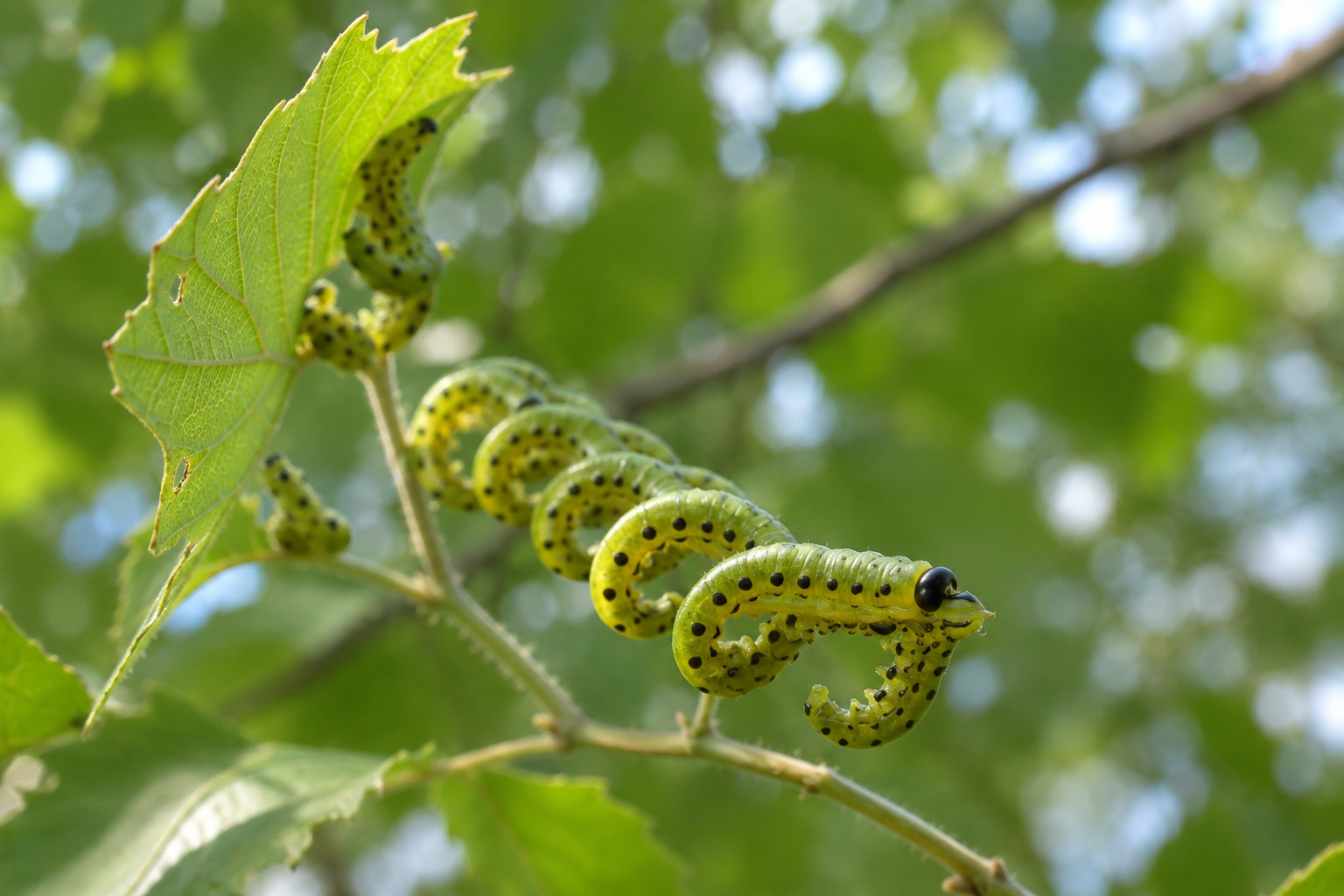
Sawfly larvae look almost exactly like caterpillars but are related to wasps, and Btk won’t touch them. Count the stubby legs along the belly (prolegs) behind the three pairs of true legs: caterpillars have five pairs or fewer, while sawfly larvae have six or more.
If you’re still unsure, upload a clear photo to iNaturalist or send it to your county Extension office. Outside the US, a local agricultural advisory service or botanic garden can usually help.
Handle with care
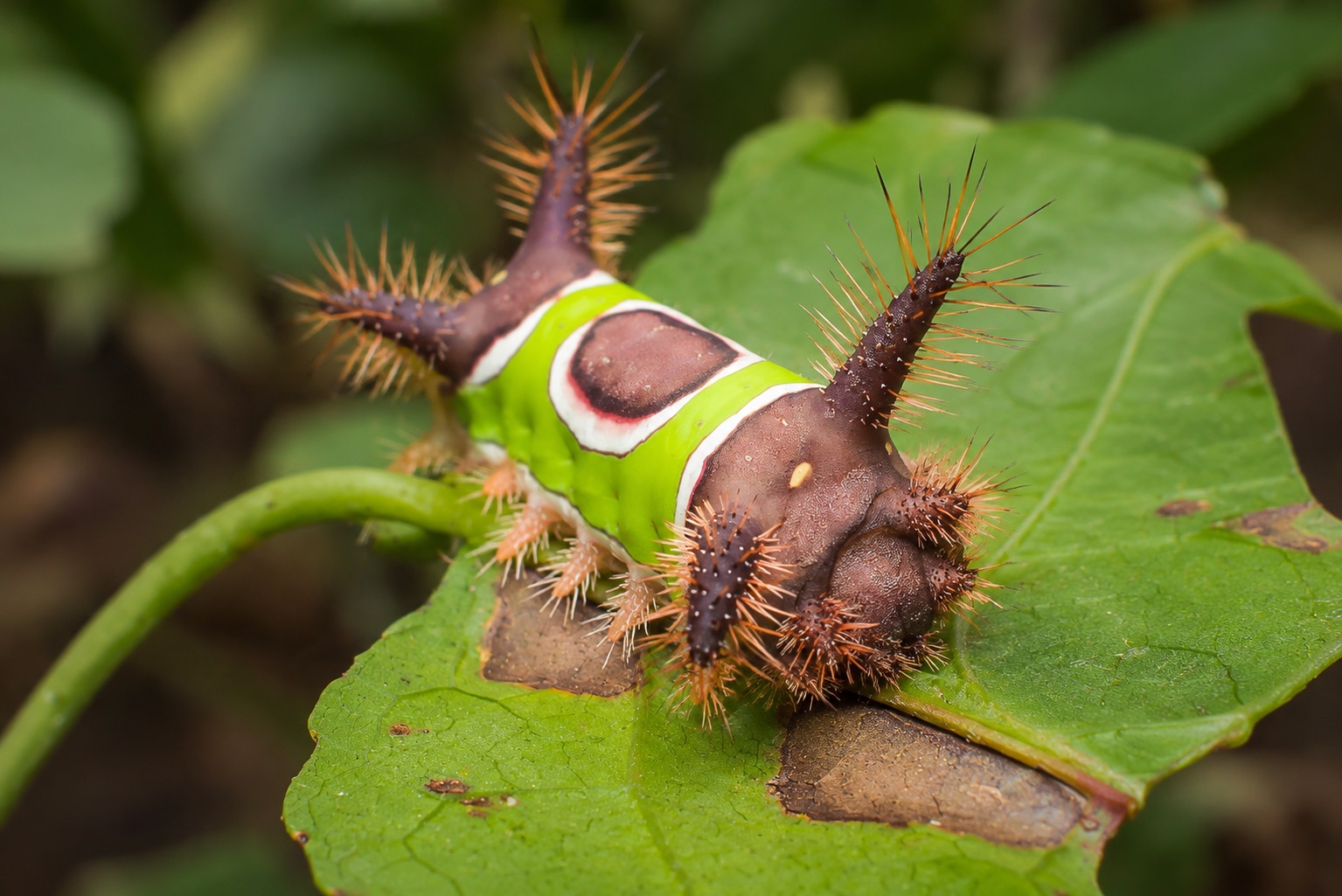
Most garden caterpillars are harmless to touch, but some carry stinging spines or irritating hairs.
In the US, the worst include the saddleback, the furry puss caterpillar of the South, and the io moth caterpillar.
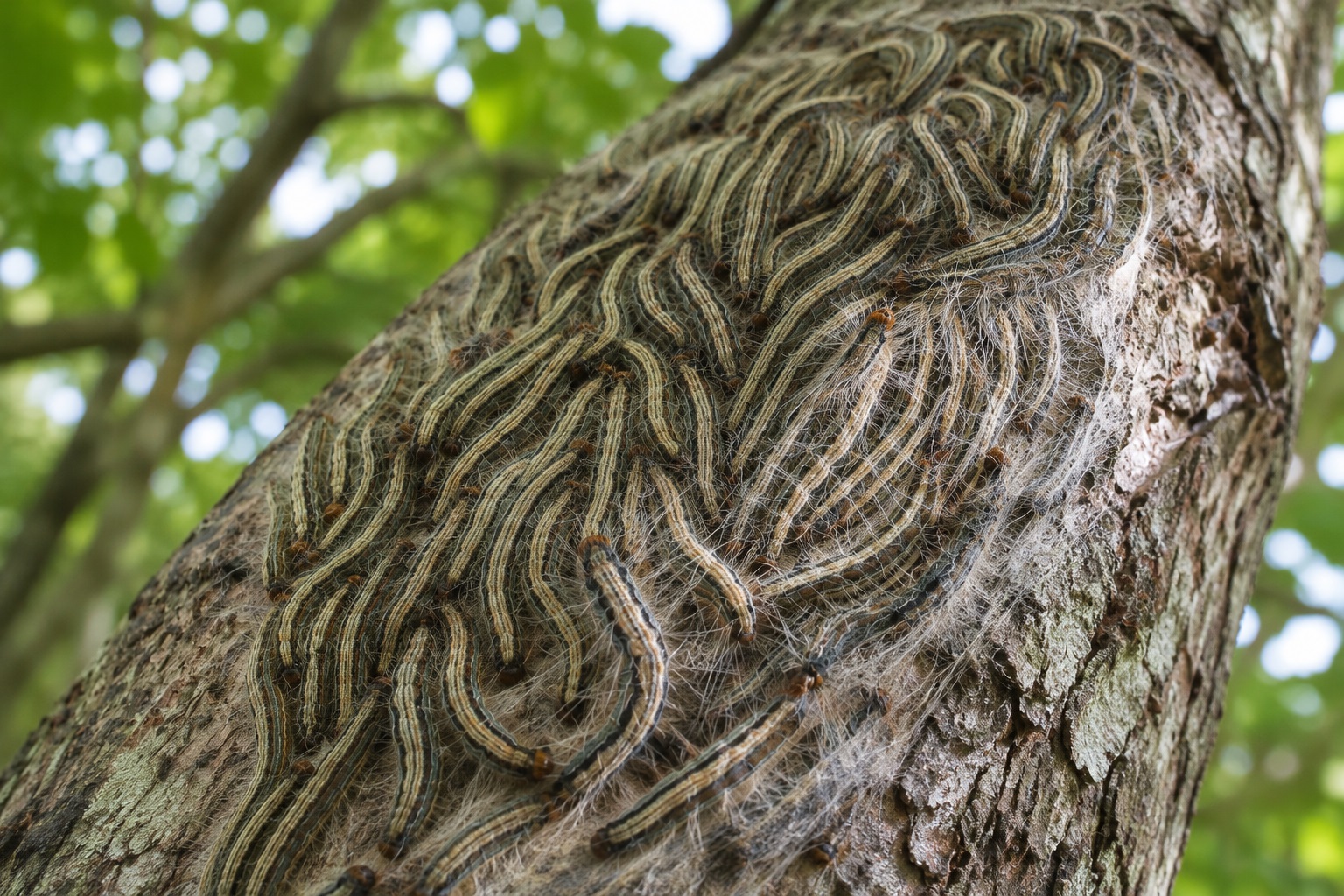
In the UK and parts of Europe, oak processionary moth larvae are the main concern. Wear gloves when you pick up a caterpillar you don’t recognize.
If you get stung: press sticky tape on the spot and pull it off to lift out the spines, using fresh tape each time and without rubbing. Wash the area with soap and water and use a cold pack for the pain.
Get medical help if hairs get into your eyes or the reaction is severe. In the US, Poison Control is at 1-800-222-1222.
Decide Whether They’re Worth Fighting
Most caterpillars are picky eaters that feed for just two to three weeks before they pupate, and they do far less lasting harm than the holes suggest. A healthy, established tree can lose a big share of its leaves and simply grow new ones.
Step in when
- seedlings or new transplants are being stripped
- you eat the leaves, heads or fruit (kale, cabbage, broccoli, lettuce, tomatoes)
- caterpillars are boring into fruit, ears of corn or buds
- fresh damage and frass increase from one day to the next
- a tree or shrub planted in the last year or two is losing most of its leaves
Leave them alone when
- the plant is a mature tree, shrub or perennial with cosmetic damage
- the damage is old and you can’t find fresh frass
- it’s a butterfly you want on its host plant, such as black swallowtails on parsley, dill and fennel, or monarchs on milkweed
- the caterpillar has small white cocoons on its back (more on those below)
If you do act, act early. Caterpillars do most of their lifetime eating in the last stage or two before they pupate, so a batch of small ones dealt with today saves far more leaves than the same number of fat ones next week.
Hand-Picking: The Fastest Fix for Small Gardens
For a few beds, some containers or a handful of tomato plants, nothing beats picking. It works instantly, costs nothing and spares every beneficial insect in the garden.
What you need: gloves, a flashlight, and a jar of water with a squirt of dish soap.
- Go out at dusk or first thing in the morning, when night feeders are still on the plants.
- Check the undersides of leaves, the centers of cabbage-family plants, folded leaves and new shoots. Running a finger lightly under a leaf often makes a camouflaged caterpillar move.
- Drop each caterpillar into the soapy water, or squash it. Don’t flick it onto the soil, because it will simply climb back up.
- Rub off any eggs you find, or pinch off the leaf. Small cabbage white eggs are tiny, pale yellow and bullet-shaped, laid one at a time; in Europe, the large cabbage white lays its yellow eggs in clusters on leaf undersides.
- Prune off rolled or webbed leaf tips with caterpillars inside.
- Repeat every two to three days for a couple of weeks, since eggs keep hatching and you’ll miss a few every round.
It’s working when fresh holes and new frass stop appearing. For big hornworms on tomatoes, spray the plant with the hose first; wet hornworms thrash and become much easier to spot.
If you’d rather not kill butterfly caterpillars you want to keep, move them onto the same kind of plant somewhere else, but moving pest caterpillars to another vegetable bed only relocates the problem.
Tent caterpillars and fall webworms live in silk nests. Prune out or pull down the nest while the caterpillars are inside, which for tent caterpillars means early morning, evening or a cool, wet day, and drop it in soapy water.
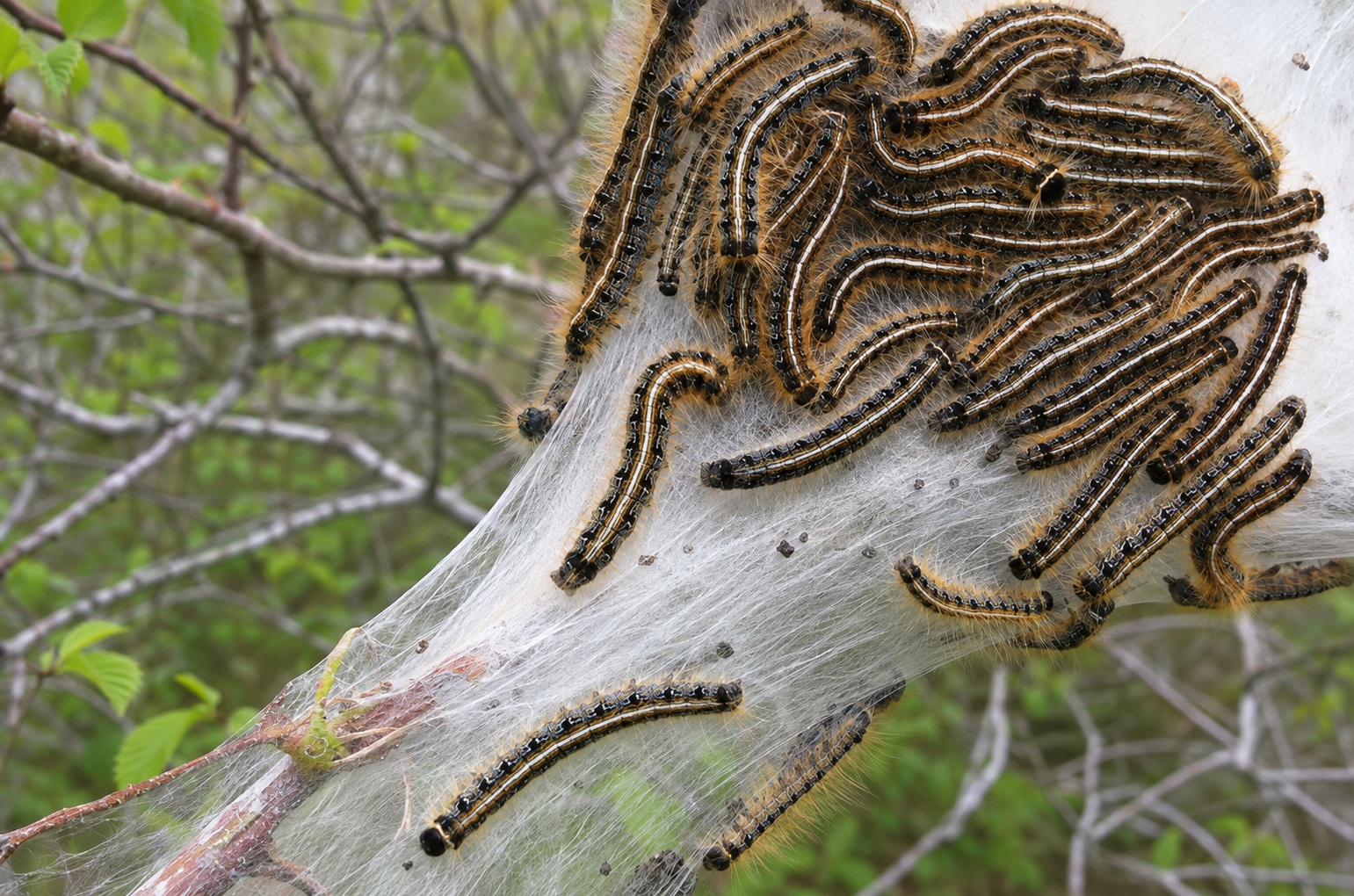
Don’t burn nests in the tree, which hurts the branch more than the caterpillars ever would. In winter, prune off the shiny, dark egg masses tent caterpillars wrap around the twigs of cherry and crabapple.
Btk: The First Spray to Reach For
When there are too many caterpillars to pick, or they’re hiding where you can’t reach, use Btk, short for Bacillus thuringiensis subspecies kurstaki.
It’s a naturally occurring soil bacterium that’s harmless to people, pets, birds, bees and nearly all other insects, because it only switches on inside a caterpillar’s alkaline gut.
A caterpillar has to eat treated leaves. Within hours it stops feeding, and it dies over the next few days. Many Btk products are listed for organic gardening.
Two things trip people up.
- First, buy the right kind: the label should say kurstaki (or aizawai). Bt israelensis, sold for mosquito larvae, does nothing to caterpillars.
- Second, Btk works best on small, young caterpillars. Large ones take longer to die and keep eating in the meantime, so pick those off by hand.
What you need: a Btk product (sold as DiPel, Thuricide, Monterey B.t. and others), a pump sprayer or spray bottle, and the label. On waxy leaves like cabbage and kale, a spreader-sticker helps the spray cling, if the label allows one.
- Mix only what you’ll use that day, at the label rate. Mixed Btk doesn’t keep.
- Spray in the late afternoon or evening on a dry day. Sunlight breaks Btk down, so evening spraying gives caterpillars a full night of feeding on fresh residue.
- Coat the tops and undersides of the leaves, plus the centers of cabbage-family plants and any new growth, where small caterpillars feed.
- Reapply after heavy rain, and at the interval on the label for as long as new caterpillars keep hatching. Rain and sunlight clear Btk off leaves within days, so one spray rarely finishes the job.
Within a day or two, treated caterpillars turn sluggish and stop producing fresh frass, then darken and shrivel.
Most Btk products can be used right up to harvest, but check the label for your crop and wash produce before you eat it.
Keep Btk off butterfly host plants.
It kills the caterpillars of butterflies you want just as readily as the pests, and it doesn’t harm adult butterflies. Don’t let spray drift onto milkweed, parsley, dill, fennel or anything else you’re growing for butterflies.
Stronger Options and Their Trade-Offs
When Btk can’t keep up, because the caterpillars are large, tunneling into fruit or part of a mixed pest problem, these are the next options.
Each is less selective than Btk, so treat only the affected plants, never spray open flowers, and spray in the evening after bees have stopped foraging.
| Option | Best for | Risk to bees and beneficials | Keep in mind |
| Btk | Small, leaf-eating caterpillars | Very low | Must be eaten; reapply after rain |
| Spinosad | Larger caterpillars, some fruitworms and borers | Toxic to bees until the spray dries | Can harm some predators and parasitic wasps |
| Neem (azadirachtin) | Young caterpillars, light infestations | Low to moderate | Slow; disrupts feeding and molting |
| Pyrethrins | Fast knockdown of a serious outbreak | High on contact | Short-lived and must hit the caterpillar |
| Insecticidal soap or horticultural oil | Very small caterpillars and eggs | Low once dry | Contact only; can burn leaves above about 90°F (32°C) |
Spinosad, which also comes from a soil bacterium, is the most useful of these for home gardens because it handles the bigger caterpillars Btk struggles with and breaks down quickly.
Conventional insecticides such as the pyrethroids (bifenthrin, permethrin) and carbaryl also kill caterpillars, but they’re highly toxic to bees and wipe out the predators that keep other pests in check.
Purdue University entomologists note that losing those predators in summer can set you up for spider mite outbreaks later. Most home gardens never need these products.
Before you spray anything, read the whole label.
In the US, the label is the law. Make sure the product is labeled for your crop and note its pre-harvest interval: how long you have to wait after spraying before you pick.
Which products are allowed varies by country and state, so check what’s registered where you live.
Netting: Stop the Eggs, Stop the Caterpillars
Every caterpillar starts as an egg laid on your plant, which makes a physical barrier the most reliable long-term fix for leafy crops.
Gardeners who net their cabbage-family crops often get through whole seasons without spraying anything.
What you need: fine insect netting or lightweight floating row cover (bird netting has holes big enough for butterflies to slip through), hoops or a simple frame, and rocks, pins or soil to hold down the edges.
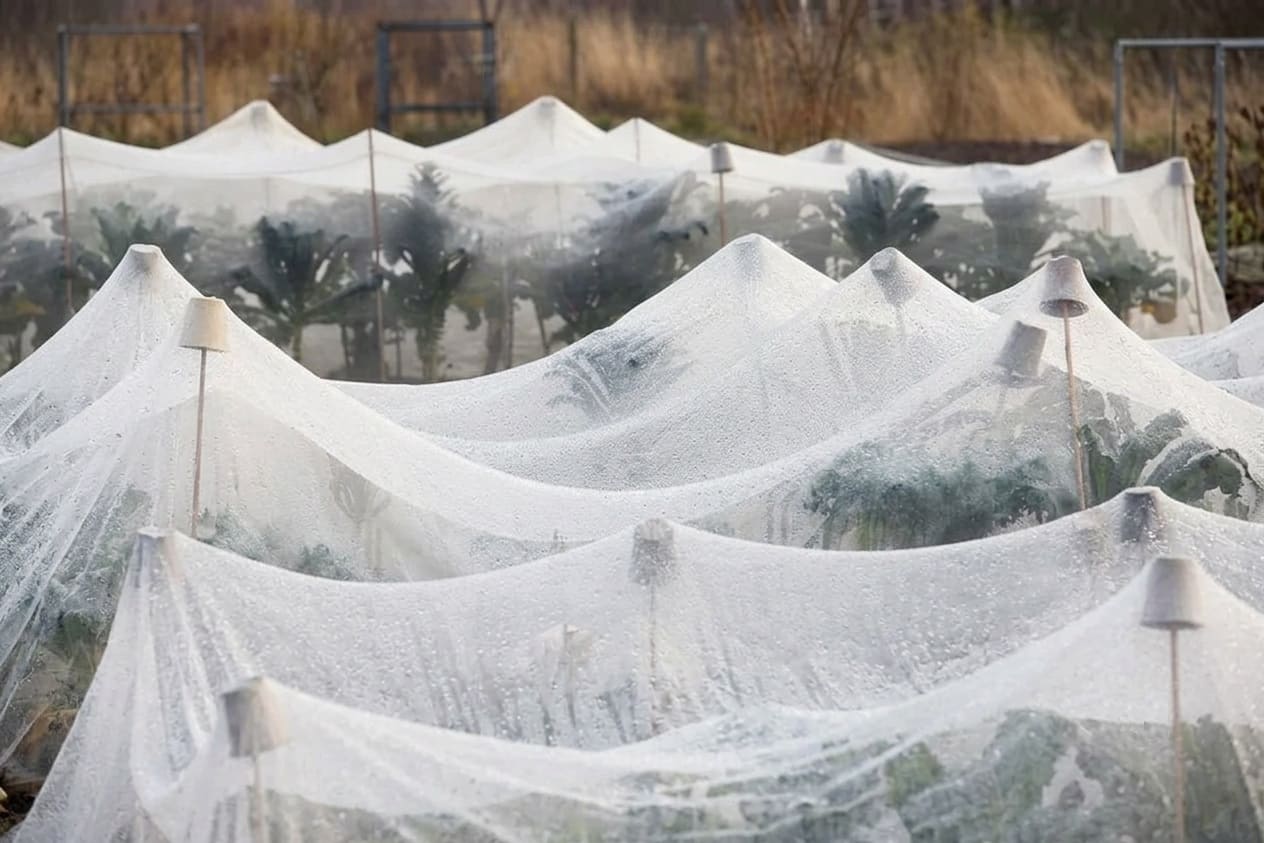
- Cover crops the day you plant them, before moths and butterflies find them.
- Check that the plants are clean first. A cover over existing eggs becomes a protected nursery.
- Hold the cover up on hoops so it doesn’t rest on the leaves. Cabbage white butterflies can lay eggs through fabric that touches the foliage.
- Seal the edges all the way around. Moths will find any gap.
- Lift the cover once a week to check for stowaways, then close it again.
Leafy greens, cabbage-family crops and root crops can stay covered until harvest because they don’t need pollinators. Squash, cucumbers and melons do, so uncover them when the female flowers open, or pollinate by hand.
On trees and large shrubs, netting isn’t practical, and picking, pruning and Btk do the work instead. For a tree too tall to reach, a certified arborist has spray equipment and treatments home gardeners don’t, though a healthy, established tree rarely needs them.
Cutworms attack from the soil, so their barrier goes around the stem. Set a collar made from cardboard, a paper towel tube or a cut-down cup around each transplant so it reaches about 2 inches (5 cm) above the soil and 1 inch (2.5 cm) below.
That’s the real source of the common advice to put cardboard or foil around the base of plants, and it only helps against cutworms.
Recruit the Natural Enemies
In a garden that isn’t sprayed with broad-spectrum insecticides, predators and parasites kill most caterpillars before you ever see them.
Birds are the obvious ones: entomologist Doug Tallamy estimates that a pair of chickadees needs 6,000 to 9,000 caterpillars to raise a single brood.
Paper wasps, lacewing larvae, assassin bugs, ground beetles and spiders all take their share, and tiny parasitic wasps and flies lay their eggs in caterpillars and their eggs.
Sometimes you’ll see the evidence. A tomato hornworm covered in small white cocoons, like grains of rice, has been parasitized by a braconid wasp.
It’s already dying, and the wasps that emerge will go looking for the next hornworm, so leave it on the plant.
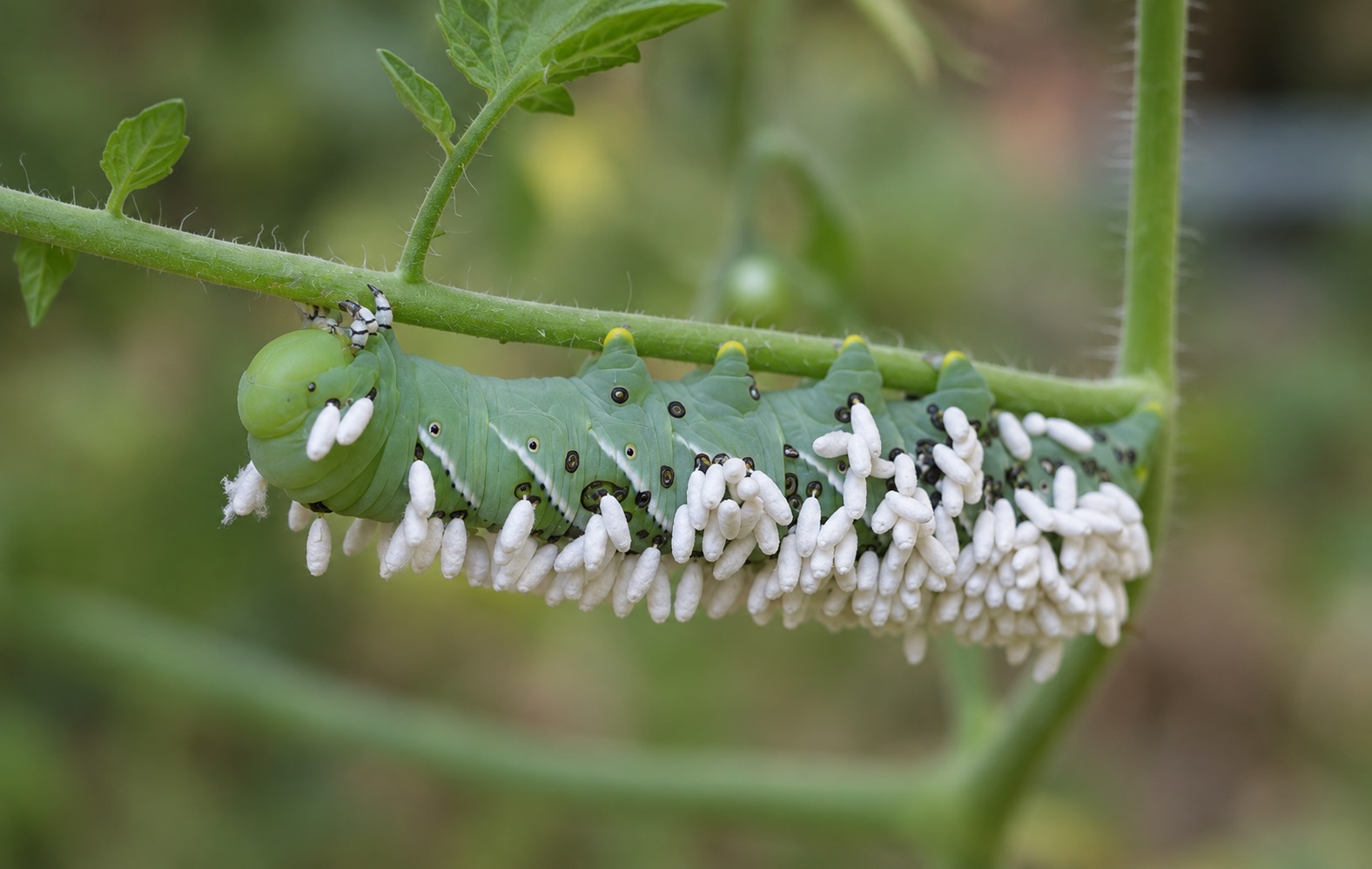
To keep these allies around, grow small-flowered plants such as sweet alyssum, dill, cilantro and yarrow near your vegetables, since tiny parasitic wasps feed on nectar from shallow flowers.
Give birds water, shrubs for cover and nest boxes. And skip broad-spectrum sprays, which kill predators along with pests; the pests usually bounce back first.
Chickens and ducks are keen caterpillar hunters too, as long as their visits are short and supervised, or they’ll move on to your seedlings.
Prevent Next Year’s Outbreak
A little planning in the off-season cuts down how many caterpillars you face next year.
- Choose less appealing varieties.
Kansas State University Extension notes that the imported cabbageworm (the caterpillar of the small cabbage white butterfly) lays fewer eggs on red cabbage than on green.
Red and purple varieties won’t help much against cabbage loopers or diamondback moths, but they’re worth growing where cabbage whites are your main pest.
- Clean up after harvest.
Many pest caterpillars spend the winter as pupae in the soil or in plant debris. Pull spent cabbage-family plants and weeds, and turn the top few inches of soil in fall to expose pupae to birds and weather.
- Plant a trap crop.
A few mustard, kale or nasturtium plants at the edge of the garden can draw egg-laying away from your main crops, as long as you check them and remove caterpillars, or pull the whole plant once it’s loaded. A neglected trap crop just raises more caterpillars.
- Turn off outdoor lights.
Lights near the garden draw night-flying moths in to lay eggs.
- Keep notes.
Write down when caterpillars first appeared and on which plants. Next year, have netting on and start checking a week or two before that date.
Home Remedies: What’s Worth Trying
Homemade caterpillar sprays get passed around a lot. Here’s how they hold up:
- Worth doing:
Kocking caterpillars off with a strong spray of water and then collecting them. If you want a soap spray, commercial insecticidal soap is safer for plants than dish soap mixes.
- Harmless but unproven:
Scattering eggshells or hanging white “decoy butterflies” to scare off cabbage whites, and planting lavender, sage or mint to repel moths.
Plenty of gardeners swear by them, but good evidence is thin, so keep up the netting and checks if you try them.
- Skip:
Vinegar sprays (too weak to matter at the usual recipes and hard on leaves when stronger), homemade hot pepper sprays (a mild repellent at best, and painful if the spray gets in your eyes), flour dusting, sour milk, and diatomaceous earth, which stops working once it’s wet and harms beneficial insects as readily as pests.
Still Seeing Damage?
- You sprayed Btk and nothing changed.
Either the caterpillars were too big, the spray washed off or missed the leaf undersides, or the pest is sawfly larvae or slugs, which Btk doesn’t affect.
- There are fresh holes but no caterpillars.
Check after dark. Cutworms, armyworms and slugs all feed at night and hide by day.
- The caterpillars are inside the fruit or stems.
No spray on the surface can reach them now. Pick off and destroy damaged fruit so the larvae inside don’t finish developing, and next season have Btk or spinosad on the plants while the eggs are hatching, before the larvae tunnel in.
- The broccoli heads are full of caterpillars at harvest.
Small caterpillars burrow into broccoli and cabbage heads. Soak the heads for about five minutes in salted water (roughly 4 tablespoons of salt per gallon, or 60 ml per 3.8 liters), which stuns the caterpillars so they rinse out easily.
Frequently Asked Questions
Is it safe to eat vegetables that caterpillars have chewed?
Yes. Cut away badly damaged parts, rinse off any frass, and eat or cook them as usual. If you’ve sprayed, wait out the pre-harvest interval on the label first.
Why do caterpillars keep coming back after I’ve cleared them?
Many pest species, including cabbage whites and cabbage loopers, have several generations a year. Each wave of caterpillars pupates and turns into adults that lay the next round of eggs, so clearing one batch doesn’t end the season.
Netting and regular checks break that cycle better than repeated spraying.
When do caterpillars show up in the garden?
Mostly from spring through fall, with heavy pressure in late summer and early fall in many areas, and almost year-round in mild climates.
Watch for moths and white butterflies hovering around your crops. Eggs follow, and they hatch within a few days.
Where to Start
Caterpillars are easiest to beat while they’re small and few, so the sooner you look, the less you’ll have to do.
Tonight, take a flashlight and a jar of soapy water out to the plants with the freshest holes. Ten minutes at dusk will tell you what you’re dealing with and take out a good share of it.

