
Chicory coffee is made from the roasted root of the chicory plant, ground and brewed much like coffee.
It has no caffeine of its own, but it does have coffee’s dark color and roasted bitterness, plus a caramel sweetness that coffee lacks.
You can brew it on its own, stir it into regular coffee the New Orleans way, or dig and roast the roots yourself.
This guide covers all three: how much chicory to use and how long to steep it, which blend fits the amount of caffeine you want, and how to turn a pile of muddy roots into a jar of roasted chicory without burning it.
Know What You’re Buying
Chicory for drinking is sold in four forms, and mixing them up is the main reason recipes disagree so wildly on how much to use, from half a teaspoon to 2 tablespoons a cup.
- Roasted ground chicory: the root roasted and ground to roughly the texture of drip coffee, often sold as chicory granules. Look for “100% chicory” or “pure chicory” on the label. This is what most recipes, including the ones here, assume.
- Roasted cut root: pea-sized roasted pieces, usually from herb suppliers. Grind them yourself or simmer them whole.
- Instant chicory: a dried extract that dissolves in hot water like instant coffee. Stir about 1 teaspoon into a cup and skip the steeping.
- Coffee and chicory blends: ground coffee with chicory already mixed in, such as Café Du Monde, French Market and Community Coffee. These contain caffeine.
Check the label before you count on a caffeine-free cup. The famous orange can of Café Du Monde is a coffee blend, and “chicory coffee” on a café menu almost always means coffee with chicory.
In the US, pure chicory is easiest to find in the coffee aisle in Louisiana and along the Gulf Coast, at Indian and other South Asian grocers, from herb suppliers and online.
Roasted chicory dissolves far more readily than coffee does, so a spoonful of it goes much further than a spoonful of coffee grounds. That’s why the amounts below look small if you’re used to brewing coffee.
How to Brew Pure Chicory Coffee
Brewed chicory looks like strong black coffee and tastes roasted, bitter and faintly sweet, with hints of caramel and dark chocolate.
It lacks coffee’s aroma and bright acidity, so it comes across as heavier and rounder, and black it can taste flat.
If you take coffee with milk and sugar, start that way here too; a strong cup drunk black is how most people decide they don’t like chicory.
You’ll need:
- roasted ground chicory, 2 teaspoons (10 ml) per 8 fl oz (240 ml) cup;
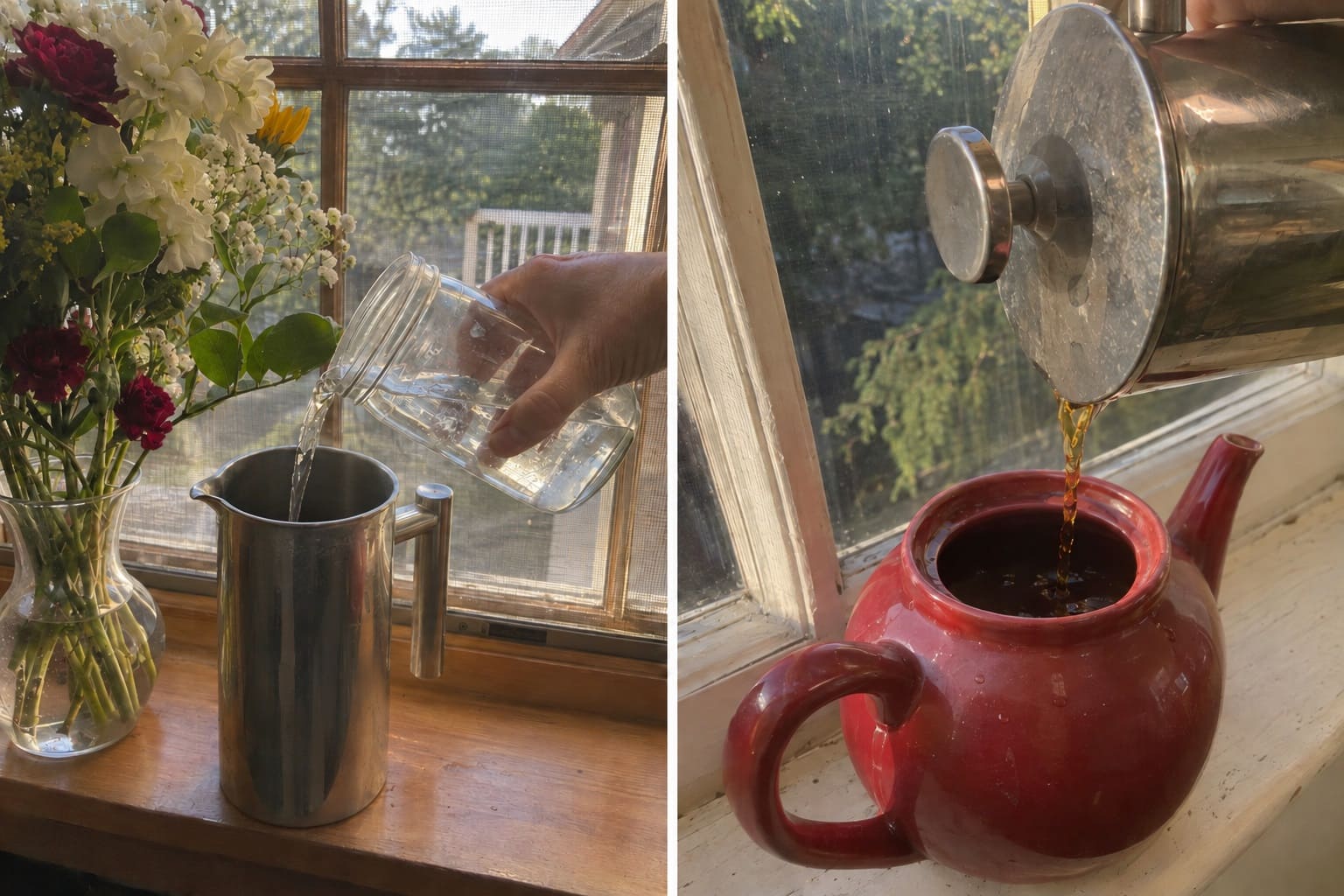
- water heated to just off the boil, about 200°F (93°C);
- a French press, or a heatproof jar plus a fine strainer;
- milk and a sweetener, if you like.
It takes about 10 minutes, and you can make as many cups as your press holds.
- Bring the water to a boil and let it stand for about 30 seconds.
- Put the chicory in the press or jar, pour in a splash of the water to wet it and wait 30 seconds. Add the rest of the water and stir once.
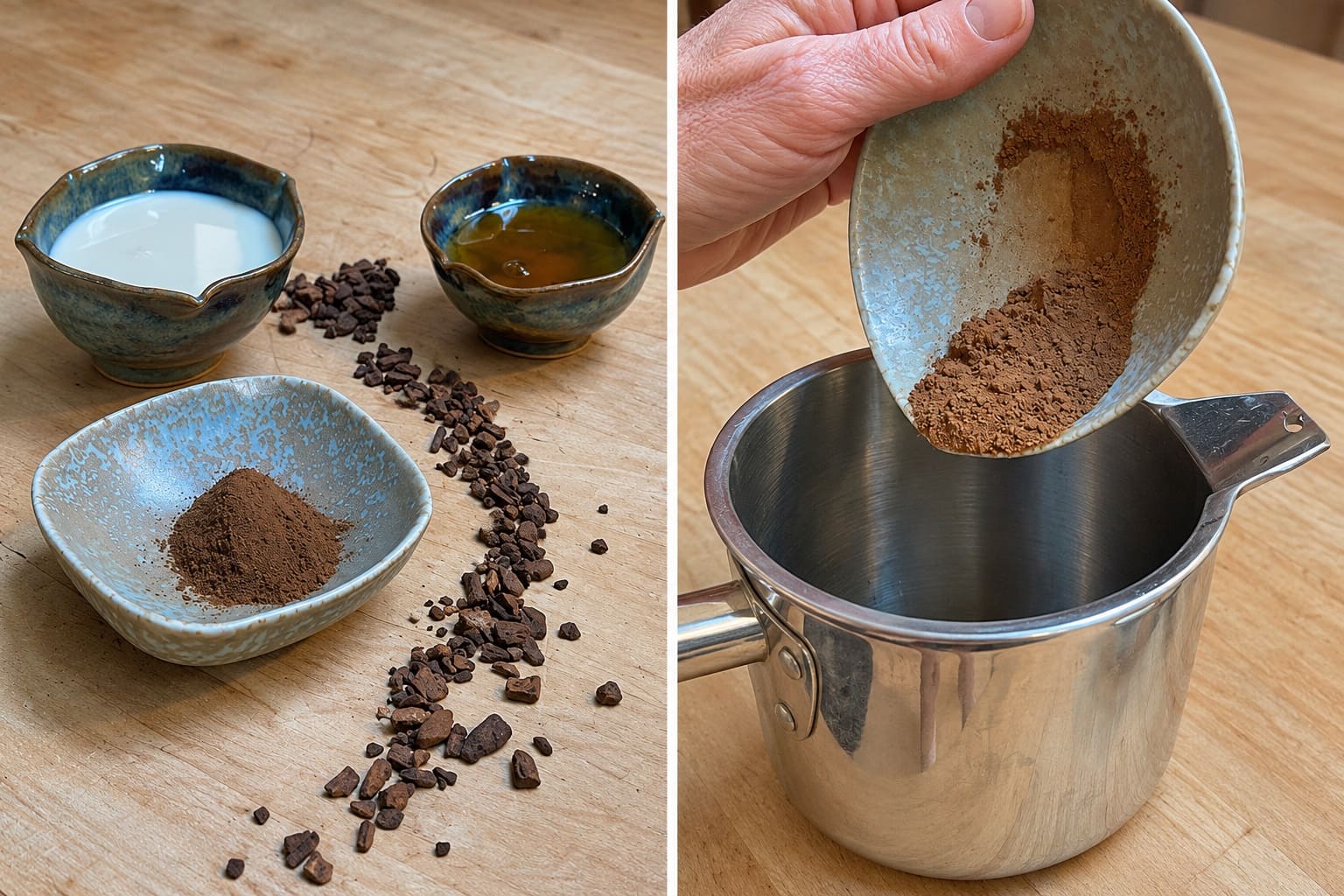
- Cover and steep for 5 minutes.
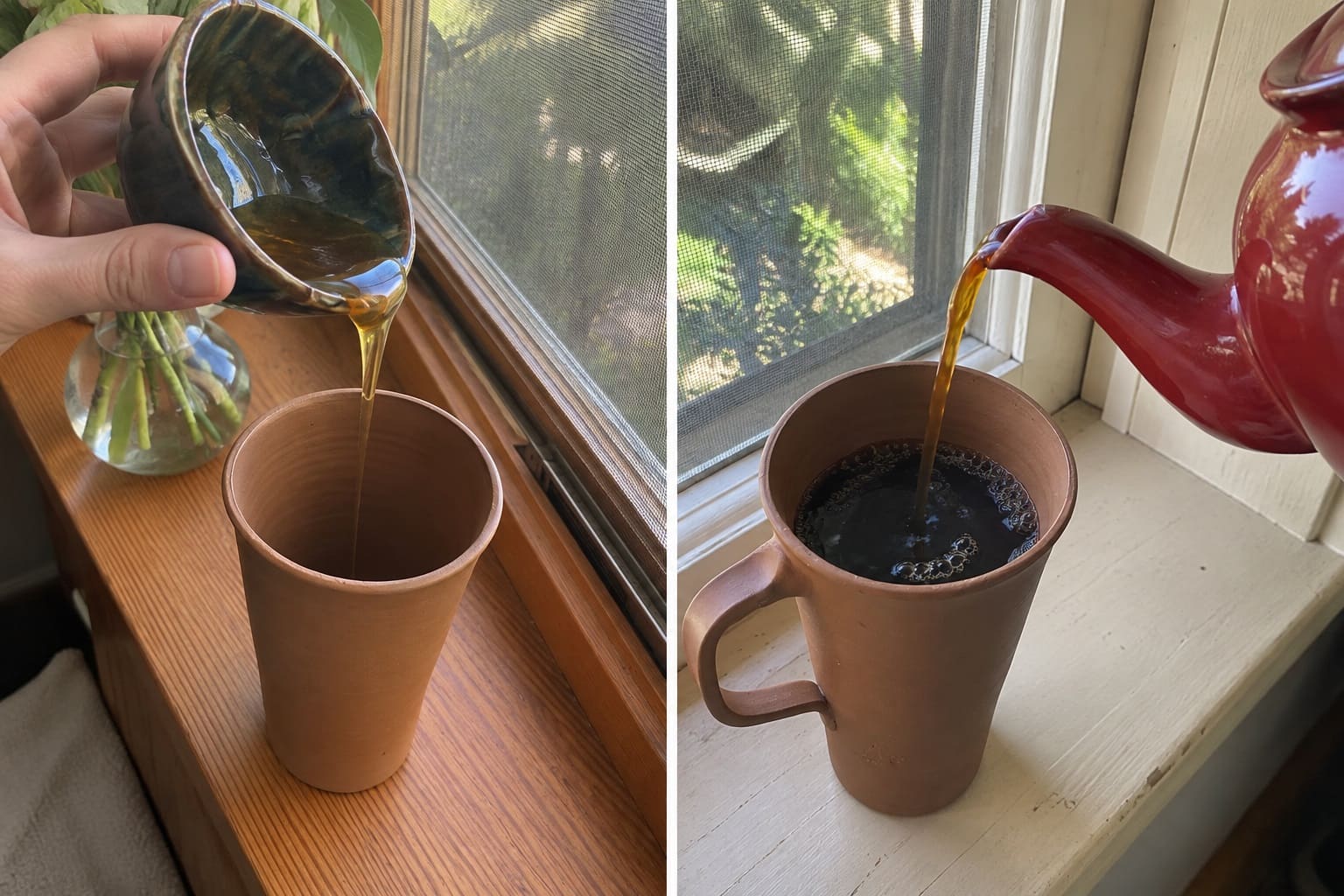
- Press the plunger down slowly, or pour the brew through a fine strainer. Lining the strainer with a paper coffee filter gives a cleaner cup.
- Taste it before you add anything. It should be dark brown and opaque, bitter but not harsh.
Adjust one thing at a time, and change the amount before the time. If the cup is thin, add another teaspoon next time; if it’s harsh, use less.
Stretching the steep to 10 minutes, as many herbal recipes do, tends to give a fuller, slightly sweeter cup rather than a much stronger one.
The same starting amount works in other brewers:
- Drip machine: use about 2 teaspoons per 8 fl oz of water in the reservoir, roughly half your usual coffee measure. If water backs up in the basket, the grind is too fine or there’s too much in the filter.
- Pour-over: wet the grounds, wait 30 seconds, then pour slowly so the water runs through in 3 to 4 minutes.
- Saucepan: the best method for roasted pieces you haven’t ground. Simmer 1 tablespoon of pieces per cup of water, covered, for 10 to 15 minutes, then strain. It’s also the easiest way to add spices: drop a cinnamon stick or a few cardamom pods into the pot.
- Moka pot: fill the basket only about halfway, don’t tamp it, and use low heat, as Italian instructions for chicory and barley coffee advise.
Chicory takes the same extras as coffee: steamed milk, vanilla, cocoa, maple syrup or a pinch of cinnamon.
Roasted dandelion root is its classic partner in caffeine-free blends. It’s milder and nuttier, and mixing the two half and half softens chicory’s edge.
Coffee and Chicory, New Orleans Style
Adding chicory to coffee is usually traced to France during Napoleon’s blockade of British trade in the early 1800s. New Orleans held on to the habit, especially after Union ships blockaded the port during the Civil War.
A little chicory deepens the color, adds body and a bittersweet finish, and replaces some of the coffee, which makes it a handy way to cut back on caffeine.
Mix the two by volume and brew the blend as you’d brew coffee, with your usual amount of grounds.
Start at three parts coffee to one part chicory; New Orleans blends are most often described as 70/30 or 80/20, and locals usually drink them with milk.
| Coffee : chicory | Caffeine per 8-oz cup* | What to expect |
| 4:1 | 64–80 mg | Coffee with a darker, rounder finish |
| 3:1 | 60–75 mg | The easy starting point; chicory clearly there |
| 2:1 | 53–67 mg | Bold and bittersweet; best with milk |
| 1:1 | 40–50 mg | Half-caf; chicory leads |
| 1:3 | 20–25 mg | Mostly chicory with a coffee backbone |
| Pure chicory | 0 mg | Caffeine-free |
*Estimates based on the FDA’s figure of about 80 to 100 mg of caffeine in an 8-ounce (240 ml) cup of brewed coffee, assuming the same total amount of grounds. Your coffee may run higher or lower, but the percentage you cut holds.
To ease off full-strength coffee, move one row down the table every week or two, so your taste and your caffeine habit adjust together.
If you grind whole beans, grind the coffee and chicory separately and mix them afterward, which lets you change the ratio whenever you like.
For café au lait the way New Orleans serves it, brew the blend strong, at about 2:1, and mix it half and half with milk heated until steaming but not boiling.
Iced Chicory Coffee and Cold Brew
Chicory’s heavy body holds up well to milk and ice, which is why New Orleans-style cold brew usually includes it.
New Orleans-style cold brew.
You’ll need 1 cup (about 3 oz or 85 g) of coarsely ground dark-roast coffee, ⅓ cup (80 ml) of roasted ground chicory, 3½ cups (830 ml) of cold water, a 1-quart (1 liter) jar, a fine strainer and a paper coffee filter.
It takes 12 hours, almost all of it waiting, and makes about 2½ cups (600 ml) of concentrate, enough for five drinks.
- Stir the coffee, chicory and water together in the jar until all the grounds are wet.
- Cover the jar and leave it at room temperature, out of direct sun, for 12 hours.
- Strain it through the fine strainer, then a second time through the paper filter to catch the fine silt. Let gravity do the work; pressing the grounds clouds the brew.
- Store the concentrate in a sealed jar in the refrigerator and use it within a week.
- To serve, pour ½ cup (120 ml) over ice and top with an equal amount of milk. Sweeten with simple syrup, which dissolves in cold drinks where sugar won’t, or a spoonful of sweetened condensed milk.
For a caffeine-free version, steep ⅓ cup of chicory alone in 2 cups (480 ml) of cold water the same way, then taste it and dilute as needed.
Vietnamese-style iced coffee
Vietnamese-style iced coffee uses the same coffee and chicory blends. Vietnamese American cafés have long brewed Café Du Monde through a phin, a small metal drip filter that sits on top of the glass.
- Spoon 1 to 2 tablespoons (15 to 30 ml) of sweetened condensed milk into a glass.
- Put 2 tablespoons of coffee and chicory blend in the phin, set the press insert on top and place the phin on the glass.
- Pour in a splash of just-boiled water to wet the grounds and wait 30 seconds. Then fill the chamber with about 4 fl oz (120 ml) of water and cover it.
- Let it drip for 4 to 5 minutes, stir the coffee into the milk and pour it over a glass of ice.
Use 1 tablespoon of pure chicory instead for a caffeine-free glass. No phin? Brew a strong half cup any other way and pour it over the milk.
How to Make Chicory Coffee From the Root
Roasting your own spreads over a day or two, but most of that is drying time, and the hands-on work is mostly cleaning.
The payoff is chicory roasted exactly as dark as you like, from a plant that may be growing nearby for free.
Finding or Growing the Roots
Chicory grows wild across much of North America and Europe in fields, vacant lots, pasture edges and roadsides, anywhere the soil has been disturbed.
It’s easiest to recognize in summer: stiff, branching stems 1 to 4 feet (30 to 120 cm) tall with few leaves, carrying sky-blue flowers about 1½ inches (4 cm) across that sit right against the stem.
The petals have squared-off, fringed tips. The flowers open in the morning and close by early afternoon, so look on sunny mornings.

Mark the plants in summer and dig them later. Roots are best from late fall through early spring, when the plant has died back to a flat rosette of leaves.
At that stage chicory looks a lot like dandelion; one difference is the coarse hairs along the underside of the leaf’s midrib, where dandelion leaves are mostly smooth. Older roots that have already flowered are woodier but still roast fine.
The ground is easiest to dig after rain, and the taproot runs deep, so use a spade rather than pulling. Keep the leaves attached until you’re home so you can check every root you dug.
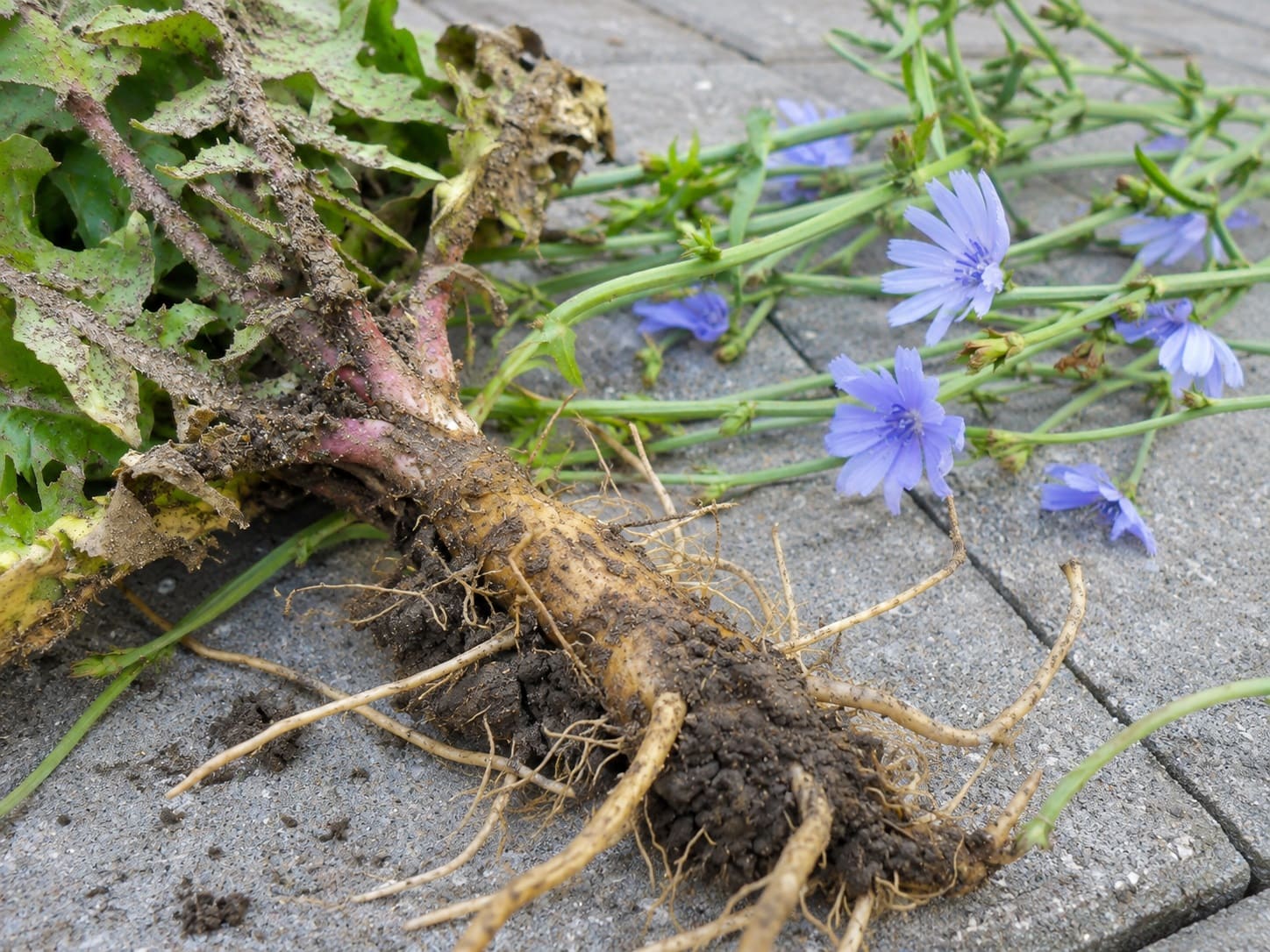
Dig only where you’re sure the ground is clean. Skip roadsides, ditches, rail lines and anywhere that may have been sprayed with herbicide, and get permission on land that isn’t yours. Foraging rules on public land vary from place to place, so check them locally.
Growing your own gives fatter, more tender roots. Look for large-rooted cultivars bred for the purpose, such as ‘Magdeburg’ or ‘Brunswick’. Sow them in spring and dig the roots in fall once the tops start to die back.
Belgian endive (witloof) and radicchio are the same species, so the roots left over after forcing endive can be roasted instead of composted.
Cleaning, Drying and Roasting
Gather a bucket, a stiff brush, a sharp knife or a food processor, rimmed baking sheets lined with parchment and, if you have one, a food dehydrator.
Most of a fresh root’s weight is water, so expect roughly a cup of roasted pieces from each pound (450 g) of fresh roots, enough for about 15 to 25 mugs. Allow overnight for drying plus 1 to 2 hours of roasting.

- Soak the roots in a bucket of water for a few minutes to loosen the soil, then scrub them with the brush and rinse. There’s no need to peel them. Cut off the crowns and leaves.
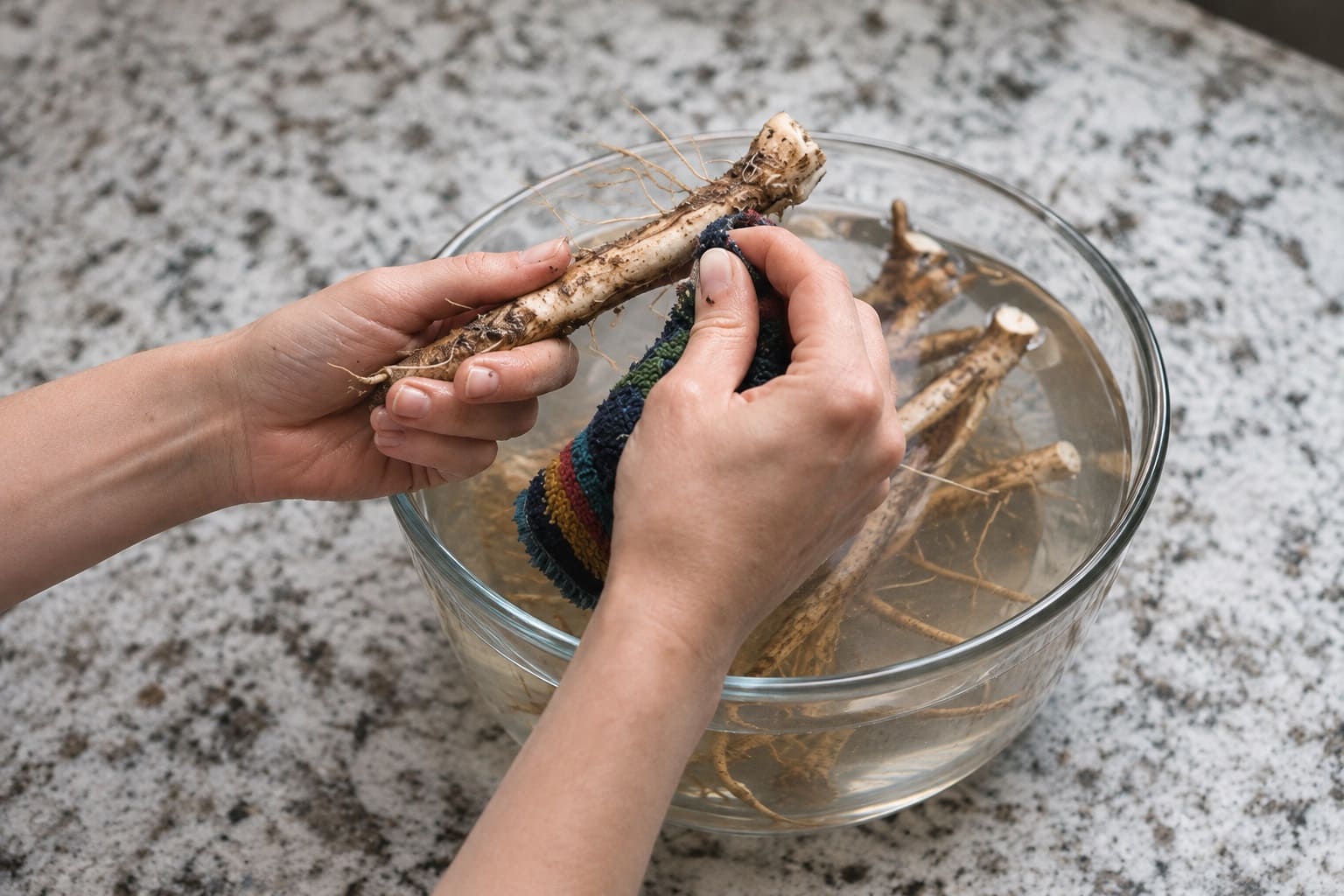
- Cut evenly. Chop the roots into pieces about the size of a pea, or pulse them in a food processor. Even size matters more than exact size, because small bits burn before big ones are done. Discard any woody cores that resist the knife.
- Spread the pieces in a single layer and dry them in a dehydrator overnight, or in the oven at its lowest setting, around 170 to 200°F (75 to 95°C), for 1½ to 2½ hours. They’re ready when they’re hard and snap rather than bend. Drying first gives a much more even roast than putting wet roots straight into a hot oven.
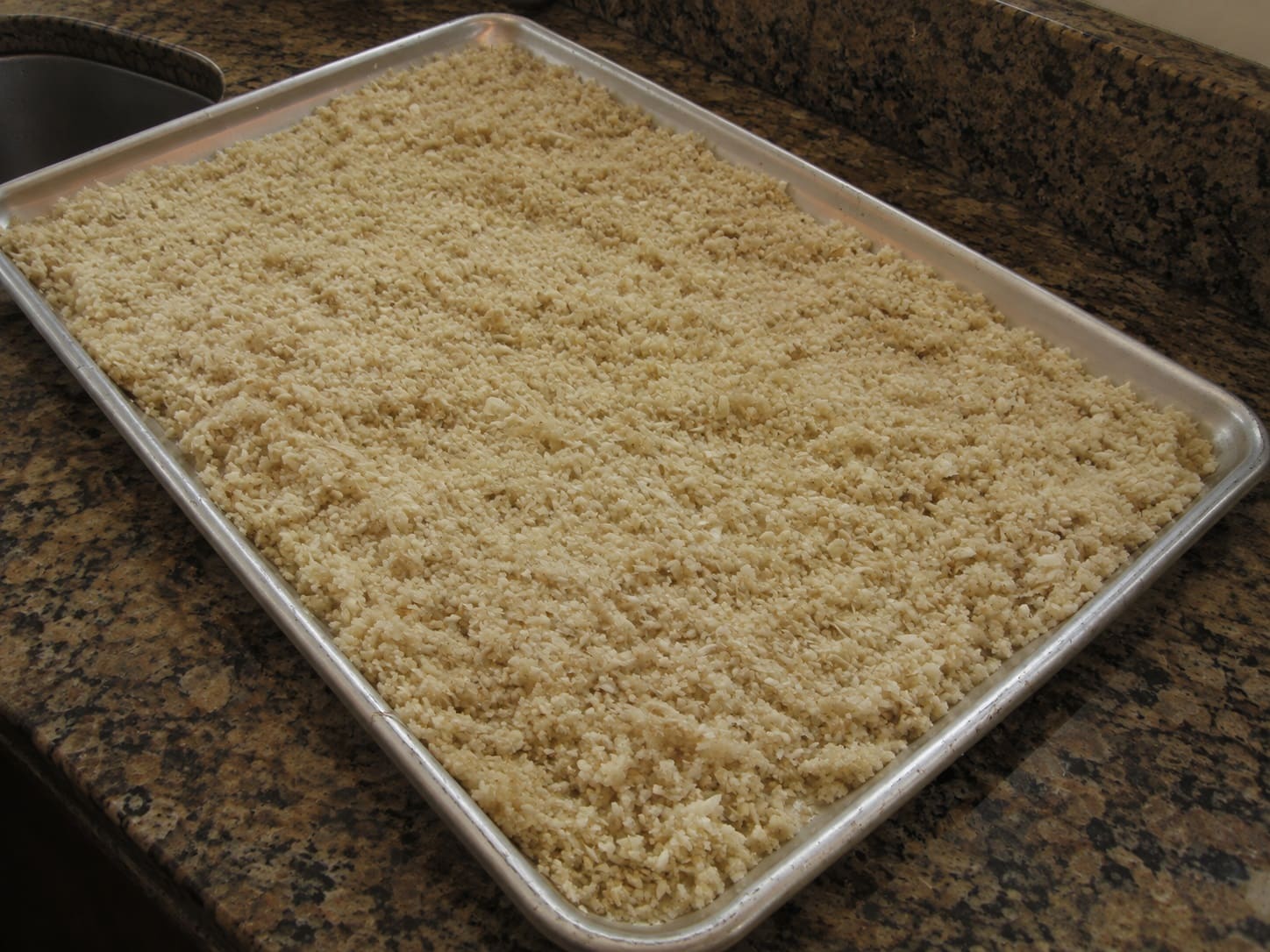
- Heat the oven to 300 to 325°F (150 to 165°C) and roast the dried pieces in a single layer, stirring every 10 to 15 minutes. They usually turn golden within the first 20 minutes, then darken slowly. Most batches take 40 to 90 minutes.
- Know when to stop. Take the tray out when the pieces are an even, deep brown, smell of caramel and chocolate, and give off the first faint wisp of smoke. Before you turn the oven off, grind a few pieces and brew a test cup. If it tastes weak, roast a little longer.
- Spread the pieces out until they’re completely cool before you grind or store them.
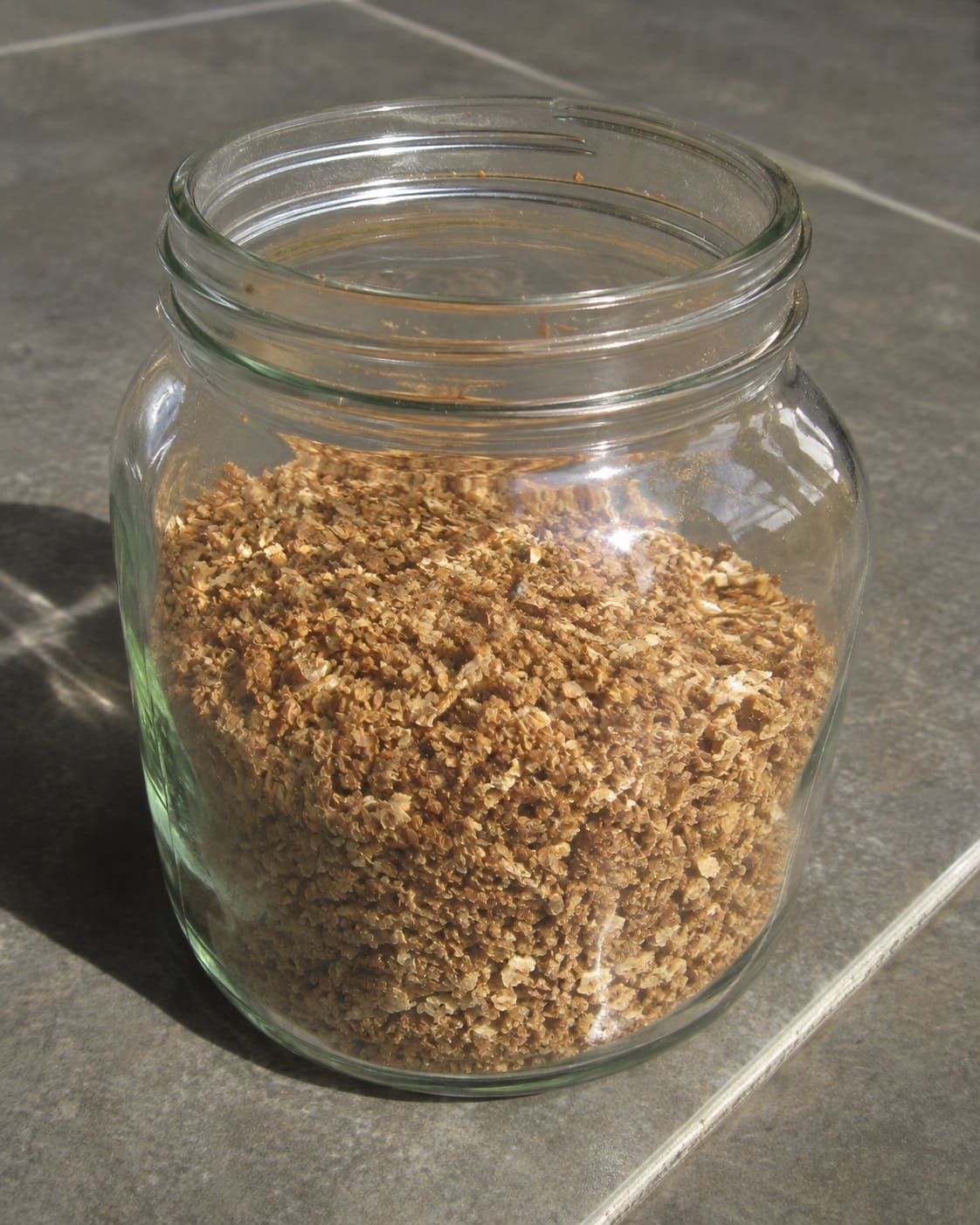
Roast color is your strength dial. A lighter, cinnamon-brown roast brews milder and sweeter, while a dark one brews more bitter and closer to coffee.
Black, shiny or acrid-smelling pieces are burnt, and a few of them will make the whole jar taste scorched, so pick them out.
Grinding and Storing
Grind only what you’ll use in the next week or two. A blade grinder handles roasted chicory well, and a burr grinder works too if you break up large chunks first. Aim for the texture of drip coffee or coarse sea salt.
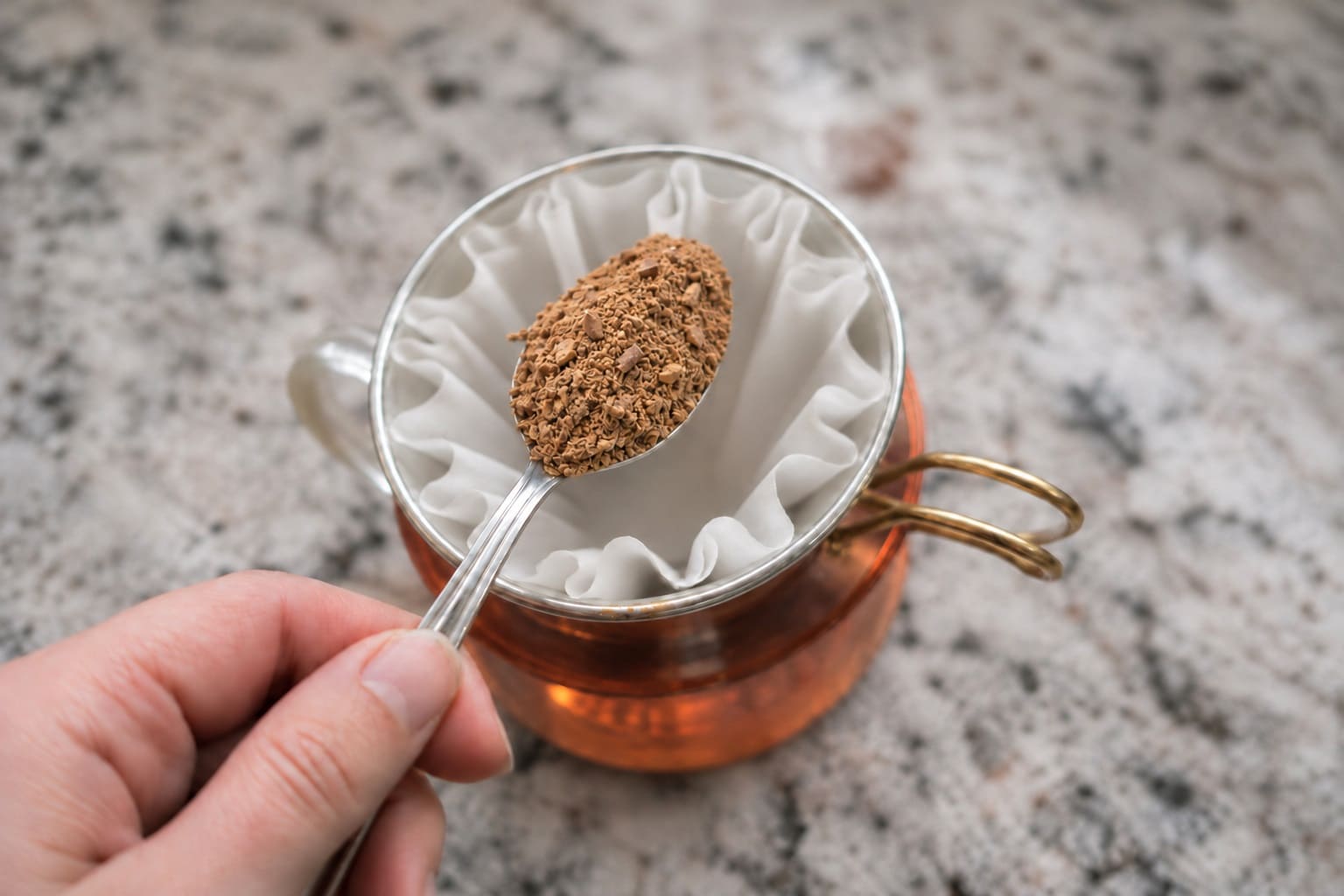
Powder-fine chicory makes a muddy, bitter cup and clogs filters. In a pinch, a mortar and pestle followed by a sieve does the job.
Keep the roasted pieces in an airtight jar somewhere cool and dark. Chicory has almost none of the oil that makes coffee go stale and rancid, so whole roasted pieces keep their flavor for many months.
Its real enemy is moisture: roasted chicory soaks up humidity and turns sticky and clumped, so keep the lid tight and use a dry spoon. If a batch goes soft, crisp it in a 250°F (120°C) oven for about 10 minutes.
Related posts:
- How to Make Pumpkin Powder (DIY Pumpkin Flour at Home)
- How to Dry Mint at Home (4 Easy Methods for Best Flavor)
Troubleshooting
- Bitter and harsh: too much chicory, a burnt roast or a powder-fine grind. Use less first; if that doesn’t fix it, look at the roast and the grind.
- Thin or weak: too little chicory, a coarse grind or a pale roast. Add a teaspoon, or steep home-roasted pieces a few minutes longer.
- Sludge at the bottom of the cup: the grind is too fine for a press. Pour the brew through a paper filter, or grind coarser next time.
- Burnt edges and pale centers after roasting: uneven pieces, a crowded tray or an oven running hot. Sort the pieces by size and roast at the lower end of the range.
- Gummy pieces or a pasty grind: the roots weren’t fully dry. Dry the next batch longer; dry out this one in a low oven before grinding.
Is Chicory Coffee Good for You?
Pure chicory coffee is caffeine-free, and that’s its clearest benefit: no jitters and nothing to keep you awake at night. Most people tolerate it well.
Raw chicory root is one of the richest sources of inulin, a fiber that feeds beneficial gut bacteria, which is why chicory is so often sold as a gut-health drink. Keep that claim in proportion.
Roasting breaks down much of the inulin, and the only bowel benefit EU regulators accept for chicory inulin requires 12 grams of it a day.
A whole tablespoon of roasted chicory weighs less than that, so a mug or two is a pleasant drink with a little fiber, not a fiber supplement. Claims about blood sugar and other benefits rest mostly on lab and animal studies.
A few people should start small or check first:
- Sensitive digestion or IBS: inulin is a fermentable fiber and can cause gas and bloating. Start with 1 teaspoon per cup and build up over a week or two.
- Allergies: chicory belongs to the daisy family, along with ragweed, chrysanthemums and marigolds, and cross-reactions with birch pollen have been reported. If you react to any of these, try a small amount first.
- Gallstones: chicory may stimulate bile flow, so talk to your doctor before drinking it regularly.
- Pregnancy and breastfeeding: chicory in normal food amounts is generally considered safe, but larger, medicinal amounts are advised against during pregnancy, and there’s little safety data for breastfeeding. Ask your provider before making it a daily drink.
Frequently Asked Questions
Can you use chicory in an espresso machine or pod brewer?
Coffee and chicory blends work in espresso machines, and they’re also sold in pods for single-serve brewers.
Pure chicory is less predictable as espresso. It has none of the oils that form crema, so expect a thin, dark shot, and start with a smaller dose than you’d use for coffee.
A moka pot with a half-filled basket is the easier route to a strong, espresso-like cup.
Can you reuse chicory grounds?
You can, but the second cup is much weaker, because so much of chicory dissolves the first time. If you want to stretch a batch, mix the spent grounds with a fresh teaspoon instead of brewing them alone.
Is chicory coffee less acidic than coffee?
It tastes less sharp than coffee, and plenty of people whose stomachs object to coffee find chicory easier to drink. There’s little solid measurement of its actual acidity, though.
If coffee bothers you, chicory is well worth trying, but judge it by how you feel rather than by the label.
Where to Start
If you’ve never tried chicory, buy a bag of pure roasted chicory before you dig a single root. Brew it at 2 teaspoons per cup with milk, and the next morning swap a quarter of your usual coffee grounds for chicory.
Two cups will show you which role it earns in your kitchen: a caffeine-free drink, a way to cut back on coffee or simply a richer-tasting coffee. Once you’re hooked, mark a few blue-flowered plants next summer and roast your own batch in the fall.

