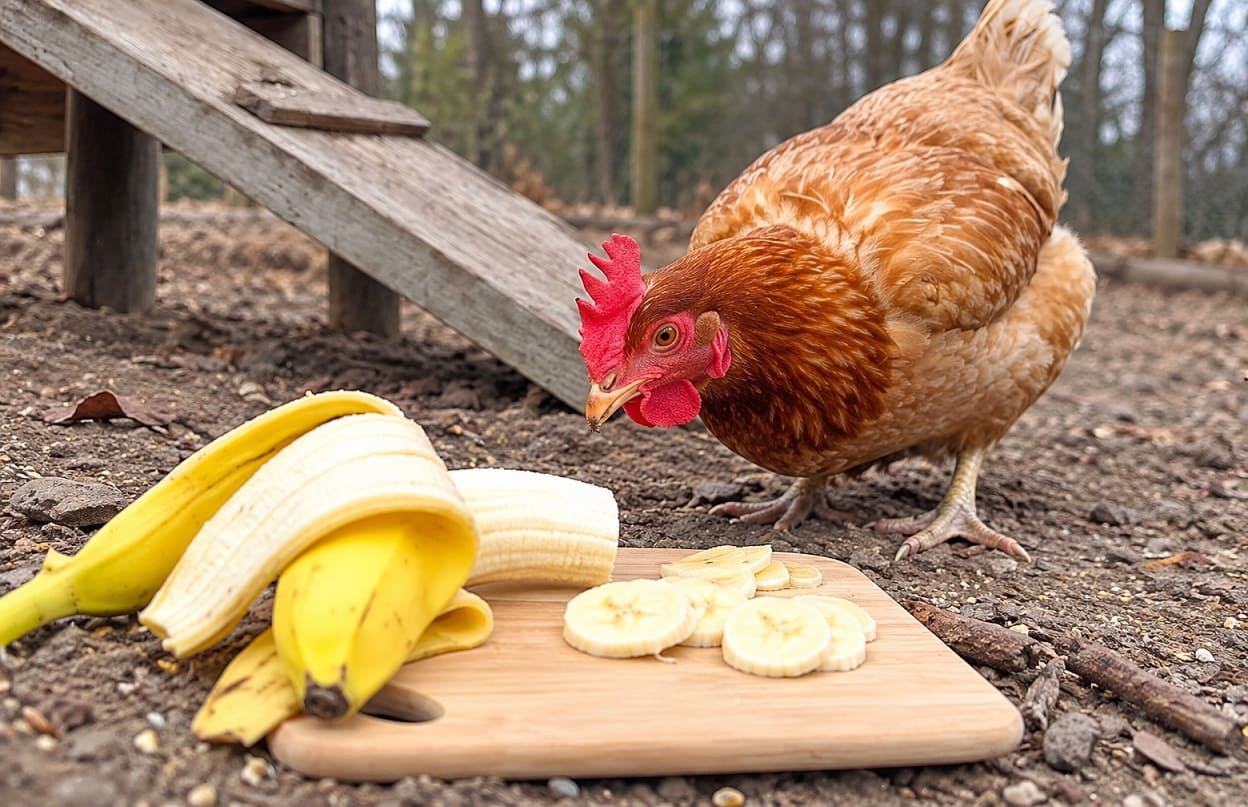
There’s a particular kind of guilt that comes with a bunch of bananas going spotty on the counter.
Nobody wants them, banana bread isn’t happening, and the compost feels like a waste when a flock of eager hens is standing right outside. So the question lands: can you just hand them over to the chickens?
Short version — yes, and they’ll probably sprint for them. Bananas aren’t toxic, and they bring a few genuinely useful nutrients to the run.
But “safe” and “good idea in any amount” are two different things, and most articles blur that line.
The part that actually matters isn’t whether chickens can eat bananas; it’s how the sugar and the near-zero protein fit into a laying hen’s day.
By the end of this, you’ll know exactly how much to give, how often, which ripeness is best, whether the peel is worth the bother, and the warning signs that you’ve gone overboard.
The short answer, in five lines
- Yes — bananas are a safe, non-toxic treat for chickens.
- Keep them to a treat: about 1 tablespoon per adult bird, once or twice a week.
- All treats combined should stay under roughly 10% of the daily diet.
- Ripe is ideal; never feed moldy or fermented fruit.
- The peel is edible but optional — most hens ignore it.
Yes, Chickens Can Eat Bananas — but Treat Them Like Candy, Not Dinner
Let’s settle the safety question first, because it’s the easy part. Bananas are not toxic to chickens. There’s no hidden compound to fear in the flesh, and most birds adore the soft, sweet texture.
Toss a few slices into the run and you’ll likely watch your calmest hen transform into a heat-seeking missile.
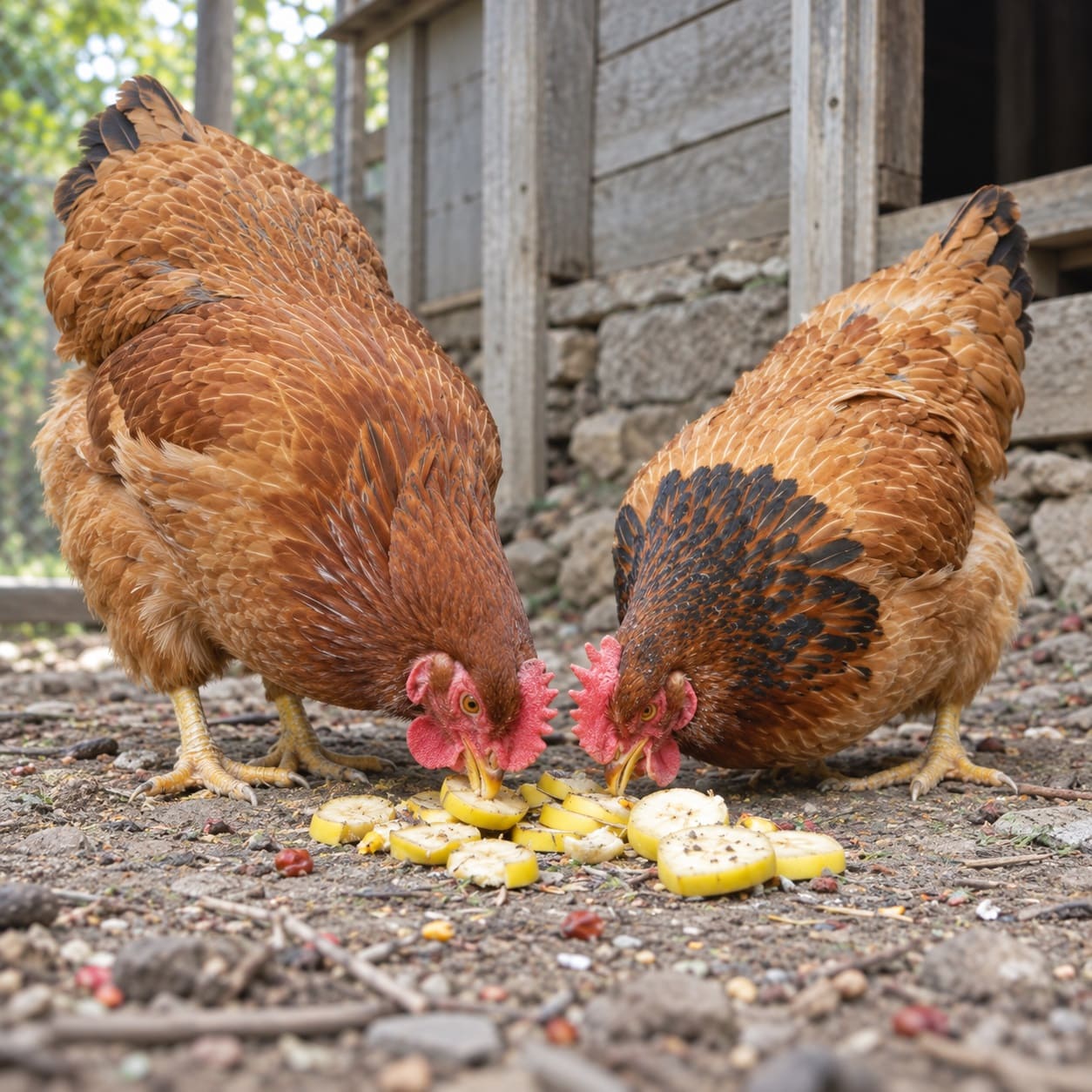
So why does every sensible keeper say “in moderation”? Here’s the reason that actually holds up — and it’s not just “sugar makes them fat.”
A banana is mostly water and carbohydrate, with only about a gram of protein in the whole thing.
What it does bring — a bit of potassium, vitamin B6, magnesium, and fiber — is genuinely useful in small doses, but it’s nothing a good feed isn’t already giving your birds.
A laying hen, meanwhile, runs on protein and calcium: the egg itself is essentially a protein package inside a calcium shell. Every mouthful of banana is a mouthful that isn’t balanced feed.
Fill a hen up on sweet treats and she has less appetite for the feed that supplies what she actually needs.
Over time, that protein-and-calcium shortfall shows up where you’ll notice it: fewer eggs, thinner shells, a slower bounce-back from molting.
That’s the real engine behind “moderation,” and it’s far more useful to understand than a vague warning about weight gain.
One myth worth retiring, though: you’ll read that a chicken would have to eat something like 20 bananas in one sitting to truly harm itself.
That’s basically true, and it’s good news — an accidental extra handful won’t poison anyone, so don’t panic over a one-time slip.
The damage bananas can do is the slow kind, built from a daily sugary habit, not a single generous afternoon.
How Much Banana, and How Often? Cutting Through the Conflicting Advice
This is where the internet falls apart. One article says treats should be 5% of the diet, the next says 10%, a third says “a tablespoon,” and a fourth says “one banana per four birds.” No wonder people give up and guess.
Here’s the through-line that ties them together: the 90/10 rule. Aim for about 90% balanced feed and 10% everything else — and because bananas sit at the sugary end of the treat shelf, park them at the low end of that 10%.
Translated into real life, it looks like this:
| Your setup | About how much banana | How often |
| A hen or two | A few thin slices each (about 1 tablespoon) | 1–2 times a week |
| A small flock (4–6 birds) | 1 banana, shared between them | 1–2 times a week |
| Chicks under 6 weeks | None yet — see the chick section below | — |
The golden rules underneath the numbers are simple: never daily, and always rotate bananas with other treats so no single food dominates.
If your birds free-range, remember they’re already topping up on bugs and greens, so go even lighter on the fruit.
Want a gut-check that you’ve got the balance right?
Watch the egg basket. If your numbers dip or shells start feeling flimsy and it isn’t molting season or the dead of winter, take an honest look at how many treats have been sneaking into the run.
Ripe, Green, or Spotty-Brown? Which Banana Is Actually Best
Sources flatly contradict each other here. Some insist on ripe only and warn that green bananas cause upset; others claim “the greener, the better” because of the lower sugar.
They’re each half-right, and the full picture is more useful:
- Ripe and yellow is the sweet spot. It’s soft, easy to peck, and easy to digest — your everyday default.
- Green and unripe has less sugar (a genuine plus) but more resistant starch, which some birds find harder on the gut or simply pass straight through. If you use it, cut smaller pieces and don’t make it the norm.
- Overripe and brown is often the flock favorite, and soft-brown is perfectly fine — but it’s also the sweetest, so shrink the portion to match.
The only hard line is spoilage. Brown does not mean bad, but fuzzy mold, sliminess, or a boozy, sour smell does. Fermented or moldy fruit belongs in the trash or a hot compost pile, never in the run.
A good rule of thumb: if you’d still use it for banana bread, your hens can have it; if it’s gone past that, so have they.
What About the Peel? An Honest Answer
Banana peels aren’t toxic, and yes, they’re technically edible. But here’s the honest version most posts skip:
- Most chickens won’t really eat a raw peel.
They’ll nibble the soft inner side and leave the leathery rest behind. That’s completely normal, not a sign of a picky flock.
- There are two real catches.
Pesticide residue tends to concentrate on and in the peel, so if you feed it, choose organic and wash it well — or simply skip it.
And raw peel is tough, so it needs help: chop it small, boil it soft, or dry and crush it into a sprinkle for their feed.
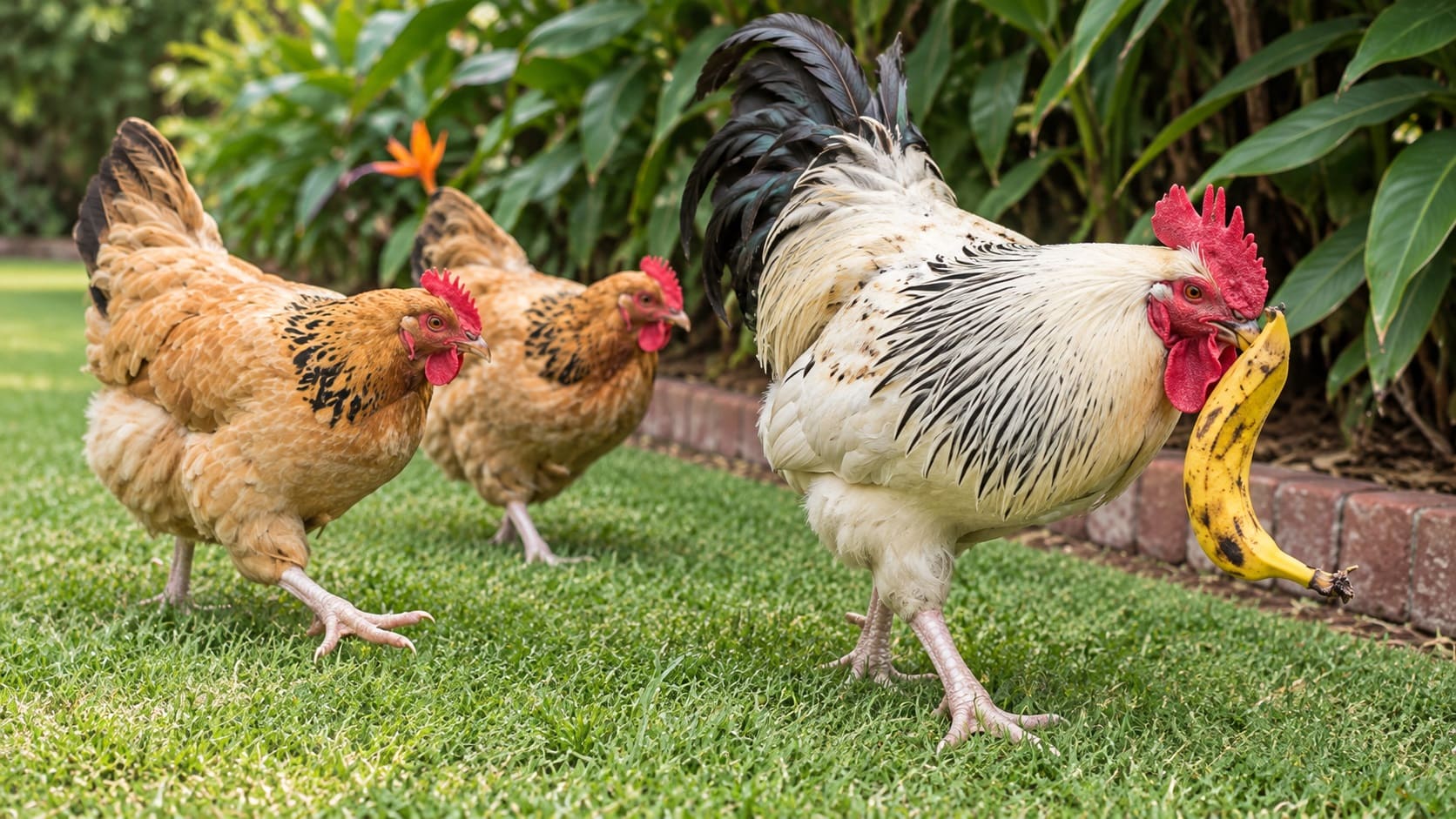
You’ll also see the claim that the peel is more nutritious than the fruit. Treat that as folklore, not fact.
Peels do carry fiber and some minerals, but there’s no solid poultry evidence that they out-nourish the flesh, and the prep work rarely pays off in enthusiasm from the birds.
Bottom line: feeding the peel is a nice zero-waste gesture if your hens happen to take to it, but it’s entirely optional. Tossing peels straight into the compost is a perfectly good answer — and your flock won’t feel cheated.

How to Serve Bananas: The Fun Part, Done Right
Serving bananas takes almost no effort, but a few small choices keep it clean and fair:
- Peel it. The flesh is what they’re after, and it spares you the pesticide question entirely.
- Slice or mash it. Bite-sized rounds or a quick mash help everyone get a share and stop the bossiest hen from inhaling the whole thing.
- Scatter it on a clean surface. A flat rock, a board, or bare ground beats dropping it into the bedding, where it turns into sticky mush.
- Clear the leftovers. After 20–30 minutes, pick up whatever’s left. Sugary scraps are a magnet for flies, ants, and rats.
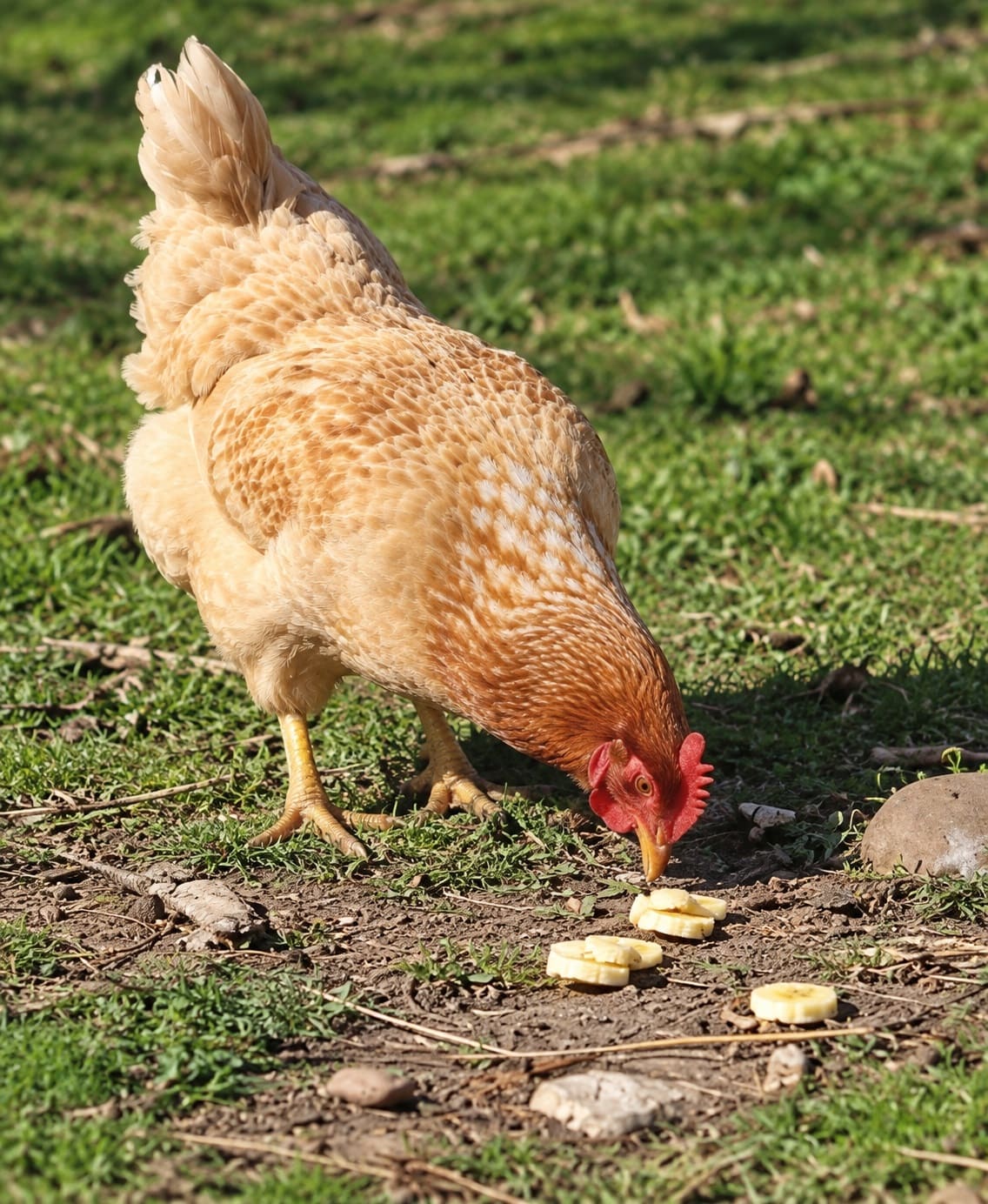
Once the basics are handled, the fun begins. Two crowd-pleasers worth trying:
- The hanging banana.
Split a whole banana lengthwise, tie it up with twine, and let the flock peck at a swinging piñata. It’s entertainment and a snack in one.
- Frozen slices.
On a hot afternoon, frozen banana coins are a fun novelty. Just be honest about what they do: this is enrichment, not air conditioning.
Shade, plenty of cool water, and watery treats like cucumber or watermelon do far more to beat real heat than a frozen banana ever will.
Anyone who has tossed a single banana into the run knows the scene that follows: a gentle flock turns, briefly, into a feathered rugby scrum, and the lowest hen in the pecking order ends up watching from the sidelines.
Spreading the pieces out across a few feet is the quiet fix — suddenly everyone has a piece, and nobody is getting flattened for it.
One easy thing to overlook: grit. Chickens have no teeth — they grind food in the gizzard using grit they’ve swallowed.
If your birds aren’t ranging on gritty ground, keep a dish of grit available, or soft treats just sit heavy in the crop.
As for the comical beak-wiping you’ll see afterward, that’s just a hen cleaning sticky residue off her beak, and it’s nothing to worry about.
How do you know it went well? The pieces vanish within 10–20 minutes, and the next day’s droppings look completely normal.
When Bananas Backfire — and What to Do
Signs you’ve gone too far
Most guides warn you vaguely to “watch for problems” without saying what to look for. Here’s the actual list:
- Loose or runny droppings the day after a treat.
- Turning their beaks up at regular feed — a classic sign of a treat habit.
- Weight you can feel building up around the breastbone.
- A soft, squishy, or sour-smelling crop first thing in the morning, which points to sour crop.
- Over several weeks, fewer eggs or noticeably thinner shells.
In plain terms, too much soft, sugary food can throw the crop off balance — letting yeast bloom or food pack down instead of moving through the way it should.
How to set things right
The fix is usually simple. Pause all treats for a few days and go back to plain balanced feed, fresh water, and grit, making sure no single bird is gorging. Most mild cases clear up on their own within a day or two.
Know when it’s more than a treat hangover, though. If a bird is hunched and listless, refusing to eat, passing watery droppings that won’t stop, or carrying a crop that’s still squishy and sour after a night’s empty stomach, call an avian vet rather than waiting it out.
Can Baby Chicks Have Bananas?
Chicks are a different story, and the advice online is all over the map — some say never, others say 6 weeks, others 8.
Here’s the reasoning that cuts through it. A chick’s entire job in the early weeks is growing, and growth runs on high-protein starter feed, not sugar. Their tiny digestive systems are also easily thrown off.
So the safe, simple rule is to hold off on bananas and other sweet treats for the first several weeks.
If you want to share once they’re a bit older — somewhere around 6 to 8 weeks — offer a pea-sized dab of mashed ripe banana, rarely, and only once they have chick grit so they can actually break it down.
Until then, starter feed and clean water are all they need. When in doubt, wait. There’s genuinely no rush.
Banana Questions Chicken Keepers Actually Ask
Can chickens eat banana chips or dried banana?
Skip them. Drying concentrates the sugar, and most store-bought chips pile on added sugar, oil, or preservatives that your flock doesn’t need. Fresh banana — or plain frozen — is the better choice every time.
Will feeding bananas make my eggs taste like banana?
No. Unlike strong-flavored foods such as onion, garlic, or fish, bananas don’t carry through into the eggs. You can hand out the treat without worrying about your morning omelet.
Do bananas boost egg laying?
Not directly. Steady laying comes from complete feed, enough protein and calcium, good light, and low stress — not from any single fruit. If anything, leaning on bananas too hard can lower production rather than raise it.
My chickens won’t touch bananas — is something wrong?
Not at all. Taste is individual, and plenty of hens snub bananas while their coop-mates lose their minds over them. If yours aren’t fans, just offer something else — berries, melon, or chopped cucumber are usually easy wins.
If bananas are fine, which fruits and scraps aren’t?
Keep a few things out of the run entirely: avocado pits and skins (they contain persin), raw or dried beans (toxic lectins), anything moldy, chocolate and coffee (theobromine and caffeine), large amounts of onion, and the green parts of potatoes and unripe tomatoes (solanine).
When you’re unsure about a new food, look it up before tossing it in.
Related posts:
- Can Chickens Eat Sunflower Seeds? Everything You Need to Know
- Can Chickens Eat Potatoes? The Safe and Toxic Varieties Explained
- Can Chickens Eat Bird Seed? Unraveling Myths and Facts
The Bottom Line
Bananas are one of the easiest treats you can offer a flock — as long as you keep them in their lane. The quick recap:
- Bananas are a safe, sugary treat, not a meal.
- About 1 tablespoon per bird, once or twice a week, never daily.
- Ripe is best; moldy or fermented is never.
- The peel is edible but optional — the flesh is what they love.
- Watch the droppings, the breastbone, and the egg basket for signs you’ve overdone it.
Here’s the part that makes this worth learning: the same 10% thinking works for every treat you’ll ever hand out, so you’ve really just picked up the rule for the whole treat shelf, not only bananas.
Next time a spotty bunch is sitting there that nobody will eat, peel one, scatter a few slices across a clean board, and let the girls show you exactly how they feel about it.
Save this guide for the next time you’re eyeing the fruit bowl and wondering what’s fair game.

