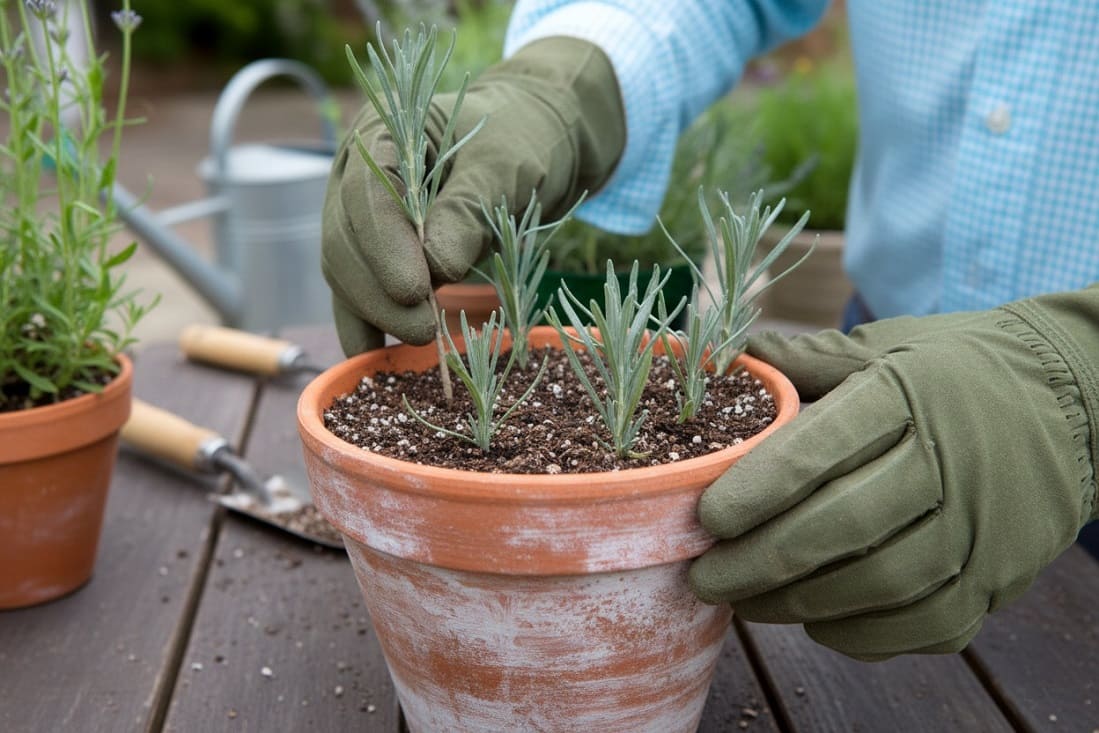
There’s something almost magical about snipping a stem from your lavender plant and watching it transform into a whole new shrub.
I still remember the first time I successfully propagated lavender—standing in my garden with a handful of freshly rooted cuttings, feeling like I’d unlocked some secret gardening superpower. The best part? It cost me absolutely nothing.
If you’ve been eyeing those expensive lavender plants at the nursery and wondering if there’s a better way, you’re in the right place.
Propagating lavender is surprisingly straightforward, even if you’re new to gardening.
Whether you want to create a stunning hedge, fill containers for your patio, or simply have more of this fragrant Mediterranean beauty without breaking the bank, propagation is your answer.
Why Propagate Lavender Instead of Buying Seeds?
Before we dive into the how-to, let’s talk about why cuttings beat seeds hands down.
When you grow lavender from seed, you’re playing a bit of a lottery. Those seeds can take months to germinate, and even then, the resulting plants might not look or smell quite like their parent.
Some popular lavender varieties—like the robust Lavandin hybrids—don’t even produce viable seeds since they’re sterile hybrids.
Cuttings, on the other hand, give you exact clones of your favorite plant. That gorgeous ‘Hidcote’ with the deep purple flowers? Every cutting will be identical.
Plus, you’ll have blooming plants much faster—often within the same growing season rather than waiting two years as you would with seeds.
The economics are pretty compelling too. One mature lavender plant can yield dozens of cuttings.
Imagine transforming a single $15 plant into enough lavender to line your entire driveway. That’s the power of propagation.
Understanding Your Options: Softwood vs. Hardwood Cuttings
Lavender cuttings fall into two main categories, and choosing between them depends on timing and your patience level.
1. Softwood cuttings come from the plant’s fresh, green growth in spring and early summer. These stems are flexible, almost tender, with leaves that still feel soft to the touch.
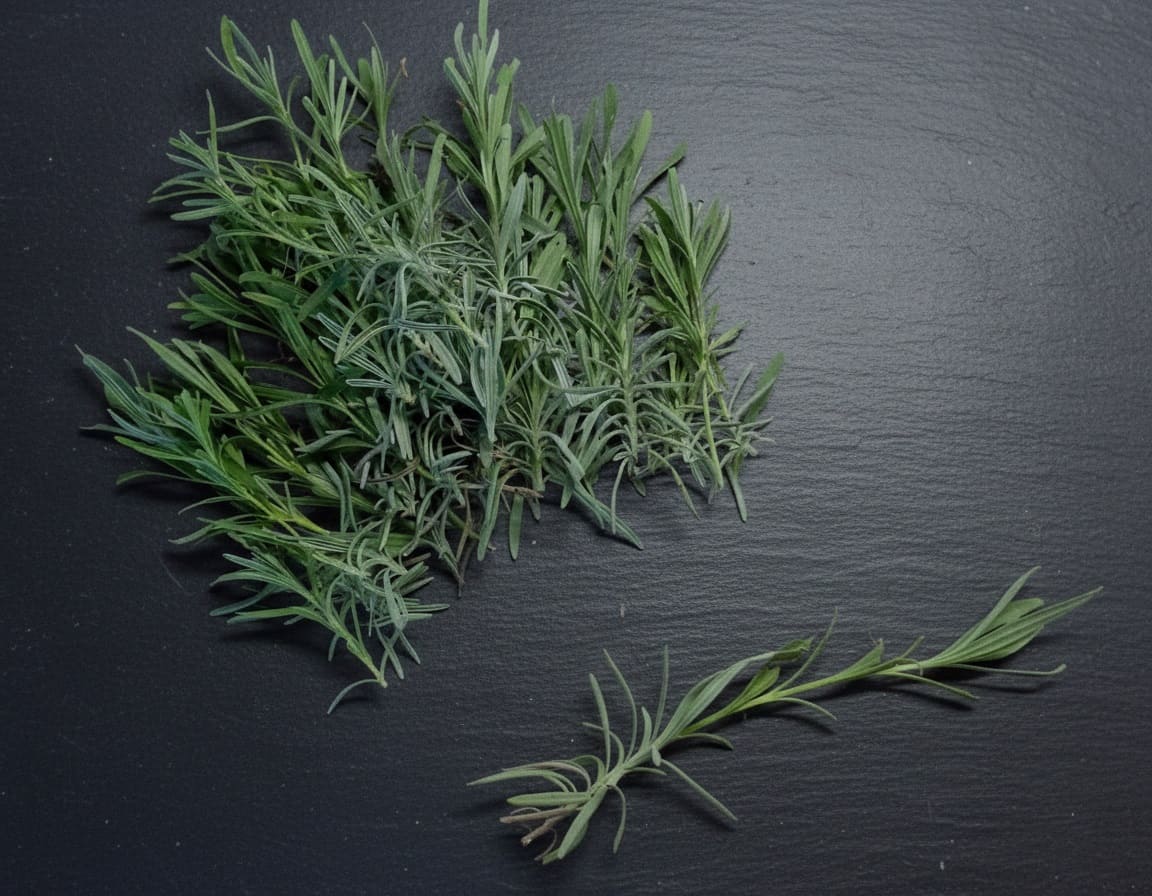
The advantage? They root incredibly fast—sometimes in as little as two weeks. The catch is they’re more delicate and need attentive care to prevent wilting.
2. Hardwood cuttings are taken from the more mature, woody portions of the plant, typically in late summer through fall.
These stems have started to brown and feel firm, almost like twigs. They take longer to develop roots—often six weeks or more—but they’re tougher and more forgiving if you forget to check on them for a few days.

For complete beginners, I recommend starting with softwood cuttings in late spring. The quick results will boost your confidence, and the warm weather creates ideal rooting conditions.
Once you’ve mastered the basics, hardwood cuttings are perfect for expanding your collection during the quieter autumn months.
The Best Time to Take Lavender Cuttings
Timing can make the difference between success and disappointment.
For softwood cuttings, aim for late spring through early summer—typically May through July in most climates.
You want to catch the plant when it’s actively growing but before it puts energy into flowering.
Those non-flowering stems root most reliably because they’re focused on vegetative growth rather than reproduction.
Hardwood cuttings work best in late summer through early autumn—August and September are ideal.
The plant has finished its main flowering flush, and the stems have matured enough to handle the stress of propagation.
Here’s a tip I learned the hard way: take your cuttings in the morning. The stems are plump with moisture at this time, giving you a better success rate than cuttings taken during the heat of the afternoon when plants are slightly stressed.
What You’ll Actually Need (No Fancy Equipment Required)
Don’t let gardening catalogs convince you that successful propagation requires expensive gear. Here’s my simple toolkit:
- Sharp, clean pruners or scissors (I use regular craft scissors for small cuttings)
- Small pots with drainage holes (recycled nursery pots work perfectly)
- Well-draining potting mix (I blend regular potting soil with coarse sand or perlite)
- Optional rooting hormone powder (boosts success but isn’t essential)
- Clear containers for humidity (plastic bags, cut bottles, or even glass jars)
- A pencil or chopstick for making holes in the soil
That’s it. No heating mats, no specialized propagation stations, no expensive misting systems. Lavender is Mediterranean at heart—it actually prefers things simple and a bit on the dry side.
Step-by-Step: How to Propagate Lavender Cuttings
Step 1: Prepare Your Growing Medium
Mix your potting medium before you take cuttings—you want to work quickly once those stems are cut.
I use a simple blend of two parts potting soil to one part coarse sand or perlite. This creates the fast-draining environment lavender roots demand.

Fill your small pots and water the mixture thoroughly, then let excess water drain. The soil should feel like a wrung-out sponge—moist but not soggy.
Step 2: Select and Take Your Cuttings
Look for healthy, straight stems that show no signs of disease or pest damage.
- For softwood cuttings, choose green, flexible stems without flowers.
- For hardwood, select slightly woody stems with good color.

Cut stems about four to six inches long, making your cut at a slight angle just below a leaf node—those little bumps where leaves emerge. Taking multiple cuttings increases your odds since not every one will root successfully.

Step 3: Prepare Each Cutting
Strip away the lower leaves from the bottom two inches of each stem. You can pinch them off with your fingernails or use scissors—just be gentle to avoid tearing the bark. Leave the top cluster of leaves intact.

Here’s a trick many guides skip: lightly scrape a thin strip of outer bark from the bottom inch of the stem.
This exposes the cambium layer where new roots will emerge and dramatically improves rooting success.
Step 4: Apply Rooting Hormone (Optional but Helpful)
Rooting hormone isn’t mandatory—lavender will root without it—but it does improve your success rate and speed up the process.
Pour a small amount of powder into a separate container (never dip directly into the main jar, or you’ll contaminate it), then roll the cut end of your stem in the powder. Tap off any excess.

Don’t have rooting hormone? Try dipping the stem end in honey or cinnamon instead. Both have natural antimicrobial properties that help prevent rot while the cutting establishes roots.
Step 5: Plant Your Cuttings
Use a pencil to poke holes in your prepared soil about two inches deep. This prevents the rooting powder from rubbing off as you insert the cuttings. Place each stem in a hole, then gently firm the soil around it so it stands upright.

You can fit three or four cuttings around the edge of a six-inch pot. Interestingly, cuttings placed at the pot’s perimeter often root better than those in the center—the improved drainage right against the pot wall seems to make the difference.

Step 6: Create a Humid Environment
Lavender has a funny relationship with humidity. It hates soggy conditions, yet cuttings need some moisture in the air to prevent wilting before roots form. The solution? Light, breathable humidity.
Cover your pot with a clear plastic bag, propping it up with sticks so it doesn’t touch the leaves.
Or try my favorite hack: flip a large glass jar upside-down over the pot. It creates perfect humidity while allowing you to monitor progress.
Poke a few small holes in plastic covers, or lift them briefly each day to allow air circulation. This prevents the mold that can develop in overly humid conditions.
Step 7: Find the Sweet Spot
Place your cuttings in a warm location with bright, indirect light. A spot near an east or north-facing window works beautifully.
Avoid direct afternoon sun, which can cook tender cuttings under their plastic covers.
Temperature matters more than you might think. Aim for consistent warmth around 65-75°F. Too cold, and rooting slows to a crawl. Too hot, and cuttings dry out or rot.
Step 8: Water Wisely
This is where most propagation attempts fail. Overwatering kills more lavender cuttings than anything else.
Check the soil every few days by sticking your finger about an inch deep. If it feels dry, add a small amount of water.
If it still feels moist, wait. The goal is consistently damp soil, never wet or waterlogged.
Mist the leaves lightly if they start looking droopy, but don’t water the soil unless it’s actually dry.
Remember, lavender evolved in dry Mediterranean hills—it’s programmed to tolerate dry conditions better than wet ones.
Step 9: Watch for Root Development
Softwood cuttings typically root within two to four weeks. Hardwood cuttings need four to six weeks, sometimes longer.
How do you know if roots have formed? Gently tug on a cutting. If you feel resistance, roots have anchored it in place. If it pulls up easily, give it more time.
New growth at the tip is another positive sign—it means the cutting has developed enough roots to support fresh leaves.
Step 10: Transplant and Harden Off
Once roots have established (you can see them peeking from drainage holes or feel strong resistance when tugging), it’s time to move your new plants.
Carefully separate rooted cuttings and transplant each into its own pot with regular potting mix enriched with sand or grit. Water well and place in a bright spot.
Before planting outdoors, gradually acclimate your babies to garden conditions over one to two weeks.
Start with an hour of outdoor time in a sheltered spot, gradually increasing exposure to sun and wind. This “hardening off” prevents shock that can damage tender new plants.

The Water Propagation Alternative
Some gardeners skip soil entirely and root cuttings in plain water. Here’s how:
Fill a clear glass with about three inches of room-temperature water. Place your prepared cuttings in the glass with the stripped portion submerged and leaves above the waterline. Change the water every few days to keep it fresh.

Roots typically appear within two to three weeks—you’ll actually see them developing through the glass, which is admittedly quite satisfying. Once roots reach about an inch long, pot up in soil.
The downside?
Water-grown roots can struggle when transitioning to soil. Success rates tend to be lower than with direct soil propagation, though it’s still worth trying if you’re curious or have extra cuttings to experiment with.
Propagating by Layering: The Lazy Gardener’s Method
If the cutting method seems too fussy, try layering—it’s essentially getting the plant to do the work for you.
Choose a long, flexible stem near the base of your lavender plant. Bend it down to the ground and identify where it naturally touches the soil.

Make a shallow cut or scrape on the underside of the stem at this point—this wound encourages root formation.
Pin the stem to the ground with a rock or landscape staple, covering the wounded section with soil. Keep this area consistently moist (more water than you’d normally give lavender).

In several months, roots will develop at the buried section. Once well-rooted, sever the new plant from its parent and transplant it. This method has the highest success rate of all propagation techniques, though it’s the slowest.
Troubleshooting Common Problems
- Cuttings turn black and mushy:
This is root rot from overwatering. Reduce watering frequency and ensure your pots have excellent drainage. Add more sand or perlite to your soil mix for next time.
- Leaves wilt and stems dry out:
Not enough humidity or the cutting was too soft. Increase humidity around the cuttings and try selecting slightly more mature stems next time.
- No roots after six weeks:
Some varieties are slower than others, and cool temperatures slow the process. Be patient, ensure temperatures stay around 70°F, and try applying rooting hormone if you haven’t already.
- Mold growing on soil surface:
Too much moisture with poor air circulation. Remove humidity covers for a few hours daily and cut back on watering.
- Roots form but no new growth appears:
This is normal during fall and winter when plants naturally slow down. New shoots will appear when spring triggers active growth.
Planting Your New Lavender in the Garden
Once your propagated lavender has spent a few weeks in individual pots and shows vigorous growth, it’s ready for its permanent home.
Choose a spot with full sun—lavender needs at least six hours of direct sunlight daily. Soil drainage is absolutely critical.

If you have heavy clay soil, amend generously with coarse sand and organic matter, or create raised beds to ensure water doesn’t pool around roots.
Plant at the same depth the lavender was growing in its pot. Space plants eighteen inches to three feet apart depending on the variety—check expected mature size and plan accordingly.
Water well after planting, then back off. Established lavender thrives on neglect, preferring dry conditions to frequent watering. In most climates, rainfall alone is sufficient once plants are established.
Your Lavender Propagation Questions Answered
- How many cuttings should I take?
Always take more than you think you’ll need. Even with good technique, expect some failures. Taking ten cuttings to end up with six or seven rooted plants is completely normal.
- Can I propagate any lavender variety?
Yes, all lavender types propagate successfully from cuttings. English lavender (Lavandula angustifolia) is the easiest for beginners, while French and Spanish varieties are equally reliable once you understand the process.
- Do I need a greenhouse?
Not at all. A simple plastic bag over a pot creates sufficient humidity for successful rooting. Many gardeners succeed on sunny windowsills.
- Should I fertilize cuttings?
No. Fertilizer can burn tender new roots. Wait until plants are well-established in their permanent location before feeding.
- How long until my propagated lavender blooms?
Lavender grown from spring softwood cuttings often blooms the same season. Hardwood cuttings taken in fall typically bloom the following summer.
Final Thoughts: Growing Your Lavender Empire
Propagating lavender transforms you from plant buyer to plant creator.
That first successful batch of rooted cuttings will give you a confidence boost that extends to other plants too—once you realize how simple propagation can be, you’ll start eyeing every plant in your garden as potential propagation material.
Start small with just a few cuttings to learn the process. Pay attention to what works in your specific conditions—your climate, your soil, your available light. Every gardener develops their own tweaks and preferences.
Within a season or two, you could have enough lavender to create the hedge you’ve been dreaming about, fill containers for every corner of your patio, or share plants with friends and family. All from a few simple cuttings and some basic care.
The lavender journey begins with a single snip. Why not grab those scissors and give it a try?
Quick Reference Guide: Lavender Propagation at a Glance
- Best time for softwood cuttings: Late spring to early summer
- Best time for hardwood cuttings: Late summer to early fall
- Cutting length: 4-6 inches
- Rooting time: 2-4 weeks (softwood), 4-6 weeks (hardwood)
- Success boosters: Morning collection, rooting hormone, well-draining soil
- Common mistakes: Overwatering, too much direct sun, poor drainage
- When to transplant: Once roots are visible and cuttings resist gentle tugging
- Time to first bloom: Same season (softwood) or following year (hardwood)

