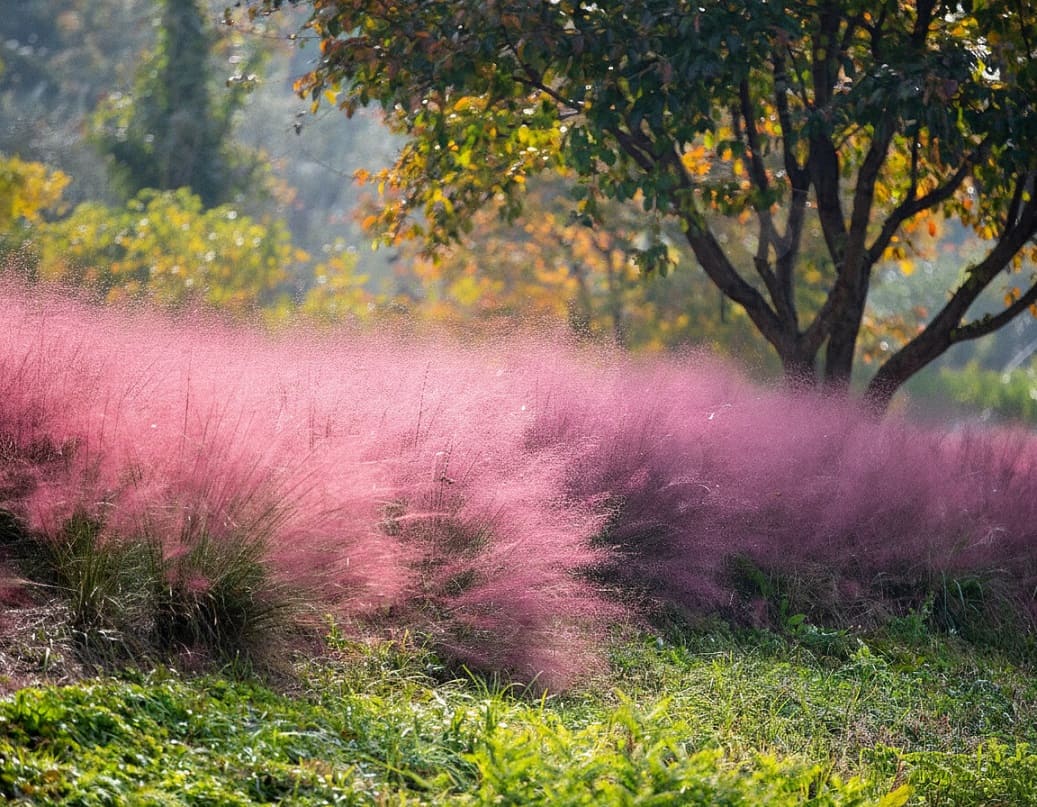
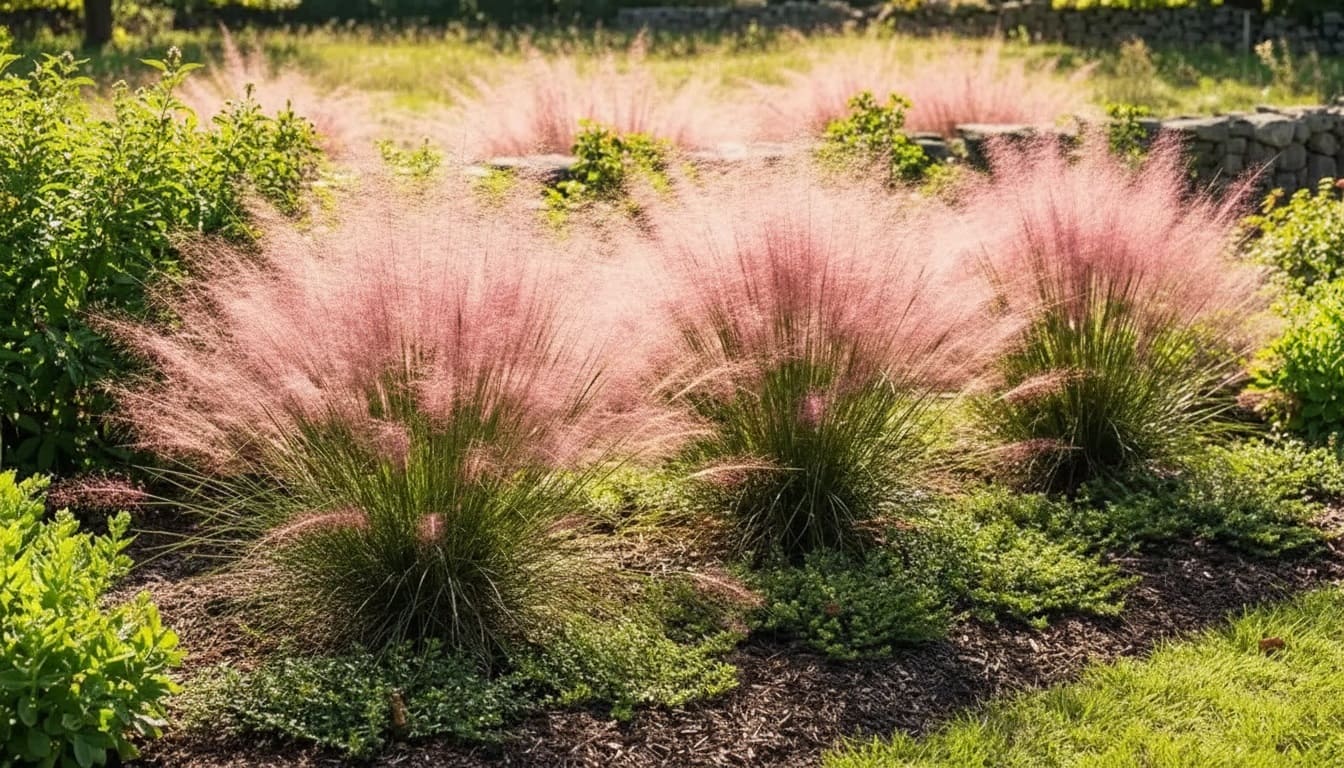
Picture walking through your neighborhood on a crisp October morning and stopping dead in your tracks at the sight of what looks like pink clouds floating above the ground. That’s the magic of pink muhly grass in full bloom.
The first time I encountered this ornamental grass, I honestly thought someone had installed elaborate decorations. Nope—just nature showing off.
This native North American beauty has earned its reputation as one of the most spectacular ornamental grasses you can grow.
By the end of this guide, you’ll know exactly how to cultivate those Instagram-worthy pink plumes in your own garden, whether you’re working with clay soil or sandy loam, full sun or partial shade.
What Makes Pink Muhly Grass Special?
Pink muhly grass (Muhlenbergia capillaris) is a warm-season perennial that forms neat, rounded clumps of fine-textured green foliage throughout spring and summer.
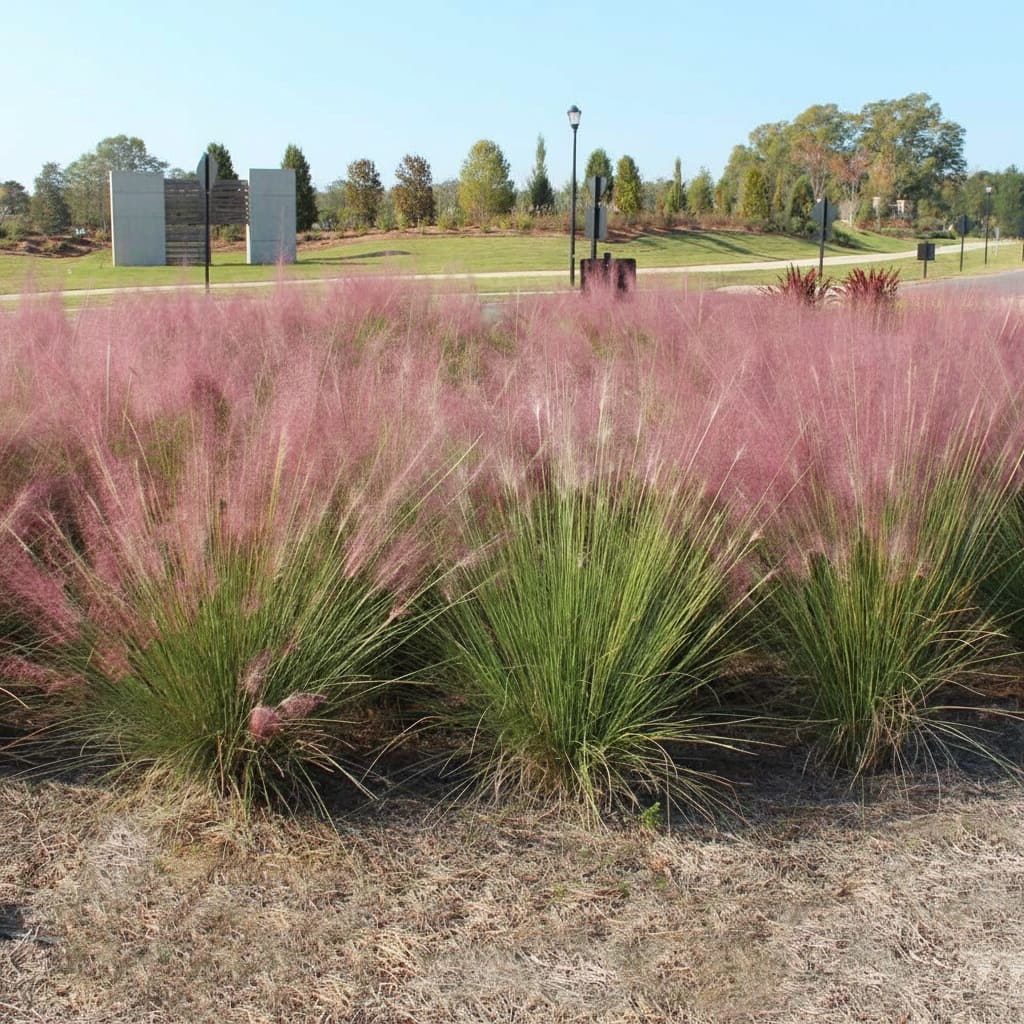
But the real showtime happens in late summer through fall, when ethereal clouds of pink to purplish flowers emerge, creating an almost magical haze above the foliage.
These delicate plumes can last six to eight weeks, providing color when many other plants are fading.
Beyond its stunning appearance, this grass is a workhorse. It’s drought-tolerant once established, requires virtually no fertilizer, resists deer browsing, and thrives in conditions that would stress many other ornamentals.
Native to the eastern and southeastern United States, it’s perfectly adapted to thrive in zones 6-9 (with some success in zone 5 with winter protection), handling everything from coastal salt spray to rocky, infertile soil.
The Three Non-Negotiables for Success
Full Sun or Bust
Pink muhly grass evolved in open prairies and sunny pine flatwoods. While it can technically survive in partial shade, you’ll be disappointed with the results.
For those glorious pink plumes and robust growth, provide at least six to eight hours of direct sunlight daily.
In shade, expect weak, floppy growth and significantly fewer blooms—perhaps only a handful of sparse flower stalks rather than the full cloud effect.
👉 Discover 22 Fast-Growing Shade Trees That Cool Your Yard in 5 Years
Drainage Trumps Everything Else
Soggy, poorly drained soil will kill pink muhly grass faster than anything else. Root rot from wet conditions is the primary killer.
The good news? Beyond good drainage, this grass tolerates remarkably diverse soil types—sandy, clay, rocky, loamy, acidic to neutral pH (5.5-7.0), even high-salt coastal soils.
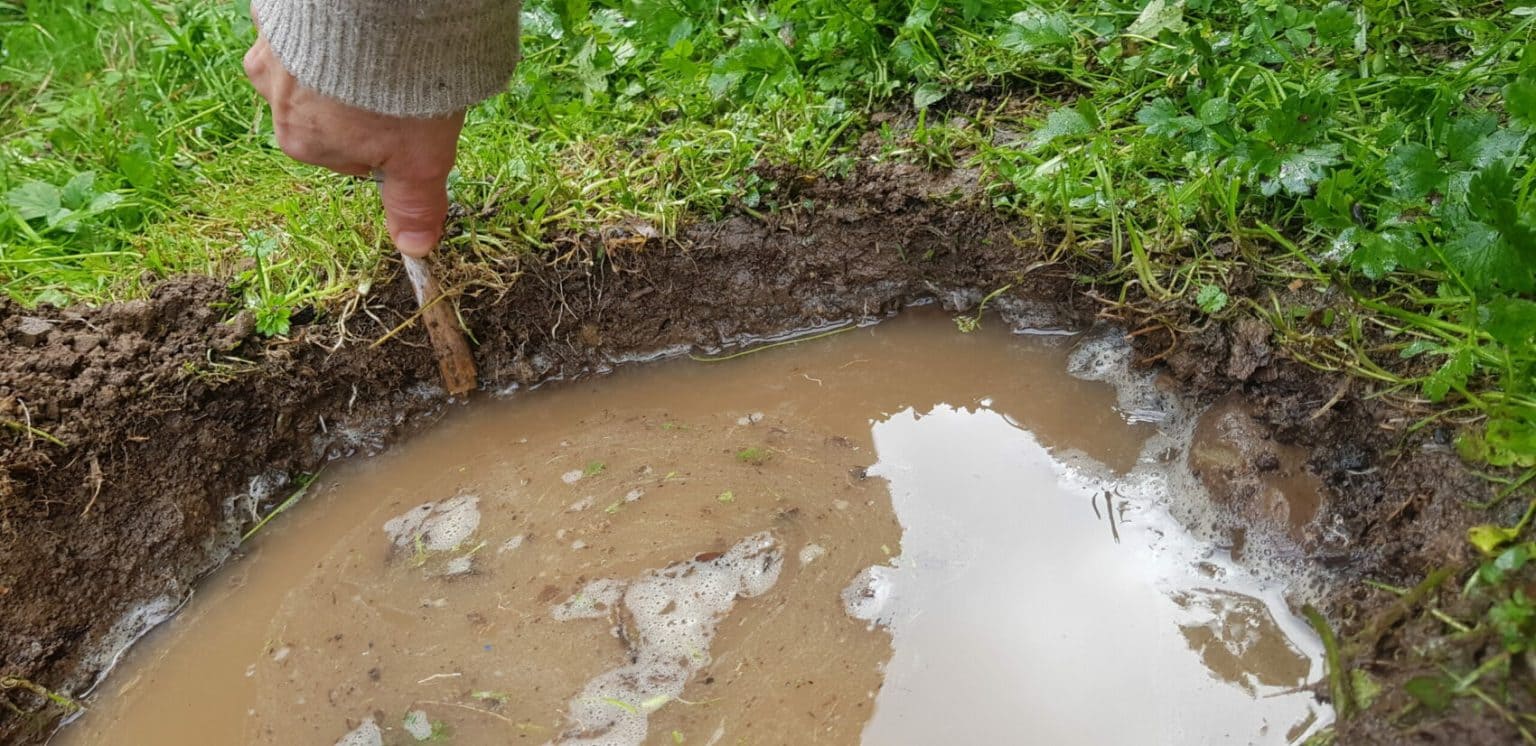
- Test your drainage:
Dig a 12-inch hole, fill it with water, and check after 24 hours. If water remains, either choose a different location, create a raised bed, or amend extensively with coarse sand and compost. This one step prevents more problems than any other care measure.
👉 Find out What Is a Swale? Complete Guide to Natural Drainage for Homeowners
Understanding Your Climate Zone
Most pink muhly grass thrives in zones 6-9, though experiences vary. The plant handles temperatures down to -10°F to -15°F, but prolonged colder exposure proves fatal.
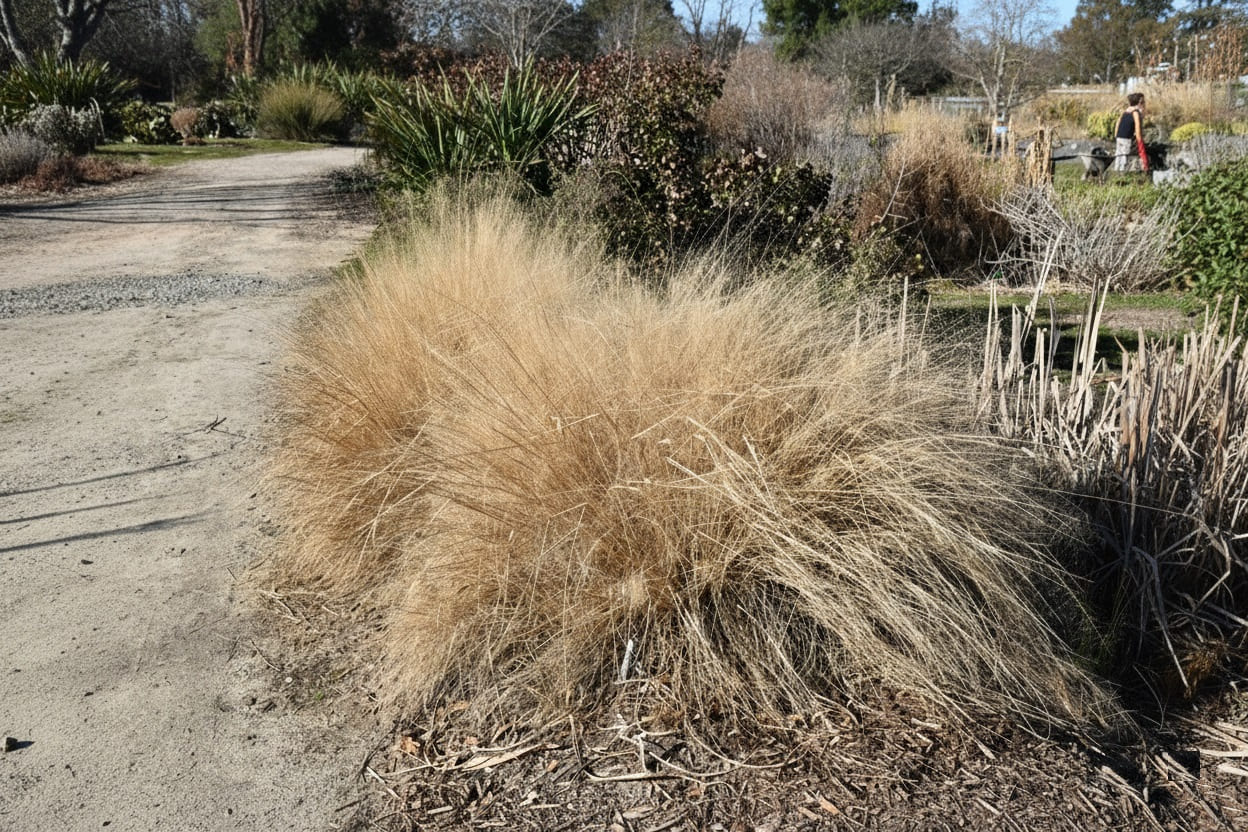
In zones 8-9, it may remain semi-evergreen through winter. In zone 6 and colder areas, it goes fully dormant, with tan foliage providing winter interest before spring regrowth.
- For zone 5 or cold pockets of zone 6:
Plant in your warmest microclimate (south-facing walls that reflect heat), apply 2-3 inches of mulch around the base before winter (not touching the crown), or grow in containers that can be moved to protected locations during extreme cold.
👉 Discover 40 Stunning Winter Flowers That Bloom in Snow & Transform Your Cold Garden
When and How to Plant
Timing: Spring vs. Fall Planting
1. Spring planting offers the best success in most climates. The sweet spot arrives when soil temperatures reach about 60°F, typically 2-4 weeks after your last frost.
A simple test: stick your finger into the soil a few inches deep mid-morning. If it feels cool but not icy or clammy, you’re ready.
Spring planting allows the entire growing season for root establishment before winter stress.
2. Fall planting works in zones 7-9 if completed at least 6-8 weeks before first hard freeze.
In zones 5-6, fall planting gambles on whether plants can establish roots before winter dormancy.
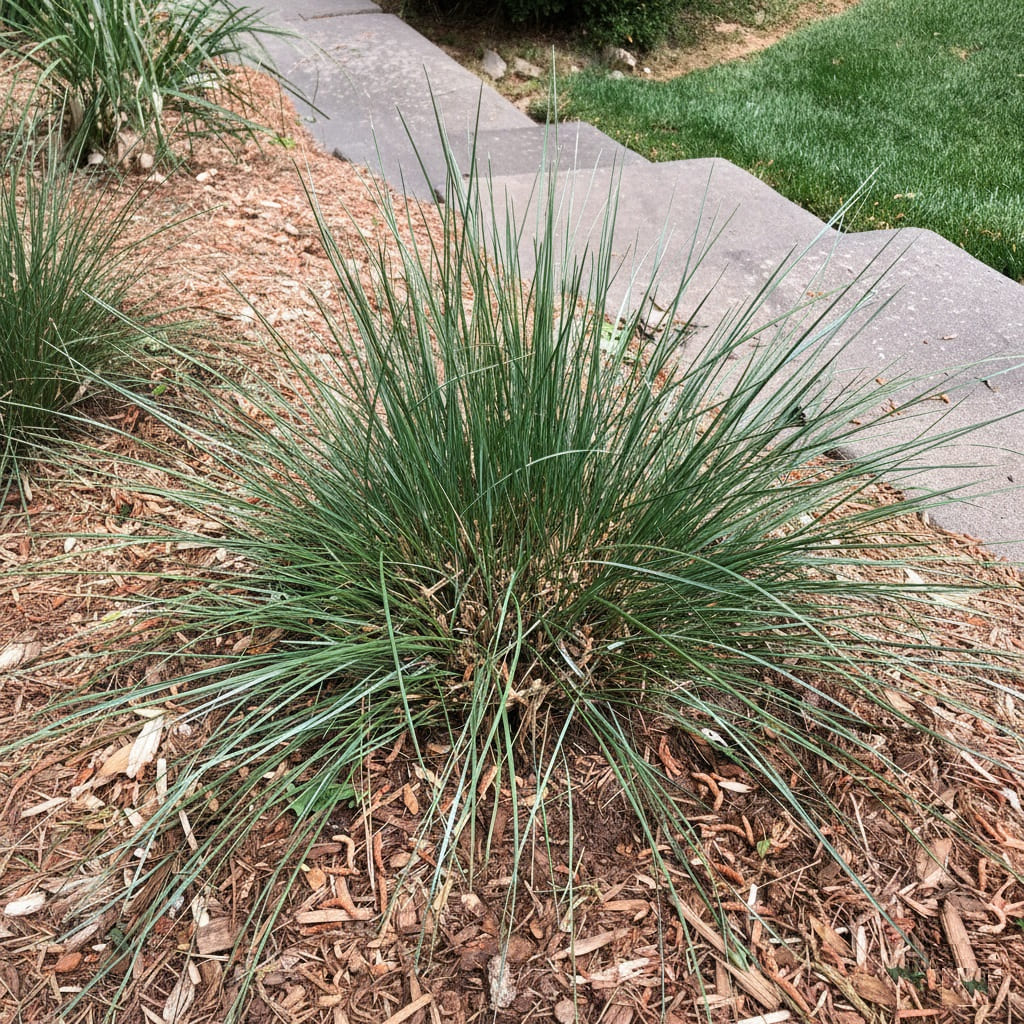
Avoid mid-summer planting unless prepared for intensive watering—new transplants establishing in blazing heat often struggle.
Planting Step-by-Step
For transplants
Choose a sunny location where each plant has room for its mature size: 2-3 feet wide and 2-3 feet tall (up to 4-5 feet with flower plumes).
Spacing matters:
Plant 2-3 feet apart, center to center, for plants that fill in without immediate crowding.
- Closer spacing (18-24 inches) creates faster visual impact but requires earlier division.
- Wider spacing (3-4 feet) produces a more meadow-like appearance with better air circulation.
Dig holes twice as wide as root balls but no deeper than their height. The crown—where stems meet roots—should sit right at soil level, or slightly above in heavy clay areas.
Remove plants from containers and gently loosen circling roots. If severely rootbound, make shallow vertical cuts on root ball sides to encourage outward growth.
Backfill with native soil without amendments unless soil quality is genuinely terrible. Pink muhly prefers lean conditions.
Water thoroughly to settle soil and eliminate air pockets, then apply 1-2 inches of mulch around (not against) the plant, keeping it several inches from the crown.
Starting from Seed
Growing from seed proves economical but demands patience—no blooms until the second season. Sow indoors or direct outdoors in early spring after last frost.
Pink muhly seeds need light to germinate, so press them gently into moist soil surface without burying. Mist regularly to maintain moisture without washing seeds away.
Germination occurs in 10-21 days. Once seedlings develop several inches of growth and strong roots, transplant to the garden with proper spacing.
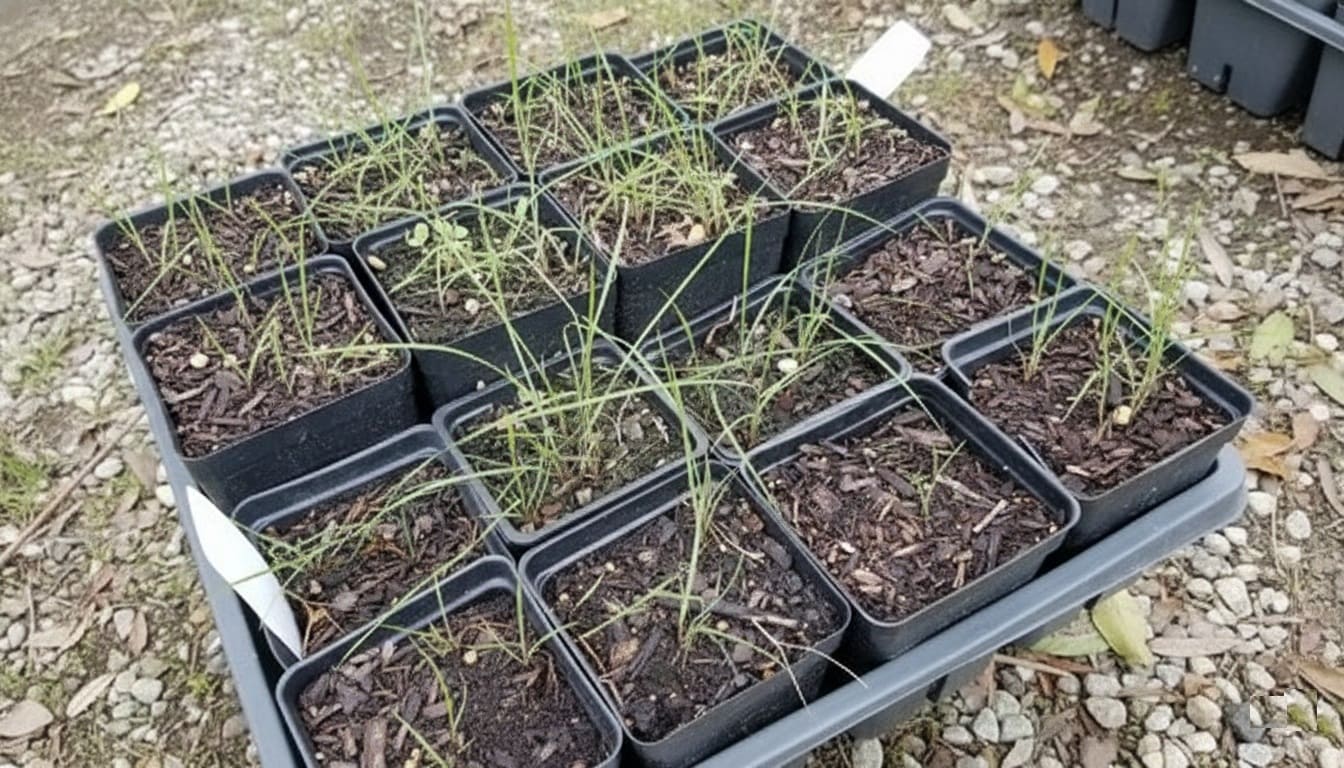
Some growers report better germination with 12 weeks of cold stratification (seeds stored in moist medium in the refrigerator), particularly for northern seed sources, though southern sources may not require this treatment.
Watering: Building Strong Roots, Then Backing Off
The First Season: Building Strong Roots
During the first 2-3 months after planting, water deeply about twice weekly if rainfall proves insufficient.
“Deeply” means getting moisture down 6-8 inches into the soil—not surface sprinkling. This encourages roots to grow downward rather than staying shallow.
A common mistake is watering lightly every day, creating weak, shallow root systems that struggle later.
Established Plants: Embrace the Drought Tolerance
Once established (by the end of the first growing season), pink muhly’s drought tolerance shines.
In most climates with average rainfall, you can essentially ignore it except during severe dry spells.
Watch for these signs that watering might help: soil bone dry to 2+ inches depth, foliage looking slightly wilted or less vibrant than usual, or extended drought (3+ weeks without rain).
When watering, provide about an inch in a deep soak, then wait for soil to dry before watering again.
Container-grown plants need more frequent attention since pots dry faster than ground soil. Check during hot weather and water when the top inch or two feels dry.
Fertilization: Breaking the “More is Better” Myth
Pink muhly grass doesn’t need fertilizer. Over-fertilization, particularly with nitrogen-rich products, causes more harm than good—producing floppy, weak growth that falls over rather than standing upright.
Consider fertilizing only if a soil test reveals genuine deficiencies or plants appear stunted despite proper light and drainage.
If necessary, use balanced, slow-release formula (10-10-10) at half strength in early spring.
One light application per year suffices, or simply work a handful of compost into soil around the plant base for gentle, long-term nutrition.
Annual Maintenance: The Single Most Important Task
Late winter or early spring pruning, before new growth emerges, significantly impacts plant health and appearance.
You’ll recognize the right moment when grass is fully dormant with tan or brown foliage, but before fresh green shoots appear at the base. Never prune in mid-to-late summer—this removes developing flower buds.
- Gather foliage by tying it into a “ponytail” with twine or having someone hold it bunched together.
- Using sharp hedge shears or pruners, cut the grass down to 3-6 inches above the crown. Don’t cut flush to the ground or too close to the crown—you risk damaging the growing point.
- Rake away debris to prevent fungal issues and allow sunlight to reach new growth.
Some gardeners prefer leaving the grass standing through winter for its tan seed heads and textural interest, which works perfectly—just ensure you complete pruning before spring growth begins.
Propagation: Multiplying Your Collection
Division: The Fastest Route to More Plants
Every 3-5 years, dividing pink muhly clumps rejuvenates plants, prevents dead areas from forming in clump centers, and provides new specimens to expand your display. Early spring, just as new growth begins, offers ideal timing.
Dig around the perimeter with a sharp spade, about 2 inches from visible foliage, angling 45 degrees to get under the root ball.
Pink muhly develops dense, fibrous root systems requiring serious effort—a sharp pruning saw, sturdy knife, or even a chainsaw for mature clumps. Wear protective equipment.
Split the root ball into 2-4 pieces, ensuring each section has healthy roots and green foliage.
Replant immediately—one section in the original location, others shared or relocated. Water thoroughly and treat divisions like new transplants for the first few weeks.
Seed Collection and Starting
- Collecting seeds:
After pink plumes fade in late fall (usually after Thanksgiving), comb through plumes with your fingers or an actual comb to release seeds.
Store in cool, dry conditions in paper envelopes or sealed containers if completely dried. Seeds remain viable for several years.
Troubleshooting Common Problems
1. No blooms or very few flowers typically results from:
- insufficient sunlight (needs full sun to bloom well)
- recent summer pruning (removes developing buds)
- severe drought during late summer bud formation
- overfertilization (nitrogen produces foliage at flower expense)
- or first-year establishment (plants focus on roots; expect minimal flowering until year two or three).
2. Floppy, falling-over growth indicates excessive nitrogen from fertilization, insufficient light creating weak growth, overcrowding requiring division, or natural aging in undivided clumps.
3. Brown, yellow, or dying foliage during growing season suggests:
- root rot from waterlogged soil (improve drainage or relocate)
- severe drought even for drought-tolerant plants (provide supplemental water)
- or natural dieback of older leaves (a few brown blades among green growth is normal).
During fall and winter, tan, brown, or yellowish color indicates normal dormancy.
4. White, frothy appearance on plumes signals mealybug infestation.
Blast plants with strong water streams, apply neem oil per package directions, or use insecticidal soap for persistent problems.
Fortunately, pests rarely trouble pink muhly with proper growing conditions.
5. Dark spots on leaves (tar spot fungus) develops in humid climates with poor air circulation.
Prevent by ensuring proper plant spacing for airflow, avoiding overcrowding, skipping fertilization that creates disease-susceptible lush growth, and planting in full sun.
For treatment, remove affected foliage, improve spacing and circulation, and consider fungicides for severe cases.
👉 Related post: How to Identify and Fix Brown Spots on Your Snake Plant
Design Strategies That Maximize Impact
Creating Visual Impact with Mass Plantings
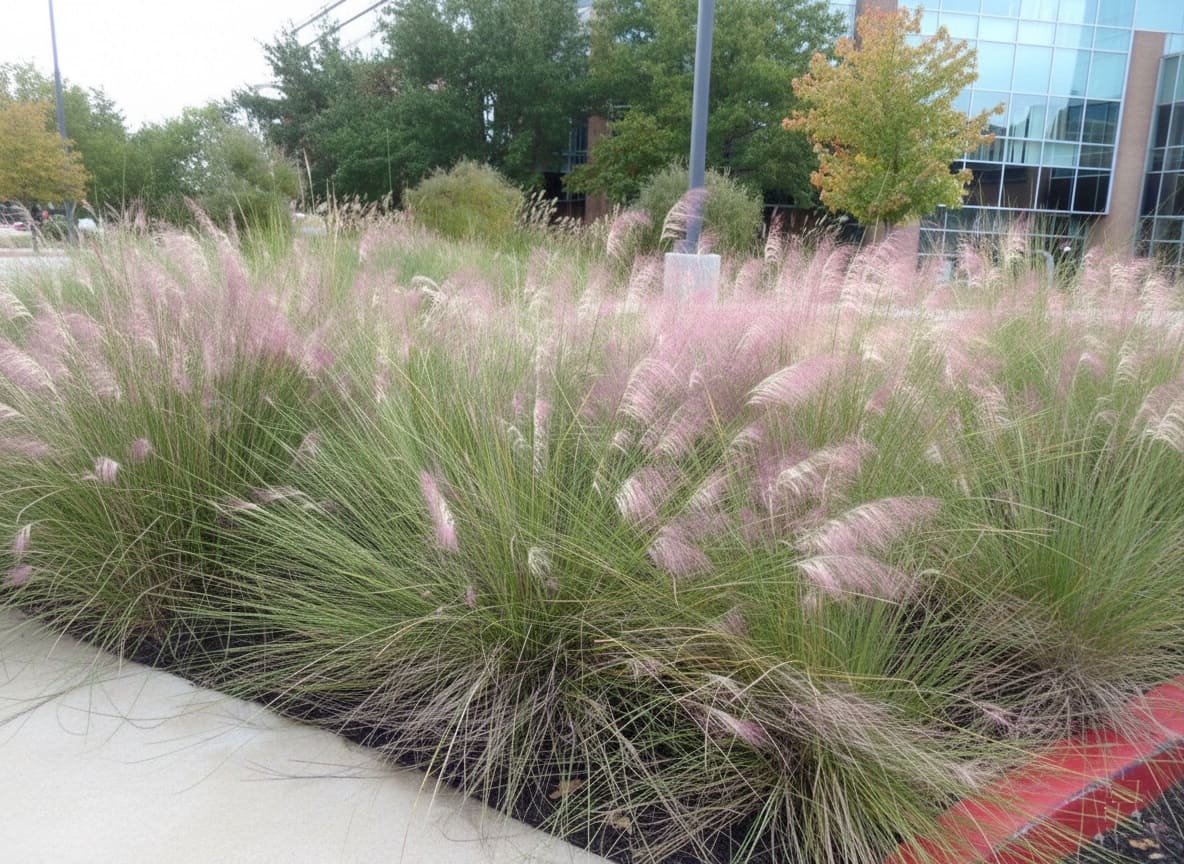
A single pink muhly plant attracts attention, but the real “wow factor” emerges from group plantings.
Multiple plants blooming simultaneously create that signature pink cloud effect that stops traffic.
Plant in clusters of 3, 5, or 7 for naturally pleasing arrangements. Create drifts or ribbons through garden beds for flowing, meadow-like appearance.
Line pathways, driveways, or fence lines for dramatic seasonal impact. Mass plantings on slopes or berms provide erosion control with stunning visual payoff.
Complementary Companion Plants
Pink muhly blooms late summer through fall, so companions sharing this timing create extended interest.
The pink plumes contrast beautifully with golden black-eyed Susans, purple coneflowers and asters, bright goldenrod, orange sneezeweed, or the burgundy tones of sedum.
For spring and summer interest before muhly blooms, incorporate beardtongue, lanceleaf coreopsis, butterfly weed, or purple coneflower.
Incorporating into Different Garden Styles
- In formal borders, use pink muhly as middle or back-of-border plants, providing soft texture against structured evergreens.
- Cottage gardens benefit from intermixing with perennials for romantic, informal looks.
- Modern landscapes shine with strict geometric patterns or linear drifts for architectural impact.
- Native gardens combine muhly with other grasses and wildflowers for authentic meadow ecosystems.
- Large containers (at least 12-18 inches wide) work for patios or entryways, though these require repotting every 2-3 years and more frequent watering.
👉 Here’s How to Create a Harmonious Garden: A Guide to Beautiful Design
Alternative Varieties Worth Exploring
- ‘White Cloud’ produces creamy white plumes instead of pink, blooms slightly later, and grows more upright—stunning for contrast in mixed plantings.
- ‘Regal Mist’ (M. capillaris ‘Lenca’) offers compact form with pinkish-red flowers, excellent for containers or smaller spaces.
- ‘Undaunted Ruby’ (M. reverchonii), native to Texas with reddish blooms, proves hardier to zone 5 and handles wet conditions better than standard pink muhly—worth trying in challenging climates.
- ‘Pink Flamingo’, a hybrid with bright pink flowers and slender evergreen leaves (zones 6-10), provides excellent performance in narrow spaces.
Buying Considerations and What to Expect
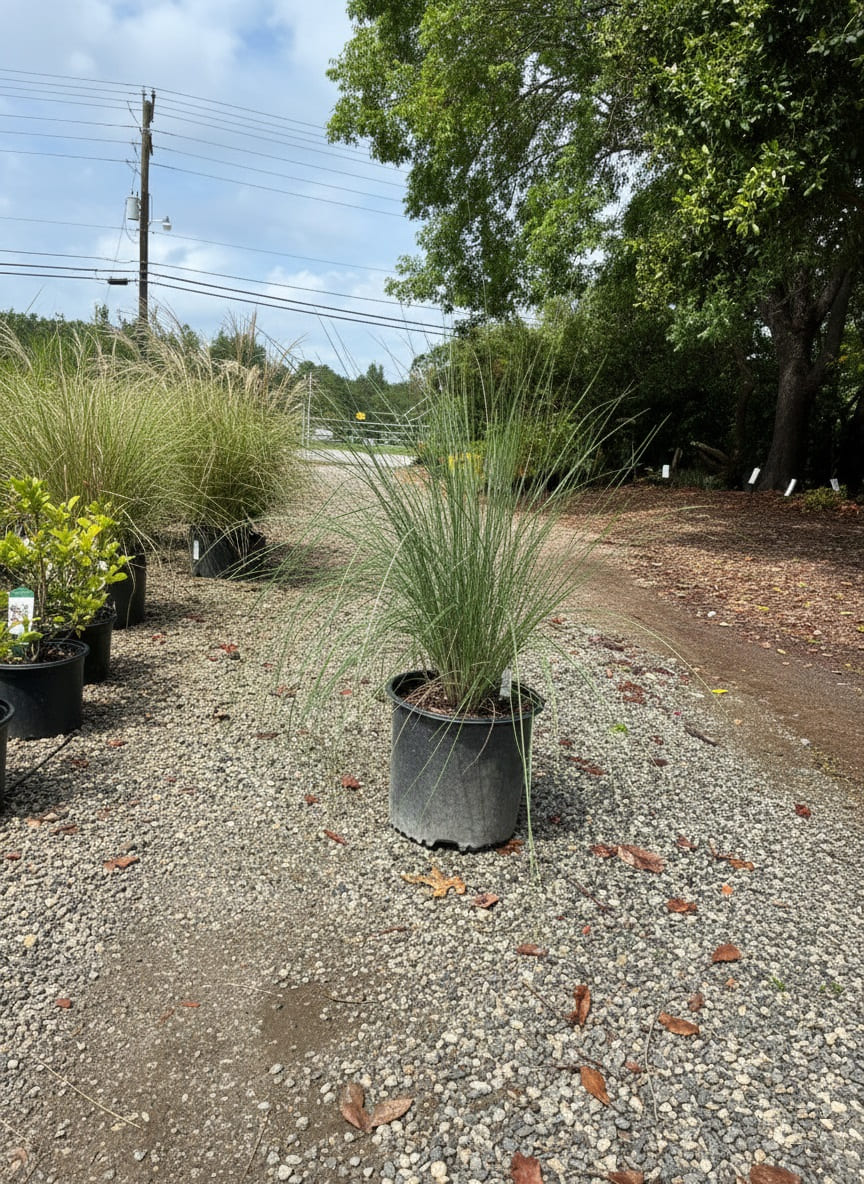
When purchasing pink muhly grass, look for plants with healthy green foliage, no signs of disease or pests, and roots visible but not severely circling in containers. Avoid plants with brown, dead centers or excessive yellow foliage.
Most garden centers carry pink muhly grass in spring and fall; online nurseries offer year-round availability with broader variety selection.
Container sizes typically range from 1-gallon to 3-gallon pots.
- Larger plants establish faster and may bloom modestly the first fall, though they cost more.
- Smaller transplants require more patience but offer economical options for mass plantings.
Set realistic expectations for your investment.
- First-year plants focus energy on root development, producing modest to no flowering.
- By year two, you’ll see improved displays.
- Year three and beyond deliver the full, spectacular pink clouds this grass is famous for.
This isn’t instant gratification—it’s an investment that pays dividends for a decade or more.
Seasonal Journey: What Happens Through the Year
New shoots emerge bright green in mid to late spring, with the plant developing robust clumps of fine, wire-like foliage.
Through summer, pink muhly grows steadily, forming attractive mounded shapes that provide wonderful contrast to bolder perennials.
While not the star during this season, the grass serves as an excellent supporting player.
Late summer through fall transforms the plant completely. Airy panicles of pink to purplish flowers emerge, seemingly overnight, creating clouds of delicate color lasting 4-8 weeks, often until first frost.
Backlit by low afternoon sun, the plumes seem to glow—this is when you’ll understand the plant’s popularity.
After frost, pink fades to soft tan or beige, but seed heads remain through winter.
While less dramatic than fall’s display, the dried plumes catch snow, frost, and winter light beautifully, providing structure and movement when little else happens in the garden.
This textural interest continues until you prune in late winter, completing the cycle.
Why Pink Muhly Grass Earns Its Keep
This grass teaches patience. It won’t dazzle instantly but invest that initial effort—proper sun exposure, well-draining soil, adequate first-season watering—and by year two or three, you’ll witness one of the most spectacular fall displays any plant can offer.
The beauty lies not just in pink plumes, but in remarkable adaptability and genuinely low-maintenance nature.
Once established, it essentially cares for itself, requiring only annual pruning and occasional drought watering.
It won’t demand fertilizer, won’t spread invasively, and won’t fall victim to deer or most pests.
Native to North America, it supports local ecosystems while providing cover for small mammals and seeds for songbirds through winter.
Whether creating naturalistic meadows, formal borders, or simply wanting a show-stopping specimen for your front yard, pink muhly grass delivers.
Those cotton-candy clouds swaying in autumn breeze reward every moment of patience.
Your action plan:
- Assess your site for adequate sun (6+ hours) and drainage.
- Time planting for spring after soil warms or early fall in warm zones.
- Space plants 2-3 feet apart.
- Water regularly the first season, then trust the plant’s drought tolerance.
- Be patient through year one.
- Prune annually in late winter.
- Then sit back and enjoy the fall show that makes neighbors stop and ask what that gorgeous pink cloud is in your garden.

