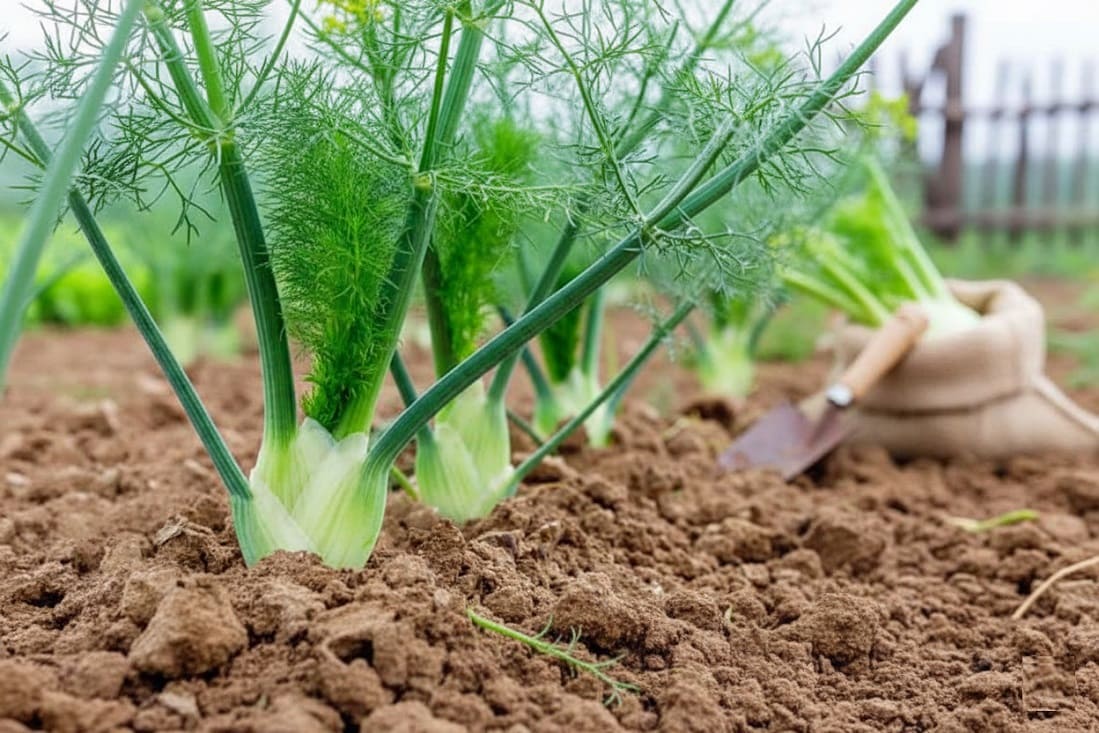
My first attempt at fennel was a spectacular failure. I sowed seeds in March, watched them sprout beautifully, and felt like a gardening genius—until every single plant bolted straight to flower without forming a bulb.
That disaster taught me fennel’s most important lesson: timing trumps enthusiasm. Once I learned to work with fennel’s preferences rather than against them, this Mediterranean beauty became one of my most rewarding crops.
If you’re ready to grow your own gourmet fennel—those white bulbs that cost a small fortune at the market—you need to understand this plant’s quirks. The good news? Once you know the rules, fennel is far easier than its finicky reputation suggests.
Know Your Fennel: Two Plants, Two Purposes
Before you buy seeds, understand which fennel you’re after:
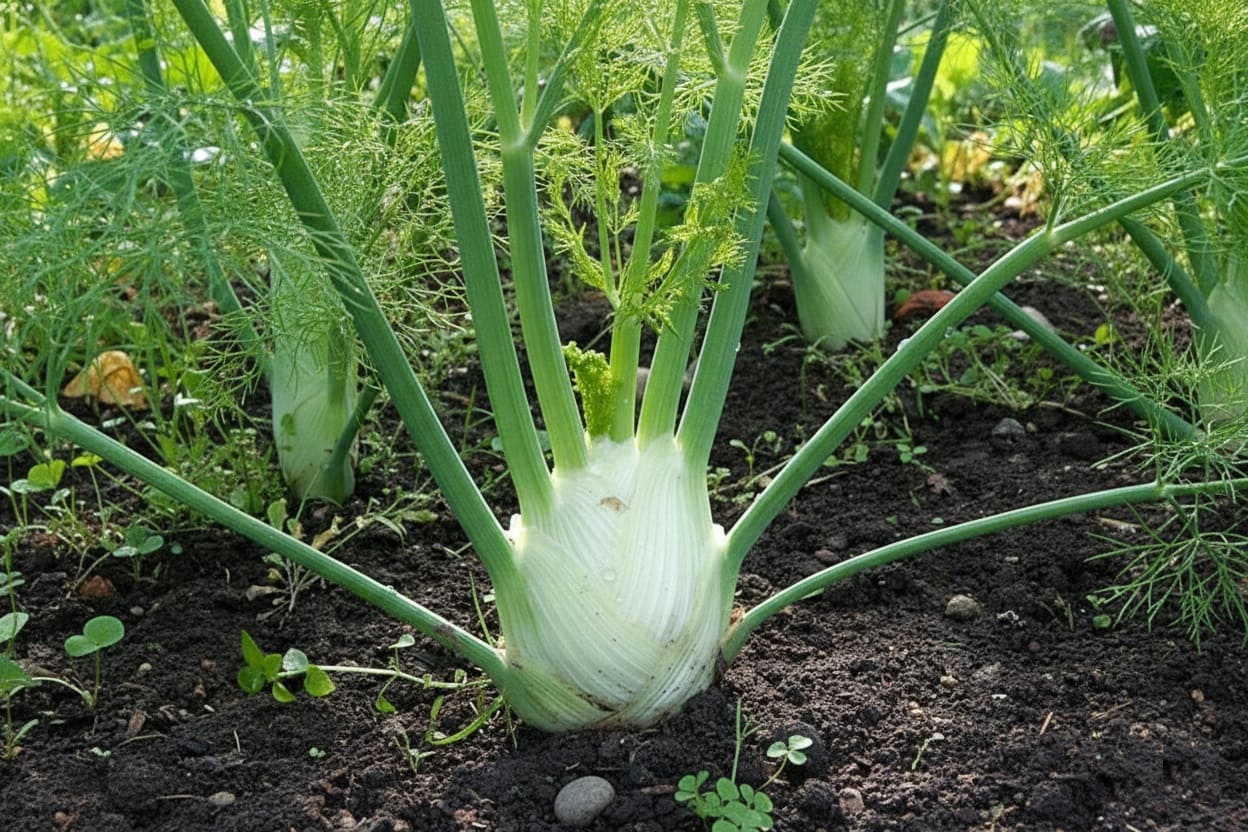
1. Florence fennel (also called bulb fennel or finocchio) produces the prized white bulb—actually swollen, overlapping leaf stems with a crisp, celery-like texture and sweet anise flavor.
This annual vegetable reaches 2-3 feet tall and is what you want for roasting, grilling, or shaving into salads. Varieties include ‘Zefa Fino’, ‘Orion’, and ‘Perfection’.
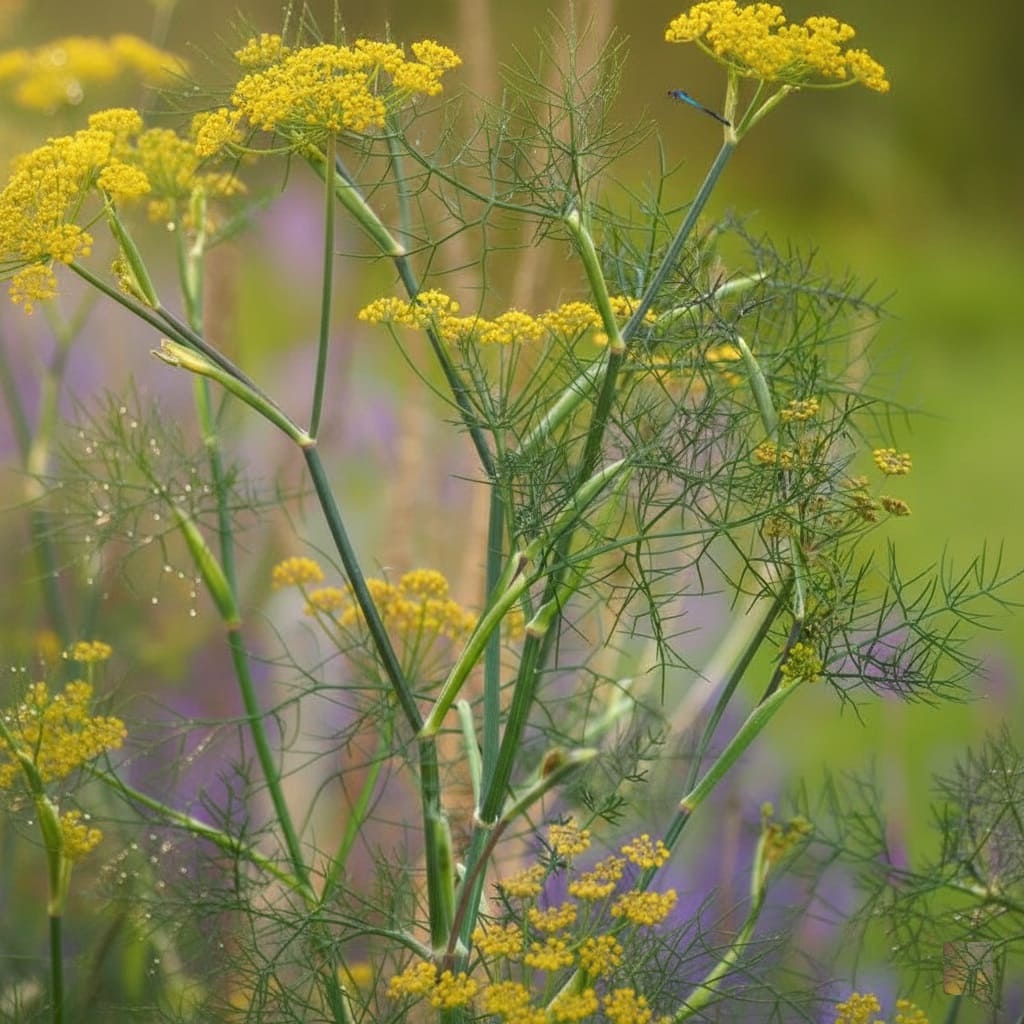
2. Herb fennel grows as a 5-6 foot perennial with feathery foliage and no significant bulb. You harvest the fronds and seeds for their aromatic, licorice-like flavor. Bronze fennel adds copper-toned drama to ornamental gardens while serving the same culinary purpose.
The rest of this guide focuses primarily on Florence fennel, since growing perfect bulbs requires more finesse, though I’ll note where herb fennel differs.
The Golden Rule: Sow in Summer, Harvest in Fall
Here’s what took me years to accept: fennel sown in spring almost always bolts before forming good bulbs.
Cold nights trigger flowering, the plant’s stress response that bypasses bulb development entirely. This is why June and July sowings succeed while April plantings fail.
The sweet spot for most climates is mid-June through late July. This timing works because soil has warmed (above 60°F), spring cold snaps have passed, and decreasing day length after the summer solstice discourages bolting.
Your fennel matures in the cooler, moister conditions of early autumn—exactly what it needs.
This late sowing makes fennel perfect for succession planting. After you harvest early potatoes, peas, or spring lettuce, fennel steps in to fill the gap. One bed can feed you twice in a single season.
For herb fennel, you can start as early as late April since you’re harvesting foliage, not bulbs. Still, June sowings are more reliable and face fewer pest problems.
Climate adjustments: In very hot regions (zones 9-10), consider a fall/winter crop by sowing in August-September. In short-season areas (zones 4-5), choose the fastest-maturing, most bolt-resistant varieties and sow as soon as soil reaches 60°F in late May.
Site Selection and Soil Preparation
Fennel demands full sun—6 to 8 hours minimum. Partial shade produces weak, spindly plants with small bulbs. Choose a warm, sheltered spot protected from strong winds.
The soil challenge is creating conditions that are both well-draining and moisture-retentive. Heavy clay that stays soggy leads to root rot; sandy soil that dries out triggers bolting. The solution is generous organic matter.
Several weeks before planting, work 2-3 inches of finished compost or well-rotted manure into the top 8-10 inches of soil. For heavy clay, add coarse sand or perlite. For pure sand, extra compost helps retain moisture. Rake the bed smooth with a fine texture.
Fennel prefers slightly alkaline soil (pH 6.5-8). Test your soil pH—inexpensive kits are available at garden centers.
If your soil tests acidic (below 6.5), add garden lime at the rate recommended on the package (typically 5-10 pounds per 100 square feet for sandy soil, more for clay). Apply lime at least 2-3 weeks before planting so it has time to work.
Soil that hosted a well-fed spring crop like lettuce often needs nothing extra—fennel isn’t as heavy a feeder as you might think. Overly rich soil can actually dilute flavor.
Sowing Fennel Seeds: Direct vs. Transplanting
Fennel’s taproot makes it sensitive to transplanting, but both methods work with proper technique.
Direct Sowing (The Easier Path)
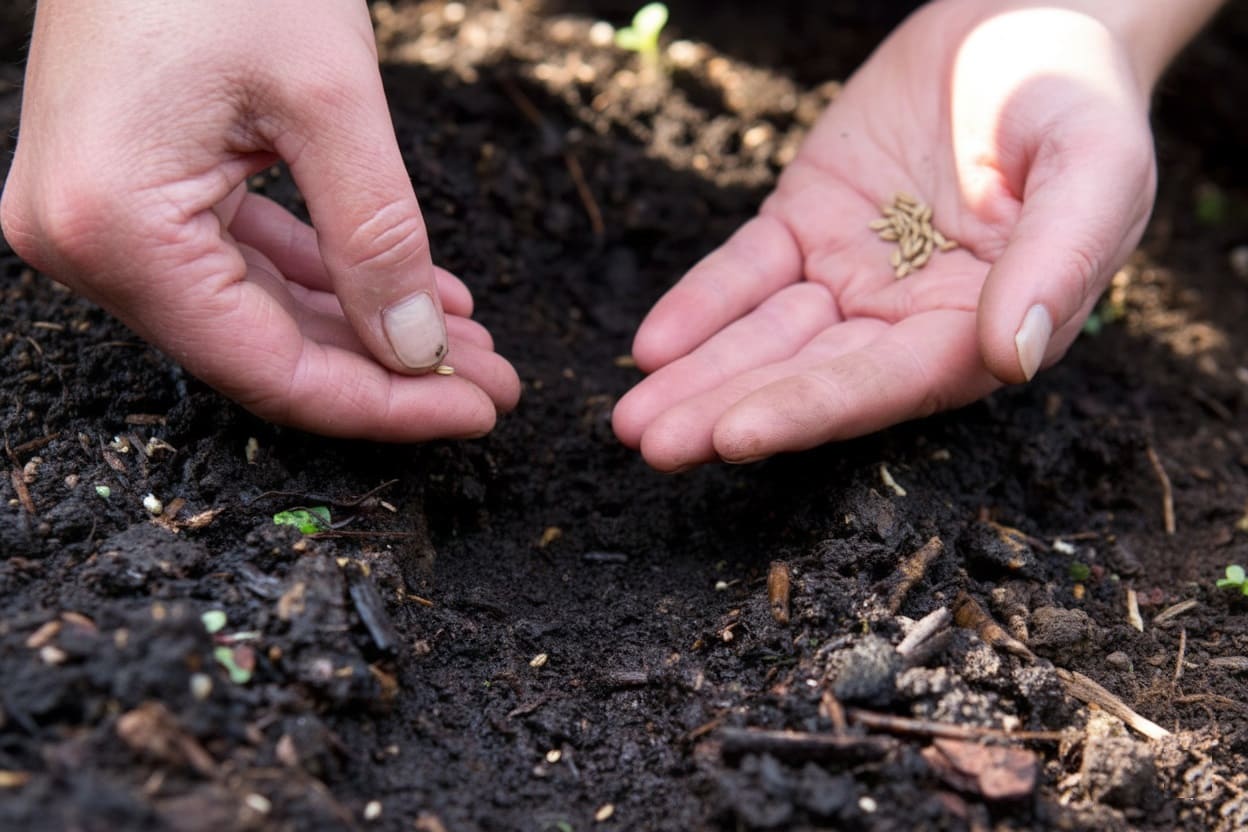
After preparing your bed, create shallow furrows about ½ inch deep and 18 inches apart. If soil is dry, water along the furrow before sowing—this prevents washing seeds away when you water after planting.
Sow seeds thinly, about 2 inches apart, or station-sow 3 seeds every 12 inches. Cover lightly with soil and water gently with a rose-head watering can. Germination takes 7-14 days at 60-70°F.
When seedlings reach 2-3 inches with true leaves, thin to final spacing of 12 inches apart for standard bulbs.
For baby fennel (harvested at 2-3 inches across), space plants 6-8 inches apart. Wider spacing—up to 18 inches—produces the largest bulbs if you have room to spare.
Thinning tip: Don’t pull unwanted seedlings—you’ll disturb neighbors’ roots. Instead, snip them at soil level with scissors. Toss those tender, anise-scented thinnings into your next salad.
Starting Indoors (When Necessary)
If your growing season is short or you want to maximize production, start seeds indoors 4-6 weeks before your target outdoor planting date (typically sowing in early to mid-May for June transplanting).
Use cell trays or individual 3-inch pots—one seed per cell. Sow ¼ inch deep in seed-starting mix. Keep at 65-70°F and in bright light. Water from below to prevent damping off.
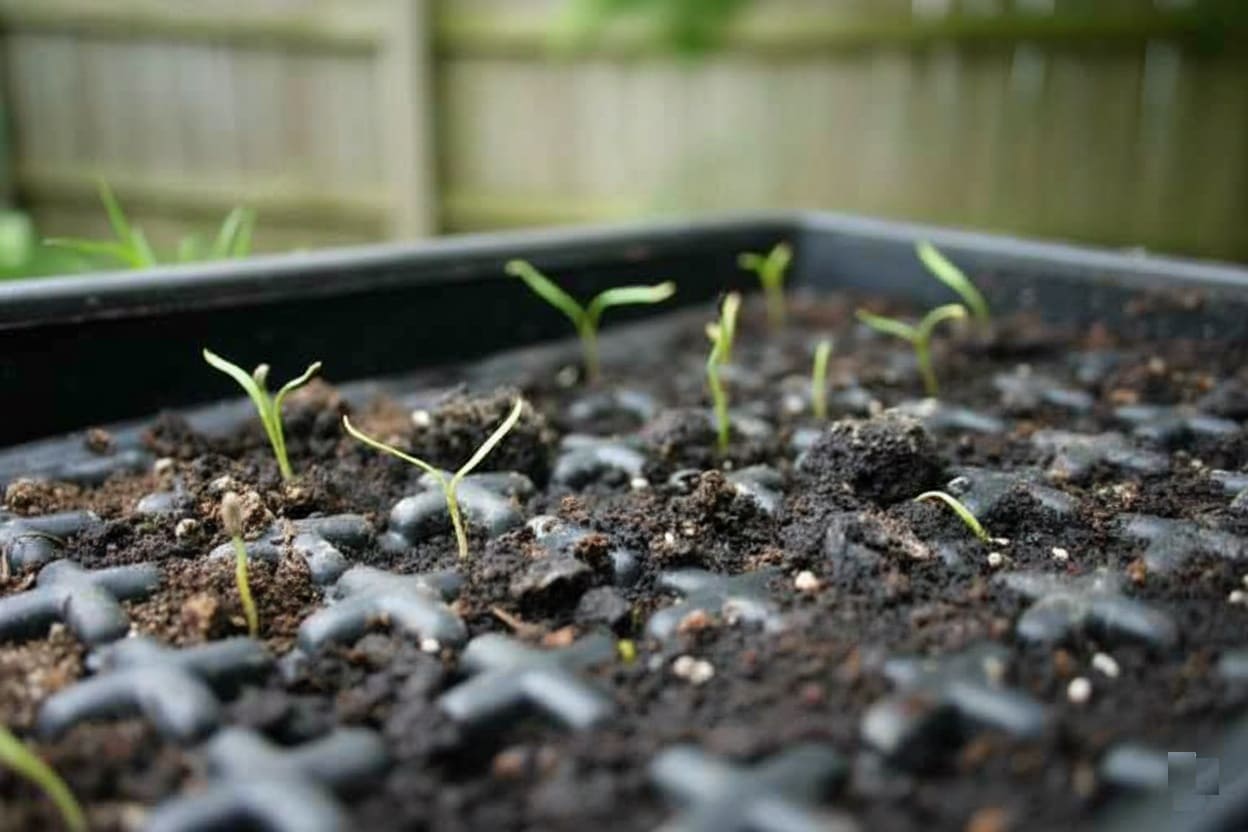
Critical step: hardening off. One week before transplanting, move seedlings outside for increasingly longer periods. Start with 1-2 hours in filtered shade, gradually increasing to full sun over 7-10 days. This acclimates them to outdoor conditions and prevents shock.
Transplant on a cloudy day or in evening to reduce stress. Dig holes just large enough for the rootball, disturbing roots as little as possible. Plant at the same depth they were growing, firm soil gently around them, and water thoroughly.
The Watering Equation: Consistency Prevents Bolting
After timing, consistent moisture is your most powerful tool for preventing bolting and producing crisp, sweet bulbs. Erratic watering—letting soil dry out, then flooding it—stresses plants into flowering.
Aim for soil that’s evenly moist but never waterlogged. Think “damp sponge” rather than “soaking wet” or “bone dry.” This typically means 1-2 inches of water per week, increasing during hot spells.
- How to water wisely:
Water deeply in early morning so foliage dries before evening, reducing disease risk. Drip irrigation or soaker hoses deliver consistent moisture directly to roots without wetting leaves—ideal for fennel. Overhead watering is fine if done early and soil drains well.
Check moisture by pushing your finger 2 inches into the soil. If it feels dry at that depth, water thoroughly until the top 6 inches are moistened.
- Mulch matters:
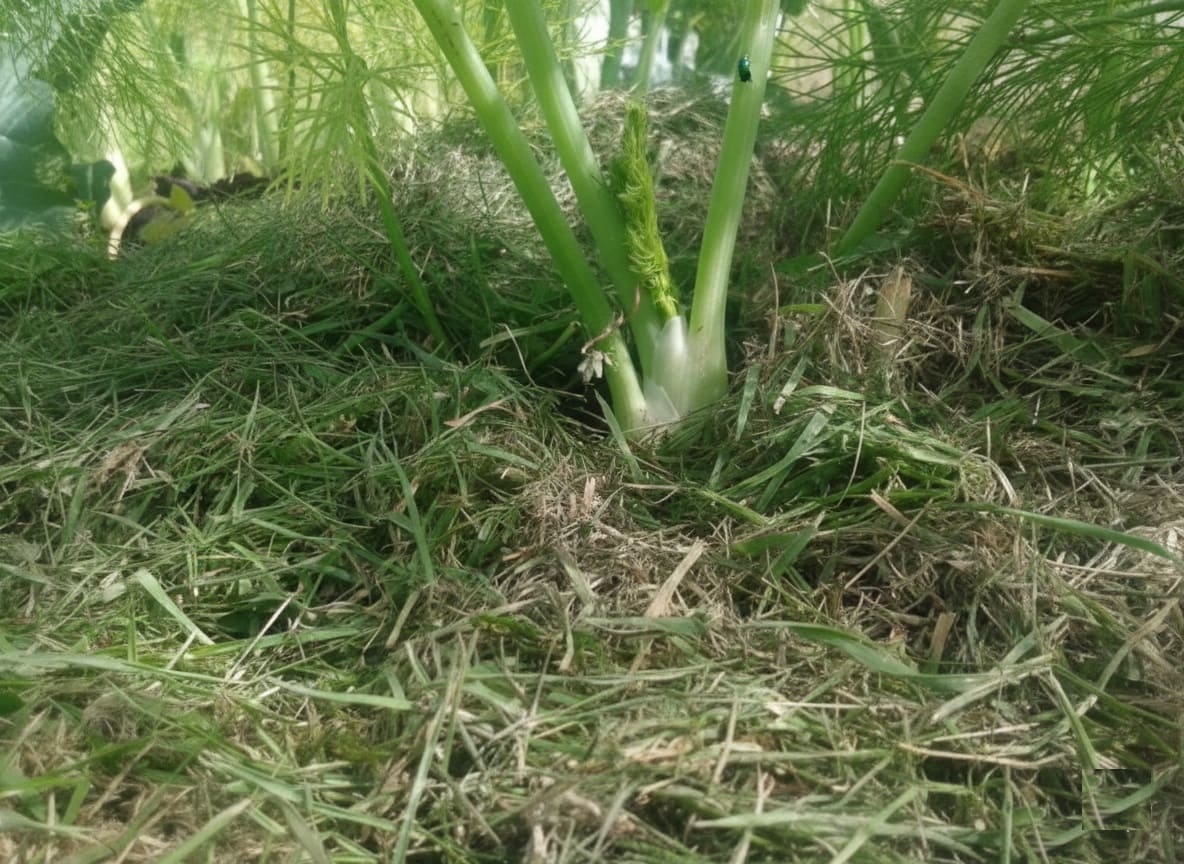
Apply 2-3 inches of organic mulch (straw, shredded leaves, or grass clippings) around plants once they’re established. Mulch moderates soil temperature, conserves moisture, and suppresses weeds—your secret weapon for stress-free fennel.
👉 Learn about Hay vs Straw: The Real Difference Every Farmer Must Know
Feeding and Earthing Up
If you’ve enriched your soil with compost beforehand, fennel needs little additional feeding. However, once bulbs begin swelling (around golf-ball size), a boost helps them size up nicely.
Apply a liquid fertilizer every 2-3 weeks from bulb formation through harvest. Choose a balanced organic fertilizer (like fish emulsion) or a tomato-type feed higher in potassium (potassium promotes fruiting and bulbing).
Dilute according to package directions—half-strength is often sufficient.
Earthing up (also called hilling or blanching) is optional but produces whiter, sweeter, more tender bulbs.
When bulbs reach the size of a hen’s egg, gradually mound loose soil around them over the next 2-3 weeks until only the green tops show. This excludes light, blanching the bulb white.
Don’t have loose soil? Use straw, cardboard collars, or even thick black fabric instead—anything that blocks light works.
The tradeoff: blanched bulbs are milder and prettier, but unblanched bulbs have slightly stronger flavor and more vitamins. I often skip this step and enjoy perfectly delicious green-tinged bulbs.
Variety Selection: Choose for Success
Not all fennel varieties perform equally. Modern breeding has dramatically improved bolt resistance, uniformity, and flavor.
Top Florence Fennel Varieties:
- ‘Zefa Fino’ – The reliability champion. This open-pollinated variety resists bolting, matures in 65-80 days, and tolerates less-than-perfect conditions. Start here.
- ‘Orion’ F1 – A hybrid producing heavy, uniform bulbs that store exceptionally well. Slightly slower (80 days) but worth the wait.
- ‘Perfection’ – True to its name, with medium-sized bulbs, delicate flavor, and strong bolt resistance allowing earlier spring sowings.
- ‘Solaris’ – Another reliable hybrid with good uniformity and bolt resistance.
- ‘Romanesco’ – Classic Italian heirloom with large, beautiful bulbs and intense flavor—but demands ideal conditions.
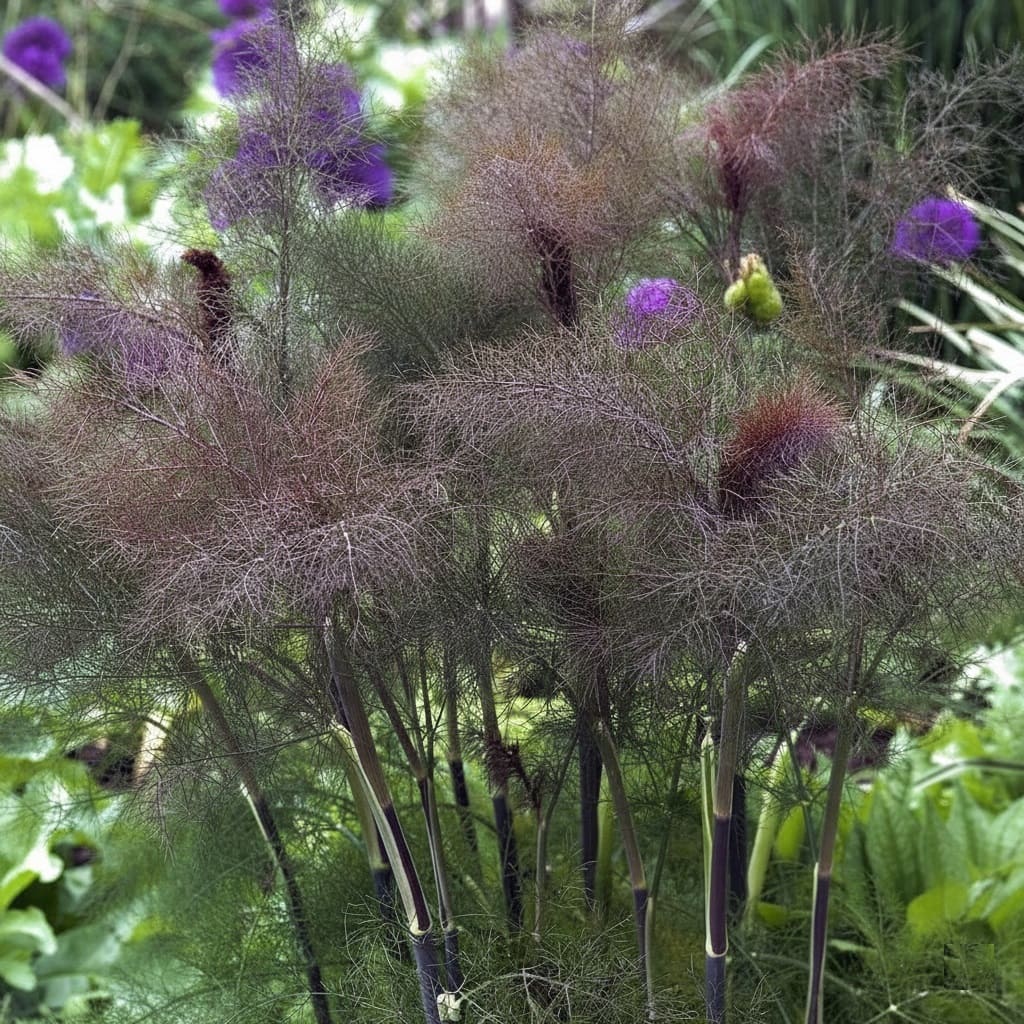
For herb fennel, choose between standard green-leaved (Foeniculum vulgare) or the stunning bronze variety (F. vulgare ‘Purpureum’).
Bronze fennel’s copper-toned foliage starts intensely purple in spring, maturing to bronzy-green by summer. It’s slightly less invasive than green fennel while being equally flavorful and more winter-hardy.
Growing Fennel in Containers
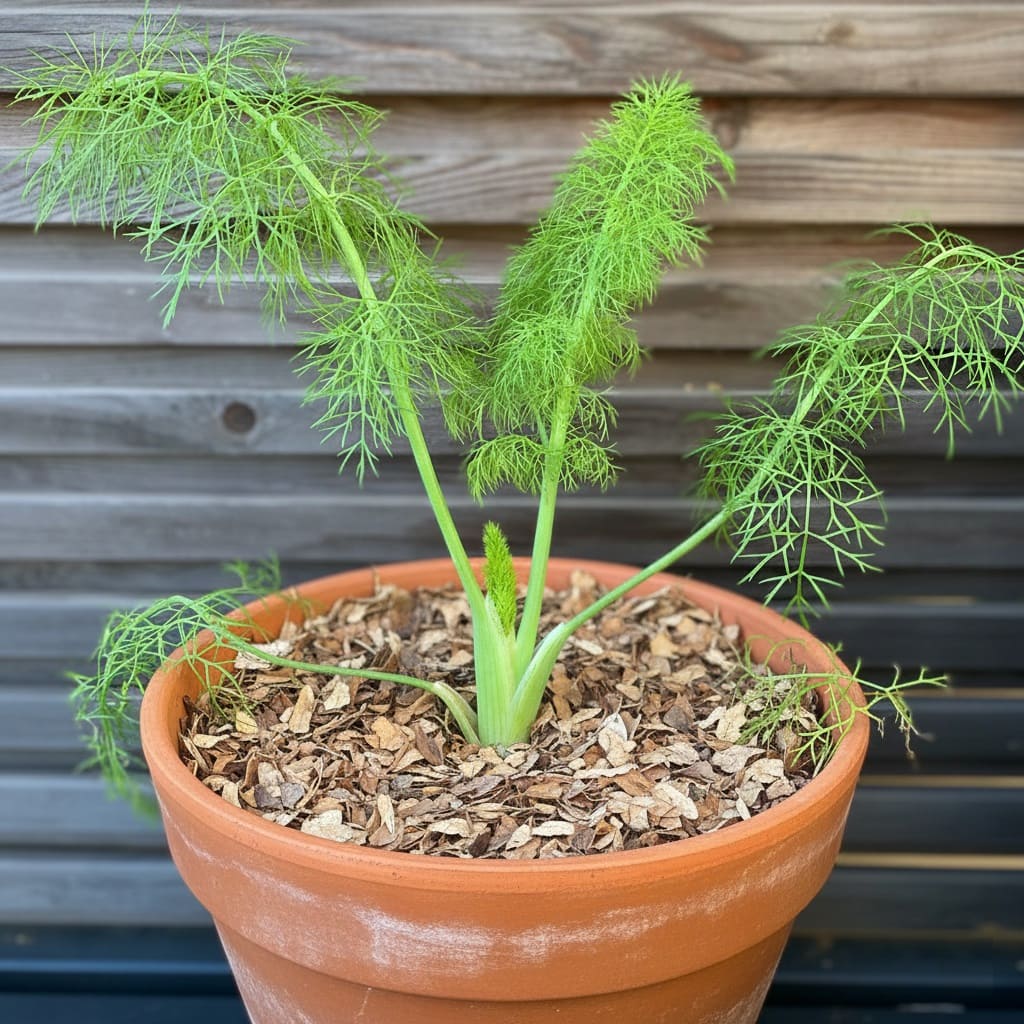
Short on garden space? Florence fennel thrives in containers if you meet its needs.
Container requirements
Choose a pot at least 12 inches wide and 18 inches deep to accommodate the taproot. Deeper is better—24 inches deep allows even more root development. Ensure excellent drainage with multiple holes in the bottom.
Fill containers with quality potting mix, not garden soil. Add perlite or coarse sand (about 20% by volume) to improve drainage. Water-retentive potting mixes work well since containers dry out quickly.
Sow 2-3 seeds in the center of each 12-inch pot, thinning to the strongest seedling. In larger containers (18+ inches wide), space multiple plants 10-12 inches apart.
Container care differs from in-ground
Pots dry out faster, especially in hot weather, so check moisture daily. Container fennel benefits from weekly feeding with diluted liquid fertilizer since nutrients leach out with frequent watering.
Herb fennel makes spectacular container specimens for patios, reaching 3-4 feet in pots while providing beautiful texture. Bronze fennel is particularly striking.
Pest Management: Fewer Problems Than You’d Expect
Fennel’s aromatic oils deter many pests, making it relatively carefree.
1. Slugs and snails are your primary enemy, devastating young seedlings overnight. Combat them with beer traps, copper barriers, or hand-picking patrols at dawn.
Organic iron phosphate slug bait works well if populations are high—scatter sparingly around seedlings.
2. Aphids occasionally cluster on tender new growth but rarely cause serious damage. A strong blast of water from the hose dislodges them, or apply insecticidal soap if infestations persist.
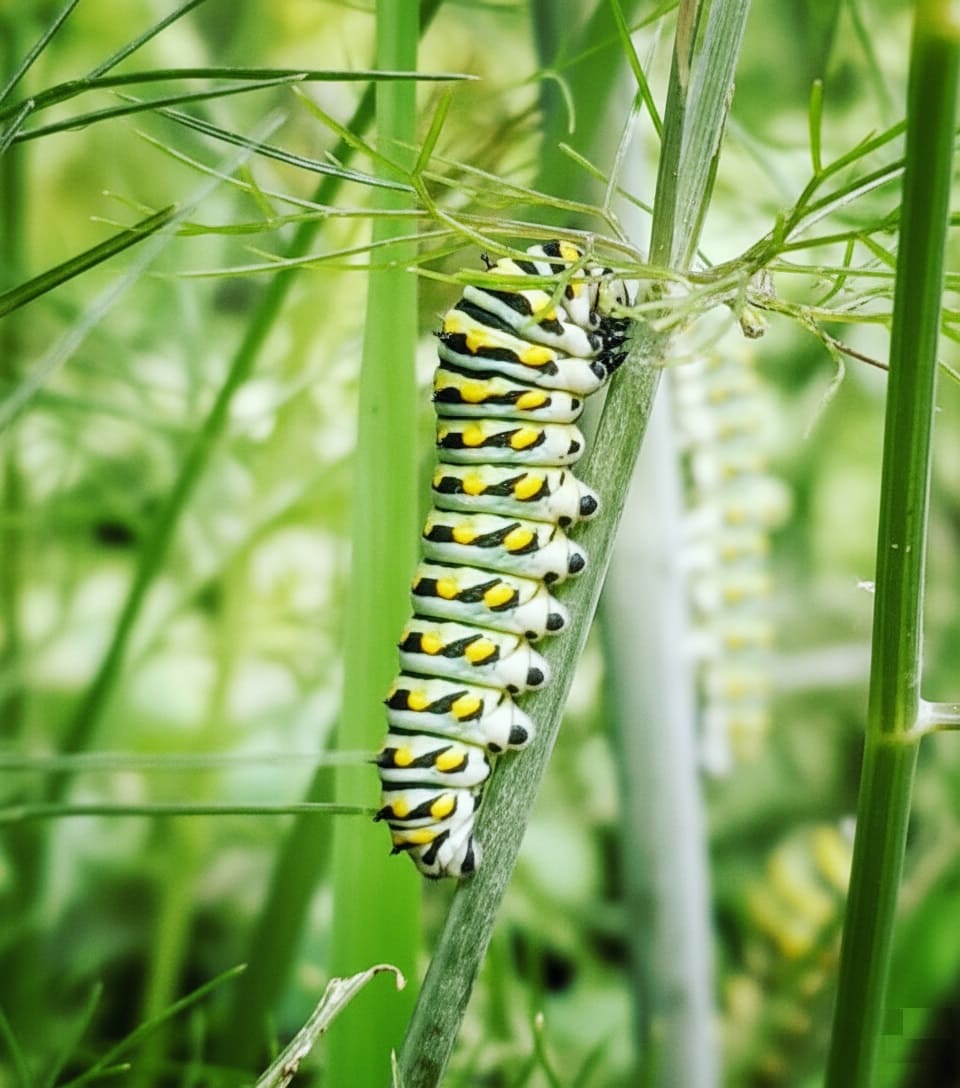
3. Black swallowtail caterpillars feast on fennel foliage—they’re beautiful green caterpillars with black and yellow bands.
Many gardeners welcome them as beneficial pollinators-in-training. The caterpillars rarely damage bulb production since they eat fronds, and the adult butterflies are gorgeous.
If you’re growing fennel strictly for bulbs and they’re bothersome, hand-pick and relocate to wild fennel if available. Never use pesticides—you’ll kill beneficial insects along with caterpillars.
4. Root rot can occur in waterlogged soil. Prevention is simple: ensure good drainage and don’t overwater. If plants suddenly wilt despite moist soil, root rot may be the culprit—remove affected plants and improve drainage before replanting.
The biggest “pest” is bolting, but that’s a stress response, not an insect. Prevent it with proper timing, consistent moisture, and bolt-resistant varieties.
Harvesting Your Fennel Bounty
Florence Fennel Bulbs
Bulbs mature 80-100 days after sowing, though this varies by variety and conditions. Most are ready in late September through October from June/July sowings.
Harvest when bulbs reach tennis-ball size (3-5 inches across) and feel firm when gently squeezed. You’ll see the base looking distinctly swollen and rounded.
Don’t wait too long—once the plant starts to bolt (sending up a central flower stalk), the bulb becomes woody and bitter within days.
To harvest, use a sharp knife to cut just below the bulb at soil level. Trim stalks to 1-2 inches above the bulb. The trimmed stalks aren’t waste—chop them for stocks or freeze for soup bases.
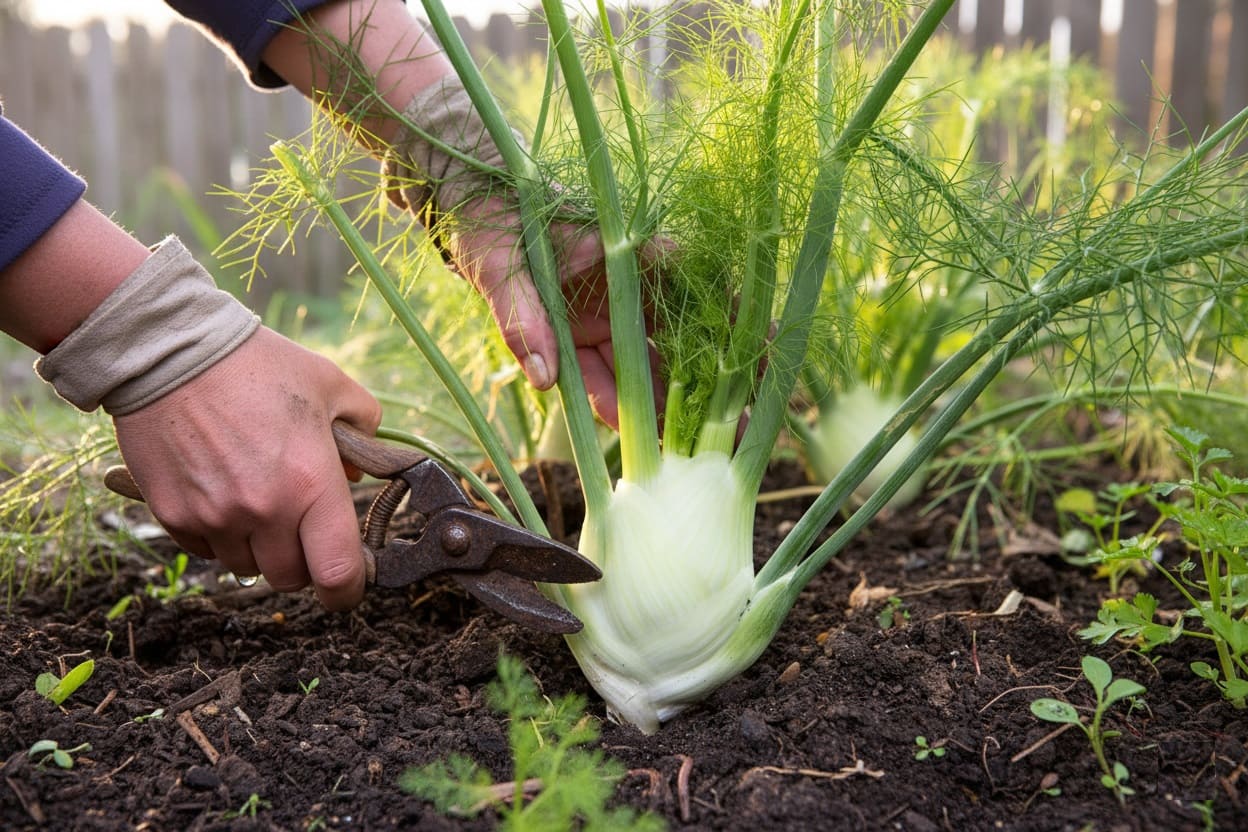
Bonus harvest: Leave the root and base (about 1 inch tall) in the ground. Within 2-3 weeks, it will sprout new feathery shoots perfect for salads and garnishes.
These regrown fronds are more tender than the original foliage. You won’t get another bulb, but these greens are a valuable second harvest.
Florence fennel tolerates light frosts (down to 28°F), so don’t rush to harvest everything at the first chill. In mild climates, bulbs can stay in the ground well into November.
Fennel Fronds
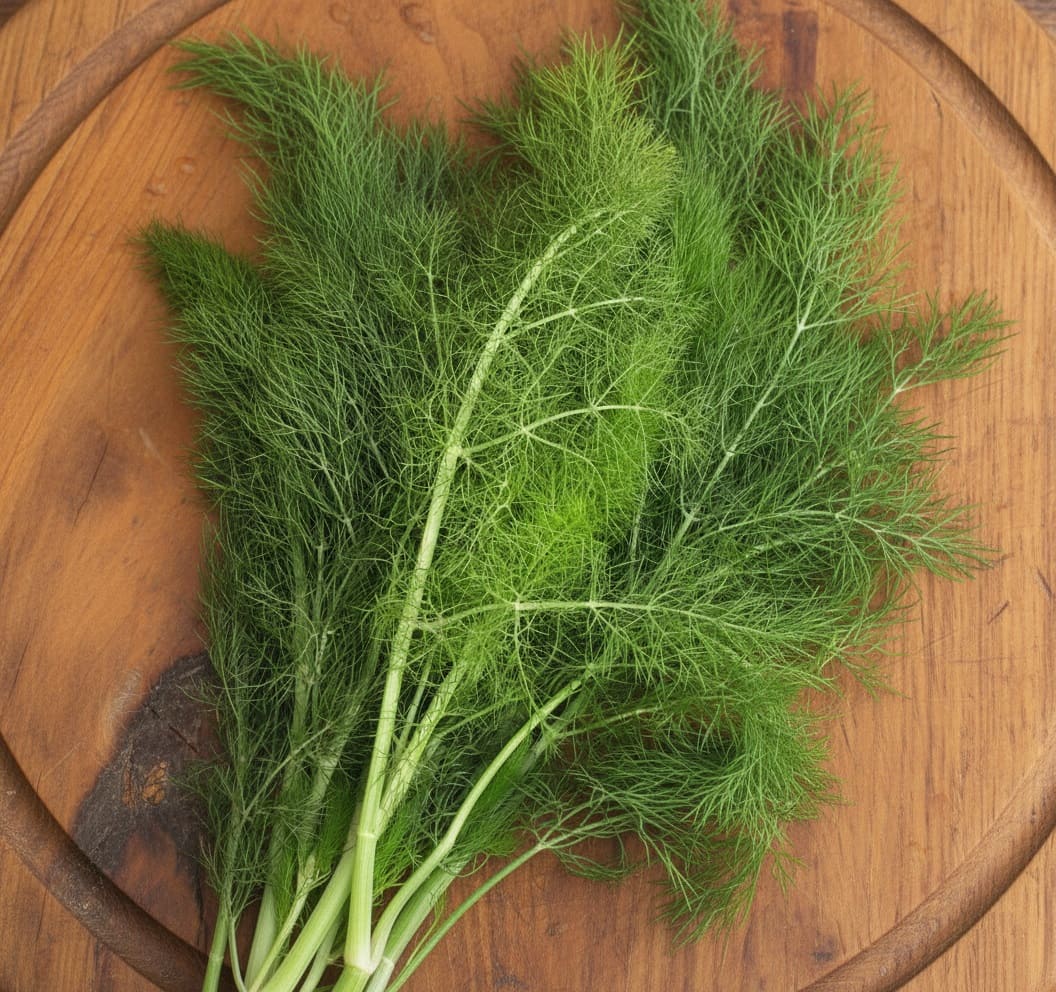
Harvest fronds from both herb and Florence fennel throughout the growing season once plants are established. Using sharp scissors, snip stems near the base, taking no more than one-third of the plant at a time—it needs remaining foliage to photosynthesize.
For Florence fennel grown for bulbs, harvest fronds sparingly until after you lift the bulb—the plant needs those leaves to build the bulb you’re after. Once you’ve harvested the bulb, the regrowing shoots are all yours.
Fronds are most flavorful when young and bright green. Use them fresh in the next day or two for peak flavor and texture.
Fennel Seeds
If you’re growing herb fennel or if your Florence fennel bolts (or you intentionally let one flower), harvest seeds for cooking and next year’s planting.
Allow flowers to fully develop—those flat, yellow umbels are magnets for beneficial insects like lacewings, ladybugs, and parasitic wasps. Once flowers fade and seedheads turn brown but before seeds drop (typically late September or October), cut entire stems.
Bundle 5-6 stems together, place them upside-down in a large paper bag with the seedheads inside, and hang in a warm, dry location with good airflow. After 2-3 weeks, shake the bag vigorously—mature seeds will fall to the bottom.
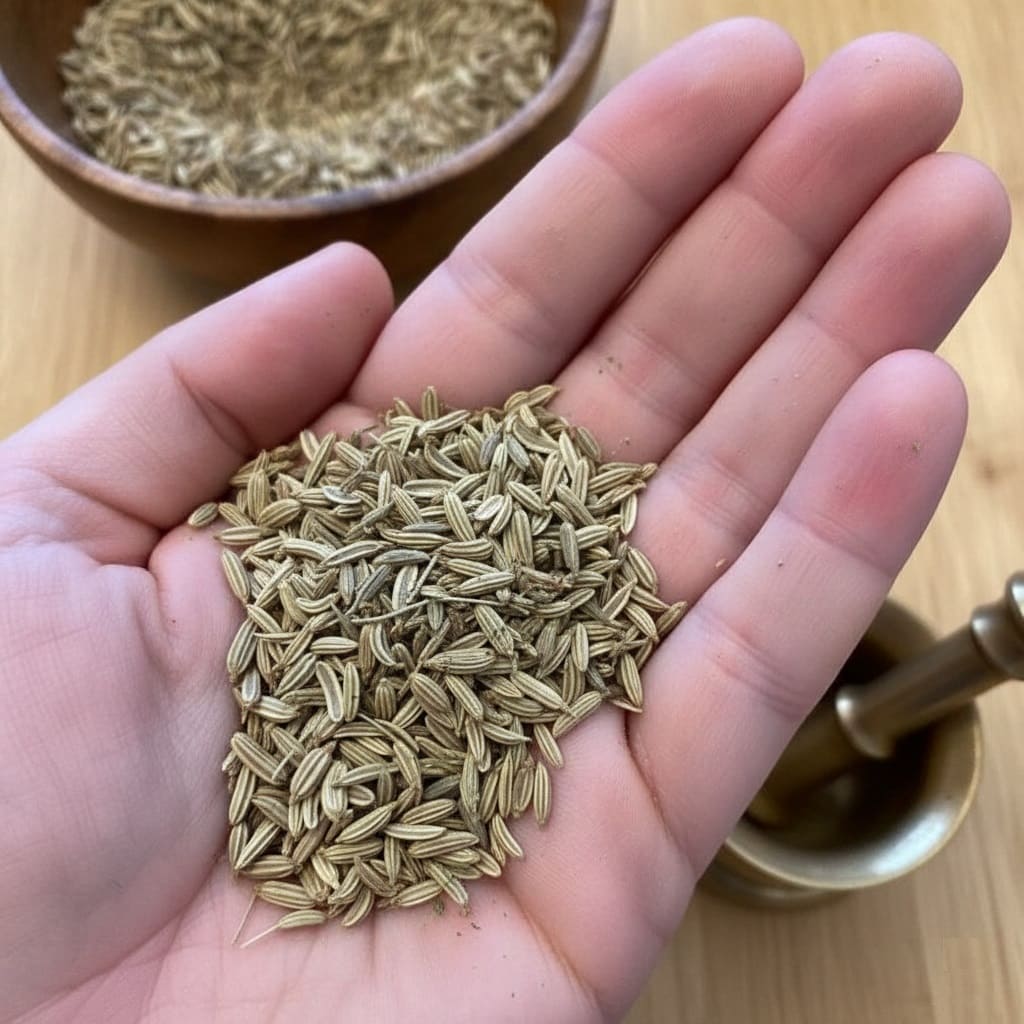
Pour seeds into a fine-mesh strainer to remove chaff. Store in an airtight jar in a cool, dark place. They’ll keep for cooking for about a year and remain viable for planting for 3 years.
Storing and Using Your Harvest
Fresh bulbs keep 3-5 days in the refrigerator if you remove the fronds first (they draw moisture from the bulb). Wrap bulbs in a damp paper towel, place in a perforated plastic bag, and store in the crisper drawer.
For longer storage—up to 2-3 months—keep unwashed bulbs in a cold (32-35°F), very humid environment like a root cellar. Check periodically and use any that show signs of softening.
Fronds stay fresh for a few days in a glass of water on the counter, like cut flowers. For longer storage, wrap loosely in damp paper towels, seal in a container, and refrigerate for up to a week.
Or chop and freeze in ice cube trays with water or olive oil for instant flavor additions to soups and sauces.
Cooking ideas transform fennel from garden curiosity to dinner star:
- Shave raw bulbs paper-thin over salads with orange segments, olive oil, and lemon
- Roast thick wedges at 400°F until caramelized (the anise flavor mellows to surprising sweetness)
- Braise with white wine, garlic, and thyme—perfect with fish
- Grill thick slices brushed with olive oil for smoky char
- Sauté sliced fennel with onions as a fragrant base for pasta sauce or risotto
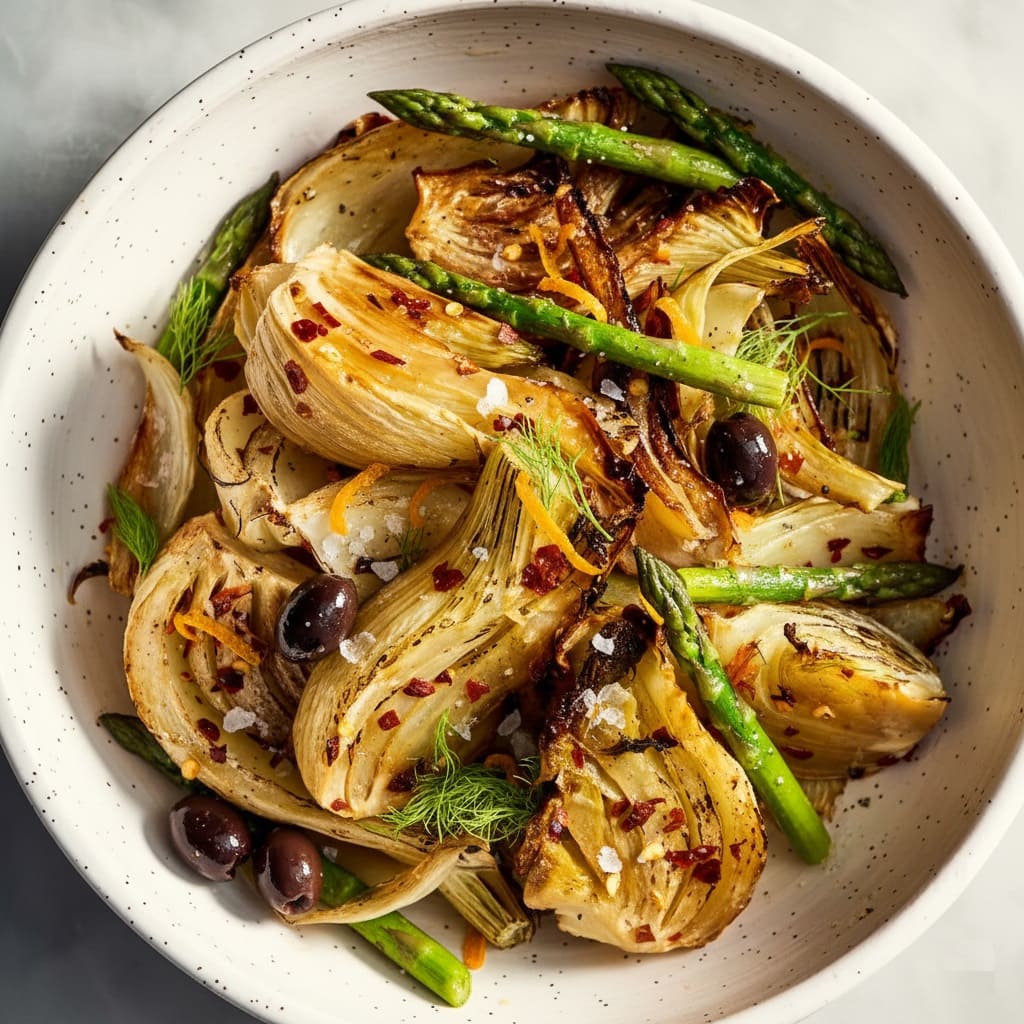
The licorice flavor that intimidates some people becomes sweet and delicate when cooked—even anise-haters often love roasted fennel.
Understanding and Preventing Bolting
Since bolting—premature flowering—is fennel’s most common problem, let’s tackle it comprehensively.
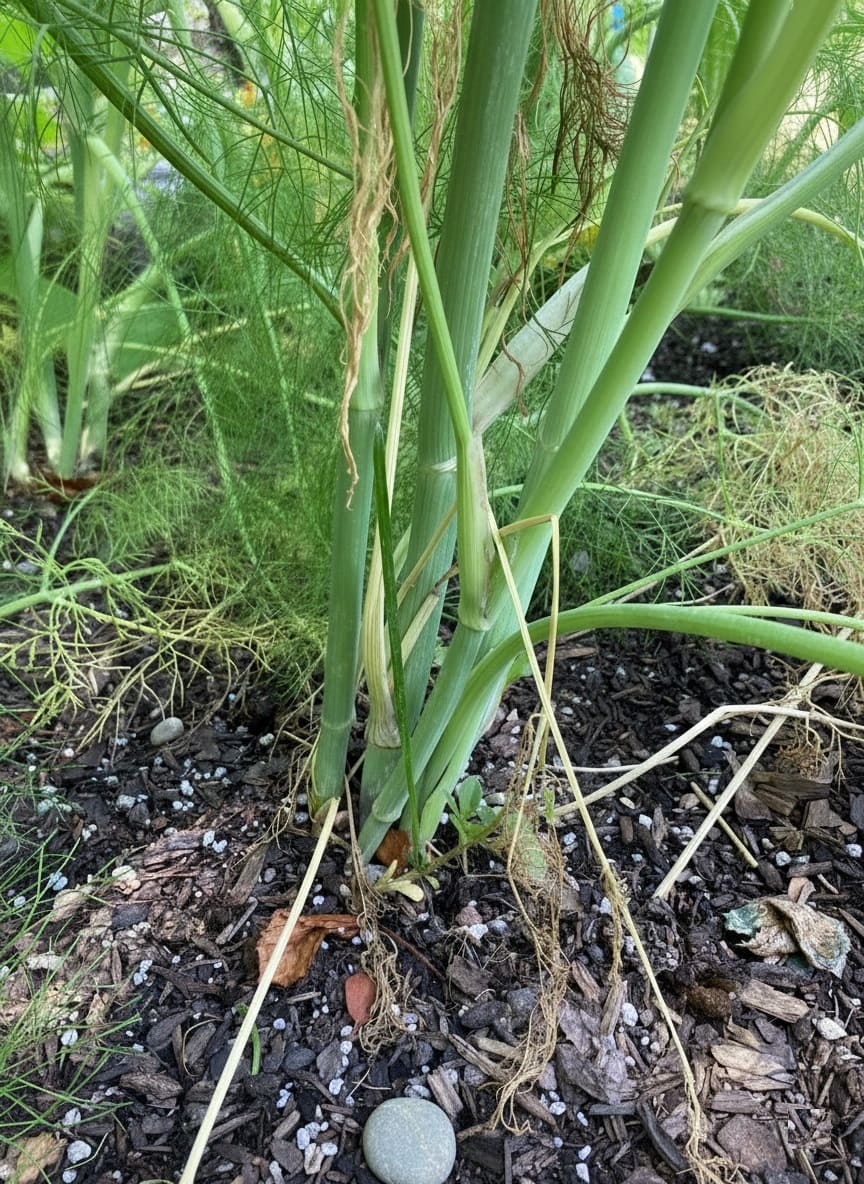
What causes bolting
- Cold temperatures (below 50°F) in early growth stages
- Transplant shock or root disturbance
- Water stress (soil drying out between waterings)
- Extreme heat without adequate moisture
- Early spring sowing with lengthening days
- Genetic predisposition in non-resistant varieties
Prevention strategies
- Time it right – Sow in June-July, not spring
- Choose resistant varieties – ‘Zefa Fino’, ‘Perfection’, and ‘Orion’ lead the pack
- Maintain consistent moisture – Never let soil dry out
- Avoid transplanting – Direct sow when possible
- Protect from temperature swings – Use row covers if late spring or early fall brings unexpected cold
If plants start to bolt
Once that central flower stalk emerges, the bulb’s fate is sealed—it will turn woody. Your options: harvest immediately and use what you can (younger bolted bulbs are sometimes still usable if caught early), or embrace it and let the plant flower for beneficial insects.
Those blooms attract predatory wasps, lacewings, and hover flies that control aphids and other pests across your entire garden—valuable ecosystem services.
Companion Planting: Give Fennel Some Space
Fennel’s reputation as a garden loner has merit—it’s allelopathic, releasing compounds that inhibit growth of certain nearby plants, especially nightshades (tomatoes, peppers, eggplants, potatoes) and beans.
- Keep fennel away from: tomatoes, peppers, eggplants, potatoes, beans, and kohlrabi (plant at least 4-5 feet away).
- Suitable neighbors: cucumbers, lettuce and salad greens, peas, and sage tolerate fennel’s company.
- Special note on dill: While fennel and dill coexist peacefully, they cross-pollinate if flowering simultaneously. This doesn’t affect current crops but creates hybrid seeds with unpredictable traits. Keep them separated if you’re saving seed.
👉 Read The Ultimate Companion Planting Guide: 422 Plant Combinations That Actually Work
I’ve found the simplest approach is dedicating a corner bed or row-end to fennel, treating it as a specimen plant. This showcases bronze fennel’s ornamental beauty while avoiding potential conflicts.
Succession Planting for Continuous Harvest
Rather than one large planting, sow fennel every 2-3 weeks from mid-June through late July. This extends your harvest window from September through November and prevents feast-or-famine gluts.
Mark your calendar for sowings on June 15, July 1, July 15, and July 30. Each sowing should provide 4-6 bulbs for a typical family, yielding steady supplies for 10-12 weeks.
Calculate backward from your first fall frost date (mine is mid-October). Florence fennel needs 80-100 days to mature, so my last sowing is around July 20-25.
Knowing your local frost date (check the Old Farmer’s Almanac or local extension office) lets you fine-tune this timing.
Climate-Specific Considerations
- Hot summer areas (zones 8-10):
Provide afternoon shade during peak heat, ensure very consistent moisture, and consider growing as a fall/winter crop (sow August-September for December-January harvest). Mulch heavily to keep roots cool.
- Short-season areas (zones 3-5):
Choose the fastest varieties (‘Zefa Fino’ matures in 65 days), start indoors in late May for June transplanting, and use row covers to extend the season. Your window is tight but achievable.
- Humid climates:
Ensure excellent air circulation and avoid overhead watering to prevent fungal issues. Space plants at the wider end of recommendations (15-18 inches) for better airflow.
- Dry climates:
Fennel surprisingly tolerates heat if moisture is consistent. Drip irrigation is your friend. Mulch heavily and consider afternoon shade during extreme heat (above 95°F).
Herb Fennel: The Easier Cousin
While this guide emphasizes Florence fennel, herb fennel deserves mention for being notably more forgiving.
Sow herb fennel in late April through July, either directly or in pots for transplanting. Space plants 18-24 inches apart—these grow tall (5-6 feet) and wide (2-3 feet). Provide full sun and occasional water once established.
Harvest fronds throughout the season, cutting stems near the base. Allow some plants to flower—those yellow umbels are butterfly and beneficial insect magnets. Collect seeds in fall for cooking and planting.
In zones 5-10, herb fennel overwinters, dying back to the ground and re-emerging in spring. Cut dead stems to ground level in late fall or early spring before new growth appears. After 3-4 years, plants may become woody—divide them or start fresh from seed.
Bronze fennel offers the same culinary uses with dramatic visual appeal. The intense purple-bronze spring foliage matures to copper-green by summer, providing stunning contrast in ornamental borders while feeding pollinators and your kitchen.
It’s less invasive than green fennel and slightly hardier (to about -20°F vs. -10°F for green).
Frequently Asked Questions
- Why do grocery store fennel bulbs look so much whiter than mine?
Commercial growers earth up bulbs completely and harvest at precise timing for maximum whiteness. Your green-tinged bulbs are perfectly normal and equally delicious—blanching is aesthetic more than functional.
If pure white bulbs matter to you, earth up more thoroughly and harvest just as they reach size.
- Can I start harvesting fennel before bulbs are fully mature?
Absolutely. “Baby fennel” harvested at 2-3 inches across is a delicacy—more tender and sweet than full-sized bulbs. Space plants closer (6-8 inches) and harvest young if you prefer this approach.
- How much fennel should I plant for a family of four?
Plan for 4-6 plants per succession sowing. This yields 4-6 bulbs every 2-3 weeks with succession plantings, providing 1-2 bulbs per week through fall—plenty for most families who use fennel as a side dish or salad ingredient rather than a main course.
- My fennel has beautiful foliage but no bulb—what went wrong?
Three possibilities: you’re growing herb fennel instead of Florence fennel (check your seed packet), the plant bolted before bulbing due to spring sowing or stress, or it simply needs more time.
Florence fennel takes 80-100 days, and bulbs sometimes develop later than expected in cool weather.
- Can I regrow fennel from store-bought bulbs?
Yes! Cut the root end about 1 inch above the base and place it in a shallow dish of water in a sunny window. Change water every 2-3 days. Within a week, you’ll see new shoots and roots.
Continue growing in water for greens, or transplant to a pot once roots are well-developed. You won’t get another bulb (it would need to grow from seed for that), but you’ll get plenty of fronds.
Final Thoughts
Fennel rewards patience and attention with a gourmet crop that’s expensive to buy but straightforward to grow once you understand its preferences. The key insights: sow in midsummer not spring, maintain consistent moisture, and choose bolt-resistant varieties.
Start small your first year—maybe just 4-6 plants in a single sowing. Learn how fennel responds in your specific garden.
Once you taste that first crisp bulb you grew yourself, especially knowing they cost $4-6 each at the market, you’ll understand why fennel has been treasured since ancient times.
Whether you’re drawn to Florence fennel’s gourmet bulbs or herb fennel’s aromatic fronds and seeds, this Mediterranean beauty deserves a sunny corner in your garden.
The investment is small, the effort moderate, and the rewards—both culinary and visual—are substantial.
Now get your seeds ordered, mark your calendar for mid-June, and prepare to master one of the garden’s most sophisticated crops. Your future self, slicing into that first perfect bulb or snipping fresh fronds for tonight’s roasted fish, will thank you.

