
Imagine a plant that offers year-round interest, asks for little in return, and actually improves with benign neglect. Sounds too good to be true? Meet berberis—the unsung hero of the garden world.
Whether you’re dreaming of a living fortress to deter intruders, a wildlife haven buzzing with pollinators, or simply a splash of fiery autumn color, this adaptable shrub delivers on all fronts.
In this comprehensive guide, you’ll discover everything you need to successfully grow and care for berberis, from choosing the perfect variety to mastering propagation techniques.
By the end, you’ll understand why seasoned gardeners consider berberis indispensable.
What is Berberis? Understanding the Basics
Berberis, commonly known as barberry, encompasses over 400 species ranging from knee-high groundcovers to imposing three-meter specimens.
What unites them is remarkable resilience and distinctive seasonal appeal that keeps gardens interesting throughout the year.
The Two Main Types
Deciduous Berberis
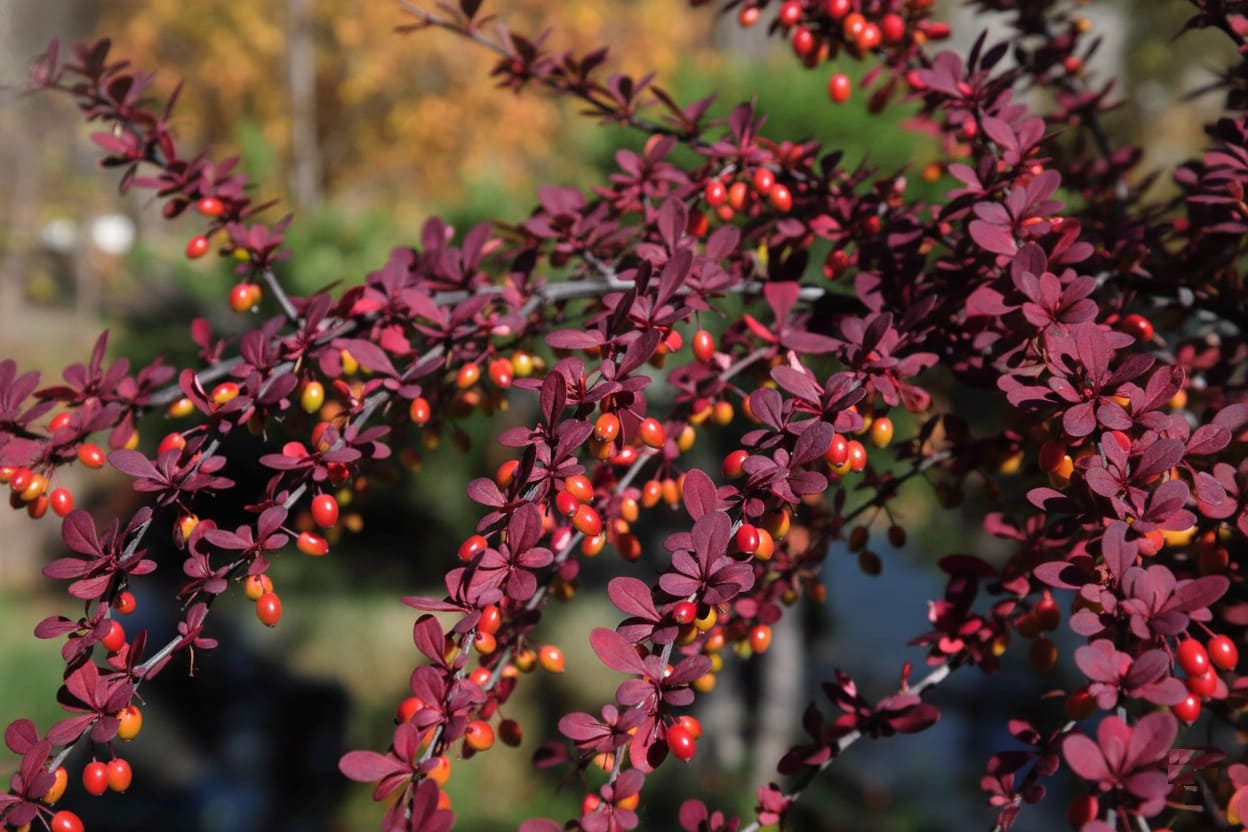
These drop their leaves in winter but compensate with spectacular autumn drama.
Japanese barberry (Berberis thunbergii) glows with brilliant red autumn foliage, followed by bright red berries that feed birds through winter.
Most cultivars reach 1-1.5 meters tall with thorny stems.
Evergreen Berberis
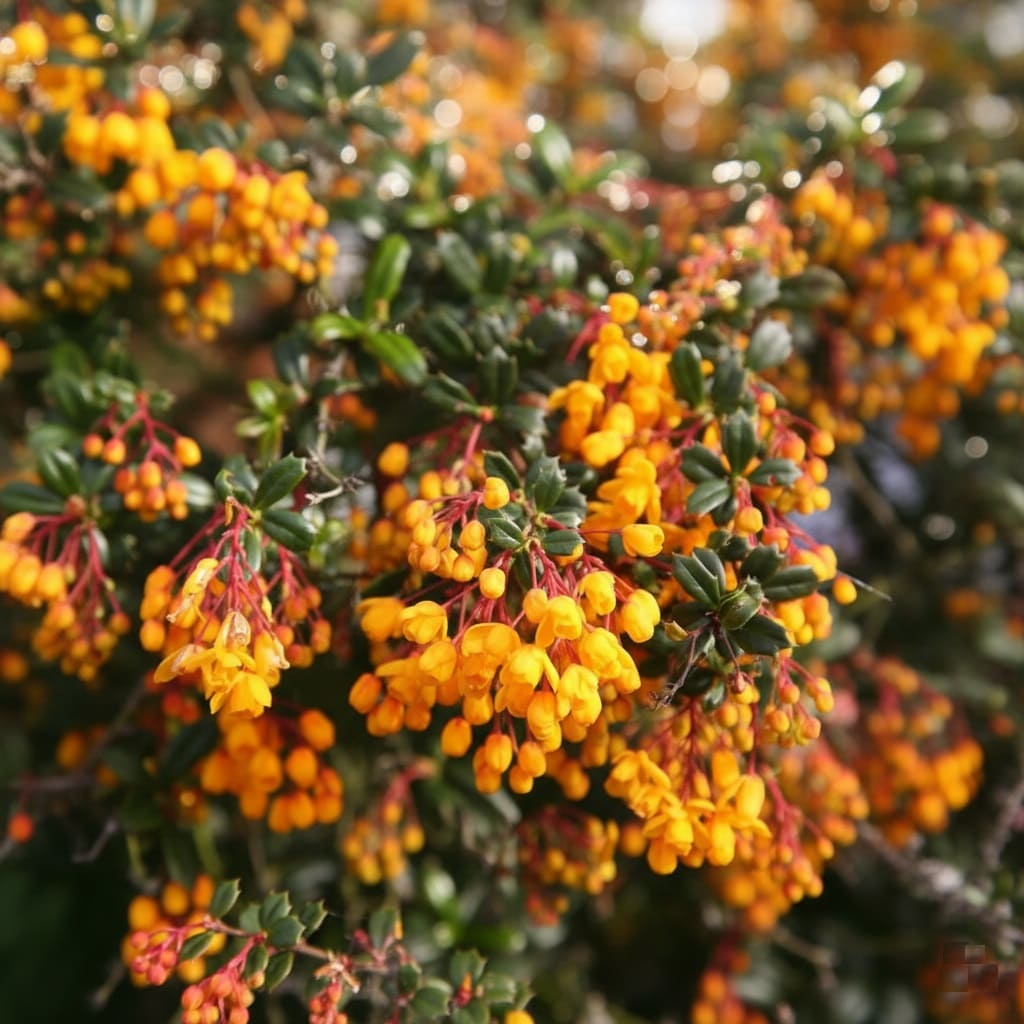
Darwin’s barberry (Berberis darwinii) and its relatives keep glossy, often holly-like leaves year-round, providing constant structure and wildlife shelter.
Many produce abundant golden-orange spring flowers followed by blue-black berries.
These typically grow larger, reaching 2-3 meters if unpruned.
Important Safety Considerations
Before planting, understand two critical points.
1. First, berberis has sharp thorns on stems and sometimes spine-tipped leaves—always wear thick gloves and eye protection when handling these plants.
The thorns can cause skin irritation and painful puncture wounds.
2. Second, while the plant serves important ecological functions, all parts except ripe berries contain compounds that cause mild to moderate stomach upset if ingested by humans or pets.
Keep plants away from areas where children play, and consult poison control if ingestion occurs.
Additionally, Japanese barberry has become invasive across the northeastern United States and parts of the Midwest, and research shows it creates ideal habitat for deer ticks that spread Lyme disease.
Check with your local extension office before planting any berberis variety.
Choosing the Right Berberis for Your Garden
Matching the plant to your specific needs prevents future problems and ensures success.
Size Matters: Know Your Space
- Dwarf Varieties (30-60cm)
‘Tiny Gold’ reaches just 50cm with bright golden foliage perfect for container growing or edging. ‘Concorde’ forms neat purple cushions ideal for small gardens or rockeries.
👉 Discover 37 Dwarf Fruit Trees for Small Spaces & Container Gardens
- Medium Shrubs (60cm-1.5m)
The garden workhorses. ‘Crimson Pygmy’ creates burgundy mounds around 60cm tall, while ‘Admiration’ grows to 50cm with dark purple leaves edged in gold.
‘Rose Glow’ reaches 1.2-1.5 meters with marbled pink and purple foliage that evolves through summer.
👉 Discover more Purple Leaf Plants To Transform Your Garden with Stunning Foliage
- Large Specimens (1.5-3m)
Berberis darwinii reaches 3 meters with masses of orange flowers. B. julianae grows similarly tall with exceptionally fierce thorns that create impenetrable barriers. These suit substantial hedges or large gardens.
Deciduous or Evergreen?
Your choice depends on priorities.
- Deciduous varieties excel at providing stunning autumn color in shades of orange, scarlet, and wine-red, plus more conspicuous berries on bare winter branches.
- Evergreen options offer year-round structure, constant screening, reliable wildlife shelter, and generally more abundant spring flowers.
👉 Discover 22 Evergreen Junipers for Ground Cover & Garden Protection
Top Varieties to Consider
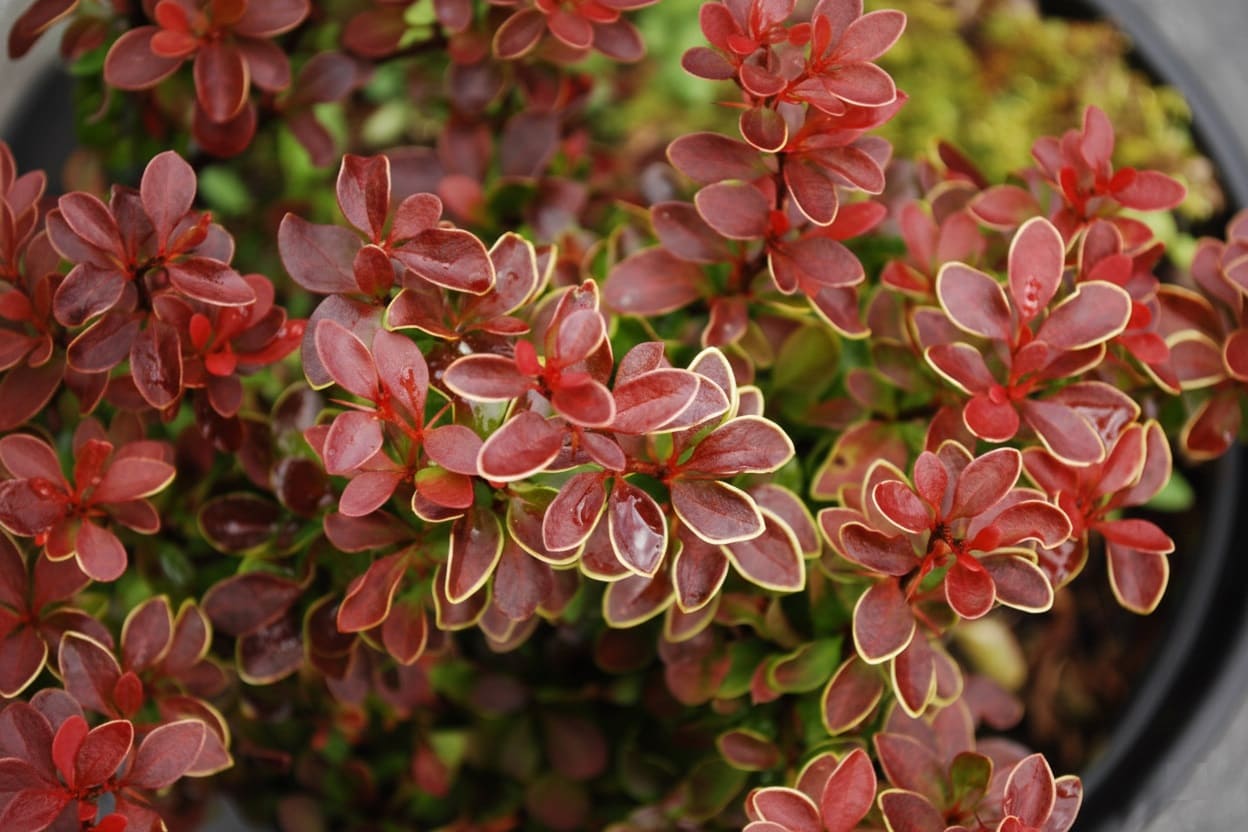
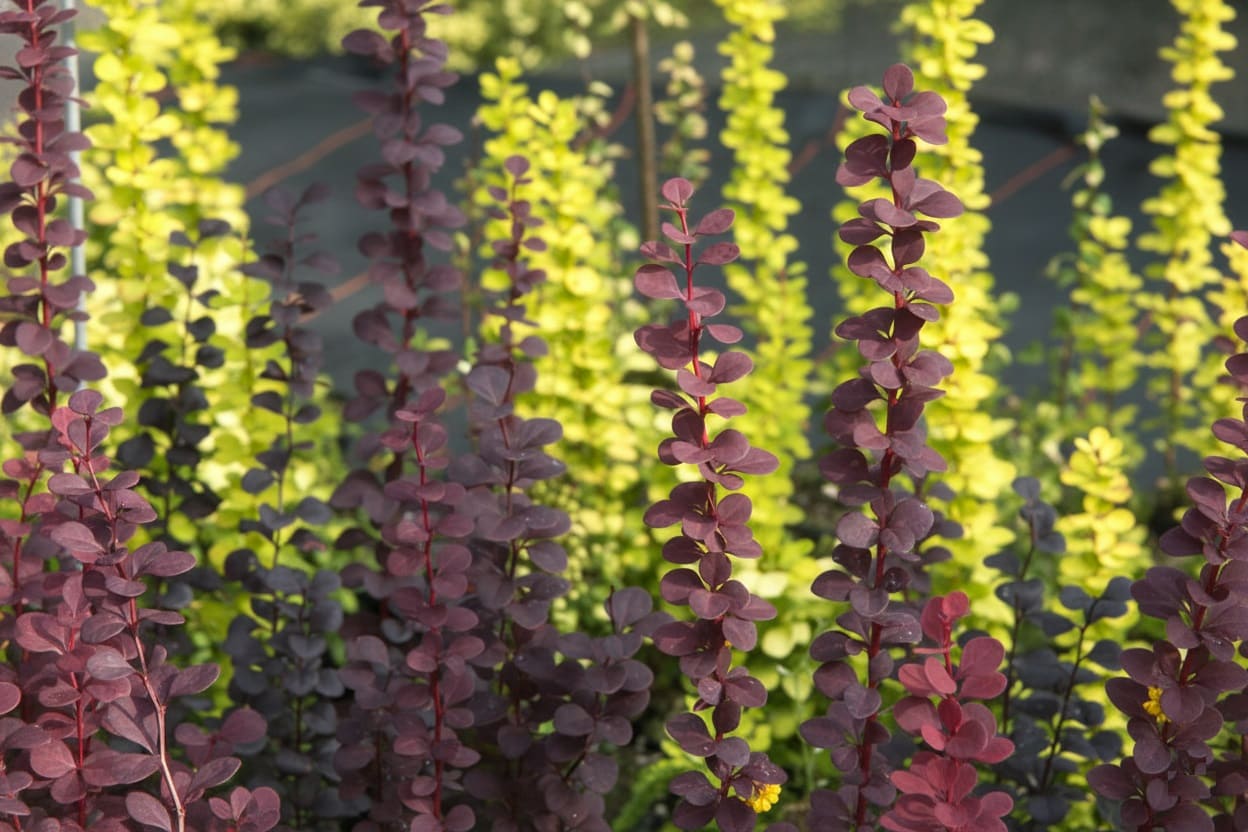
‘Golden Ring’ combines dark reddish-purple leaves rimmed with thin golden edges, growing 1-1.5 meters tall. The dramatic contrast holds through summer before intensifying in autumn.
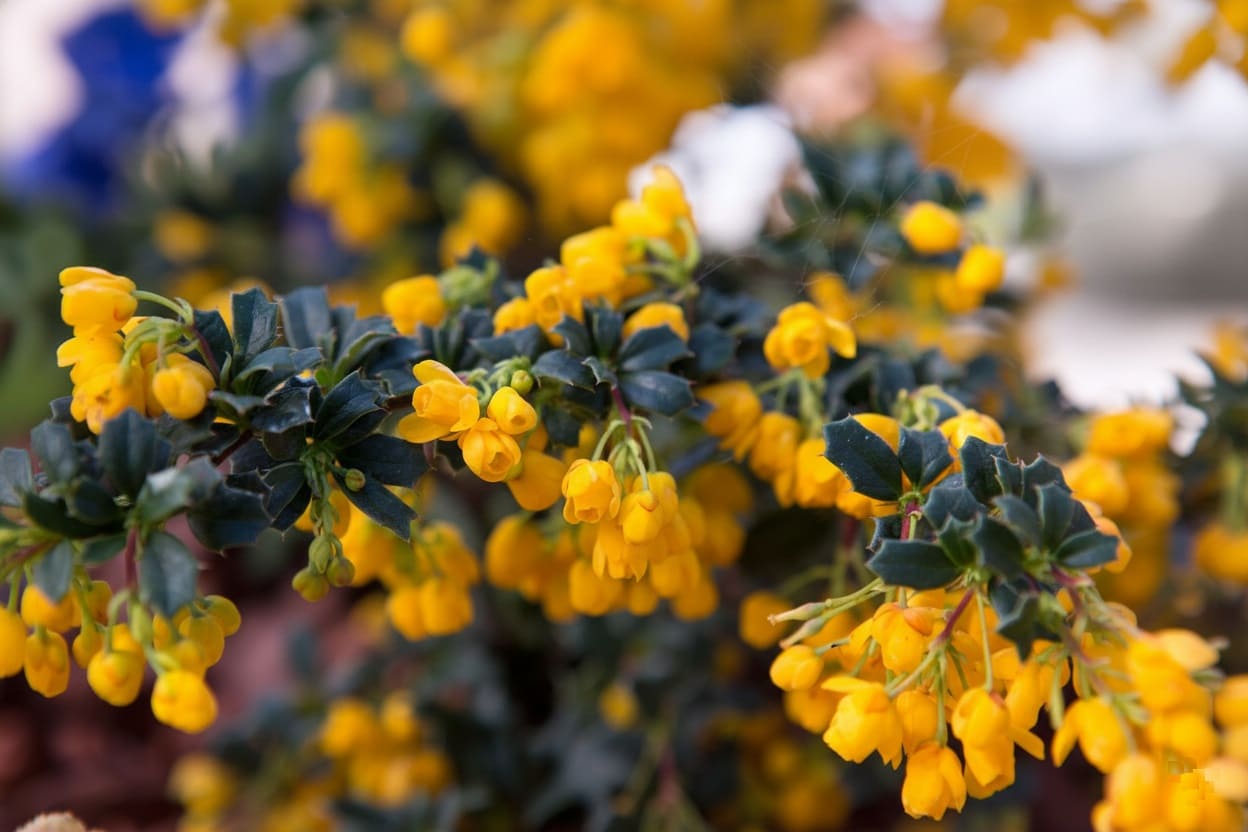
Berberis darwinii ‘Compacta’ delivers the beauty of Darwin’s barberry in a 90cm package. Masses of rich orange-yellow flowers cover the plant in spring, followed by edible blue-black berries.
‘Helmond Pillar’ grows narrow and upright to 1.5 meters with purple leaves, perfect for tight spaces or creating vertical accents in borders.
Where to Plant Berberis: Site Selection Essentials
Berberis thrives in full sun (6-8 hours daily) where you’ll see the richest foliage colors, most abundant flowering, better berry production, and denser growth.
However, partial shade works well, especially for evergreen species like B. darwinii. Golden-leaved cultivars benefit from afternoon shade in hot climates to prevent leaf scorch.
👉 Related post: 22 Fast-Growing Shade Trees That Cool Your Yard in 5 Years
Here’s where berberis really shines—these shrubs grow in almost any soil that isn’t waterlogged, handling heavy clay, sandy soils, alkaline to acidic conditions (pH 5.5-7.5), poor fertility, and even urban soils contaminated with road salt.
The ideal is moist but well-draining loamy soil, but berberis rarely demands perfection. If drainage concerns you, work in coarse grit and organic matter, or plant on a slight mound.
Perfect Positions
- For Hedging:
Space plants 30-60cm apart depending on variety and desired density.
Closer spacing creates faster screening but uses more plants. B. thunbergii f. atropurpurea works beautifully for purple hedging, while B. darwinii creates stunning evergreen screens with bonus spring flowers.
👉 Read The Complete Guide to Hedgerows: Wildlife Havens for Your Property
- In Mixed Borders:
Plant berberis 1-1.5 meters apart as part of layered planting schemes. Purple varieties create dramatic backdrops for silver-leaved plants or pastel flowers, while golden forms brighten shadowy areas.
- As Specimen Plants:
Allow 1.5-2 meters of space around larger varieties so their architectural form can be appreciated from multiple angles.
- Wildlife Corridors:
Plant berberis alongside other native shrubs spaced 1-2 meters apart to create interconnected habitat.
The dense, thorny branches provide secure nesting sites for small birds, who shelter safely from predators.
The spring flowers feed bees, butterflies, and other pollinators emerging from winter, while autumn berries sustain thrushes, blackbirds, redwings, and fieldfares through lean months.
The rare Barberry Carpet moth feeds exclusively on berberis species.
Growing Berberis in Containers
Compact varieties adapt beautifully to container life. Choose a pot at least 40cm in diameter (60cm for larger cultivars) with excellent drainage holes.
Use soil-based compost like John Innes No. 3, which provides better structure and longer-lasting nutrients than peat-free alternatives for woody plants.
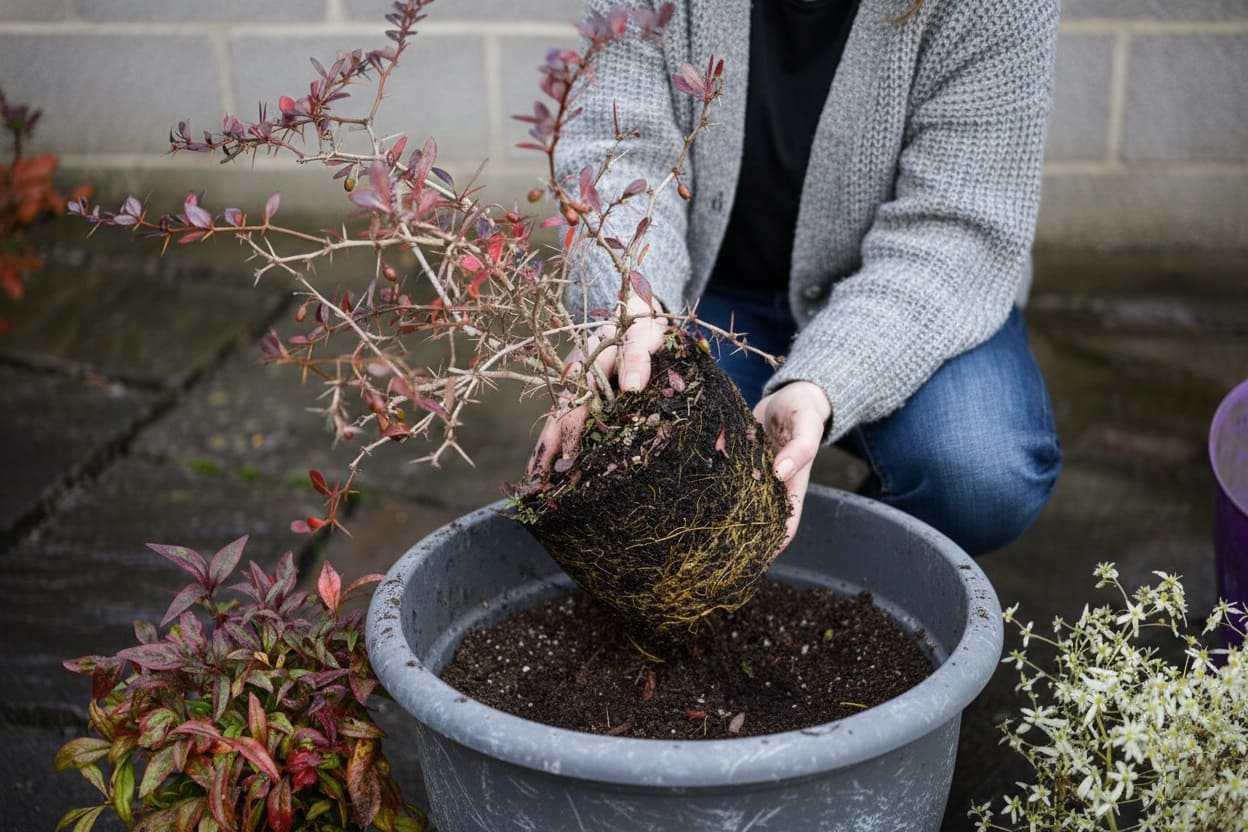
Container-grown berberis need more attention than garden-planted specimens.
Water when the top 3-4cm of compost feels dry—possibly daily during hot weather. Feed fortnightly from April through August with balanced liquid fertilizer.
Each spring, scrape away the top 5cm of compost and replace with fresh material mixed with slow-release granules.
Repot every 2-3 years, going up one pot size until reaching maximum desired size, then simply refresh the compost annually.
👉 Related post: How to Repot Aloe Vera: Step-by-Step Guide (No-Rot Tips)
Planting Berberis: Getting It Right from the Start
Timing Your Planting
Container-grown plants go in almost anytime except during frozen or waterlogged conditions, but autumn (October-November) or spring (March-April) planting gives roots time to establish before temperature extremes.
Evergreen varieties prefer spring planting in cold regions.
Bare-root plants—economical for hedging—must be planted during dormancy between November and March. These arrive without soil around roots and need planting immediately after delivery.
If impossible, heel them temporarily into spare ground or pot up to keep roots moist.
The Planting Process
Before beginning, put on thick gloves and consider eye protection. Those thorns mean business.
Dig a hole twice as wide as the root ball but no deeper—you want roots spreading laterally. Rough up the hole’s sides in heavy soil to prevent glazing.
While berberis tolerates poor soil, mixing a shovelful of well-rotted compost with backfill gives young plants a boost.
For container-grown shrubs, slide the plant from its pot and gently tease out circling roots. Position so the root ball’s top sits exactly level with surrounding soil—too deep risks stem rot; too high exposes roots to drying.
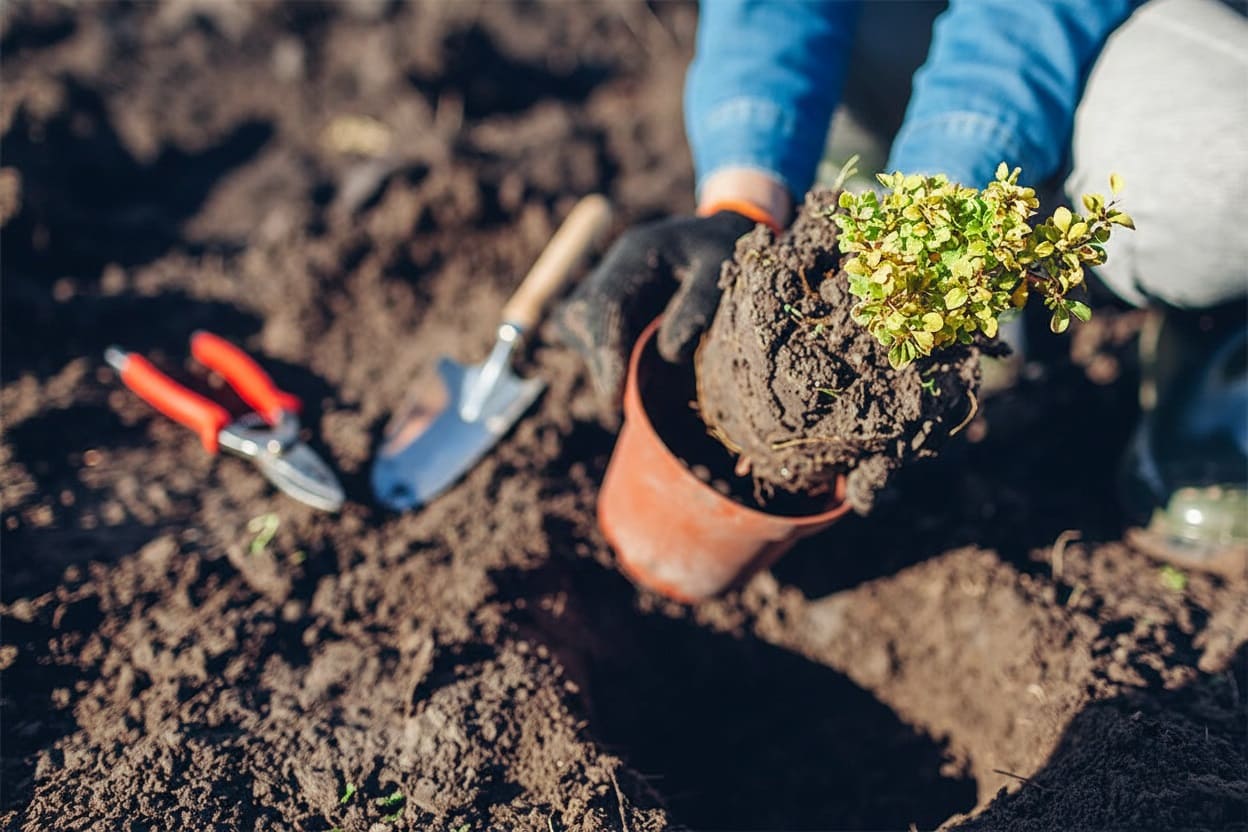
For bare-root plants, soak roots for an hour before planting. Spread roots naturally and match the visible soil mark on the stem with your garden’s soil level.
Backfill around roots, working soil in gently to eliminate air pockets. Firm with your heel, then water thoroughly—settling water completes the job of eliminating air gaps.
Spread a 5-7cm layer of organic mulch around the plant, keeping it 2-3cm from stems to prevent rot. This locks in moisture, suppresses weeds, and provides slow-release fertility as it breaks down.
The Wheat Rust Story: Historical Context
Common barberry (Berberis vulgaris) played a fascinating role in agricultural history.
This species serves as alternate host for wheat stem rust (Puccinia graminis), a devastating fungal disease that ravaged crops in the early 20th century.
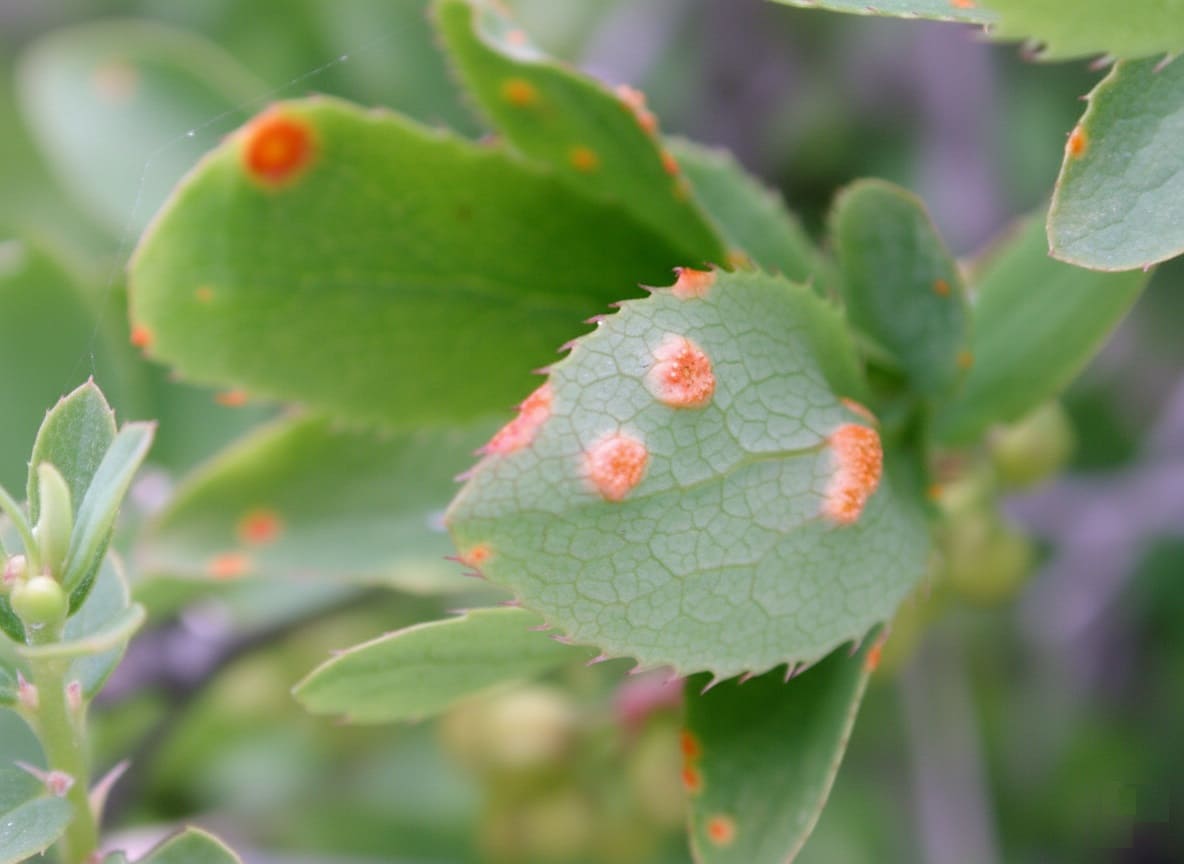
The fungus requires both wheat and barberry to complete its life cycle, and crucially, berberis is where it sexually reproduces—creating new, potentially more virulent strains through genetic recombination.
This led to massive eradication programs across North America’s wheat belt from the 1920s onward.
While modern rust-resistant wheat varieties have largely solved the problem, common barberry remains prohibited or discouraged in some agricultural regions.
Check local regulations if you garden near wheat-growing areas, though ornamental cultivars of other species pose no such concerns.
Caring for Your Berberis: Low-Maintenance Success
Watering Essentials
During the first year, water regularly during dry spells to establish deep roots. Aim for thorough soaking once or twice weekly rather than frequent shallow sprinkles, which encourages shallow root systems.
After establishment, berberis develops impressive drought tolerance, needing water only during prolonged dry periods.
Watch for wilting leaves or premature leaf drop during the growing season—signs to provide a deep drink.
Container plants need checking daily in hot weather and watering when the top few centimeters feel dry.
Feeding and Mulching
Berberis in reasonably fertile soil rarely needs feeding. Annual mulching in early spring provides multiple benefits: weed suppression (hand-weeding berberis is miserable), moisture conservation, slow-release nutrients, and improved soil structure.
Use well-rotted manure, garden compost, or leaf mold, maintaining that crucial gap between mulch and stems.
Container specimens benefit from balanced liquid fertilizer (10-10-10 NPK ratio) every fortnight during the growing season.
Each spring, refresh the top 5cm of compost with new material enriched with slow-release granules.
Seasonal Tasks Worth Doing
- Spring: Apply annual mulch after soil warms, start feeding containers as growth resumes.
- Summer: Water during prolonged dry spells, inspect weekly for sawfly larvae from late April onward.
- Autumn: Plant bare-root and evergreen varieties, enjoy the foliage display on deciduous types.
- Winter: Prune deciduous varieties during dormancy, protect containers from severe frost by moving to sheltered spots.
Pruning: Keeping Berberis in Shape
How much you prune depends entirely on your situation. Berberis in wild gardens may need nothing beyond occasional tidying, while formal hedges require regular attention.
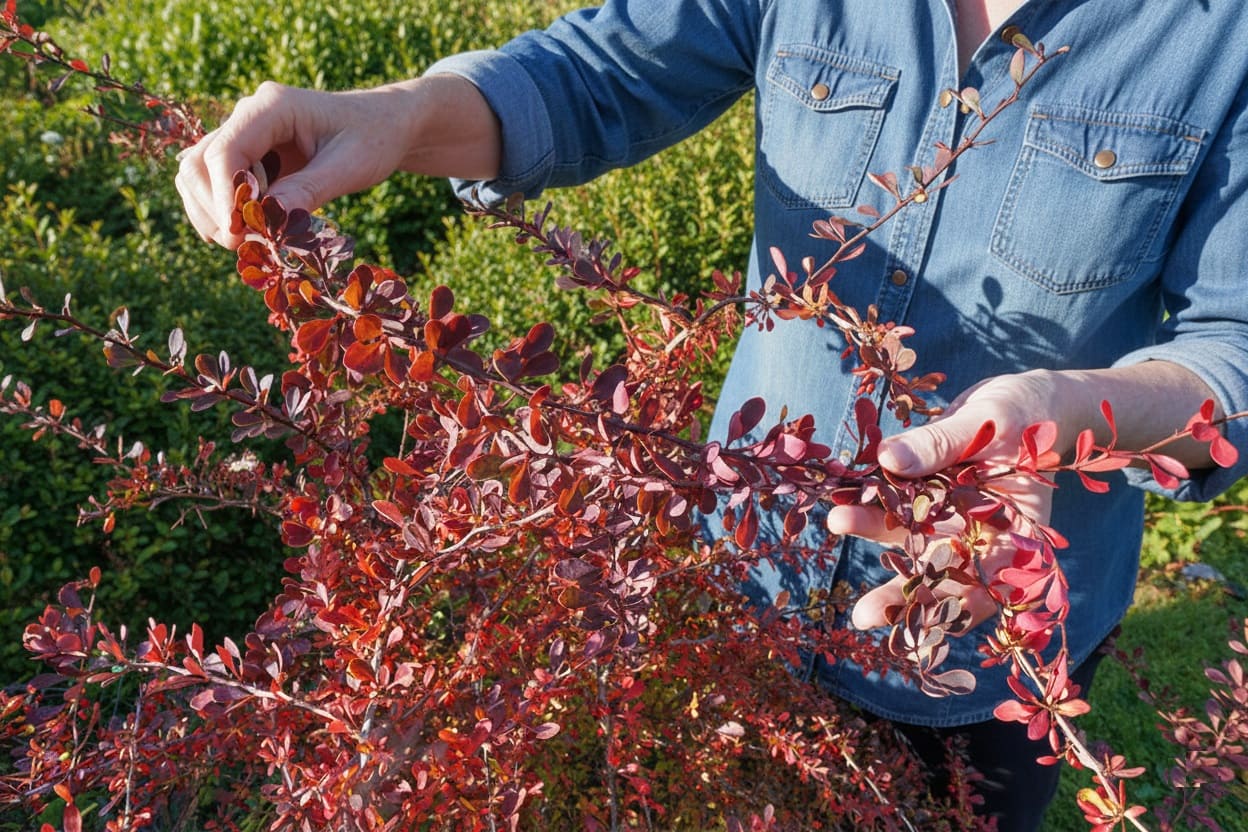
Deciduous Varieties
Tackle pruning in mid- to late winter while plants are dormant and leafless. Most need minimal intervention—just enough to maintain pleasing shape.
Every few years, cut one or two of the oldest stems right to ground level, stimulating vigorous new basal growth.
For varieties grown for bright foliage (‘Aurea’ or ‘Rose Glow’), prune more heavily—cutting back up to a third encourages abundant fresh shoots with the most vivid colors.
Clip deciduous hedges during summer for neat shapes, accepting you’ll sacrifice berries. For wildlife-friendly hedges, trim lightly in winter instead.
Evergreen Varieties
Prune immediately after flowering in early to mid-summer if you value neat shape over berries, or wait until late autumn after birds have enjoyed the fruit.
Evergreens typically need only light shaping using secateurs to selectively shorten individual branches—this looks more natural than severe shearing.
Renovation: The Hard Reset
Overgrown or neglected berberis responds remarkably well to drastic action.
In late winter, cut the entire plant to within 30cm of ground level. Feed generously and mulch well afterward.
Come spring, vigorous new growth emerges from the base. Accept sacrificing flowers and fruit the following season, but the plant returns stronger and more shapely.
Propagation: Multiplying Your Berberis
Semi-Ripe Cuttings: Best Results
Between mid-July and early September, take 10-15cm cuttings from current season’s growth that has begun firming—stems that bend but don’t snap.
Using sharp, clean secateurs, cut just below a leaf joint and immediately bag cuttings to prevent drying.
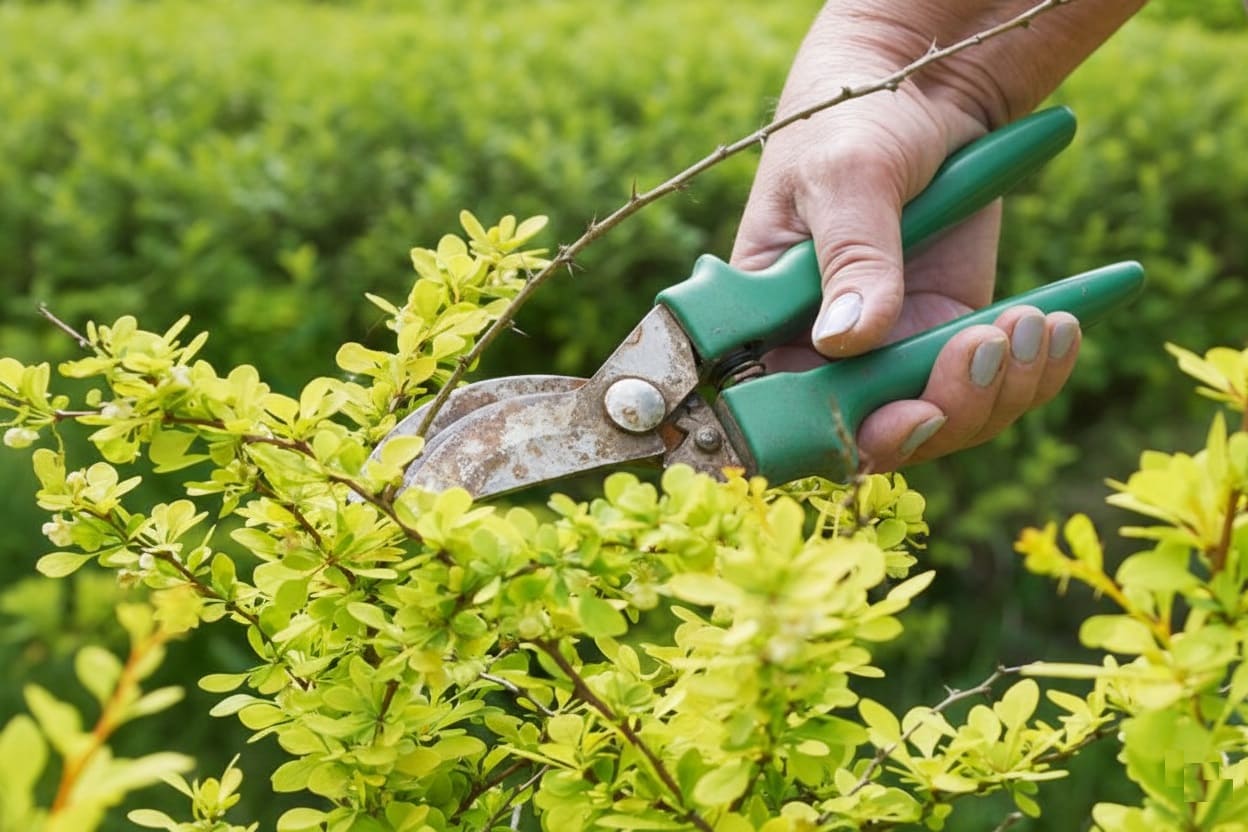
Strip leaves from the lower half, dip cut ends in rooting hormone powder, and insert into pots filled with half perlite, half multi-purpose compost.
Water well, cover with clear plastic, and keep in bright indirect light. Check for rooting after 6-8 weeks by gently tugging—resistance indicates success.
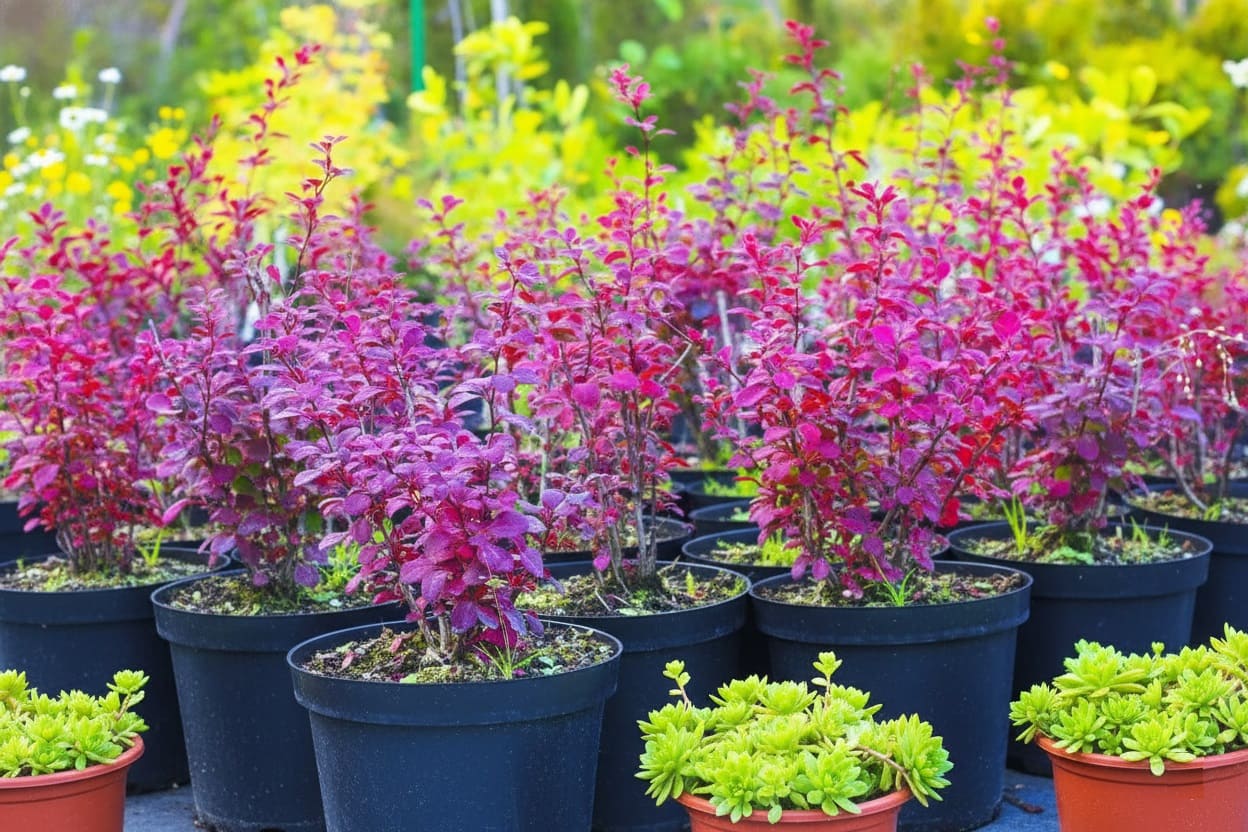
Once rooted, gradually remove covers to acclimatize plants. Pot individually into soil-based compost and grow in a sheltered cold frame through winter. By the following autumn, plants should be ready for permanent positions.
👉 Here’s How to Propagate Plants in Water: Easy Step-by-Step Method
Growing from Seed: The Patient Route
Harvest ripe berries in late summer, mash in water to separate seeds from pulp, then dry clean seeds.
Mix with damp sand in a plastic bag and refrigerate for 8-12 weeks—this cold stratification breaks dormancy.
Alternatively, sow immediately into outdoor pots and let winter’s chill do the work naturally.
After stratification, sow 5mm deep in seed compost. Germination occurs sporadically over several months once spring temperatures rise.
Be patient and don’t discard pots prematurely. Note that seed-grown plants may not match parent plants exactly due to hybridization.
👉 Here’s How to Germinate Seeds: Complete Guide to Starting Seeds Successfully
Troubleshooting: Pests and Problems
Berberis Sawfly: The Major Threat
This insect has become the most significant berberis pest, capable of completely defoliating plants within days.
Small black-spotted larvae (actually sawfly larvae, not caterpillars) appear from late April through October, feeding voraciously from leaf edges inward.
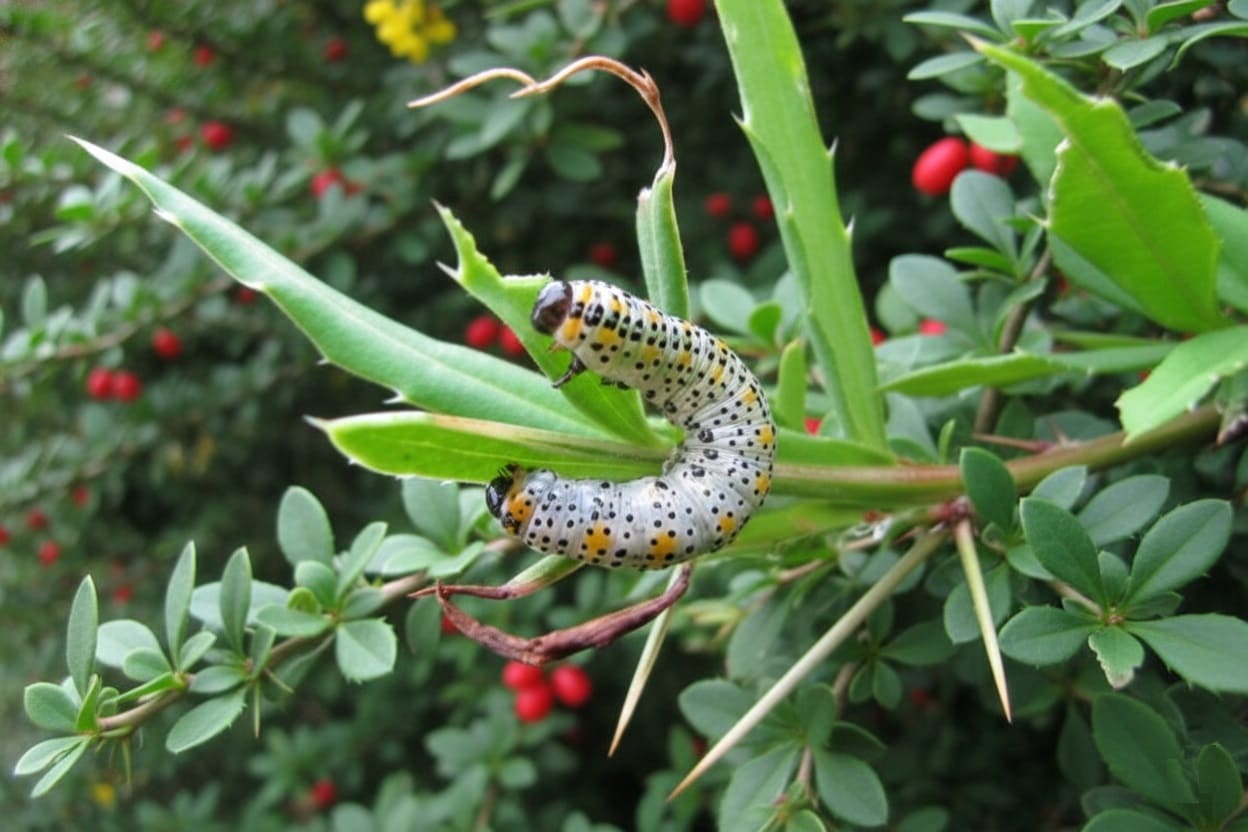
Check plants weekly during vulnerable periods—early detection makes control easier. Handpick small infestations into soapy water.
For larger problems, organic sprays containing natural pyrethrum work best on young larvae but are less effective once they mature.
Encourage natural predators like birds, ground beetles, and wasps by maintaining diverse planting. Established plants usually recover from severe defoliation, though repeated attacks weaken them.
Powdery Mildew
White powdery coating on leaves signals this fungal disease, typically appearing when plants are stressed by drought.
Ensure good air circulation by avoiding overcrowding, keep roots adequately watered during dry spells, and mulch to maintain even soil moisture.
Remove and destroy affected leaves. Fungicidal sprays are available but rarely necessary if you address underlying stress.
Other Occasional Issues
Golden-leaved cultivars can scorch in intense summer sun—site these where they receive afternoon shade in hot climates.
Late spring frosts damage emerging shoots on deciduous varieties, so choose sheltered positions in frost-prone gardens or select later-flushing varieties.
Making the Most of Your Berberis
Companion Planting Strategies
Berberis’ varied foliage creates opportunities for striking combinations.
Purple-leaved varieties pair beautifully with silver artemisia, nepeta, or lamb’s ears, creating sophisticated contrasts that make both plants shine.
Try ‘Rose Glow’ underplanted with silver-leaved Stachys byzantina and pale pink hardy geraniums for a harmonious pink-purple-silver scheme.
Golden varieties like ‘Aurea’ glow when paired with deep blue salvias, purple heucheras, or dark-leaved dahlias.
Plant ‘Tiny Gold’ beside blue Muscari and white crocus for a cheerful spring display that brightens shady corners.
Green evergreens serve as excellent backdrops for succession planting.
Use B. darwinii as the permanent structure behind drifts of spring bulbs (daffodils and tulips), summer perennials (echinacea and rudbeckia), and autumn grasses (miscanthus and calamagrostis) for year-round interest.
Four Seasons of Appeal
A well-chosen berberis provides continuous garden value.
In spring, masses of small yellow to orange flowers create bright displays while feeding bees emerging from winter dormancy.
Through summer, lush foliage creates structure and color blocks that anchor mixed borders and give the eye resting points among exuberant perennials.
Autumn brings the main event for deciduous types—leaves igniting with orange, scarlet, and purple tones that rival any Japanese maple, while berries ripen into glossy jewels.
Winter reveals different beauties: persistent berries feeding hungry birds through lean months, evergreen varieties maintaining garden structure when everything else has died back, and bare branches of deciduous types revealing graceful architectural form often hidden by foliage.
👉 Here’s How to Create a Harmonious Garden: A Guide to Beautiful Design
Frequently Asked Questions
Q: How quickly does berberis grow?
Most berberis have slow to moderate growth, adding 10-30cm annually.
Dwarf varieties reach mature size in 5-10 years, while larger species might take 10-20 years to achieve full height.
This steady, predictable pace makes them manageable in garden settings.
Q: Can I eat berberis berries?
Some species produce edible berries rich in vitamin C—notably B. vulgaris and B. darwinii—traditionally used in preserves and Middle Eastern dishes.
However, unripe berries and those from some cultivars cause stomach upset, and they’re quite tart even when ripe.
Only consume ripe berries from identified edible species, and all other parts contain compounds causing digestive distress. Consult expert resources before eating any foraged berries.
👉 Here are 40+ Types of Berries: Identification Guide, Health Benefits & How to Grow
Q: Will berberis grow in shade?
Berberis tolerates partial shade better than many shrubs, though flowering and fruiting become less prolific and foliage colors may mute.
Evergreen species generally handle shade better than deciduous ones.
For truly shady spots (less than 3-4 hours sun daily), consider alternatives specifically bred for deep shade.
Dappled shade under deciduous trees suits berberis well.
Q: Can I keep berberis small through pruning?
Yes, berberis responds well to regular pruning and can be maintained below natural size.
However, choosing a naturally compact variety suited to your space saves ongoing work and creates better-looking plants.
Constant severe pruning to restrict a large variety produces stressed plants with poor flowering.
Q: Is berberis deer resistant?
Yes, extremely so. The combination of thorny stems and somewhat bitter foliage makes berberis one of the most deer-resistant shrubs available.
This makes it excellent for rural gardens where deer browsing devastates less protected plants.
Conclusion: Your Path to Berberis Success
Growing berberis successfully comes down to these essentials:
- Choose varieties matching your space and check local invasiveness concerns.
- Site in full sun and well-drained soil, though berberis tolerates partial shade and various soil types.
- Plant properly with generous holes and good initial watering.
- Maintain minimally through annual mulching, occasional deep watering during drought, and selective pruning.
- Watch for sawfly between April and October to prevent devastating defoliation.
Whether creating impenetrable boundaries, establishing wildlife havens, or adding structure and color that evolves through seasons, berberis delivers exceptional value.
These resilient shrubs ask little, offer much, and improve with age—rather like the best gardeners.
Ready to add berberis to your garden?
Visit local nurseries this autumn to see varieties in their full glory, choose your favorites, and plant while soil still holds summer’s warmth.
Your garden—and the wildlife it supports—will thank you for years to come.

