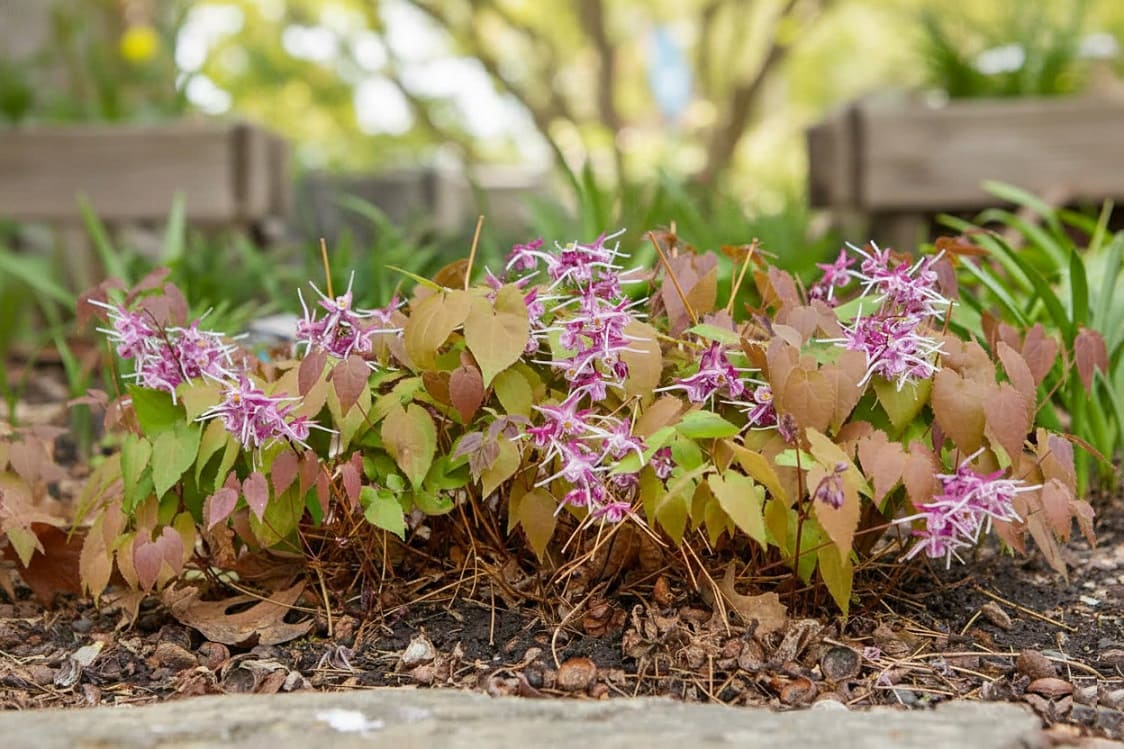
Have you ever walked through a woodland garden in spring and noticed delicate flowers hovering like tiny butterflies above a carpet of heart-shaped leaves?
Chances are, you were admiring epimediums—one of the most underappreciated shade perennials in the gardening world.
These charming plants won’t grab headlines, but they solve real problems. If you have dry shade under trees where nothing else grows, pathways that need softening, or simply want spring color without constant fussing, epimediums deliver.
By the end of this guide, you’ll understand why experienced gardeners consider them essential—and have everything you need to grow them successfully.
What Makes Epimediums Special
Epimediums are low-growing perennials (8-18 inches tall) from the barberry family, native to woodlands in Asia and the Mediterranean.
They spread slowly through underground rhizomes to create attractive groundcover, hardy in zones 4-8 depending on variety.
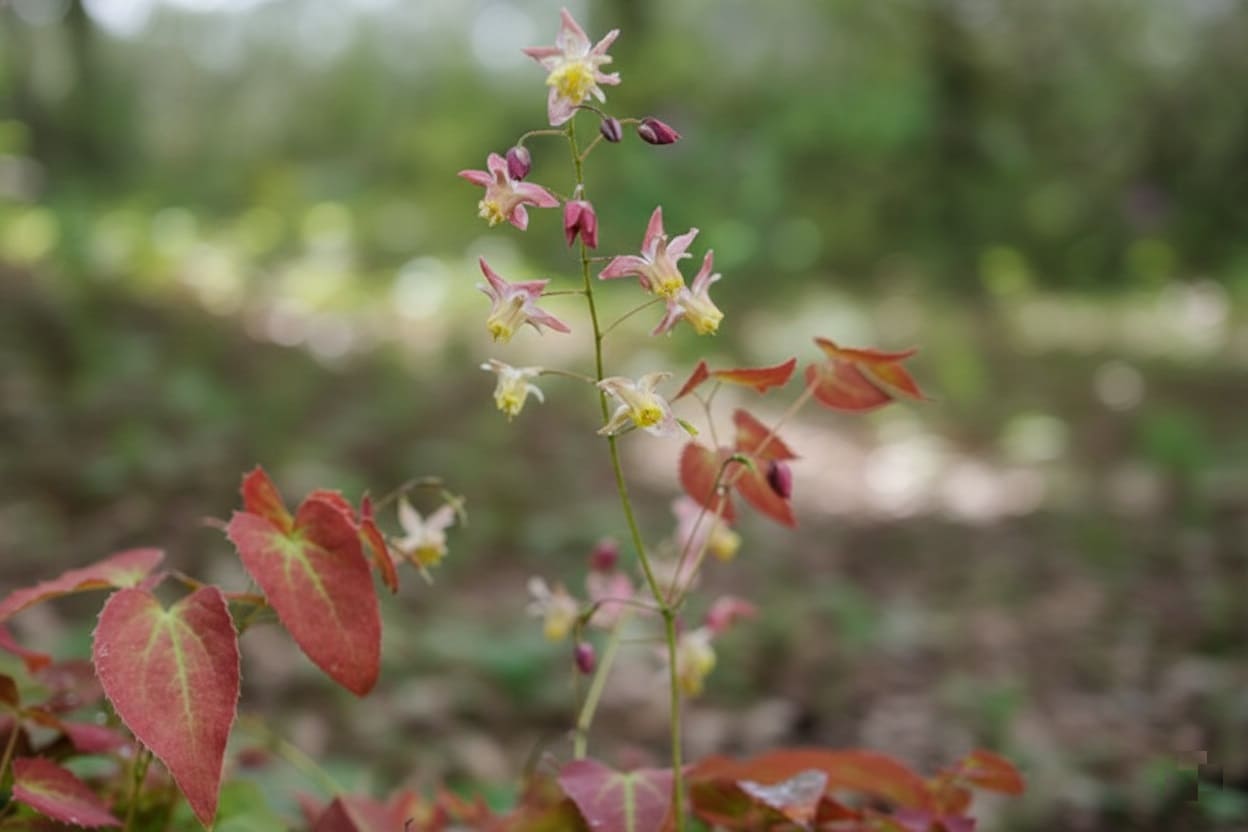
Their charm lies in offering two shows for the price of one.
The heart or arrow-shaped foliage alone justifies growing them, emerging in spring flushed with bronze, burgundy, or crimson before maturing to green. Many varieties color up again in fall, providing three seasons of interest.
Then in mid-to-late spring (typically April through May, depending on your zone and variety), thin wiry stems rise above the foliage carrying sprays of delicate blooms in white, yellow, pink, orange, or purple.
Each small flower features an intricate structure with spurs resembling a bishop’s hat or fairy wings—hence their common names.
Individual blooms may be petite, but they appear in generous numbers for three to four weeks, creating an enchanting display.
After flowering ends, epimediums don’t fade into the background. The fresh foliage that emerged with or just after the blooms provides attractive groundcover through summer and fall.
In warmer zones (7-8), many varieties stay evergreen through winter. In colder regions (4-5), deciduous types naturally die back while semi-evergreen varieties may hold tattered leaves that shelter the crown until you cut them back in late winter.
Why Gardeners Love Them (Beyond Good Looks)
Epimediums excel in dry shade—that notoriously difficult combination where tree roots steal moisture and dense canopy blocks light.
Once established (usually by their second season), their rhizomes store enough moisture to survive drought periods that would wither other shade perennials. This doesn’t mean they prefer drought, but they tolerate it when needed.
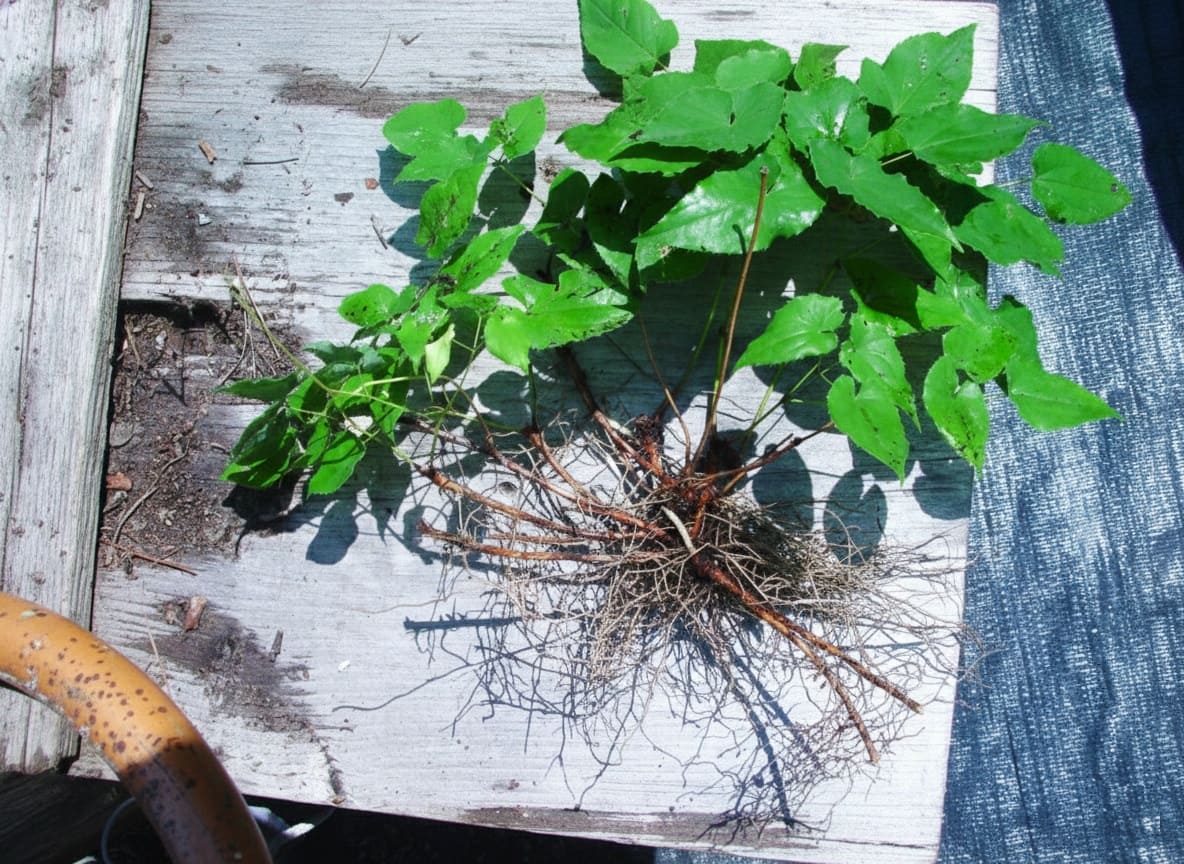
Deer and rabbits typically ignore them, making epimediums ideal for gardens plagued by these visitors. The plants resist most pests and diseases, rarely requiring intervention.
They’re also remarkably long-lived, persisting for decades with minimal care—I’ve seen plantings thriving after forty years under the same trees.
Perhaps best of all, epimediums are truly low-maintenance. No staking, no deadheading (though you can remove spent flower stems for tidiness), and no frequent division required.
An annual trim in late winter and occasional watering during establishment covers most of their needs.
Related posts:
- When and How to Deadhead Cosmos for Continuous Blooms
- How and Why to Deadhead Daylilies for Boosting Blooms
- How to Deadhead Salvia for Healthier Blooms And Extend Your Garden’s Beauty
Understanding Growth Patterns: Clumpers vs. Spreaders
Before selecting varieties, understand the two basic growth patterns, as this affects how you’ll use them in the garden.
1. Clumping types form tight, slowly expanding mounds. Many Asian species like Epimedium grandiflorum fall into this category.
They’re perfect for smaller spaces or when you want distinct individual plants rather than continuous groundcover. These are trickier to divide, which explains their typically higher price.
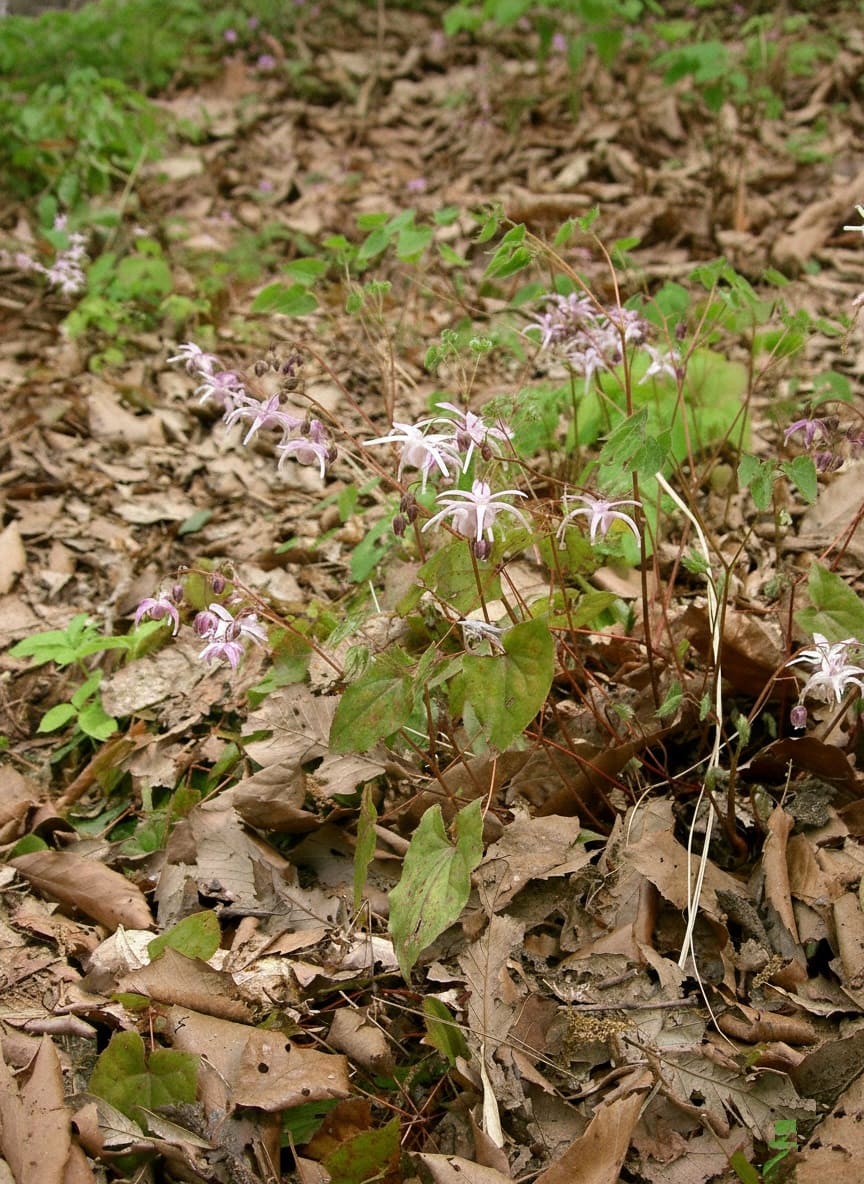
2. Spreading types extend via rhizomes, gradually colonizing an area. Mediterranean species and their hybrids, like Epimedium x versicolor, tend to be spreaders.
Even the fastest spreaders move at a measured pace—perhaps 6-12 inches annually. They create dense weed-suppressing coverage without overwhelming neighbors.
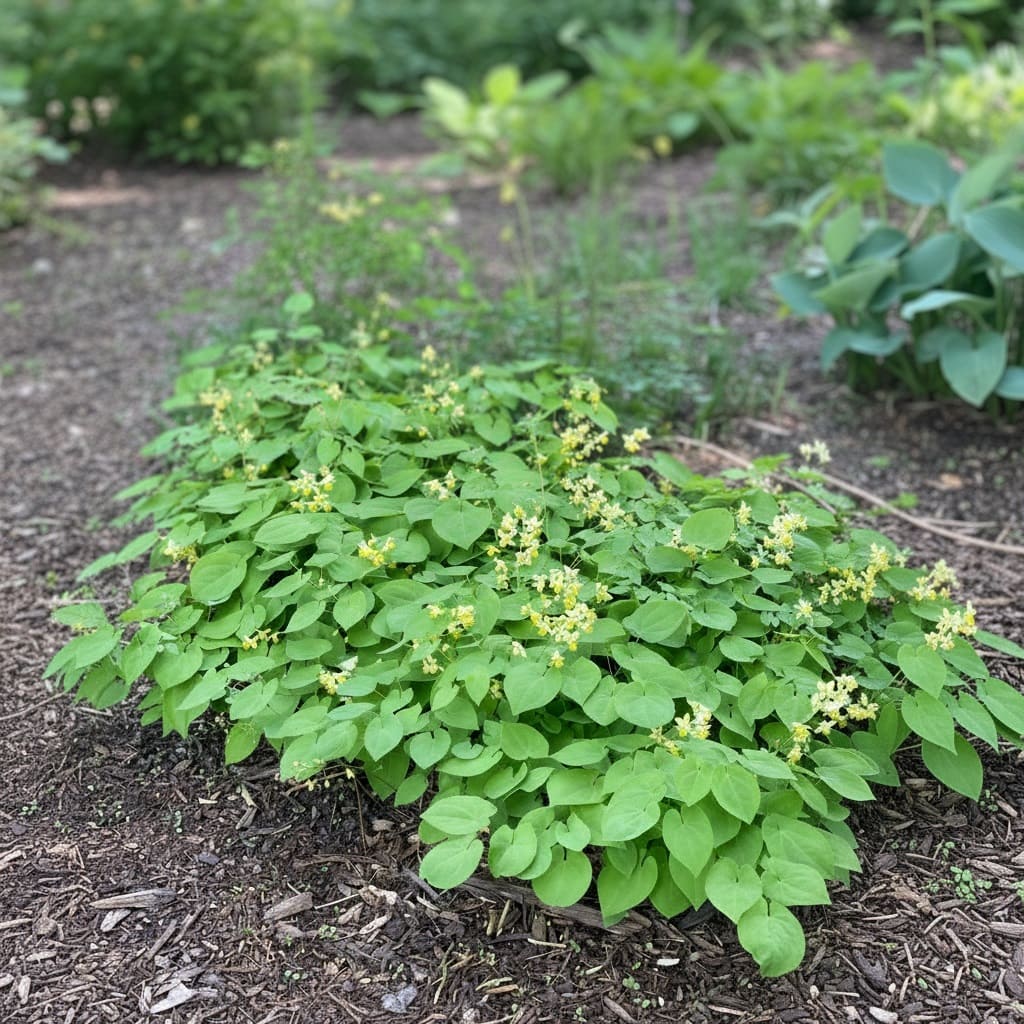
The other key distinction is foliage behavior.
Asian species are typically deciduous, dying back completely in winter. Mediterranean species tend to be evergreen to semi-evergreen, retaining leaves through winter (though these often look shabby by spring).
Your climate affects this: a plant that’s evergreen in Zone 7 might be deciduous in Zone 5. This matters for both winter interest and spring maintenance.
Choosing the Right Location
Success with epimediums starts with proper siting. These woodland plants prefer dappled shade or light shade—think of the conditions under high tree canopy where patches of sunlight filter through.
They’ll tolerate deep shade, though flowering may be reduced. Morning sun with afternoon shade also works well in cooler climates.
Full sun typically spells trouble. Intense sunlight scorches leaves, causing them to crisp and brown.
If your only available space gets sun, stick to the most sun-tolerant varieties like Epimedium x versicolor ‘Sulphureum’ and ensure consistent moisture during dry periods.
The beauty of epimediums is their adaptability to challenging spots other plants reject. They grow well under shallow-rooted trees like maples and beeches, where their modest roots don’t compete aggressively.
They handle dry shade near buildings, on slopes, and in rocky areas where digging is difficult.
Consider them for:
- The base of retaining walls, where flowers cascade attractively at eye level
- Shaded pathways where you can appreciate delicate blooms up close
- Under trees and large shrubs as living mulch
- North-facing house foundations
- Woodland gardens as textural groundcover
- Rock gardens in shaded pockets
- Containers on shaded patios (more on this below)
👉 Discover more Shade-Loving Herbs and Vegetables That Grow With Less Sunlight
Soil Preparation: Setting the Stage for Success
While epimediums tolerate poor soil, they perform best in conditions mimicking their native woodland habitat. Aim for loose, well-draining soil enriched with organic matter.
The ideal pH is neutral to slightly acidic (6.0-7.0), though many species handle alkaline conditions.
Note that Japanese varieties generally prefer more acidic soil, while Chinese species often grow naturally on limestone and tolerate alkalinity better.
Heavy clay or waterlogged soil causes problems, leading to root rot and poor performance.
If you’re working with clay, amend generously with compost, leaf mold, or well-rotted manure to improve drainage and structure. Sandy soil benefits from the same amendments to boost water retention.
The organic matter serves multiple purposes: it aerates heavy soil, helps sandy soil hold moisture, provides nutrients, and creates the spongy texture epimediums appreciate.
Work a three to six-inch layer into the planting area. Think quality over quantity—well-decomposed compost or leaf mold beats fresh materials that haven’t fully broken down.
Planting Step-by-Step
Timing
Spring and fall offer the best planting windows, giving plants time to establish before temperature extremes.
Container-grown epimediums can go in the ground anytime the soil isn’t frozen or saturated, provided you water diligently through their first summer.
The Process
Dig holes twice the width of the root ball but no deeper—you want the crown sitting at the proper level.
Position the crown (where stems meet roots) exactly at soil level or very slightly above.
Never bury it deeply, as this can lead to rot. If you’re unsure, err on the side of slightly high; the plant will settle naturally.
Space plants based on your goal and the variety’s growth habit. For relatively quick coverage with spreading types, space plants 12-15 inches apart. With clumpers or if you’re patient, 18-24 inches works.
Remember that even fast-growing epimediums are slow compared to most perennials. Plan on two to three years for plants to fill in completely—but they’ll look increasingly beautiful as they mature.
After positioning the plant, backfill with your amended soil. Firm gently with your hands (not your feet, which can over-compact), creating a slight depression around the plant to hold water.
Water thoroughly, allowing it to soak in, then water again to eliminate air pockets and ensure good soil contact with roots.
Apply a two to three-inch layer of mulch around (not touching) the plants. This conserves moisture, suppresses weeds, and mimics the leaf litter of their natural habitat.
Shredded bark, leaf mold, or compost all work well. Keep mulch an inch or two away from the crown to prevent rot.
Establishment Care and Watering
Here’s where confusion often arises. Epimediums are indeed drought-tolerant once established, but that crucial phrase “once established” means after one full growing season, sometimes two.
During establishment, consistent moisture makes the difference between a plant that merely survives and one that thrives.
First Growing Season
Water deeply when the top inch of soil dries out. “Deeply” means ensuring moisture penetrates six to eight inches down to root depth, not just wetting the surface.
Depending on your soil and weather, this might mean watering once or twice weekly. In hot, dry periods, increase frequency.
After Establishment
Once epimediums have developed strong root systems (usually by their second spring), they handle dry periods remarkably well.
Their rhizomes store moisture, allowing them to survive weeks without rain. However, “tolerating” drought differs from “thriving” in it.
Epimediums grow more vigorously and flower more abundantly with occasional deep watering during extended dry spells—perhaps once every two to three weeks if there’s no rain.
The exception is epimediums in sunnier locations or in very free-draining sandy soil. These need more consistent moisture even after establishment to prevent leaf scorch and maintain vigor.
Container Culture
Epimediums adapt well to container culture, perfect for patios, decks, or balconies lacking in-ground space. This deserves proper attention since containers create different growing conditions.
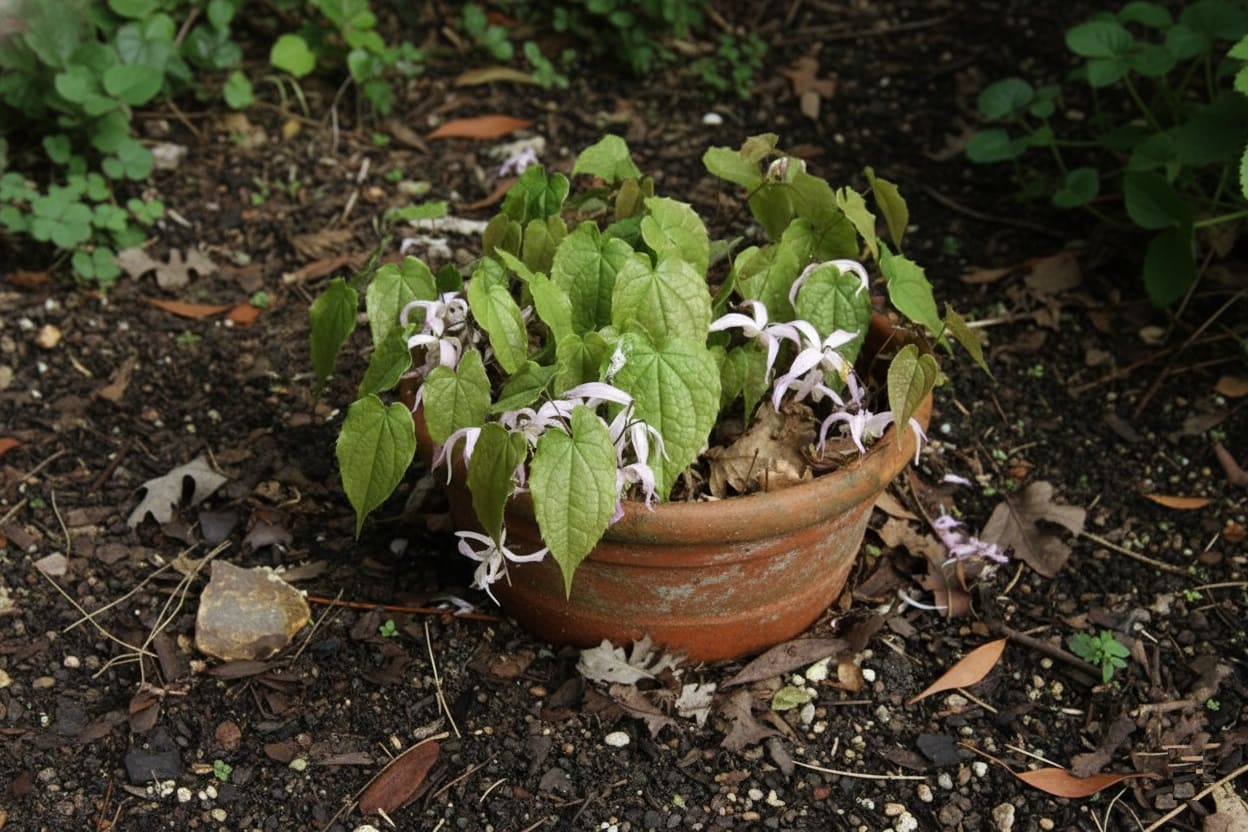
Container Selection
Choose pots at least 12 inches in diameter and equally deep, with multiple drainage holes. Shallow containers dry out quickly and don’t provide adequate root space.
Terra cotta breathes but dries faster than plastic or glazed ceramic—pick based on how often you can water.
Potting Mix
Skip garden soil, which compacts in containers. Use quality potting mix amended with additional compost or leaf mold.
Add perlite or coarse sand for extra drainage if your mix seems heavy. The goal is moisture retention without sogginess.
Care Differences
Container plants need more attention than those in the ground. Check moisture every few days in warm weather, watering when the top inch feels dry.
Feed monthly during the growing season with dilute liquid fertilizer, or incorporate slow-release granules at planting.
Every two to three years, epimediums need repotting into slightly larger containers with fresh soil. Do this in early fall, gently loosening roots before replanting.
If the plant has become crowded, divide it into two or three sections rather than moving to a much larger pot.
Winter Care
In zones 5-6, containers need protection since roots are more exposed to cold than in-ground plantings.
Move pots to an unheated garage, cluster them together against a sheltered house wall, or surround them with mulch or leaves for insulation.
Seasonal Care Through the Year
Understanding what happens when helps you provide appropriate care.
Late Winter/Early Spring (February-March in Zone 7, later in colder zones)
This is pruning time. Once the ground thaws but before new growth elongates, cut evergreen and semi-evergreen varieties to within an inch of the ground using hedge shears or hand pruners.
This seems drastic, but fresh growth quickly replaces it. Deciduous varieties can be tidied anytime after they’ve browned.
After cutting, rake away debris and apply fresh mulch or compost around plants. This is also the time to apply fertilizer if using it—a light sprinkling of balanced organic fertilizer or a half-inch of compost.
Spring (April-May)
Flower buds emerge, followed quickly by blooms. New foliage unfurls, often in spectacular bronze or burgundy tones. Enjoy the show!
Keep soil evenly moist during this active growth period, especially for younger plants or those in containers.
If late frosts threaten (below 25°F), cover early bloomers with sheets or frost cloth overnight.
Summer (June-August)
Flowers fade and foliage matures to green, providing attractive groundcover. This is a low-maintenance period.
Water during extended dry spells, particularly for plants in containers or sunny spots. The foliage works quietly as living mulch, shading soil and suppressing weeds.
Fall (September-November)
Many varieties develop fall color, with leaves turning shades of burgundy, bronze, or copper. Deciduous types begin dying back naturally.
This is an excellent time for division if plants have become crowded or you want to propagate. In zones 7-8, evergreen types maintain their foliage through winter.
Winter (December-February)
Deciduous varieties are dormant. Evergreen and semi-evergreen types hold leaves, though these may look worn by late winter.
In harsh winters, even “evergreen” varieties may lose some or all foliage—this is normal in colder zones.
The old leaves protect the crown from cold and desiccating winds. Resist the urge to tidy up until late winter.
The Annual Pruning: Why and How
This is where many new growers stumble, but the process is straightforward once you understand the reasoning.
For evergreen and semi-evergreen epimediums, old foliage looks increasingly tattered as winter progresses.
Leaves may be wind-damaged, frost-burned, or simply aged. If left in place, these shabby leaves obscure the delicate new foliage and flowers emerging in spring.
Imagine trying to appreciate dainty blooms behind a curtain of worn, brown-edged leaves—the effect is lost.
Deciduous varieties handle this naturally, with leaves browning and often detaching over winter. You can simply rake these away in early spring or leave them as natural mulch.
Timing matters
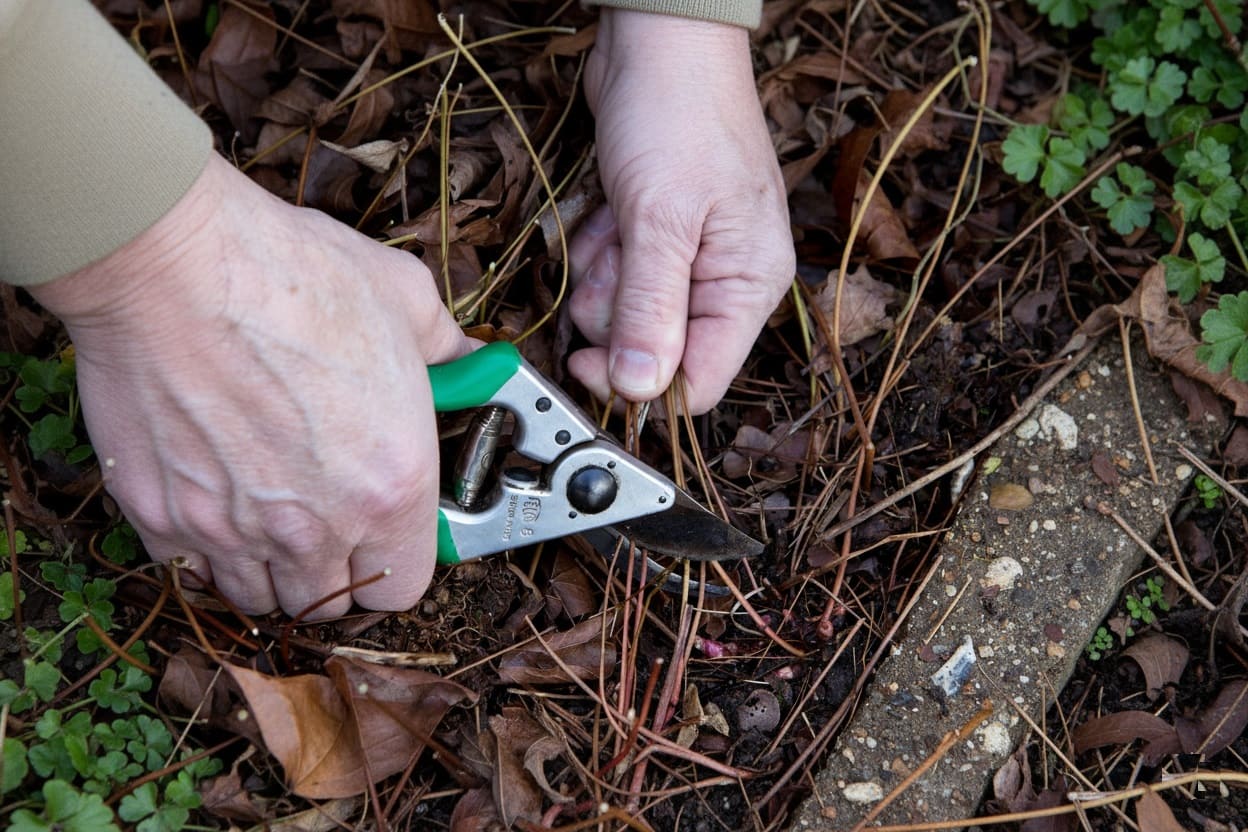
Wait until late winter or very early spring when the ground thaws but before flower buds elongate into visible spikes.
In Zone 7, this typically means late February or early March. Zone 6 might wait until mid-March, Zone 5 until late March or early April. The key is cutting before new growth gets tall enough to damage.
The method is simple
Using hedge shears, scissors, or hand pruners, cut all old foliage to within an inch of the ground.
Work carefully if flower buds have started emerging—these are visible as small, tightly held clusters at ground level. Go slowly to avoid snipping new growth.
Some gardeners skip this step, arguing that it’s unnecessary work. They’re not wrong that the plants survive fine without it, but the difference in spring display is dramatic.
Compare a sheared plant with fresh growth and flowers floating cleanly above it to an unpruned one with new growth tangled among old leaves.
The pruned plant looks intentional and polished; the unpruned one looks neglected.
After cutting, rake debris away and compost it. Fresh mulch or compost applied now gives plants a boost as they wake up.
👉 Learn How to Prune Roses: A Simple Guide for Stunning Results
Feeding: Less is More
Epimediums aren’t heavy feeders, and overfertilizing causes more problems than underfertilizing.
In reasonably fertile soil enriched with organic matter, an annual spring topdressing of compost or well-rotted manure provides sufficient nutrition.
Spread a half-inch layer around plants after spring pruning, keeping it an inch or two away from the crown.
This mulch-feed combo provides gentle, slow-release nutrients while improving soil structure and moisture retention.
If your soil is particularly poor or plants show signs of nutrient deficiency (yellowing leaves, weak growth, reduced flowering), a light application of balanced organic fertilizer in early spring helps.
Look for something like 5-5-5 or 10-10-10. Avoid high-nitrogen formulas (like 20-5-5) that push excessive foliage at the expense of flowers.
Slow-release organic options work best, providing steady nutrition over months without the salt buildup that chemical fertilizers can cause.
Apply according to package directions, erring on the light side—you can always add more later, but you can’t take it back.
Container plants have different needs since nutrients wash out with watering.
Use a dilute liquid fertilizer (half-strength) every four weeks during the growing season, or incorporate slow-release granules into the potting mix at planting.
Refresh the top few inches of soil with fresh compost each spring.
Propagation Through Division
Division serves dual purposes
Creating new plants and rejuvenating older clumps. Epimediums benefit from division every three to four years, though they’ll survive much longer without it.
Signs that division is due include reduced flowering, crowded growth, or simply that you want more plants.
Timing
The ideal time is late summer or early fall, after flowering and after the second flush of foliage has hardened off.
This gives divisions time to establish before winter. Spring division works too, right after flowering, but fall-divided plants typically establish better.
The Process
Water plants thoroughly the day before division to reduce transplant stress. Dig carefully around the entire clump, working six to eight inches out from the visible stems.
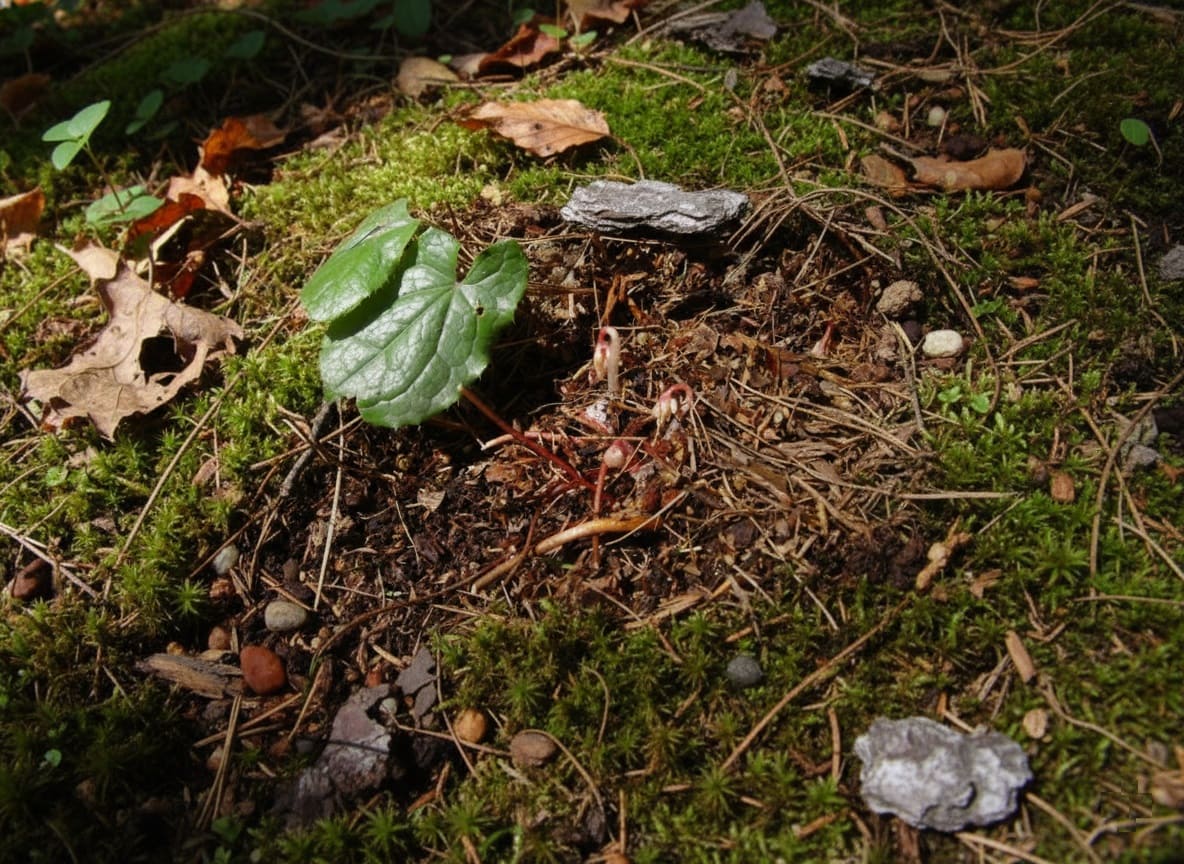
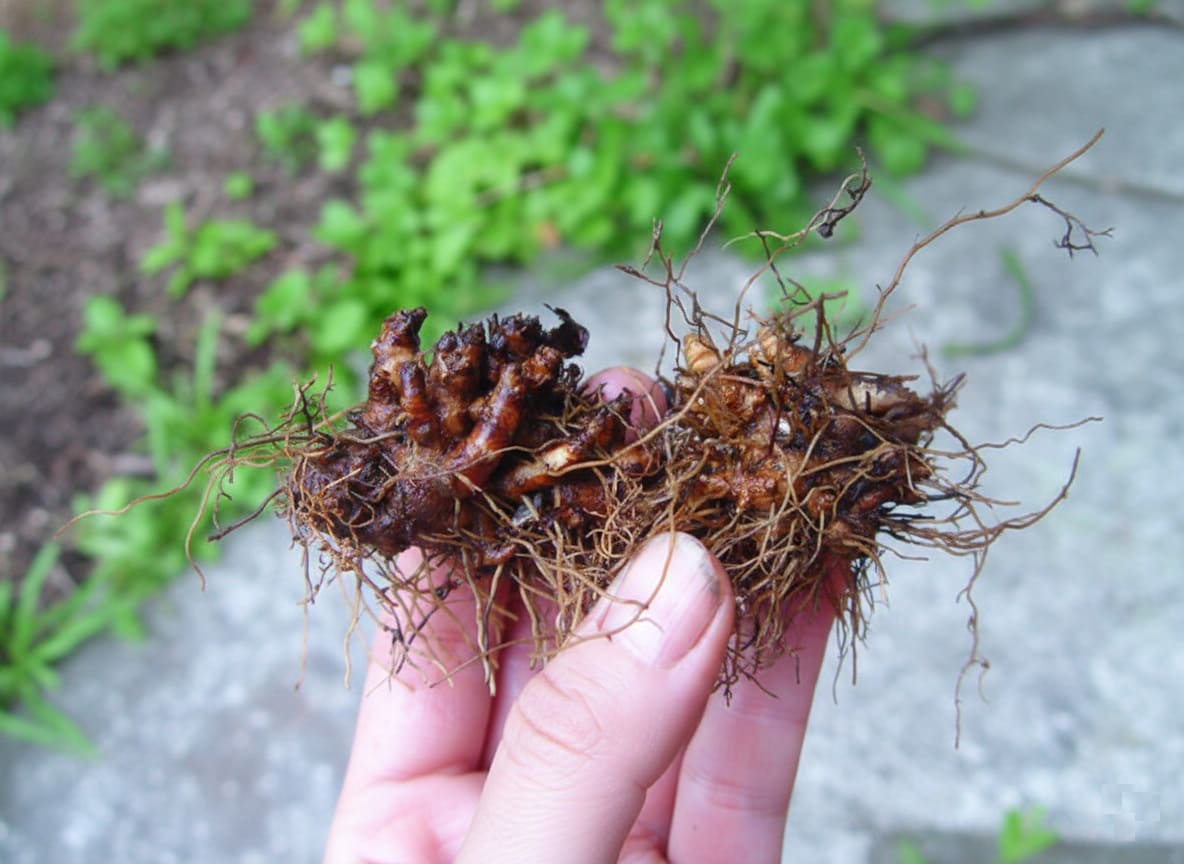
Lift the whole plant, preserving as much root as possible. Shake or gently wash off soil so you can see the rhizome structure.
Using a sharp spade, knife, or even a pruning saw for tough older clumps, cut through the root mass.
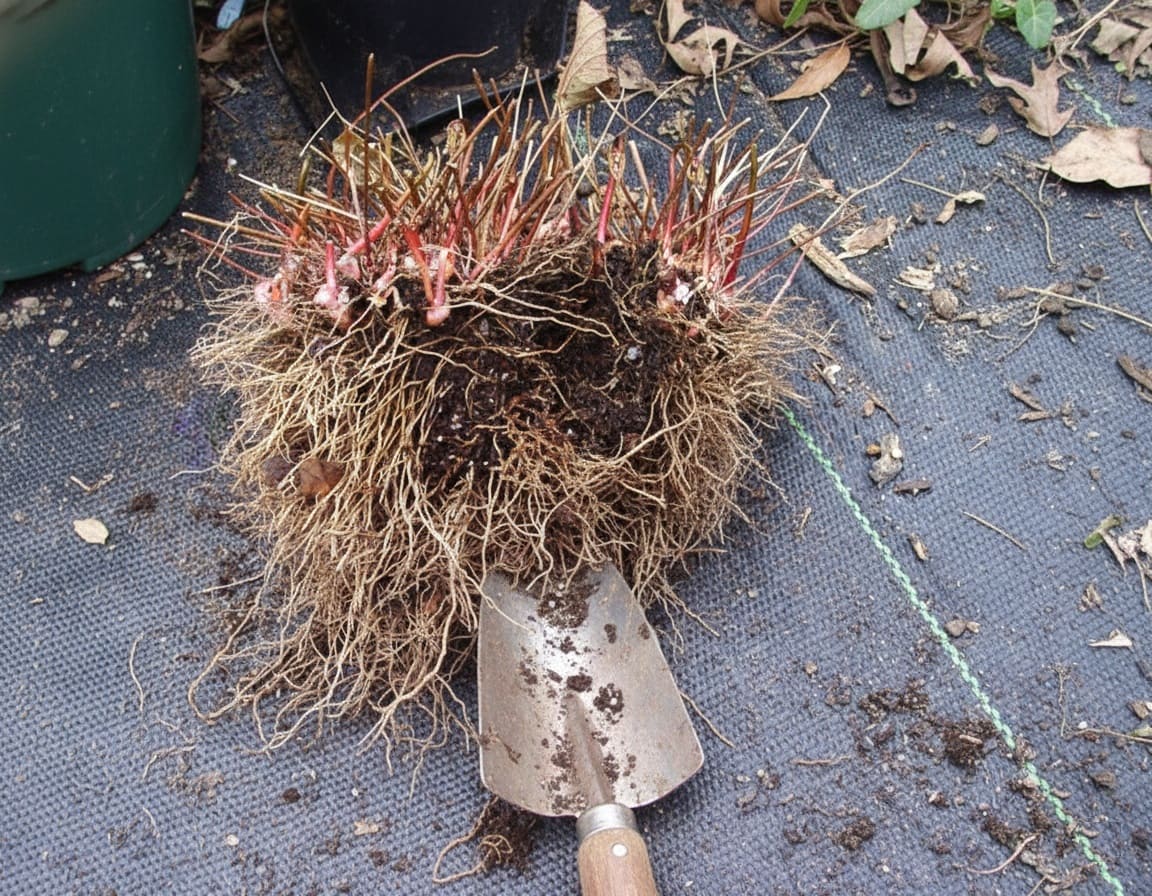
For spreading types, this is relatively easy. For tight clumpers, you may need to work slowly, cutting between natural divisions in the rhizome.
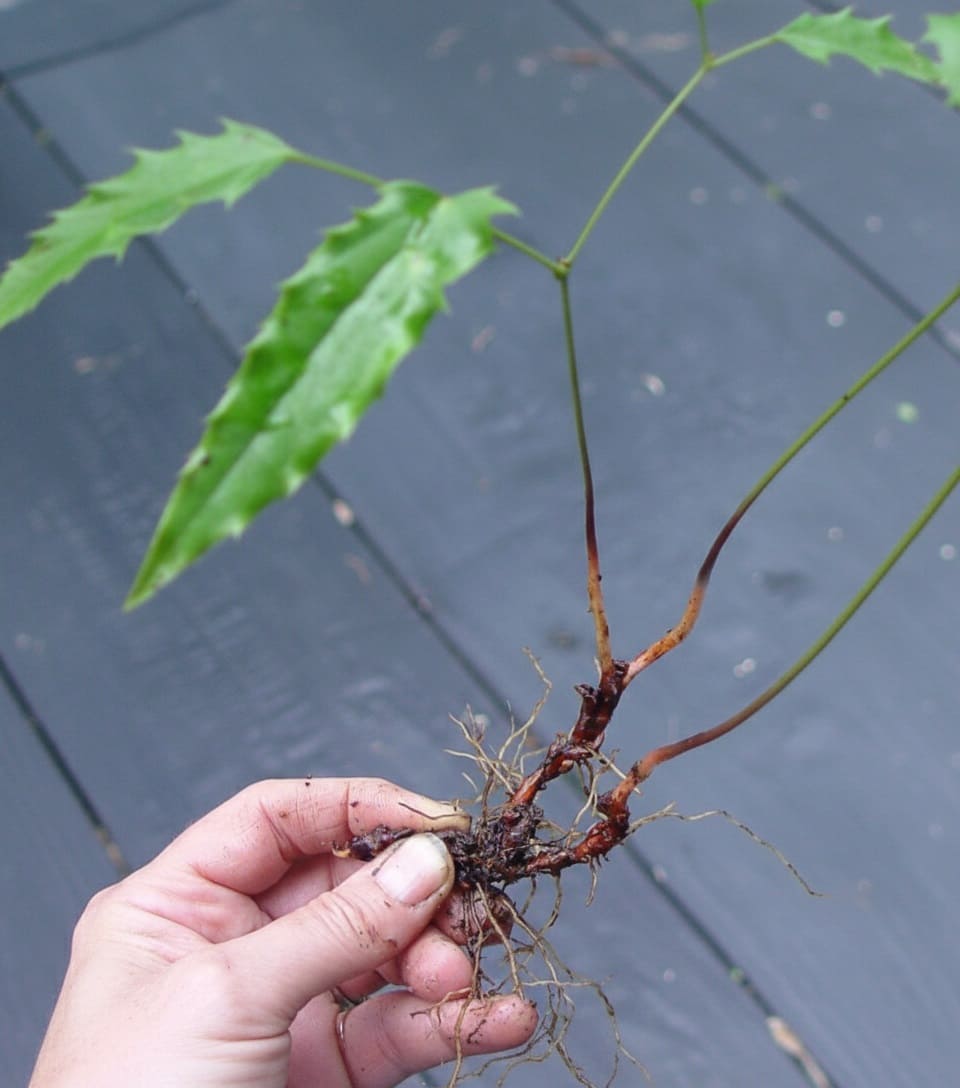
Each division needs at least two or three growing points (where stems emerge) and a good portion of roots.
Here’s the crucial trick that many sources miss: leave at least two-thirds of the foliage on each division.
New growers instinctively want to trim leaves back to “reduce stress,” but this is backwards with epimediums. The foliage feeds the roots as they establish. Cut off too much, and divisions struggle.
Replant divisions immediately at the same depth they were growing, water thoroughly, and maintain even moisture until you see new growth (which may not be until the following spring).
Mulch lightly. Some divisions may sulk for a season, especially small pieces from clumping types, but most recover and grow strongly.
Choosing Your First Epimediums
With dozens of varieties available, where should beginners start? Here are five proven performers that combine beauty, reliability, and availability.
For Instant Success: Epimedium x versicolor ‘Sulphureum’
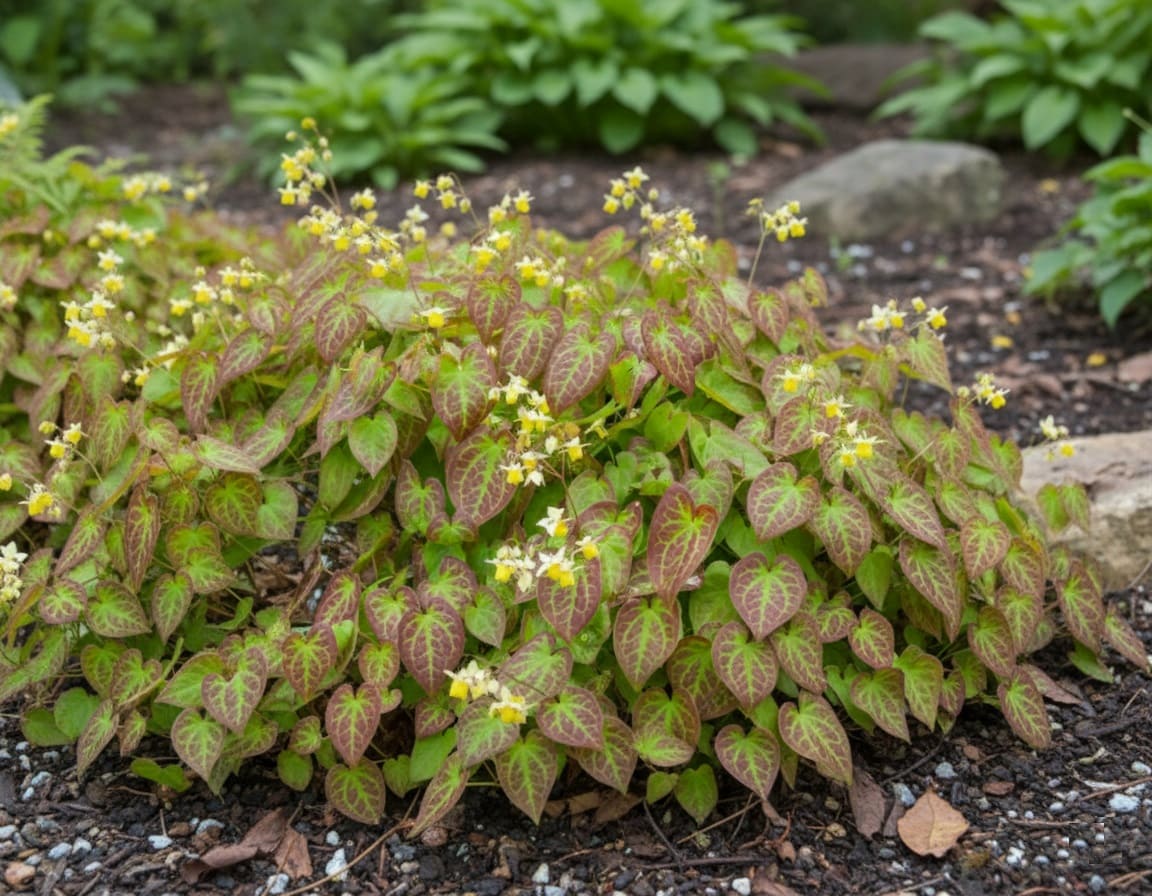
This older hybrid (pre-1849) remains popular for good reason. It spreads reliably to create groundcover, tolerates dry shade better than most, and features lovely foliage that emerges reddish-bronze with green veining before maturing to green.
Soft yellow flowers appear in spring on dark stems. Widely available and nearly indestructible, this is your “can’t fail” choice. Zones 5-9.
For Spectacular Flowers: Epimedium grandiflorum ‘Lilafee’
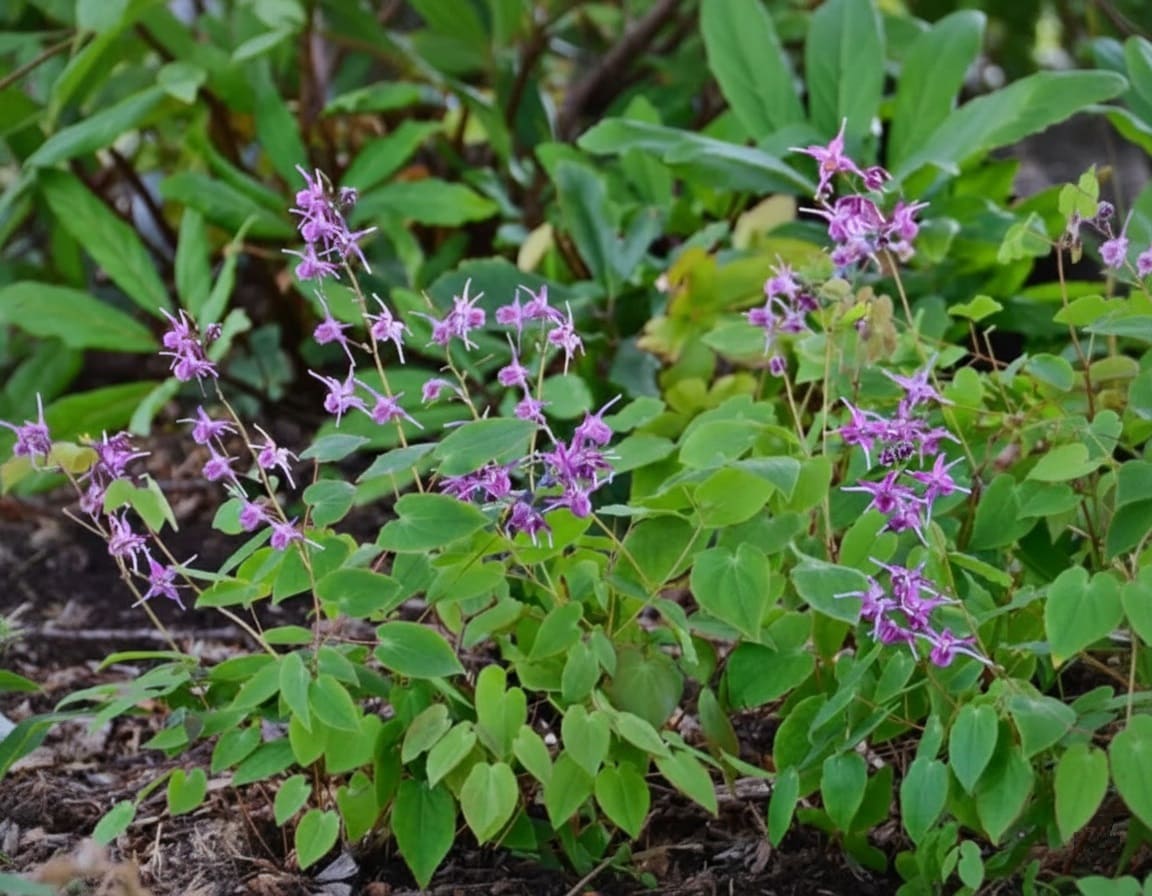
If flowers are your priority, start here. This selection produces abundant lavender blooms above bronze-tinted young foliage.
The flowers are larger than many epimediums and appear in impressive numbers. It’s a clumping type, slower to spread but stunning in bloom. Zones 5-8.
For Year-Round Interest: Epimedium x rubrum
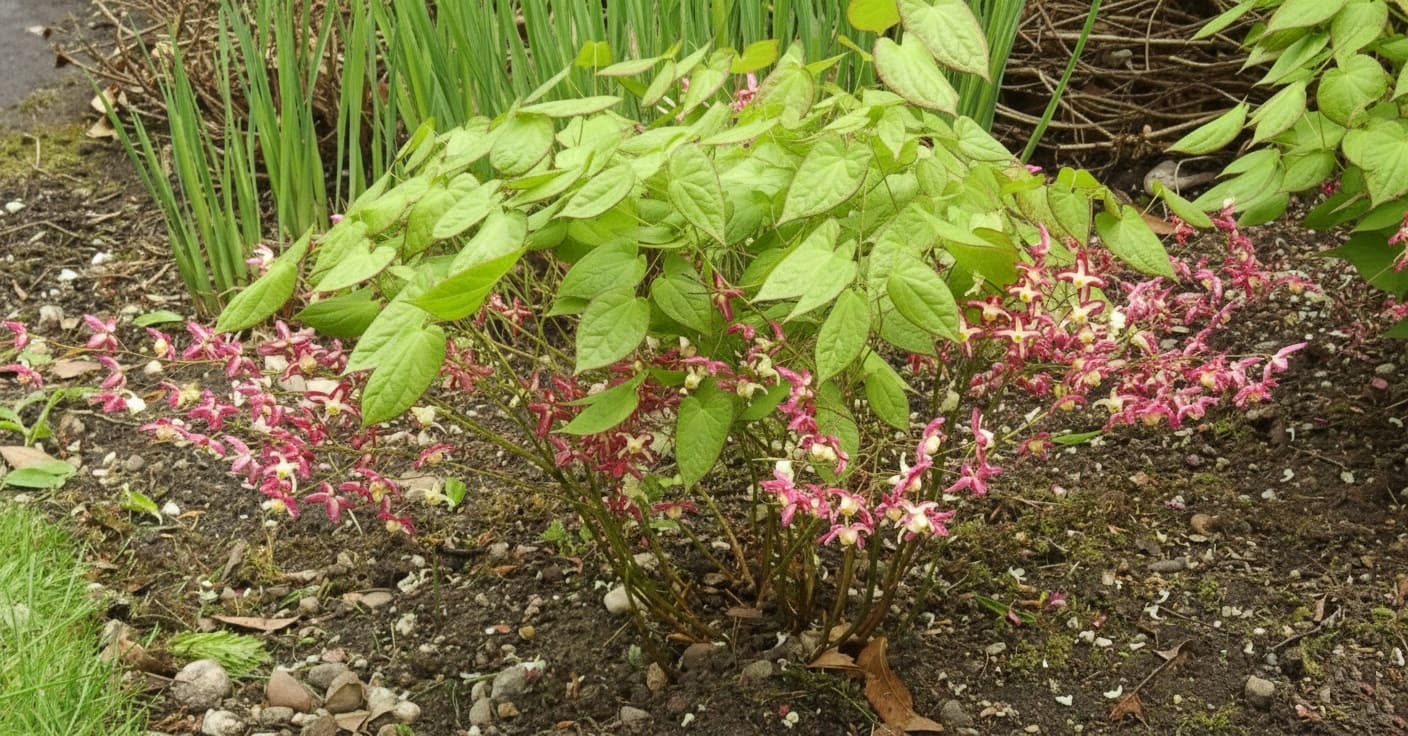
This hybrid brings spring and fall foliar color, with leaves edged in red when young and again in autumn. Bicolor flowers combine crimson outer sepals with white inner petals.
It spreads moderately—faster than clumpers, slower than ‘Sulphureum’—creating good groundcover over time.
Look for the improved selection ‘Sweetheart’ for even better performance. Zones 4-8.
For Bold Texture: Epimedium x perralchicum ‘Frohnleiten’
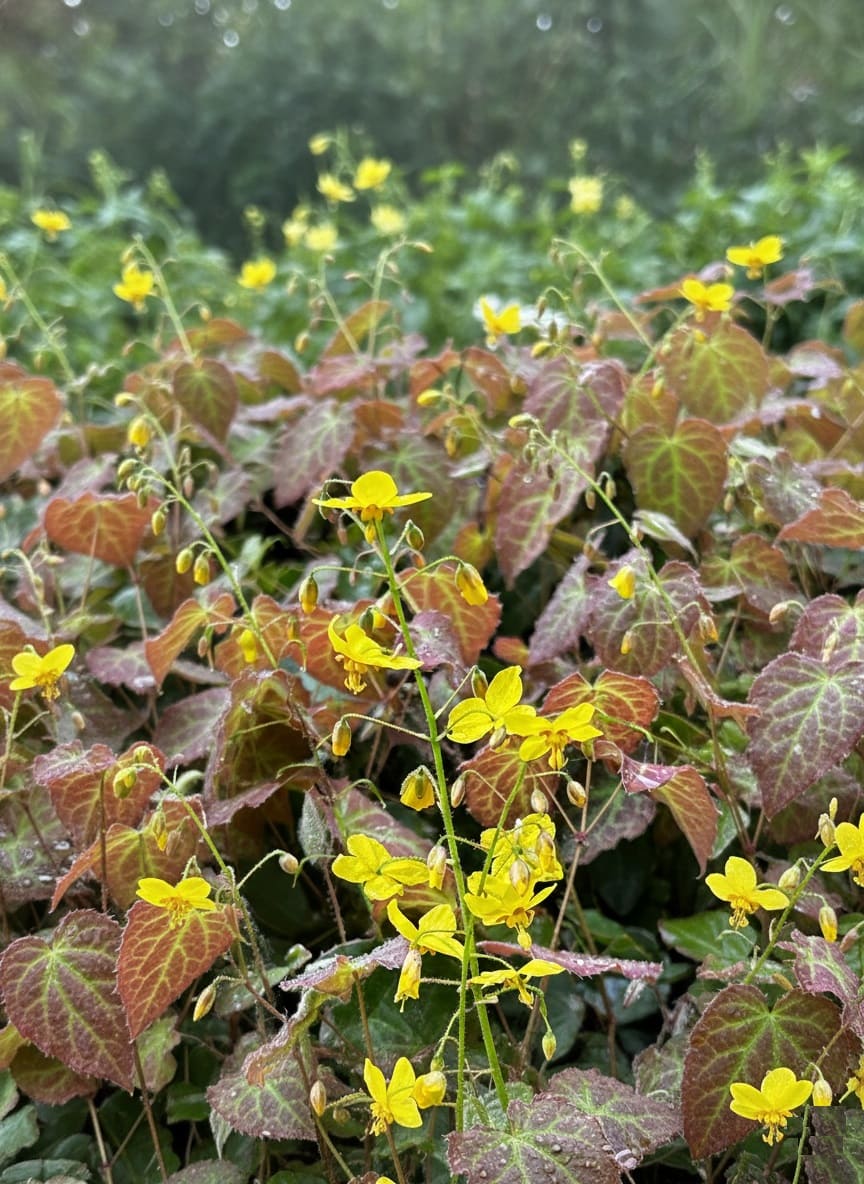
This German hybrid shines with glossy evergreen foliage marked in spring by dramatic red veining against green. Bright yellow flowers stand out beautifully against the dark leaves.
A robust spreader that handles tough conditions and fills in reliably. One of the best for true groundcover use. Zones 5-8.
For Something Different: Epimedium ‘Amber Queen’
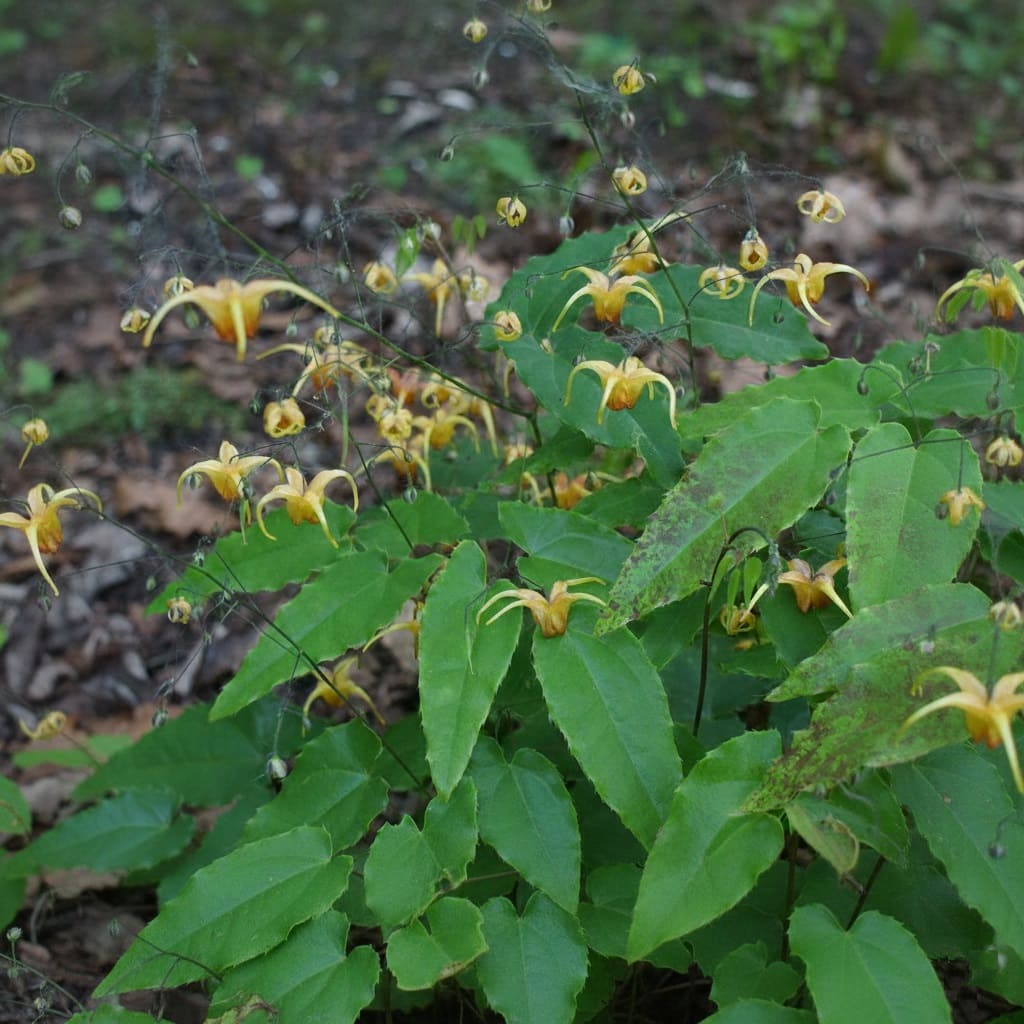
A modern hybrid producing quantities of warm amber-yellow flowers on a vigorous plant with spiny-edged foliage.
The blooms have excellent presence in the garden, being both abundant and long-lasting. This one generates excitement when garden visitors see it in bloom. Zones 5-8.
Start with two or three of these, observe how they perform in your conditions, then branch out to more specialized varieties as your collection grows.
Design Ideas and Companion Plants
Epimediums play well with other shade perennials, creating layered plantings with varied textures and bloom sequences.
Classic Combinations
Pair epimediums with ferns for textural contrast. The lacy fronds of Japanese painted fern, lady fern, or maidenhair fern juxtapose beautifully with epimedium’s solid leaves.
Plant ferns 18-24 inches apart through epimedium plantings for a naturalistic woodland effect.
Hellebores bloom slightly earlier than most epimediums, creating succession of interest. Their hand-shaped leaves contrast nicely with epimedium’s hearts.
Use hellebores as individual accent plants emerging through epimedium groundcover.
Hostas make obvious partners, with countless size and color options.
Use low-growing varieties (like ‘Blue Mouse Ears’ or ‘Pandora’s Box’) at the same height as epimediums, or taller types like ‘Sum and Substance’ behind them for a tiered effect.
Spring Bulb Partnerships
Plant daffodils, snowdrops, and species tulips to bloom alongside or just before epimediums, with the expanding epimedium foliage later hiding fading bulb leaves.
This is particularly effective with spreading epimediums like ‘Sulphureum’ or ‘Frohnleiten.’ Use 25-30 bulbs per square yard for impact, interplanting them among the epimediums.
Creating Depth
For a naturalistic woodland look, combine epimediums with wild ginger (Asarum), which shares their shade tolerance and provides different leaf texture.
Add native woodland phlox, trillium, and Virginia bluebells for varied bloom times while maintaining complementary foliage.
Contemporary Combinations
Brunnera ‘Jack Frost’ or ‘Looking Glass,’ with silver-spotted leaves and blue forget-me-not flowers, creates a stunning modern pairing.
Heucheras add color with purple (‘Plum Pudding’), caramel (‘Caramel’), or chartreuse (‘Lime Marmalade’) foliage.
These evergreen perennials provide winter interest when deciduous epimediums are dormant.
Practical Planting Scenario
- Along a 20-foot shaded path under mature trees, plant five Epimedium x versicolor ‘Sulphureum’ spaced three feet apart down one side.
- Interplant with 100 early daffodils (‘February Gold’ or ‘Tête-à-tête’).
- Add three Japanese painted ferns between the epimediums for mid-season texture.
- On the opposite side, repeat with Epimedium x perralchicum ‘Frohnleiten’ for a different foliage pattern and flower color while maintaining the same overall effect.
This creates a cohesive, low-maintenance pathway planting that performs for three seasons.
👉 Here’s How to Create a Harmonious Garden: A Guide to Beautiful Design
Troubleshooting Common Problems
The beauty of epimediums is how rarely problems occur. Still, a few issues may arise.
1. Brown, crispy leaf edges usually indicate too much sun or drought stress. Move affected plants to shadier locations or increase watering.
If leaves brown in winter, that’s normal for deciduous types and expected wear for evergreen varieties.
👉 Here’s How to Identify and Fix Brown Spots on Your Snake Plant
2. Yellowing leaves might signal poor drainage and waterlogged roots. Improve drainage by amending soil or moving plants to better-draining locations. Yellowing could also indicate nutrient deficiency—try applying compost.
👉 Find out Why Are Your Cucumber Leaves Turning Yellow? Top Causes & Solutions
3. Lack of flowers often results from deep shade. Epimediums need some light to bloom well. Limbing up trees to allow more filtered light can help. Very young plants may not flower prolifically their first year or two.
4. Slug or snail damage shows as irregular holes in leaves. While slugs occasionally munch epimedium foliage, they rarely cause serious harm. Handpick pests in the morning or set beer traps if populations are high.
5. Vine weevil adults notch leaf edges, while larvae feed on roots. In containers, this can become serious. For ground plantings, damage is usually cosmetic. Beneficial nematodes control larvae in the soil.
6. Mosaic virus creates yellow mottling or distortion in leaves. Aphids spread this disease, so controlling aphids helps prevent it. Remove and destroy infected plants since there’s no cure.
7. Plants decline after a few years in the same location usually means they need division to rejuvenate growth. Dig and divide congested clumps, replanting divisions in refreshed soil.
Frequently Asked Questions
- Q: Do I really need to cut back my epimediums every year?
A: For deciduous varieties, no—leaves brown naturally. For evergreen and semi-evergreen types, cutting back isn’t mandatory, but it dramatically improves the spring display.
Old leaves look shabby and hide new foliage and flowers. This annual renewal takes minutes but doubles the visual impact.
Q: How long does it take epimediums to fill in and create groundcover?
A: Faster spreaders like E. x versicolor planted 12 inches apart fill in within two years. Slower clumpers take three to four years.
These long-lived plants reward patience with decades of beauty. Closer spacing speeds the process but costs more initially.
Q: Can epimediums grow under trees with aggressive roots like maples?
A: Absolutely. Epimediums have shallow, non-competitive roots that coexist peacefully with tree roots.
They handle dry shade under maples, oaks, and beeches better than almost any other flowering perennial. Amend soil well at planting and water during establishment.
Q: Will epimediums spread aggressively and take over my garden?
A: No. Even the fastest varieties expand just 6-12 inches per year. They create dense coverage without the aggressive behavior of truly invasive plants.
Spreading types are easily controlled by digging out edges, and they don’t seed invasively.
Q: Can I grow epimediums from seed?
A: Yes, but it’s slow and unpredictable. Most are hybrids, so seedlings won’t match the parent.
Collect fresh seeds as they ripen, sow immediately, and allow winter cold stratification.
Plants may take two to four years to flower. Division is faster and more reliable.
Q: My epimediums aren’t blooming much. What’s wrong?
A: The most common cause is insufficient light. They flower best with bright, dappled light or morning sun.
Other causes: plants too young (give them time), clumps overcrowded (divide them), or over-fertilizing with high-nitrogen products.
Q: Are epimediums truly deer-proof?
A: While no plant is absolutely deer-proof, epimediums rank among the most deer-resistant perennials available. Deer consistently ignore them even when browsing nearby plants.
Rabbits occasionally nibble young growth but don’t cause lasting damage.
The Bottom Line
Epimediums deserve far more recognition than they receive. They combine beauty with practicality, offering attractive foliage, charming flowers, and genuinely carefree growth.
Whether you’re filling difficult dry shade, creating refined groundcover, or adding spring interest to a woodland garden, epimediums deliver reliably year after year.
Start with one or two proven varieties suited to your conditions. Watch how they grow, enjoy their quiet elegance, and you’ll soon find yourself seeking more varieties to expand your collection.
The subtle magic of these plants grows on you, transforming them from anonymous groundcovers into treasured garden residents.
Your Action Plan:
- Assess your shady spots and identify the best location based on light and drainage
- Select 2-3 starter varieties from the recommendations above
- Prepare soil with ample organic matter before planting
- Water consistently through the first growing season
- Mark your calendar for late winter pruning
- Sit back and let these easy-care perennials work their magic
Ready to transform that challenging shady spot? Visit your local nursery this spring, select a few epimediums, and discover why experienced gardeners consider them indispensable.
After your first spring watching those delicate flowers float above fresh foliage, you’ll understand the appeal.
Share your experiences and favorite varieties in the comments—I’d love to hear which ones win your heart.

